

TL;DR:
- Most of whisky’s perceived flavor originates from aroma rather than taste on the tongue, emphasizing the importance of nosing first. The tasting process involves observing distinct stages: nose (aroma), palate (taste and texture), and finish (lingering aftertaste), each revealing unique insights. Understanding peat levels and the effects of cask maturation enhances appreciation, while proper technique and attentive observation improve overall tasting skills significantly.
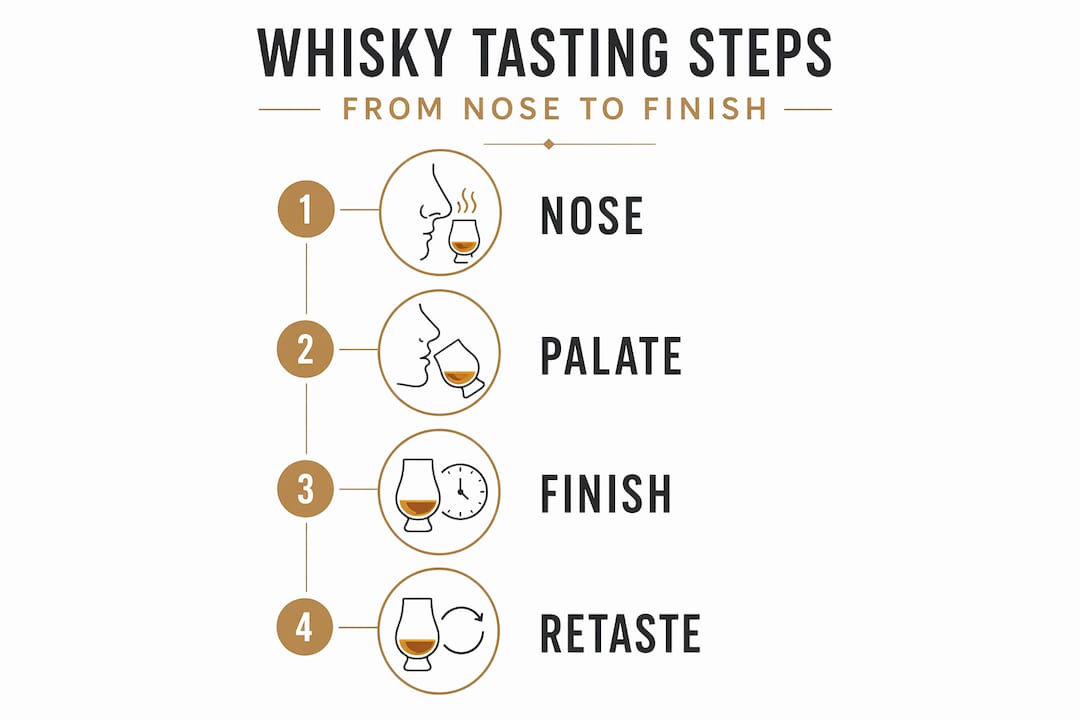
Much of what you perceive as whisky’s taste does not actually come from your tongue. Up to 80% of whisky flavour comes from smell, meaning a sip without nosing first is a sip with your senses half-closed. Understanding how does whisky taste like requires paying attention to three distinct stages: nose (aroma), palate (taste on the tongue), and finish (the lingering aftertaste). Each stage tells you something different. Together, they form a complete picture of a whisky’s character, and learning to read them changes the way you drink forever.
Table of Contents
- How whisky flavour unfolds: nosing, palate, and finish
- Understanding peat and smokiness in whisky flavour
- Beyond taste buds: how aroma shapes the whisky experience
- How maturation and cask influence whisky taste and colour
- Practical tips for tasting whisky to unlock full flavour potential
- Rethinking whisky tasting: what most enthusiasts overlook
- Explore exceptional whiskies to practise your tasting skills
- Frequently asked questions
Key Takeaways
| Point | Details |
|---|---|
| Aroma dominates flavour | Up to 80% of whisky’s perceived taste is from its aroma, so start by nosing the whisky carefully. |
| Three tasting stages | Whisky tasting involves nose (aroma), palate (taste and texture), and finish (lingering aftertaste). |
| Peat level guides smokiness | Phenol PPM measures peat intensity and helps predict smoky flavour strength in whisky. |
| Cask influences flavour and colour | Age and cask type affect whisky colour and flavours, with lighter whiskies tending to taste sweeter. |
| Tasting technique matters | Proper glassware, sipping method, and optional water addition unlock deeper whisky flavours and textures. |
How whisky flavour unfolds: nosing, palate, and finish
Building on the importance of aroma, the three tasting stages each reveal something the others cannot. Treating them as separate observations rather than one blended experience is what separates a casual drinker from someone genuinely developing their whisky palate experience.
Nose: This is where the most complex aromas live. Tilt your glass, bring it close, and take short, gentle sniffs rather than one deep inhale. Deep inhales flood your olfactory receptors and dull your sensitivity quickly. You are looking for layers here: fresh fruit, cereal grain, vanilla, floral notes, or smoke. The aromas you detect at this stage often exceed what your palate will find.
Palate: Take a small sip and move it deliberately around your mouth, covering the tip of the tongue (sweet), the sides (sour and salt), and the back (bitter). This is how you capture the full range of taste characteristics of whisky in a single sip. Notice texture too. Is it oily? Thin? Warming or sharp?
Finish: Swallow and pay attention for the next 30 to 90 seconds. The finish is where whisky either rewards patience or falls flat. Tasting notes are built across all three stages, with the nose often revealing greater complexity than what the tongue alone registers. A long finish that shifts from spice to dried fruit to oak is the hallmark of a well-aged, quality expression.
Key things to track across all three stages:
- Whether aromas on the nose match or contradict flavours on the palate
- How quickly or slowly the finish fades
- Whether the texture is light and delicate or thick and coating
- The presence of heat from alcohol versus genuine warmth from spirit character
Studying whisky tasting notes explained in depth gives you a structured vocabulary for each stage, which makes comparison far more reliable over time.
Understanding peat and smokiness in whisky flavour
One of the most distinctive and misunderstood flavour components in whisky is peat smoke. With the key tasting stages defined, this is worth exploring carefully because it shapes how you approach an entire category of expressions.
Peat is partially decomposed organic matter burned as fuel during the malting process. When barley dries over a peat fire, phenolic compounds absorb into the grain. Those compounds survive distillation and maturation to appear in the final spirit as smoke, medicinal, iodine, and ash-like notes.
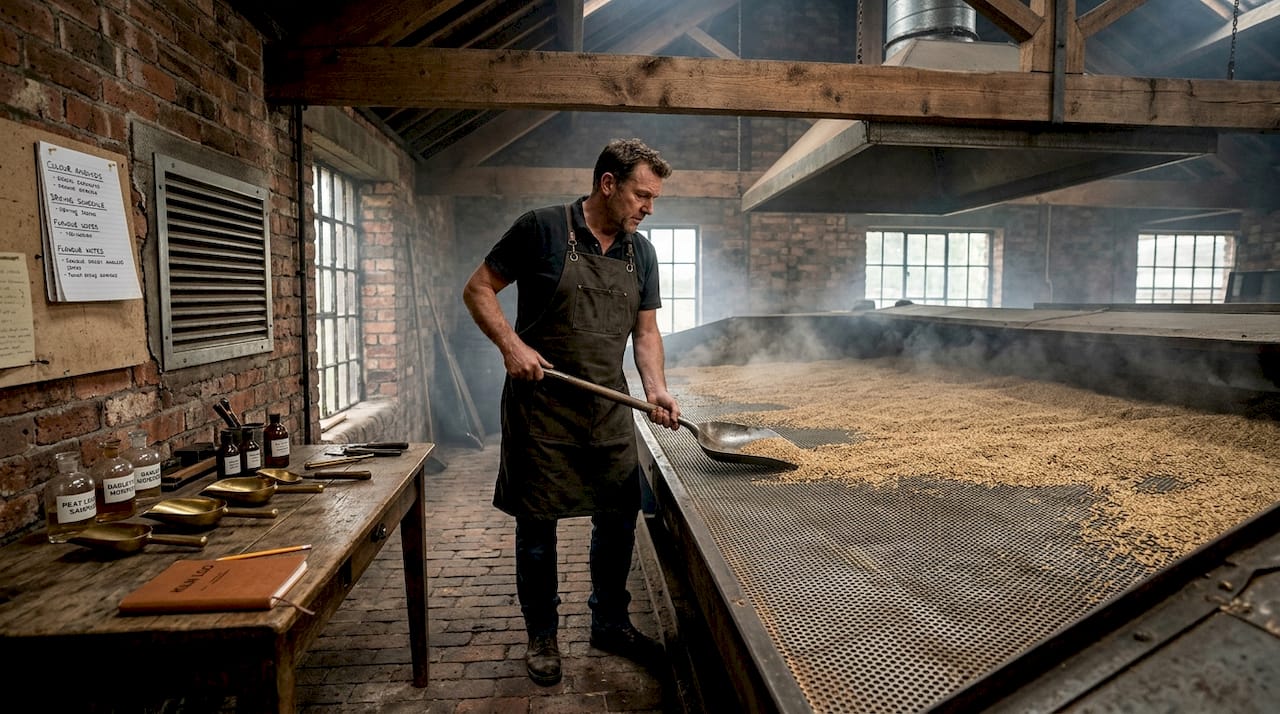
Smokiness is measured in phenol PPM, ranging from unpeated at 0 to 2 PPM through to super-heavily peated at 50+ PPM. Here is a practical guide to what those ranges mean for flavour:
| PPM range | Classification | Typical flavour character |
|---|---|---|
| 0 to 2 PPM | Unpeated | No smoke; grain, fruit, floral |
| 3 to 10 PPM | Lightly peated | Subtle smoke; soft, approachable |
| 11 to 25 PPM | Medium peated | Earthy smoke; tobacco, heather |
| 26 to 35 PPM | Heavily peated | Pronounced smoke; medicinal, campfire |
| 35 to 50+ PPM | Super-heavily peated | Intense smoke; iodine, ash, tar |
One important caveat: PPM at the still does not equal PPM in your glass. Maturation reduces perceived smokiness. A whisky vatted at 50 PPM malt and aged 12 years in a first-fill Sherry cask will taste considerably different to one released young at the same PPM. Cask character, time, and dilution all soften or redirect phenolic intensity.
Pro Tip: If you are new to peated whisky, use PPM as a navigation tool rather than a strict flavour predictor. Start at 10 to 20 PPM to understand smoke without being overwhelmed, then move up or down from there based on your response.
Understanding whisky flavour profiling with peat as a variable gives you an immediate framework for comparing expressions across regions and styles with more confidence.
Beyond taste buds: how aroma shapes the whisky experience
To fully grasp what does whisky taste like and why certain whiskies seem more complex than others, you need to understand a basic fact about human perception. Your tongue only detects five things: sweet, sour, salty, bitter, and umami. Every other descriptor you associate with whisky, including vanilla, caramel, leather, dried fruit, cereal, tobacco, and oak, arrives via your nose.
Most whisky flavour descriptors come from retronasal olfaction, which is the process of aromatic compounds travelling up the back of your throat to your olfactory receptors while you taste and swallow. This is why two whiskies can register similarly on the tongue in terms of sweetness and body but taste completely different overall. The aromatic compounds define the character.
This has practical implications for how you taste:
- Nosing before sipping primes your olfactory system and prepares the brain to interpret incoming signals
- Chewing the whisky slightly (moving it vigorously around the mouth) releases volatile compounds retronasally
- Breathing out slowly through your nose while whisky is still on your palate actively intensifies flavour perception
- Resting the glass for five minutes after pouring allows higher-volatility ethanol to dissipate, letting subtler aromas emerge
Pro Tip: Try nosing a whisky immediately after pouring, then again after five minutes of rest. The difference in what you detect is often striking. Vanilla and fruit notes that were buried under alcohol on the first nose become far more accessible on the second.
Building skills around this process is central to mastering whisky tasting notes with accuracy and consistency.
How maturation and cask influence whisky taste and colour
We have covered how flavour is sensed. Now consider the physical liquid in your glass and how the cask it aged in shaped everything about it, including its colour.
Colour is one of the first genuine tasting cues you have before the glass reaches your nose. Whisky enters a cask as clear spirit and draws all of its colour from wood. The hue you see reflects the type of cask and how long the spirit spent inside it. Lighter-coloured whiskies tend toward sweetness while darker expressions typically carry richer fruit, spice, and depth from Sherry or rum cask maturation.
| Colour | Likely cask | Expected flavour direction |
|---|---|---|
| Pale gold | Ex-Bourbon (American oak) | Vanilla, coconut, light citrus |
| Honey gold | Refill Bourbon or virgin oak | Honey, caramel, baked apple |
| Amber | First-fill Sherry (Oloroso) | Dried fruit, chocolate, warm spice |
| Deep mahogany | Pedro Ximénez or port cask | Dark fruit, molasses, rich tannins |
| Copper red | Rum cask or wine cask | Brown sugar, tropical fruit, pepper |
How to read visual cues before nosing:
- Hold the glass to natural light and observe depth of colour without relying on artificial light, which distorts hue
- Swirl gently and watch the legs (the streaks that run down the inside of the glass) as thicker, slower legs indicate higher ABV or richer texture
- Assess whether the colour appears natural and consistent, as caramel colouring (added legally in Scotch) can mislead colour-based flavour predictions
- Use colour as a hypothesis, not a verdict. Confirm it through nosing and tasting
Exploring whisky cask influence on flavour gives you much greater precision when selecting bottles based on predicted taste profile. If you want to go deeper into how different oak regimes create flavour, the guide on types of whisky ageing is worth spending time with.
Practical tips for tasting whisky to unlock full flavour potential
Having understood the science and visual cues behind whisky taste, here are concrete steps to sharpen your tasting technique and genuinely experience all the flavours in different whiskies more accurately.
- Choose a Glencairn glass. The tulip shape concentrates aromas and lets you observe the whisky’s legs clearly. Straight-sided tumblers scatter aromas and reduce nosing accuracy considerably.
- Pour a standard measure and wait. Two to three minutes at room temperature allows the spirit to open. Never taste a whisky that has just been poured from a very cold environment.
- Nose before sipping. Keep your mouth slightly open while nosing. This reduces the impact of ethanol on your nasal receptors and lets subtler notes come through.
- Take a small sip and move it around. Cover the entire mouth. Pause with whisky on the palate for five to ten seconds before swallowing.
- Add water deliberately. A few drops of water can reveal hidden flavours but will soften texture and warmth. Add one drop at a time, nose and taste after each addition, and stop when the whisky feels balanced to you.
- Record your notes immediately. Memory of flavour fades within minutes. Note nose, palate, and finish observations separately while they are fresh.
Pro Tip: Keep a dedicated tasting notebook, either physical or digital, organised by region and distillery. After tasting 20 to 30 whiskies with notes, patterns emerge quickly. You will start recognising house styles and cask signatures without prompting.
Knowing how to taste whisky like an expert involves building these habits consistently, not just applying them once.
Rethinking whisky tasting: what most enthusiasts overlook
Here is the uncomfortable truth about how most whisky lovers taste: they assess all three stages at once and then compress them into a single impression. That is understandable when you are drinking socially, but it is the single biggest reason people struggle to describe what they are experiencing or remember why a particular whisky was exceptional.
The finish is where this problem is most costly. The finish should be observed over time, not judged immediately after swallowing. A whisky’s finish can shift dramatically between the five-second and the ninety-second mark. What starts as pepper and oak can evolve into honeyed barley and soft fruit. If you close your notebook after ten seconds, you miss half the conversation.
The other overlooked issue is the conflation of heat with flavour. High-ABV whiskies (above 55%) generate alcohol warmth that is easy to mistake for spice or intensity of flavour. Separating palate structure from alcohol heat requires deliberate practice: taste without expectations, add water if heat is distracting, and always nose before forming a flavour opinion.
The third gap is failing to track how a whisky evolves in the glass over 15 to 20 minutes. As ethanol evaporates, more volatile aromatic compounds emerge. A whisky that seemed simple on first nose often reveals layers of complexity 15 minutes into the pour. This is not a coincidence. It is why professional tasters rarely rush.
Connecting your observations across all stages builds what amounts to a personal sensory database. Over time, reading a whisky’s tasting notes becomes less about memorising descriptors and more about recognising a familiar language you have developed yourself.
Explore exceptional whiskies to practise your tasting skills
Now that you have a deeper understanding of whisky flavours and tasting, the most effective next step is to apply these techniques to whiskies with genuinely distinct profiles.

At Uisuki, we curate expressions specifically chosen to represent the full spectrum of taste characteristics. The Hobart Bourbon Matured Rum Finished Single Malt is an outstanding study in cask interaction, showing exactly how Bourbon oak vanilla shifts when rum cask richness is layered on top. For comparing blended whisky flavour and texture against single malt, Ichiro’s Malt and Grain Limited Edition offers a beautifully balanced reference point. And if you want to experience how Scotch house style and peat translate to the palate, Ardnamurchan MacLean’s Nose delivers coastal character with real nuance. Each bottle is a practical lesson.
Frequently asked questions
How much does smell affect the taste of whisky?
Up to 80% of the flavour you perceive in whisky comes from its aroma, making nosing an essential part of tasting rather than an optional step.
What is the best way to approach whisky tasting stages?
Start by gently nosing the whisky, then taste by moving it around your mouth to identify dominant flavours and textures, and finally observe how the finish develops after swallowing for up to 90 seconds.
What does peat level mean in whisky?
Peat level is measured in phenol PPM and indicates the intensity of smoky flavours, ranging from unpeated at 0 to 2 PPM through to heavily peated expressions at 35 to 50+ PPM.
Can adding water change the flavour of whisky?
Yes. A few drops of water can open up hidden flavours but may also reduce texture and warmth, so add water gradually and reassess after each addition.
How does whisky colour relate to its taste?
Generally, lighter-coloured whiskies tend toward sweetness while darker expressions typically carry more fruited and spiced flavours, reflecting the cask type used and the duration of maturation.