

Selecting the right whisky and analysing each glass takes your appreciation far beyond a simple dram. For Australian collectors and enthusiasts who strive for depth and authenticity, careful setup and technique create a truly elevated tasting experience. By focusing on a neutral sensory environment and mastering the art of flavour profiling, you unlock the full complexity hidden in each bottle, from subtle fruity notes to bold smoky finishes. This guide brings together expert preparation tips and proven tasting strategies to help you refine your palate and expand your whisky knowledge.
Table of Contents
- Step 1: Prepare Your Whisky Tasting Setup
- Step 2: Select And Pour Your Whisky Samples
- Step 3: Assess Appearance And Aroma Of Each Whisky
- Step 4: Taste And Identify Distinct Flavour Notes
- Step 5: Record And Verify Your Flavour Profile Findings
Quick Summary
| Key Point | Explanation |
|---|---|
| 1. Select a Suitable Tasting Environment | Choose a quiet, well-lit space that is free from strong odours to enhance sensory exploration of whisky. |
| 2. Use Proper Glassware for Tasting | Employ Glencairn or tulip-shaped glasses to concentrate the whisky’s aromas effectively during tasting. |
| 3. Record Detailed Tasting Notes | Systematically document your observations on appearance, aroma, palate, and finish for better whisky appreciation. |
| 4. Taste and Evaluate with Care | Take small sips and let the whisky evolve on your palate for a more nuanced understanding of its flavours. |
| 5. Cleanse Palate Between Tastings | Use water or plain crackers to reset your taste buds, ensuring clarity while assessing different whiskies. |
Step 1: Prepare your whisky tasting setup
Creating the perfect whisky tasting environment requires careful planning and attention to detail. Whether you’re a seasoned enthusiast or a curious beginner, setting up a professional tasting space will dramatically enhance your sensory exploration of whisky.
Start by selecting a quiet and well-ventilated space with good lighting that won’t interfere with your ability to observe the whisky’s colour and clarity. Professional tasters recommend creating a neutral sensory environment that allows you to focus entirely on the whisky’s characteristics. Your setup should include several key elements:
- Specialised glassware: Preferably Glencairn or tulip-shaped glasses that concentrate aromas
- Neutral palate cleansers: Water and plain bread or crackers
- Tasting notes template: For systematically recording your observations
- Good lighting: Natural or soft artificial light for colour assessment
- Comfortable seating: Arranged to promote conversation and shared experience
Temperature and ambient conditions matter significantly in whisky tasting. Aim for a room temperature around 20-22 degrees Celsius, which allows the whisky’s nuanced aromas and flavours to emerge without being masked by excessive heat or cold. Avoid strong competing odours like perfumes, cooking smells, or scented candles that might interfere with your sensory perception.
Preparation is key. Ensure each whisky is served at the right temperature - typically around 15-18 degrees Celsius - and have plenty of water available for both drinking and palate cleansing between tastings.
Professional tip: Keep a small notebook and pencil handy to record immediate impressions, as memory of subtle flavour notes can fade quickly.
Step 2: Select and pour your whisky samples
Selecting the right whisky samples is a critical step in creating a memorable and insightful tasting experience. Your goal is to curate a diverse range of whiskies that will challenge and delight your palate, revealing the remarkable complexity of this beloved spirit.
Begin by choosing whiskies that offer interesting variations in style, region, and production method. A well-planned lineup might include different whisky types to compare and contrast. Consider creating a progression that moves from lighter to more intense flavours:
- Lowland whiskies: Light and delicate
- Speyside selections: Fruity and complex
- Highland expressions: More robust and varied
- Islay whiskies: Bold and smoky
- Rare or special release bottlings: For unexpected flavour profiles
Pouring technique matters. Use a steady hand and aim to pour approximately 30-40 millilitres per sample. This quantity allows for multiple small tastings without overwhelming the palate. Pour each whisky into your prepared Glencairn glasses at least 10-15 minutes before tasting to allow subtle aromas to develop.
When selecting your samples, consider the age, alcohol percentage, and cask finish. Younger whiskies typically present sharper, more immediate flavours, while aged expressions offer deeper, more complex notes. Cask finishes like sherry, port, or wine can introduce fascinating additional layers of complexity.
Here’s a quick reference guide to whisky regions and their key characteristics:
| Region | Typical Style | Notable Flavour Notes | Example Whiskies |
|---|---|---|---|
| Lowland | Light, delicate | Grass, honey, citrus | Auchentoshan, Bladnoch |
| Speyside | Fruity, complex | Apple, vanilla, floral | Glenlivet, Macallan |
| Highland | Robust, varied | Heather, spice, peat | Glenmorangie, Dalmore |
| Islay | Smoky, bold | Peat, iodine, seaweed | Laphroaig, Ardbeg |
| Rare/Special | Unique, unexpected | Exotic fruits, oak, wine | Special releases |
Professional tip: Always have a small glass of room temperature water nearby to cleanse your palate between different whisky samples and help reset your taste buds.
Step 3: Assess appearance and aroma of each whisky
Evaluating the appearance and aroma of whisky is an art form that transforms a simple drink into a sensory exploration. Understanding how to read a whisky’s visual and olfactory characteristics will dramatically enhance your tasting experience and reveal intricate details about its origin and production.
Sensory analysis techniques reveal profound insights into each whisky’s unique personality. Begin by examining the liquid’s visual characteristics against a white background. Observe these key aspects:
- Colour intensity: From pale straw to deep amber or mahogany
- Clarity: Bright and transparent or slightly cloudy
- Viscosity: How the whisky clings to the glass (known as the “legs” or “tears”)
Swirling technique is crucial for releasing aromas. Hold the glass at a slight angle and gently rotate, allowing the whisky to coat the inside of the glass. This action helps volatilise the compounds that create the whisky’s complex bouquet. Approach the glass slowly, taking short, gentle sniffs to avoid overwhelming your olfactory senses.
When assessing aromas, train yourself to identify primary scent families. These might include fruity notes (like apple or citrus), woody characteristics (vanilla, oak), spicy elements (cinnamon, pepper), or smoky undertones. Each aroma tells a story about the whisky’s journey from grain to glass.
Professional tip: Hold the glass about five centimetres from your nose and breathe in softly, allowing the aromas to gradually reveal themselves rather than taking a deep, aggressive sniff.
Step 4: Taste and identify distinct flavour notes
Tasting whisky is a nuanced art that transforms a simple sip into a complex sensory journey. Your goal is to unlock the intricate flavour profile hidden within each carefully crafted spirit.
Chemical compounds influence whisky flavour in remarkable ways, creating a symphony of taste sensations. When tasting, follow these essential techniques:
- Take a small sip: Approximately 10-15 millilitres
- Hold the whisky on your palate for 3-5 seconds
- Move the liquid across different taste zones of your tongue
- Breathe gently through your mouth to enhance flavour perception
Flavour identification requires concentration and practice. Break down your tasting into distinct stages: initial taste, mid-palate development, and finish. Pay attention to how flavours evolve and transform across these stages.
Common flavour notes include fruity (apple, citrus), woody (oak, vanilla), spicy (cinnamon, pepper), and smoky undertones. Each whisky tells a unique story through its complex layering of tastes. Consider the mouthfeel - is it light and crisp or rich and creamy? Notice how the flavours change from the moment the whisky touches your tongue to its lingering finish.
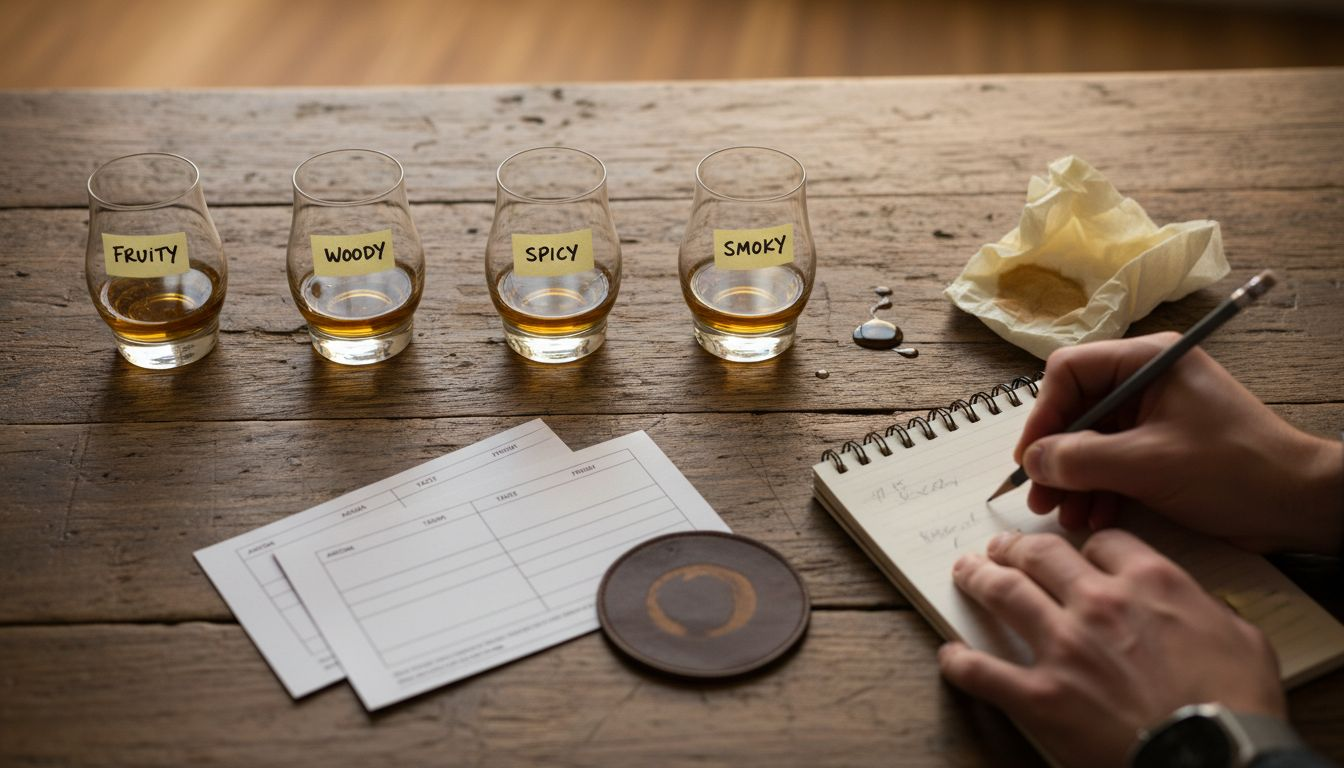
Professional tip: Take small, deliberate sips and allow each taste to fully develop before swallowing, giving your palate time to decode the whisky’s intricate flavour composition.
Step 5: Record and verify your flavour profile findings
Transforming your whisky tasting experience from a casual enjoyment to a systematic exploration requires meticulous documentation and thoughtful reflection. Your goal is to create a comprehensive record that captures the essence of each unique whisky.
Systematic tasting note documentation helps develop a refined palate and deepens your understanding of whisky complexity. Use a structured approach to capture your observations:
- Appearance: Colour, clarity, viscosity
- Nose: Initial aromas, complexity, evolution
- Palate: Flavour progression, intensity, balance
- Finish: Duration, lingering taste, final impressions
Consistent documentation is key to building a robust flavour memory. Create a standardised template that allows you to compare different whiskies systematically. Include space for both objective measurements and personal interpretations. Use descriptive language that goes beyond generic terms - instead of simply writing “fruity”, specify whether it reminds you of green apples, ripe peaches, or dried citrus.
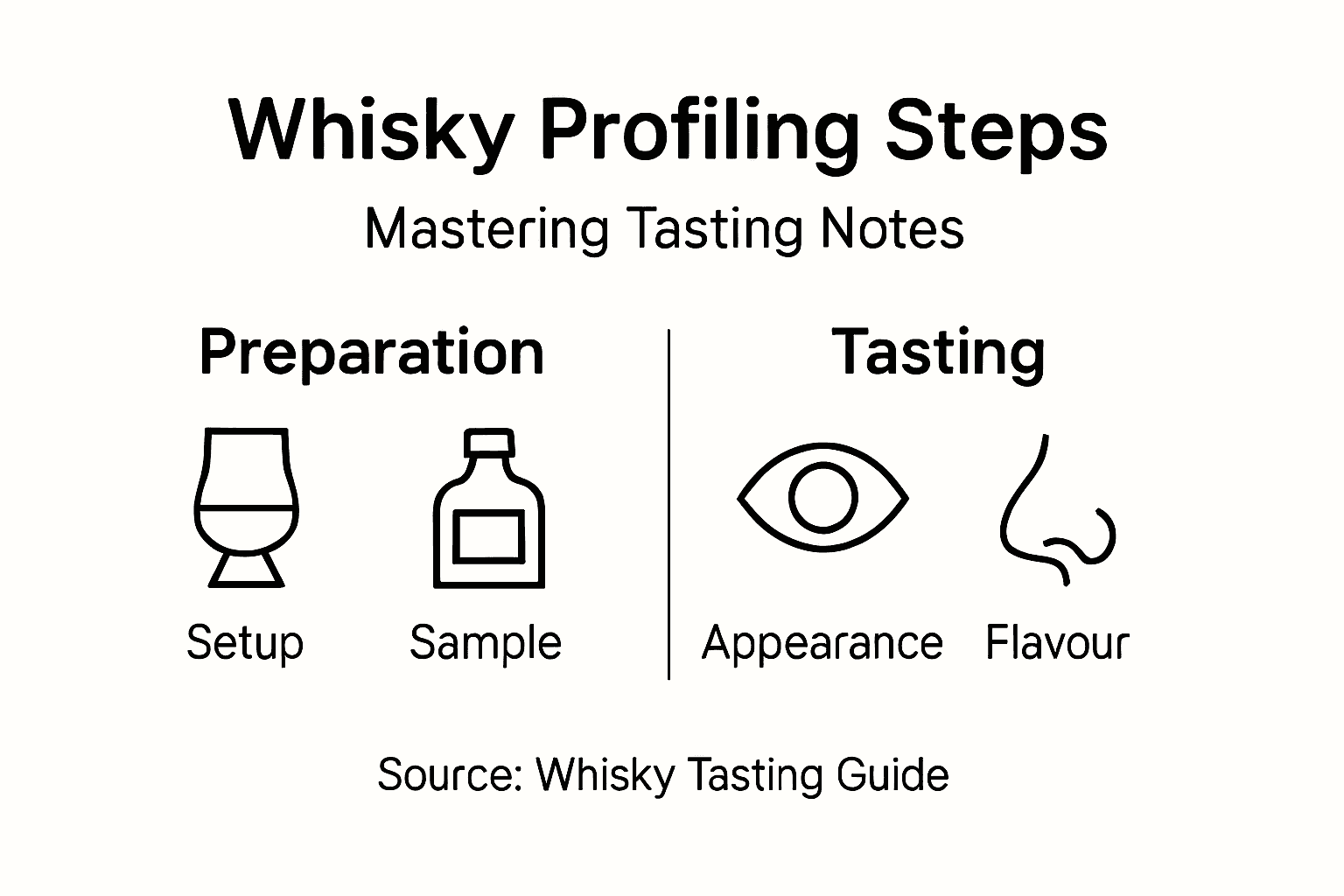
Below is a summary of whisky tasting note categories and examples for consistent documentation:
| Observation Area | Example Descriptions | Why It Matters |
|---|---|---|
| Appearance | Amber, clear, syrupy legs | Indicates age and cask type |
| Nose | Vanilla, dried fruit, smokey | Reveals aroma complexity |
| Palate | Creamy, spicy, malty | Defines flavour profile |
| Finish | Long, sweet, warming | Shows quality and balance |
Encourage verification by discussing your notes with fellow whisky enthusiasts. Comparing observations helps validate your perceptions and exposes you to different tasting perspectives. This collaborative approach not only refines your tasting skills but also builds a shared language of whisky appreciation.
Professional tip: Photograph your tasting notes or use a digital whisky journal app to track your evolving palate and create a personal whisky flavour archive.
Elevate Your Whisky Tasting Experience with Uisuki
Mastering whisky flavour profiling is both an exciting journey and a challenge that demands access to diverse, high-quality whiskies and expert guidance. Whether you aim to refine your palate, identify subtle tasting notes, or build a unique collection, having the right selection of whiskies from reputable regions is essential. Our article highlights key whisky tasting concepts like aroma evaluation, palate cleansing, and structured flavour note recording — all made richer with the perfect whisky lineup.
Explore our carefully curated range of World Whiskies that features diverse styles from Lowland to Islay. Discover classic Glenfiddich expressions alongside exclusive Scotch offerings like Glenglassaugh to deepen your sensory exploration.

Unlock new dimensions of tasting clarity and complexity today by shopping with Uisuki. Visit Uisuki.com.au now to access rare bottles, comprehensive descriptions, and personalised recommendations designed to empower your whisky flavour profiling journey. Start mastering your tasting notes with confidence and the finest whiskies at your fingertips.
Frequently Asked Questions
How can I create the ideal environment for whisky tasting?
To create the perfect whisky tasting space, select a quiet, well-ventilated area with good lighting. Aim for a room temperature around 20-22 degrees Celsius, and ensure you have specialised glassware, palate cleansers, and a comfortable seating arrangement.
What steps should I follow when selecting whisky samples?
Begin by curating a diverse range of whiskies that vary in style and complexity. Consider including whiskies from different regions, and aim to compare lighter whiskies first, progressing to bolder flavours for a more engaging taste experience.
How do I assess the appearance and aroma of whisky?
Evaluate the whisky’s colour against a white background, checking for clarity and viscosity. Swirl the glass gently and sniff softly to detect various aroma notes, identifying families such as fruity, woody, and spicy for a deeper understanding of its profile.
What techniques should I use to taste and identify flavour notes?
Take a small sip and hold the whisky on your palate for a few seconds before moving it across different taste zones of your tongue. Pay attention to the flavour’s development from the initial taste to the finish, noting how flavours evolve as you taste.
How can I document my whisky tasting notes effectively?
Use a structured template to record your observations on appearance, aroma, palate, and finish. Be specific in your descriptions to help refine your palate and encourage verification through discussions with others, helping to enhance your whisky tasting skills.
What should I focus on when reviewing my tasting notes?
Concentrate on comparing observations and identifying consistent themes among different whiskies. This review will deepen your understanding of variations in flavour profiles and improve your ability to articulate your tasting experiences.