

Choosing a new whisky can feel like deciphering a secret code for curious Australian collectors. Cask maturation holds the key, with up to 70 percent of a whisky’s flavour coming directly from the wooden barrel according to global whisky studies. From American bourbon barrels to Spanish sherry casks, the type of wood and past contents reshape every bottle. Understanding these details brings you closer to selecting expressions with exactly the depth, richness, and character you crave.
Table of Contents
- What Is Cask Maturation In Whisky?
- Types Of Whisky Casks And Their Impact
- Barrel Origins, Treatments And Past Contents
- How Climate And Maturation Time Affect Flavour
- Common Myths About Age And Cask Quality
Key Takeaways
| Point | Details |
|---|---|
| Whisky’s Character Development | Whisky maturation involves chemical interactions between the spirit, wood, and environment, contributing up to 70% of its final flavour. |
| Influence of Cask Types | Different cask types, such as Bourbon and Sherry, impart unique flavours, making cask selection essential for flavour profiles. |
| Climate Impact on Maturation | Whisky maturation speed and flavour are influenced by climate, with warmer regions accelerating processes and enhancing certain flavour concentrations. |
| Age Misconceptions | Older whisky is not always better; quality relies on a balance between various factors, not just the age in the cask. |
What Is Cask Maturation In Whisky?
Whisky maturation is a complex, transformative process where distilled spirits develop their distinctive character inside wooden casks. Unlike other alcoholic beverages, whisky uniquely evolves through wood interactions during extended aging periods, dramatically changing its flavour profile and quality.
The maturation process involves intricate chemical reactions between the spirit, wooden cask, and surrounding environment. Whisky experts understand that approximately 60-70% of a whisky’s ultimate flavour emerges directly from its wooden container, making the cask selection critically important. Different wood types and previous cask contents significantly influence the spirit’s final taste, creating remarkable diversity across whisky styles.
Cask maturation isn’t a passive waiting game but an active chemical transformation. Wood’s porous structure allows gradual interaction, with temperature and humidity causing wood to expand and contract. This movement facilitates flavour exchange, enabling compounds from the wood to migrate into the spirit while simultaneously filtering out harsher elements. Each geographical region’s unique climate contributes to distinctive maturation characteristics, resulting in regionally specific whisky profiles.
Pro Tip: When selecting a whisky, pay close attention to the cask type mentioned on the label, as it provides crucial insights into the potential flavour complexity.
Types Of Whisky Casks And Their Impact
Whisky casks represent far more than simple storage containers; they are intricate flavour architects that fundamentally transform the spirit’s character. Different cask types dramatically influence whisky’s final profile, with wood species, previous contents, and treatment techniques playing pivotal roles in developing complex taste experiences.
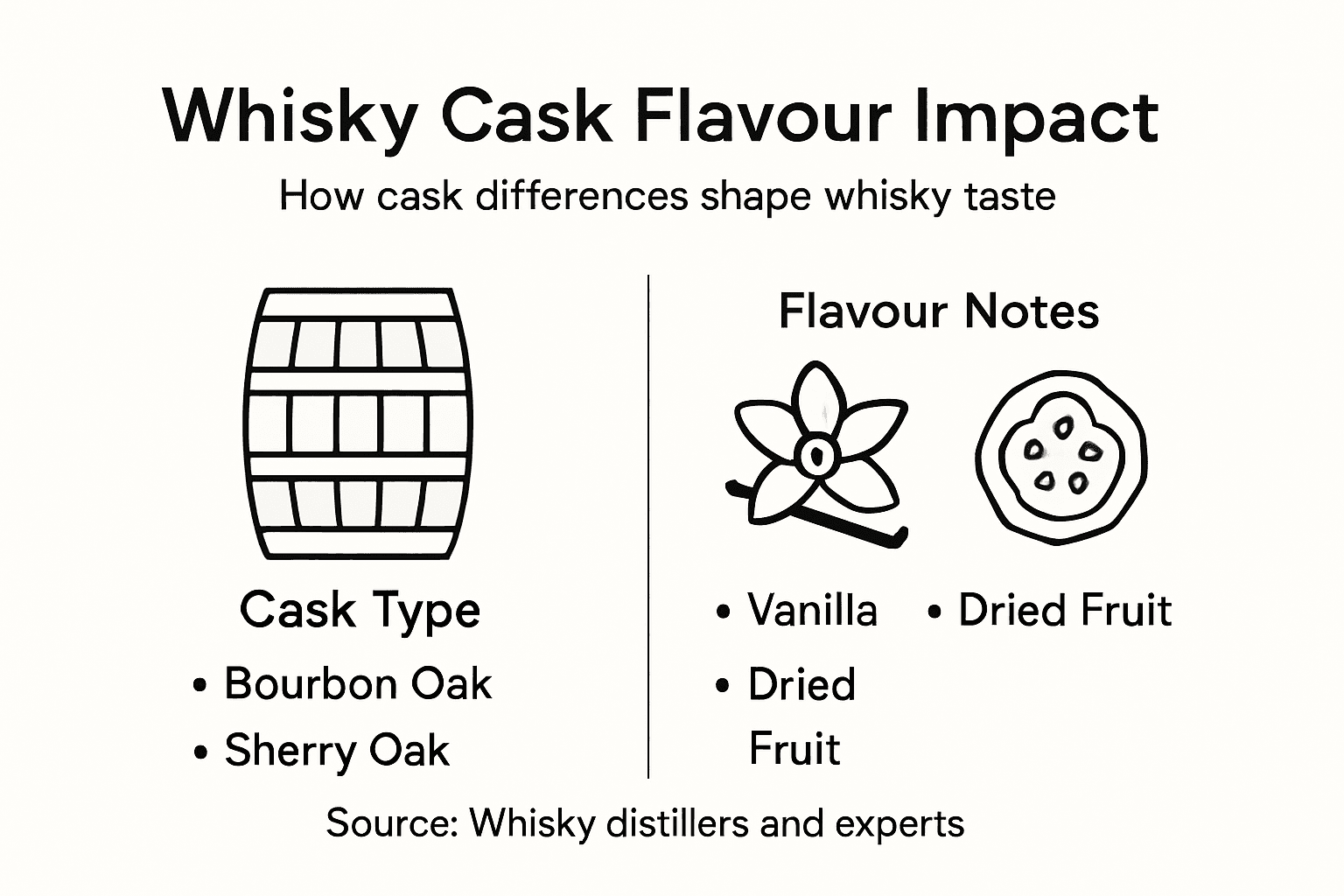
The primary whisky cask types include American bourbon barrels, Spanish sherry casks, port wine barrels, and rum casks. Each brings distinctive characteristics to the spirit. Bourbon barrels, typically made from new American white oak, impart vanilla and caramel notes, while sherry casks contribute rich dried fruit and nutty undertones. Port wine barrels introduce sweeter, more complex berry-like flavours, and rum casks can add subtle tropical and molasses-like characteristics.
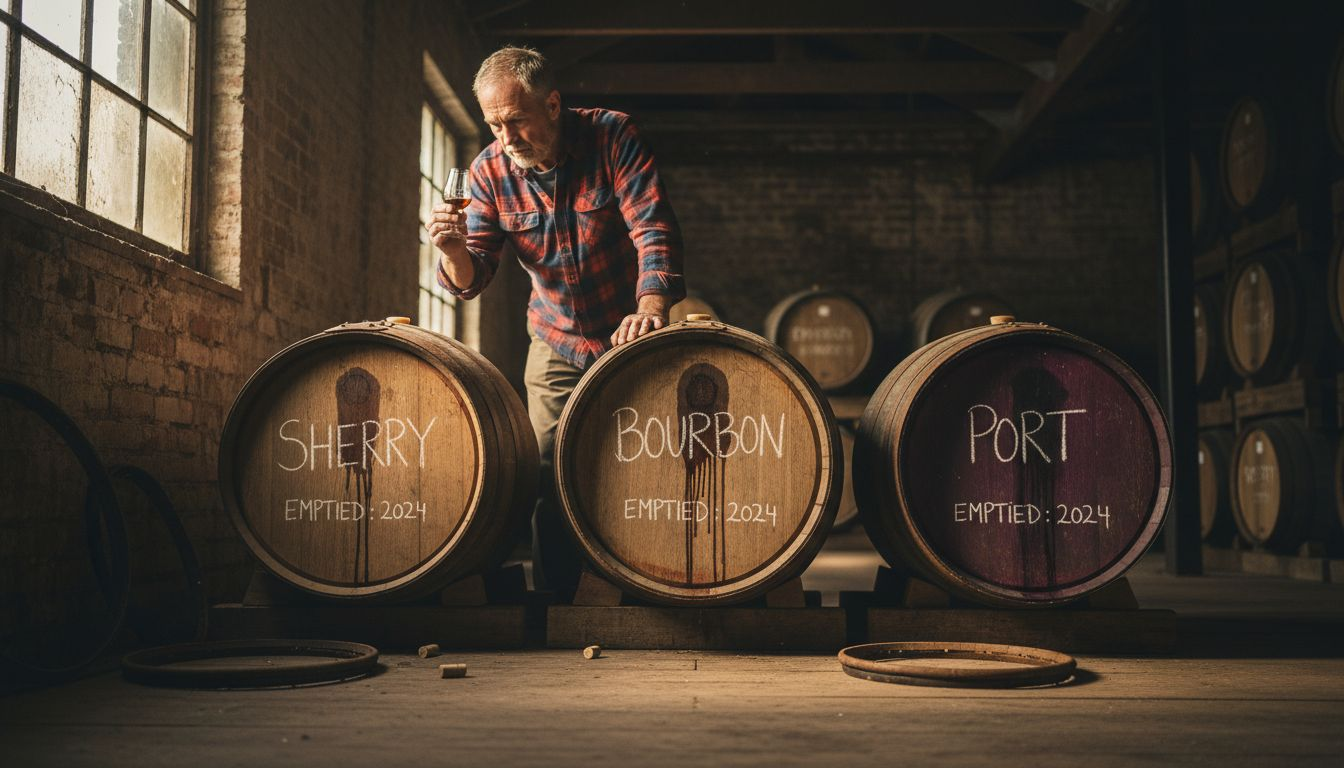
Cask preparation techniques further enhance flavour complexity. Distillers often employ processes like charring and toasting the interior of wooden casks, which creates intricate chemical interactions. These methods trigger caramelisation of wood sugars, release specific compounds, and enable deeper flavour penetration. The porous nature of wood allows gradual flavour exchange, with temperature and humidity causing wood expansion and contraction that facilitates nuanced spirit transformation.
Here’s how different cask types influence whisky characteristics:
| Cask Type | Common Flavours | Wood Species | Main Source Region |
|---|---|---|---|
| Bourbon Barrel | Vanilla, caramel notes | American white oak | United States |
| Sherry Cask | Dried fruit, nutty | European oak | Spain |
| Port Wine Barrel | Berry, sweet richness | European oak | Portugal |
| Rum Cask | Tropical, molasses hint | American white oak | Caribbean |
Pro Tip: When exploring whiskies, compare bottles from different cask types to develop a sophisticated understanding of how wood influences flavour profiles.
Barrel Origins, Treatments And Past Contents
Whisky barrel selection is an intricate art form where every detail matters, from wood origin to previous contents. Whiskey casks fundamentally transform spirit characteristics through complex interactions between wood, previous contents, and meticulous preparation techniques that dramatically influence flavour profiles.
Traditional whisky barrels predominantly originate from two primary oak regions: American white oak and European oak. American bourbon regulations mandate new, charred oak barrels, which impart distinctive vanilla and caramel notes, while European oak casks—particularly those from Spain—contribute more nuanced dried fruit and nutty undertones. The barrel’s previous contents play an equally crucial role, with sherry, port, and bourbon casks each introducing unique flavour dimensions that transform the base spirit.
Cask treatment techniques represent another critical factor in whisky development. Barrel rejuvenation methods like Shaved, Toasted, and Re-charred (STR) processes allow distillers to extend a barrel’s useful life while enhancing flavour complexity. These sophisticated techniques involve carefully removing stained wood layers, toasting to develop wood sugars, and re-charring to create an active carbon filter that further refines the spirit’s character. Such intricate processes demonstrate the remarkable intersection of craftsmanship and scientific understanding in whisky production.
Pro Tip: Always examine a whisky’s label for cask information, as understanding barrel origin can provide profound insights into its potential flavour profile.
How Climate And Maturation Time Affect Flavour
Whisky maturation is a delicate dance between time, temperature, and environmental conditions. Climate dramatically influences whisky’s flavour development, with each geographic region creating unique chemical interactions that transform the spirit’s character.
Temperature plays a crucial role in whisky aging, driving wood expansion and contraction that facilitates flavour exchange. Warmer climates like those in Taiwan or Australia accelerate maturation processes, leading to faster compound extraction and higher evaporation rates. Conversely, cooler regions such as Scotland experience slower, more gradual transformations that allow for more nuanced flavour development. The concept of angel’s share becomes particularly significant in these varied environments, with warmer locations losing more liquid to evaporation while potentially creating more intense flavour concentrations.
Maturation time is equally complex, with no universal rule determining the perfect aging period. Some whiskies develop remarkable depth after 12 years, while others reach their peak at 18 or 25 years. The interaction between wood, spirit, and climate creates a unique fingerprint for each whisky, meaning two casks aged in the same warehouse can produce dramatically different results. Factors like humidity, temperature fluctuations, and the specific microclimate of the aging location all contribute to this intricate flavour development process.
The table below summarises how climate and maturation affect whisky flavour development:
| Climate | Maturation Speed | Flavour Impact | Typical Angel’s Share |
|---|---|---|---|
| Warm (e.g. Taiwan) | Fast extraction | Bold, concentrated flavours | High evaporation |
| Cool (e.g. Scotland) | Slow, gradual change | Nuanced, complex development | Lower evaporation |
Pro Tip: Explore whiskies from different global regions to experience how climate and maturation time create distinctly unique flavour profiles.
Common Myths About Age And Cask Quality
Whisky enthusiasts often fall prey to misconceptions about age and quality, with many believing that older automatically means better. Whisky myths frequently misrepresent cask maturation, creating unrealistic expectations about how age truly influences a spirit’s character.
One persistent myth suggests that whisky continues to mature after bottling, which is fundamentally incorrect. Maturation occurs exclusively within the wooden cask, where complex chemical interactions transform the spirit. Newer barrels typically impart more intense flavours, while older barrels contribute subtler, more nuanced notes. The age statement on a bottle represents time spent in the cask, not a direct guarantee of superior taste. Some younger whiskies can be extraordinarily complex, while some older expressions might taste flat or over-oaked.
Another widespread misconception is that cask strength whiskies are inherently superior. In reality, alcohol percentage and quality are not synonymous. The true measure of a whisky’s excellence lies in the intricate balance between wood, spirit, climate, and craftsmanship. Factors like barrel type, previous contents, warehouse conditions, and regional variations play significantly more crucial roles in determining a whisky’s ultimate flavour profile than age alone.
Pro Tip: Always taste multiple expressions across different ages to understand that quality is about balance and complexity, not just years in a barrel.
Discover How Cask Selection Elevates Your Whisky Experience
Understanding how different whisky casks shape flavour profiles unlocks a deeper appreciation for every bottle you enjoy. Whether intrigued by the rich vanilla notes from American white oak or the dried fruit nuances from European sherry casks, selecting whiskies matured in distinct barrels transforms your tasting journey. At Uisuki, we bring this knowledge to life with an exclusive range showcasing the magic of cask diversity.

Explore exceptional expressions from iconic producers like The Balvenie and Macallan where cask craftsmanship is at the heart of their signature character. Ready to experience the finest influences of barrel origin, treatment and maturation climate first hand Visit Uisuki.com.au now to browse and secure your next extraordinary bottle. Don’t wait as these carefully curated whiskies reveal complexity that reward the curious palate.
Frequently Asked Questions
What is the role of cask maturation in whisky production?
Cask maturation plays a crucial role in whisky production, as it is during this process that the spirit interacts with wood, resulting in the development of distinct flavours and complexities. Approximately 60-70% of a whisky’s flavour can be attributed to its interaction with the cask.
How do different types of whisky casks affect flavour?
Different types of whisky casks, such as bourbon barrels, sherry casks, and port wine barrels, impart unique flavours. For example, bourbon barrels typically add vanilla and caramel notes, while sherry casks contribute dried fruit and nutty undertones, creating diverse tasting experiences.
Does the age of whisky guarantee better quality?
No, age does not automatically guarantee better quality in whisky. Some younger whiskies may offer remarkable complexity, while older whiskies can sometimes taste flat or overly oaked. It’s the balance between wood, spirit, and maturation conditions that truly determines quality.
How do climate and maturation time influence whisky flavour?
Climate and maturation time significantly affect whisky flavour. Warmer climates speed up the aging process, leading to bolder flavours, while cooler regions enable slower, nuanced development. The interplay of these factors results in unique flavour profiles for each whisky.