

Most australian whisky enthusiasts overlook just how much their tasting setup shapes each sip. A pristine glass and neutral space can heighten even subtle aromas, making each drop more memorable. With premium brands from Scotland, Ireland, and Japan now easy to buy online in Australia, understanding these tasting foundations means you will experience nuanced differences that casual drinkers miss. Discover the art behind each pour for deeper enjoyment and more meaningful sessions.
Table of Contents
- Stage 1: Prepare Your Tasting Space And Glassware
- Stage 2: Select Your Whisky And Pour Thoughtfully
- Stage 3: Observe Colour And Clarity For First Impressions
- Stage 4: Swirl And Inhale Aromas To Unlock The Nose
- Stage 5: Sip And Savour Flavours For Layered Enjoyment
- Stage 6: Assess Finish To Evaluate Quality And Complexity
Quick Summary
| Important Insight | Explanation |
|---|---|
| 1. Choose the Right Glassware | Use tulip-shaped glasses to enhance aroma collection and taste. Clean them thoroughly to avoid interference with flavours. |
| 2. Select a Thoughtful Whisky | Consider your mood and tastes when choosing a whisky. Pour 30–60 millilitres to prevent palate overwhelm. |
| 3. Observe Colour and Clarity | Examine whisky under light for clues about its character. Colour alone doesn’t determine quality; focus on overall appearance. |
| 4. Swirl and Inhale to Unlock Aroma | Use gentle swirling and short sniffs to capture aromatic subtleties. Categorise scents for deeper sensory engagement. |
| 5. Assess Finish for Quality | Pay attention to how long flavours linger after swallowing. A long finish indicates depth and quality in whisky. |
Stage 1: Prepare your tasting space and glassware
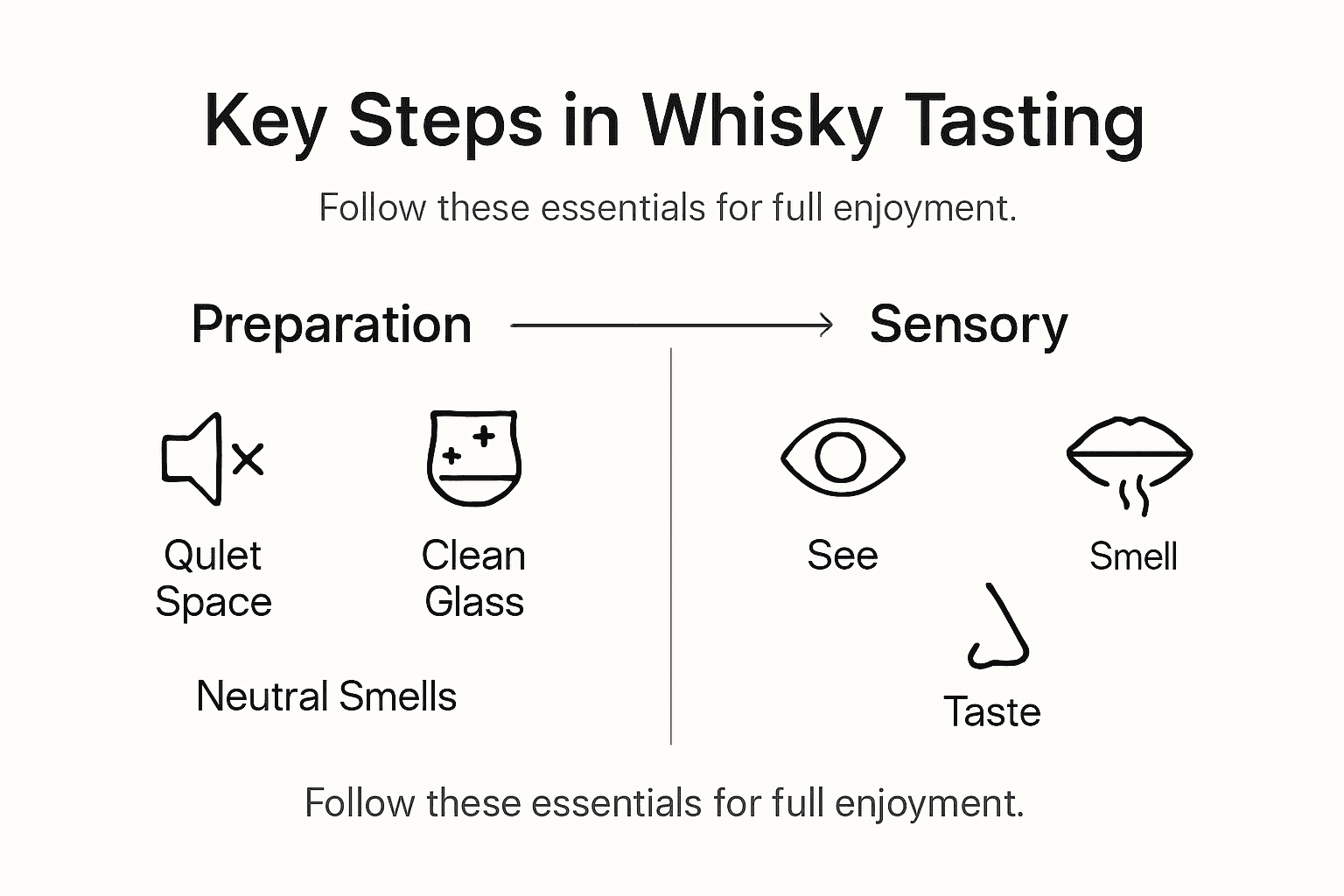
Preparing the right environment is crucial for experiencing whisky’s full sensory profile. Your tasting setup can dramatically influence how you perceive and enjoy each precious drop.
First, select the right glassware. The ideal vessel is a tulip shaped glass designed for whisky tasting, which concentrates aromas and allows subtle nuances to emerge. Specialised whisky glasses like the Glencairn or copita are perfect choices. Ensure your glass is pristine clean with no residual odours or lint that might interfere with the whisky’s delicate characteristics.

Create a neutral tasting environment away from strong competing smells like cooking, perfumes, or cleaning products. Aim for consistent room temperature and soft indirect lighting that won’t distract from your sensory exploration. Position yourself in a calm space where you can focus entirely on the whisky’s complex profile.
Quick Tip: Always wash your tasting glass with unscented hot water and allow it to air dry completely before pouring your whisky to preserve absolute clarity of aroma and flavour.
Here’s a quick comparison of common whisky glass types and their impact on tasting experience:
| Glass Type | Aroma Concentration | Flavour Clarity | Best Use |
|---|---|---|---|
| Tulip-Shaped | Excellent | High | Professional tastings |
| Glencairn | Very Good | Very High | Whisky appreciation |
| Copita | Good | Moderate | Distillery tours |
| Rocks/Old Fashioned | Poor | Low | Casual drinks |
Stage 2: Select your whisky and pour thoughtfully
Selecting the perfect whisky for your tasting journey requires careful consideration and a thoughtful approach. Your choice will set the foundation for an exceptional sensory experience.
Start by understanding the precise pouring technique that preserves whisky’s delicate characteristics. Professional tasters recommend measuring between 30 to 60 millilitres a standard serving that allows you to fully appreciate the spirit without overwhelming your palate. Pour gently and steadily into your prepared glass creating a smooth stream that minimises disruption to the whisky’s intricate aromatics.
Consider selecting a whisky that matches your current mood and taste preferences. Whether you are drawn to smoky Islay malts, smooth Speyside expressions or rich Highland whiskies each style offers a unique flavour profile. For newcomers to whisky tasting, a comprehensive guide to selecting single malt styles can help navigate the diverse world of whisky varieties.
Pro Tip: Allow your selected whisky to rest in the glass for two to three minutes after pouring to let volatile compounds settle and release their full aromatic potential.
Stage 3: Observe colour and clarity for first impressions
Visual examination is an essential first step in whisky appreciation that provides subtle insights into the spirit’s character and potential complexity. Your eyes can reveal fascinating details before the first sip.
Begin by holding your glass against a white background and examining its colour and clarity. Professional tasters note that whisky colours range from pale straw to deep mahogany amber revealing critical information about its maturation process. Swirl the whisky gently and observe how it coats the glass watching the ‘legs’ or ‘tears’ that form along the sides these liquid trails offer initial hints about the whisky’s body and potential texture.
Remember that while colour provides fascinating insights it is not an absolute indicator of quality. Whisky producers often use caramel colouring to standardise appearance so focus more on the overall visual impression and the nuanced details rather than making definitive judgments based solely on hue. Each shade tells a story of its journey from barrel to bottle a narrative waiting to unfold on your palate.
Pro Tip: Tilt your glass at a 45 degree angle against a neutral white background to get the most accurate assessment of the whisky’s true colour and transparency.
Stage 4: Swirl and inhale aromas to unlock the nose
Unlocking a whisky’s aromatic profile requires patience, technique and a willingness to explore the intricate sensory landscape hidden within your glass. This stage transforms whisky tasting from a simple drink to a deeply engaging sensory experience.
Develop a structured approach to nosing that reveals the whisky’s complex aromatic families. Begin by gently swirling the whisky in your tulip shaped glass allowing oxygen to interact with the spirit and release its volatile compounds. Approach the glass slowly with soft open mouthed breaths rather than deep intense inhalations. Professional tasters recommend short consecutive sniffs alternating between slightly open and closed nostrils to capture the full spectrum of aromas.
Learn to categorise the scents you detect into recognisable families such as fruity floral spicy woody or peaty. Each whisky tells a unique story through its nose some whispering subtle hints while others boldly declare their character. Close your eyes and allow memories and associations to emerge linking the aromas to personal experiences creating a more intimate connection with the spirit.
Pro Tip: Reset your olfactory senses between nosing different whiskies by sniffing your own clean skin or taking a deep breath of fresh air.
Stage 5: Sip and savour flavours for layered enjoyment
Whisky tasting transcends simple drinking transforming into an intricate sensory exploration where each moment reveals new dimensions of flavour and complexity. Your approach to sipping can dramatically enhance your understanding and appreciation of the spirit.
Slow down and approach each sip with intentional mindfulness. Take small deliberate sips rather than large mouthfuls allowing the whisky to coat your entire palate. Hold the liquid momentarily letting it interact with different taste zones your tongue mapping out sweet spicy smoky and subtle underlying notes. Notice how flavours evolve from initial contact to mid palate and through to the finish each stage telling a different part of the whisky’s unique narrative.
Pay attention to mouthfeel as much as flavour. Is the whisky light and delicate or rich and viscous? Does it feel oily smooth or slightly prickly? These textural elements contribute as much to the experience as the taste itself. Let the whisky rest on your tongue exploring how its character transforms creating a dynamic sensory journey that unfolds with each contemplative moment.
Pro Tip: Breathe gently through your mouth while tasting to enhance flavour perception and prevent overwhelming your palate with intense alcohol notes.
Stage 6: Assess finish to evaluate quality and complexity
The finish represents the whisky’s final statement a lasting impression that reveals its true character and craftsmanship. This ultimate stage of tasting transforms your experience from mere drinking to profound sensory analysis.
Professional whisky experts evaluate the finish as a critical indicator of overall quality. Pay attention to how long the flavours persist after swallowing noting whether the finish is short fleeting or long and complex. Observe how the taste evolves tracking subtle changes that emerge seconds and even minutes after your initial sip. A remarkable whisky will display a finish that continues to unfold revealing layers of flavour that were not immediately apparent.
Classify the finish by its duration and character short finishes typically last less than ten seconds medium finishes extend to fifteen to twenty seconds while exceptional long finishes can continue developing for thirty seconds or more. Consider the emotions and memories the finish evokes each lingering note tells a story of its origin terroir and the masterful craft of its distillation. The most sophisticated whiskies will leave you contemplating their complexity long after the last drop has disappeared.
Pro Tip: Keep a small amount of water nearby to cleanse your palate between different whiskies helping you maintain a clear and accurate perception of each finish.
For reference, here’s a summary of whisky finish classifications and what they typically reveal:
| Finish Type | Duration | Significance | Typical Flavours |
|---|---|---|---|
| Short | Under 10 seconds | Indicates lighter complexity | Fresh citrus, floral |
| Medium | 15–20 seconds | Balanced, good craftsmanship | Honey, vanilla, oak |
| Long | 30+ seconds | Exceptional depth and layers | Smoke, spice, dried fruit |
Elevate Your Whisky Tasting Experience with Expertly Curated Selections
Mastering the art of tasting whisky like a professional begins with the right dram. This article reveals crucial steps such as choosing the ideal glassware, appreciating colour and aromas, and understanding finish nuances. Yet, the true joy lies in exploring exceptional whiskies that embody these qualities. At Uisuki.com.au, we understand the passion behind each sip and provide a premium collection designed to complement your tasting journey.

Discover rare and exquisite bottles from renowned distilleries like Glenfiddich and Glenglassaugh crafted for connoisseurs who value complexity and character. Whether you are refining your palate or expanding your collection, our curated selection ensures you find the perfect whisky to enhance every stage of your tasting ritual. Don’t wait to deepen your appreciation and savour whisky on a new level. Visit Uisuki.com.au now and start your sensory journey with a dram that speaks to your soul.
Frequently Asked Questions
What glassware is best for tasting whisky?
The best glassware for tasting whisky is a tulip-shaped glass that concentrates aromas and enhances the tasting experience. Consider using a Glencairn or copita glass, ensuring that it is completely clean before use to preserve the whisky’s intricate characteristics.
How do I select the right whisky for a tasting?
To select the right whisky, consider your mood and taste preferences, exploring options such as smoky Islay malts or smooth Speyside expressions. Aim for a serving of approximately 30 to 60 millilitres to fully appreciate the whisky without overwhelming your palate.
What should I observe during the first visual examination of whisky?
During the visual examination, hold your glass against a white background to assess the colour and clarity of the whisky. Swirl the whisky gently and observe how it coats the glass, noting any ‘legs’ that form, as these provide insights into the whisky’s body and texture.
How do I properly nose the whisky?
To properly nose the whisky, gently swirl it in the glass to release aromatic compounds and take soft, open-mouthed sniffs. Focus on identifying distinct scent categories like fruity, floral, or spicy, and allow any memories they evoke to enhance your tasting experience.
What is the best technique for tasting whisky?
Approach whisky tasting mindfully by taking small sips and allowing the liquid to coat your palate. Hold the whisky in your mouth briefly to explore its flavours and texture, noting how each sip evolves from initial taste to finish.
How can I evaluate the finish of a whisky?
Evaluate the finish by noting how long the flavours linger after swallowing. Classify the finish as short, medium, or long based on how long it lasts, and observe any evolving flavours to understand the whisky’s complexity better.