

TL;DR:
- Whiskey’s flavor largely depends on its grain bill, which defines its character before barrel aging. Different grains like corn, rye, malted barley, and wheat contribute distinct tastes and textures. Most whiskey categories have legal minimum grain requirements that ensure authenticity and flavor consistency.
Whiskey is a distilled spirit made from fermented grain mash, with the grain bill determining its character long before it ever touches a barrel. The principal grains used in whiskey production are malted barley, corn, rye, and wheat, each shaping flavour, texture, and legal classification in distinct ways. Understanding whisky grain types is the fastest way to make sense of why a Kentucky bourbon tastes nothing like a Speyside single malt, or why a rye whiskey bites where a wheated bourbon soothes. The grain is not just an ingredient. It is the blueprint.
What grain is whiskey made from?
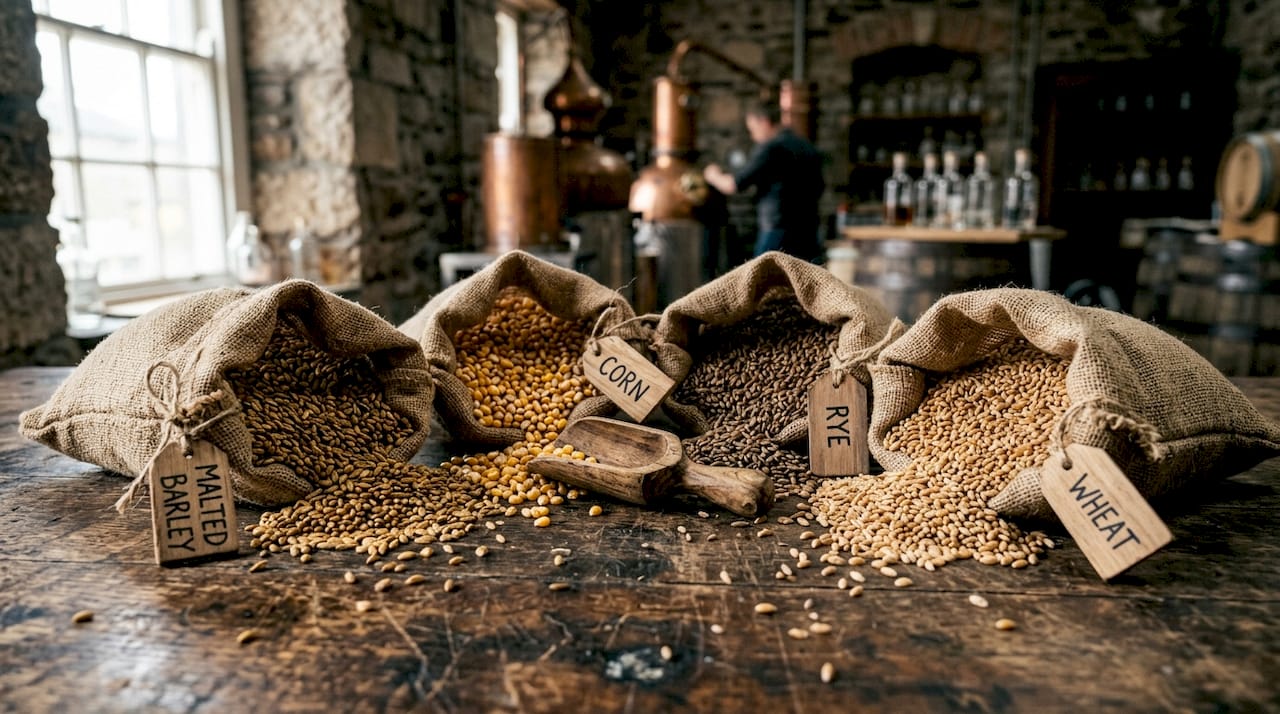
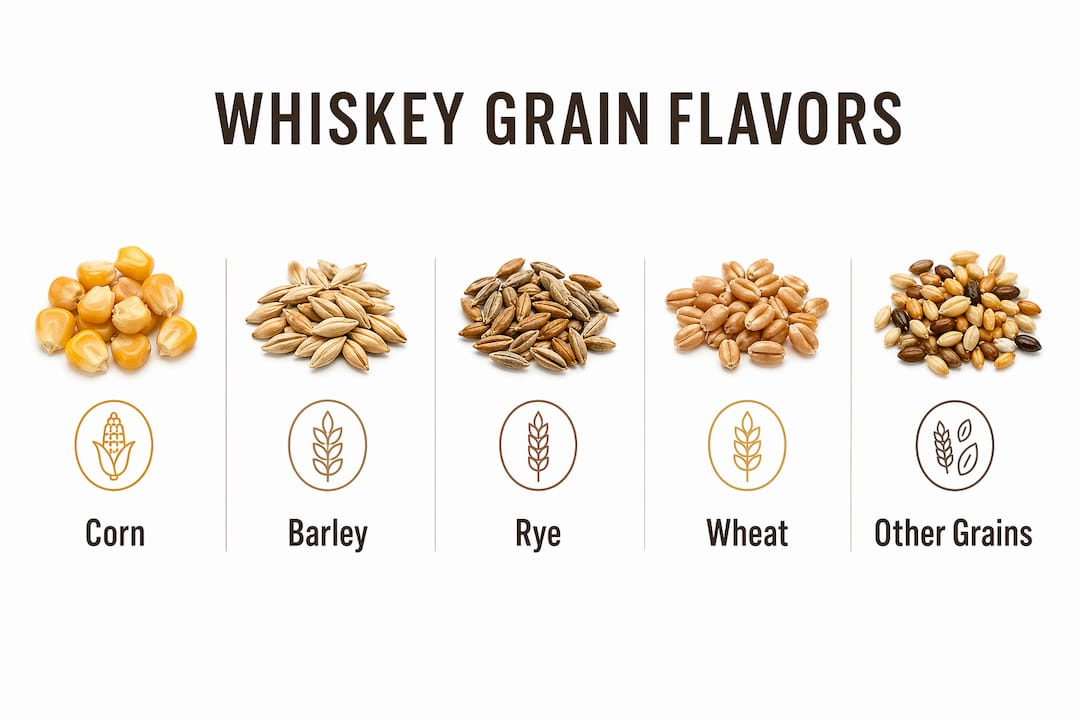
Whiskey is made from one or more cereal grains, and the specific combination used is called the grain bill. The grain bill sets the flavour foundation before barrel ageing adds its own layer, a fact that surprises many drinkers who assume wood does all the work. The four grains that dominate global whiskey production are malted barley, corn, rye, and wheat.
Malted barley
Malted barley is the oldest and most widely used grain in whisky production. Malted barley provides enzymes that convert starches into fermentable sugars, making it chemically indispensable in any mash. Beyond its technical role, it contributes malty, biscuit, and nutty flavours that form the backbone of Scotch whisky. Single malt Scotch uses 100% malted barley, which is why the style carries such a distinct, layered character.
Corn
Corn is the dominant grain in American whiskey. It ferments efficiently because it carries a high level of fermentable starch, which means distillers get strong yields per batch. Corn imparts sweetness, vanilla, and body to the finished spirit, giving bourbon its signature approachable richness. Bourbon must contain at least 51% corn by law, so that sweetness is baked into the style.
Rye
Rye delivers spice, pepper, and a dry finish that cuts through sweetness. It is used as both a primary grain in American rye whiskey and as a secondary grain in many bourbon mash bills to add complexity. Rye is also central to Canadian whisky, where it has historically defined the category. The flavour it brings is assertive, which is exactly why distillers use it deliberately rather than generously.
Wheat
Wheat sits at the softer end of the grain spectrum. It produces a creamy, bread-like texture and a gentle sweetness that makes wheated bourbons notably smooth. Distillers substitute wheat for rye in the mash bill when they want a less spicy, more approachable profile. Pappy Van Winkle and W.L. Weller are well-known examples of wheated bourbons that demonstrate this effect clearly.
Pro Tip: When reading a whiskey label, look for the mash bill or grain bill percentage if it is listed. A high rye content signals spice and dryness; a high wheat content signals softness. That single number tells you more about the flavour than most tasting notes.
How do legal definitions regulate grain composition?
Legal standards for whiskey grain types are not suggestions. They are binding requirements that define what a producer can call their product. American Bourbon must legally contain at least 51% corn, American rye whiskey requires at least 51% rye, and single malt Scotch must use 100% malted barley. These rules exist to protect the integrity of each style and give consumers a reliable expectation of flavour.
The table below summarises the grain requirements for the major whiskey categories.
| Whiskey style | Primary grain | Minimum grain requirement |
|---|---|---|
| Bourbon | Corn | 51% corn |
| American rye | Rye | 51% rye |
| Single malt Scotch | Malted barley | 100% malted barley |
| Blended Scotch | Malted barley + grain whisky | No single grain minimum |
| Wheated bourbon | Corn + wheat | 51% corn, wheat replaces rye |
| Japanese whisky | Malted barley or grain | Varies by producer |
Blended whiskies have the most flexibility. A blended Scotch combines single malt whisky with grain whisky made from other cereals such as wheat or corn, which is why blends tend to be lighter and more accessible than single malts. The grain flexibility in blending is a feature, not a compromise. It allows master blenders to achieve consistency across millions of bottles each year.
Bourbon ages in new charred oak barrels, which amplifies the vanilla and caramel notes that corn already provides. The grain and the wood work together, but the grain comes first. Without a corn-dominant mash bill, no amount of oak contact produces a true bourbon character.
How does grain choice shape whiskey flavour?
The grain bill determines the flavour profile of whiskey before a single drop enters a cask. Flavour notes like “buttered popcorn” and “biscuit” stem from grain choice, not from barrel influence alone. This is one of the most underappreciated facts in whisky education.
The table below maps each grain to its typical flavour contribution.
| Grain | Primary flavour notes | Mouthfeel |
|---|---|---|
| Corn | Sweetness, vanilla, caramel | Full, oily, rich |
| Rye | Pepper, spice, dry fruit | Lean, crisp |
| Malted barley | Malt, biscuit, nuts, dried fruit | Medium, rounded |
| Wheat | Bread, cream, light honey | Soft, smooth |
Corn and wheat both add sweetness, but they do it differently. Corn sweetness is bold and buttery. Wheat sweetness is delicate and floury. A drinker who finds rye whiskey too aggressive will almost always prefer a wheated bourbon, and understanding that difference comes down entirely to the grain.
Yeast and maturation modify these base flavours, but they cannot override them. A rye-forward mash bill will always produce a spicier spirit than a wheat-forward one, regardless of how long it ages. The grain choice directly shapes whiskey flavour and mouthfeel in ways that barrel time can refine but not replace.
Pro Tip: To train your palate on grain influence, try a side-by-side tasting of a wheated bourbon and a high-rye bourbon from the same region. The difference in spice and texture is almost entirely grain-driven, which makes it one of the clearest experiments in whisky education.
Are there unusual grains used in whiskey production?
Beyond the four core grains, a small number of producers use alternative cereals to create distinct or experimental spirits. These grains present both flavour opportunities and production challenges.
- Oats produce a creamy, silky texture and a mild sweetness. Craft distillers in Australia and the United States have used oats in small-batch mash bills to add body without the spice of rye.
- Rice whisky is a category of its own, particularly in parts of Asia. Rice whisky sits in a grey area, classified sometimes as grain whisky and sometimes as a separate category. It has not reached standard regulatory acceptance in most Western markets, but it demonstrates how broadly the definition of whisky can stretch.
- Millet and sorghum appear in some Chinese baijiu-adjacent spirits and in a handful of craft American distilleries experimenting with heritage grains.
- Rye at high percentages creates a specific production problem. Rye’s beta-glucans cause a viscous, gum-like mash that can clog equipment and slow fermentation. Distillers working with high-rye mash bills must adjust their processing techniques to compensate, which adds cost and complexity.
The grain varieties used in whisky production continue to expand as craft distilling grows globally. Alternative grains rarely replace the core four, but they add texture and novelty to a category that rewards curiosity.
Key takeaways
The grain bill is the single most important factor in determining a whiskey’s flavour identity, preceding and outlasting every other production variable.
| Point | Details |
|---|---|
| Four core grains | Malted barley, corn, rye, and wheat account for the vast majority of whiskey production worldwide. |
| Legal grain minimums | Bourbon requires 51% corn, American rye requires 51% rye, and single malt Scotch requires 100% malted barley. |
| Grain drives flavour | Corn adds sweetness, rye adds spice, barley adds malt, and wheat adds softness before barrel ageing begins. |
| Alternative grains exist | Rice, oats, and other cereals appear in craft and Asian whisky production, often outside standard regulatory frameworks. |
| Rye production challenges | Rye’s beta-glucans create a thick mash that requires modified distillation techniques to manage effectively. |
Grain first: why I think most whisky drinkers have it backwards
Most people credit the barrel for everything they love about whisky. The vanilla, the caramel, the complexity. I understand why. The barrel story is tangible. You can see the wood, touch the char, and picture the warehouse. The grain story is invisible by comparison.
But after years of tasting across styles and regions, I am convinced that grain is where the real character lives. A high-rye bourbon and a wheated bourbon aged in identical barrels for identical periods will still taste fundamentally different. The wood shapes both. The grain separates them.
The practical takeaway for anyone building their palate is to start with grain, not region. Ask what is in the mash bill before you ask where the whisky was made. A deep understanding of whisky malt contributions will tell you more about what is in your glass than the label’s origin story. Grain is not a footnote. It is the whole first chapter.
— Brendan
Whisky by grain: find your next bottle at Uisuki
Understanding the grains behind your favourite whisky makes choosing your next bottle far more satisfying. Whether you are drawn to the spice of a high-rye American whiskey, the creamy softness of a wheated bourbon, or the malty depth of a single malt Scotch, the grain bill is your guide.

Uisuki stocks a carefully selected range of whiskies from Scotland, Japan, Australia, and the USA, with detailed product descriptions that help you connect grain composition to flavour before you buy. If you are ready to put your grain knowledge to work, browse the full whisky range and find a bottle that matches exactly what you are looking for.
FAQ
What grain is bourbon made from?
Bourbon is made from a grain bill containing at least 51% corn, with the remainder typically comprising malted barley and either rye or wheat. The corn content gives bourbon its characteristic sweetness and body.
What grain is Scotch whisky made from?
Single malt Scotch is made from 100% malted barley. Blended Scotch combines single malt whisky with grain whisky, which is often produced from wheat or corn.
Is whiskey made from corn always sweet?
Corn-dominant whiskeys tend to be sweeter and fuller in body than rye or barley-forward styles. The sweetness intensifies further when corn-based spirits age in new charred oak barrels, as bourbon does by law.
Why does rye whiskey taste spicier than bourbon?
Rye grain contains compounds that produce peppery, dry, and spicy flavour notes. Rye contributes peppery and spicy notes that corn cannot replicate, which is why even a small increase in rye percentage noticeably sharpens a whiskey’s character.
Can whiskey be made from rice?
Rice whisky exists, particularly in parts of Asia, but it occupies an uncertain regulatory position. It is sometimes classified as grain whisky and sometimes as a separate category, with no standard global framework governing its production or labelling.