

TL;DR:
- Blended malt whisky is a malt-only category made from single malts from two or more distilleries. It offers complex, layered flavors with fuller body, unlike blended Scotch, which allows grain whisky. It provides high value and diverse tasting options for whisky enthusiasts.
Blended malt whisky is defined as a blend of two or more single malt whiskies from different distilleries, containing zero grain whisky. Under the Scotch Whisky Regulations 2009, every whisky in the blend must be aged at least three years in oak casks and bottled at a minimum of 40% ABV. This category sits between single malt and blended Scotch in terms of production, but it occupies its own distinct flavour territory. Understanding what blended malt whisky is helps you make smarter choices at the bottle shop and get far more enjoyment from every dram.
What is blended malt whisky and how is it legally defined?
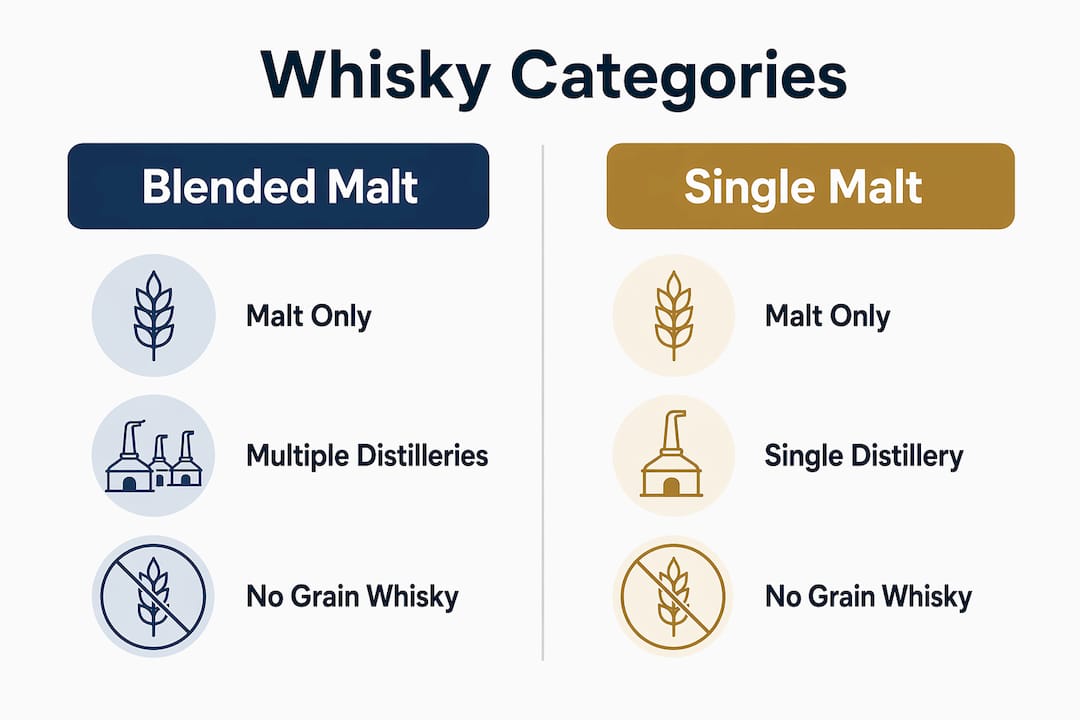
Blended malt whisky is a legally protected category with a precise definition. The Scotch Whisky Regulations 2009 require that a blended malt contain only malt whiskies from two or more distilleries. No grain whisky is permitted. That single rule separates blended malt from every other blended Scotch category.
The term “single malt” means whisky made from malted barley at one distillery using pot stills. A blended malt takes that same malt-only base but draws from multiple distilleries. The result is a whisky with the malt character of a single malt and the layered complexity of a blend.
The table below shows how blended malt compares with the two categories most people confuse it with.
| Category | Grain whisky allowed? | Distilleries | Typical character |
|---|---|---|---|
| Single malt | No | One | Distillery-specific, focused |
| Blended malt | No | Two or more | Layered, malt-forward, complex |
| Blended Scotch | Yes | Multiple | Lighter, grain-softened, accessible |
The absence of grain whisky is the defining feature of blended malt. Grain whisky, made in column stills from wheat or corn, produces a lighter and more neutral spirit. Removing it from the equation keeps the blended malt firmly in malt territory, with more body and depth than a standard blended Scotch.
Pro Tip: When reading a label, look for the words “blended malt” rather than just “blended.” If the label says “blended Scotch,” grain whisky is in the bottle.
How is blended malt whisky made?
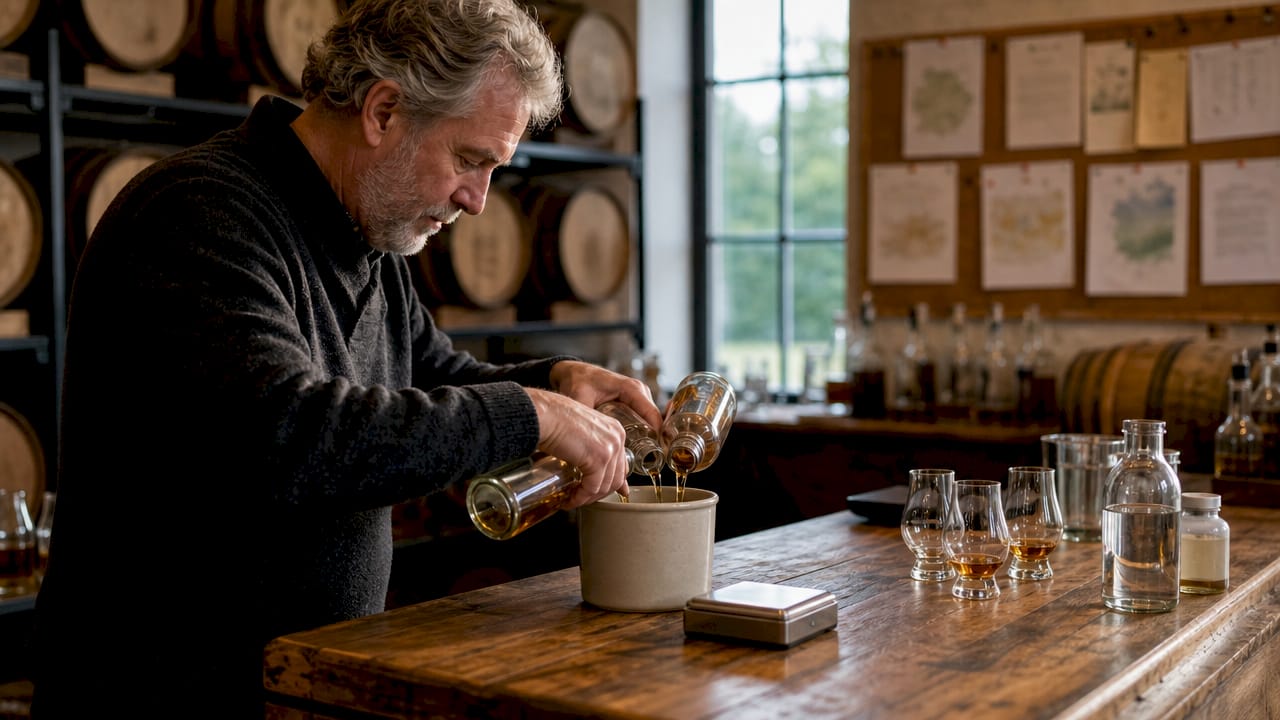
The production of a blended malt starts with the master blender selecting single malt whiskies from different distilleries. Each distillery contributes a distinct character shaped by its water source, still shape, fermentation time, and cask history. The blender’s job is to combine these individual voices into a harmonious, balanced whole.
A useful way to think about it: a single malt is a soloist, and a blended malt is an orchestra. Each instrument plays its own part, but the conductor shapes the final sound. The master blender is that conductor, adjusting proportions until the flavour is consistent and intentional.
One production technique worth knowing is teaspooning. Teaspooning adds a small amount of whisky from another distillery to a single malt, which legally reclassifies the product as a blended malt. Producers use this technique to maintain a predominantly single malt character while gaining the legal flexibility to blend casks from different sources. The flavour impact of the added whisky can be minimal, but the legal classification changes entirely.
Blended malt labels often omit individual distillery names. This is not a sign of lower quality. Labels focus on flavour profiles rather than distillery prestige, reflecting the collaborative nature of the blend. The whisky inside is defined by what it tastes like, not where each component came from.
Pro Tip: If you see no distillery name on a blended malt label, treat it as a flavour-first product. Read the tasting notes instead of hunting for a famous name.
What does blended malt whisky taste like?
Blended malt whisky delivers a malt-forward, layered flavour that single malts and blended Scotch whiskies rarely match at the same price point. Because no grain whisky dilutes the malt base, the body tends to be fuller and the flavour more textured.
The specific taste depends on which distilleries contributed to the blend and what casks were used. A blended malt drawing from Speyside distilleries might show honeyed fruit, vanilla, and light spice. One built around Islay malts will lean smoky, briny, and peaty. A blender combining both regions can produce something genuinely unexpected: smoke balanced by sweetness, or brine softened by dried fruit.
Common tasting notes found across the blended malt category include:
- Fruit: dried apricot, green apple, citrus peel, dark cherry
- Spice: white pepper, cinnamon, ginger
- Malt: biscuit, toasted grain, cereal sweetness
- Oak: vanilla, caramel, light tannin
- Smoke: peat, ash, coastal brine (in Islay-influenced blends)
Understanding whisky flavour profiles helps you predict what a blended malt will taste like before you open the bottle. The regional origins of the component malts are the clearest guide. A blended malt built from Highland and Speyside whiskies will almost always be softer and fruitier than one anchored by Islay or Campbeltown malts.
The effect of malt on whisky flavour is significant. Malted barley contributes cereal sweetness, body, and a characteristic nuttiness that grain whisky cannot replicate. In a blended malt, that malt character is amplified because every component whisky carries it.
How to choose and enjoy blended malt whisky
Choosing a blended malt is simpler than most whisky drinkers expect. The category offers genuine value, and the flavour range is wide enough to suit beginners and experienced enthusiasts alike.
-
Set a budget. Entry-level blended malts retail between £25 and £100, which translates to roughly $50–$200 AUD depending on the bottle. That range covers a wide spectrum of quality and complexity. Single malts at the same price often offer less variety because you are limited to one distillery’s style.
-
Read the regional cues. If the label mentions Speyside, Highland, or Lowland malts, expect a softer, fruitier dram. Islay or Island references signal smoke and brine. Many blended malts list the regions of their component whiskies even when they omit distillery names.
-
Consider the occasion. Blended malts work well neat, on ice, or with a small splash of water. They also excel in stirred cocktails because their malt weight and body hold up against other ingredients. A Rob Roy or a Whisky Sour made with a quality blended malt will outperform the same drink made with a light blended Scotch.
-
Check the ABV. Most blended malts bottle at 40–46% ABV. Expressions above 46% are often non-chill-filtered, which preserves more natural oils and flavour. If you want the fullest flavour experience, look for cask-strength or non-chill-filtered expressions.
-
Start with a regional style you already enjoy. If you like fruity, approachable whiskies, look for beginner-friendly options built from Speyside or Highland malts. If you are already comfortable with peated whisky, seek out an Islay-influenced blended malt for a more intense experience.
The difference between blended and single malt is not a quality gap. It is a production distinction. Blended malts are often more interesting than single malts at equivalent price points because the blender has more tools to work with.
Key takeaways
Blended malt whisky is a legally defined, malt-only category that combines single malts from multiple distilleries to deliver flavour complexity and value that neither single malts nor blended Scotch consistently match at the same price.
| Point | Details |
|---|---|
| Legal definition | Blended malt contains only malt whiskies from two or more distilleries, with no grain whisky permitted. |
| Production craft | Master blenders combine distillery characters to achieve balance, using techniques like teaspooning where needed. |
| Flavour profile | Expect malt-forward, layered flavours shaped by the regional origins of the component whiskies. |
| Value proposition | Entry-level blended malts offer genuine complexity at a lower price than comparable single malts. |
| Label reading | No distillery name on a blended malt label signals a flavour-first product, not a lower-quality one. |
Why blended malt deserves more respect than it gets
The word “blended” carries baggage in whisky culture. For years, blended Scotch was positioned as the everyday, affordable option while single malt was sold as the premium, serious choice. That narrative shaped how an entire generation of whisky drinkers thinks about quality. The problem is that it does not apply to blended malt whisky.
I have tasted blended malts that outperformed single malts costing twice as much. The misconception that blended means inferior is a marketing construct, not a reflection of what is in the glass. A skilled master blender working with quality single malts from multiple distilleries has more creative latitude than a distillery bottling a single expression. The best blended malts are genuinely complex, and that complexity is intentional.
What I find most interesting about the category is how it rewards curiosity. A single malt tells you one distillery’s story. A blended malt tells you a story that no single distillery could tell alone. That is not a compromise. That is a different kind of craft. If you have been avoiding blended malts because of the word “blended,” you have been missing some of the most interesting whiskies available at any price point.
— Brendan
Quality blended malts worth exploring at Uisuki
Uisuki carries a curated range of whiskies that showcase the full spectrum of malt-driven complexity, from approachable everyday drams to rare and limited expressions.

The Ardnamurchan Macleans Nose Blended Scotch Whisky at 46% ABV is a strong starting point for anyone wanting to experience what a quality blended expression can deliver. For enthusiasts chasing something rarer, the Ichiro’s Malt and Grain Limited Edition World Blended Whisky at 48% ABV brings Japanese craft to the blended category in a genuinely distinctive way. Uisuki ships across Australia and sources hard-to-find bottles on request, so you are never limited to what is on the shelf.
FAQ
What is the difference between blended malt and single malt?
A single malt comes from one distillery using malted barley. A blended malt combines single malt whiskies from two or more distilleries, with no grain whisky added.
Does blended malt whisky contain grain whisky?
No. Blended malt whisky contains only malt whiskies. The moment grain whisky is added, the product becomes a blended Scotch whisky under the Scotch Whisky Regulations 2009.
Is blended malt whisky good quality?
Blended malt whisky can be highly complex and flavourful. The quality of blended malts often exceeds single malts at the same price point because master blenders draw from multiple distillery characters.
Why do blended malt labels not show distillery names?
Blended malt labels focus on flavour profiles rather than distillery names because the whisky draws from multiple sources. The absence of a distillery name reflects the collaborative nature of the blend, not a lower standard of production.
Can you use blended malt whisky in cocktails?
Blended malts work well in cocktails because their malt weight and body hold up against mixers and other spirits. They are a preferred choice for stirred cocktails like the Rob Roy and the Whisky Sour.