

TL;DR:
- Bourbon whiskey is made from at least 51% corn, resulting in a sweet, full-bodied flavor. Rye whiskey uses at least 51% rye grain, giving it a spicy, herbal profile with a dry finish. Age, proof, and grain percentage significantly influence their taste, cocktail use, and aging potential.
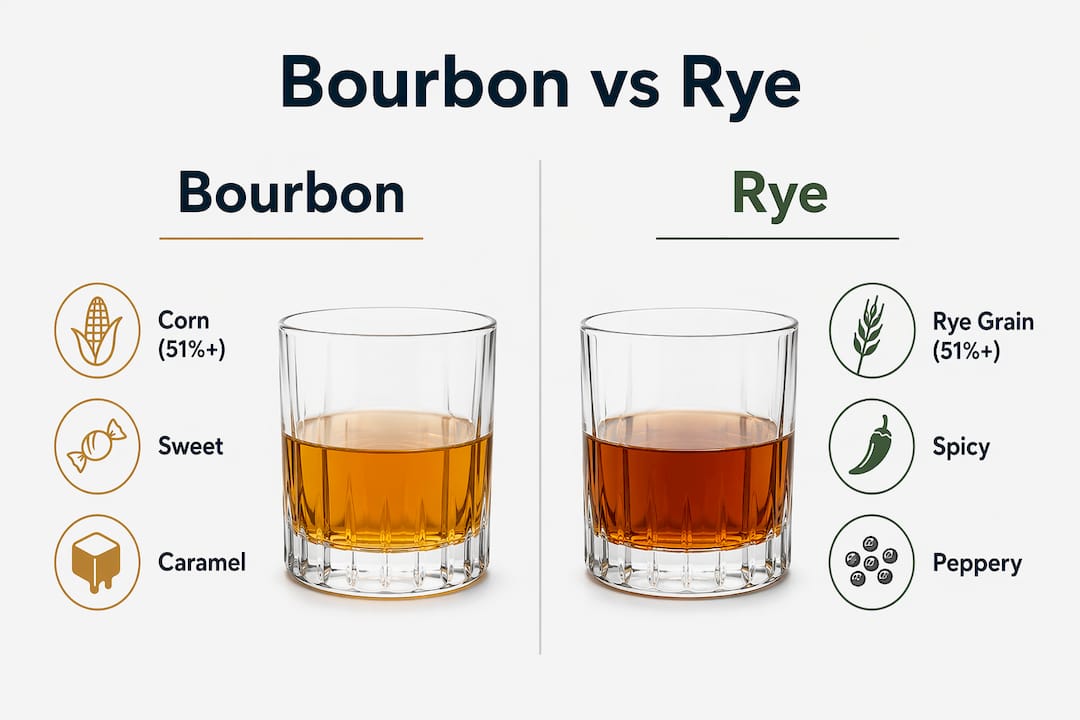
Bourbon whiskey is defined as an American spirit made from a mash bill of at least 51% corn, while rye whiskey requires at least 51% rye grain. That single difference in grain drives everything: the sweetness you taste, the spice you feel, and the cocktail each spirit suits best. Understanding the bourbon whiskey vs rye whiskey distinction is the fastest way to make better choices at the bottle shop, at the bar, and in your own glass. Both spirits must be aged in new charred American oak and distilled below 160 proof, making their grain bills the primary variable separating them.
What are the key flavour differences between bourbon and rye whiskey?
The grain bill is the single biggest driver of flavour in American whiskey. Bourbon’s corn-heavy mash produces a sweet, full-bodied spirit with notes of vanilla, caramel, honey, and baked stone fruit. The mouthfeel is oilier and rounder than rye, which makes bourbon approachable for newcomers.
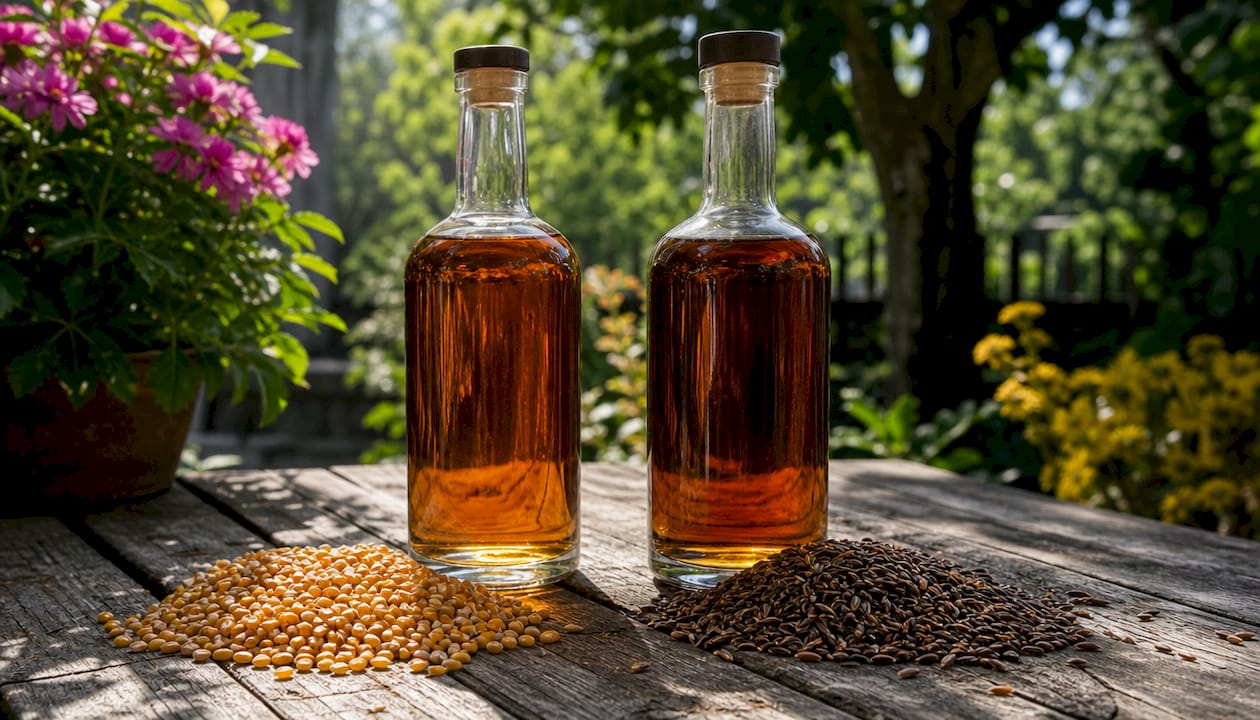
Rye whiskey delivers a fundamentally different experience. The rye grain flavour profile is spicy, peppery, and often herbal, with a drier finish and a leaner body. Many rye expressions also carry a subtle fruitiness, particularly dried cherry or citrus peel, underneath the spice.
The chemistry behind rye’s spice is specific. Ferulic acid in rye grain converts into eugenol and guaiacol during fermentation, producing the bold, peppery character that defines the style. This spice is a flavour compound, not an alcohol burn. It remains perceptible even in long-aged expressions, which is why rye retains its identity across a wide range of maturation periods.
A higher rye percentage in the mash bill amplifies these spicy congeners. Some producers use a “high-rye” bourbon mash bill, sitting around 25–35% rye, to add complexity without crossing into full rye territory. That style sits between the two categories and is worth knowing when you are learning the differences between bourbon and rye.
| Characteristic | Bourbon | Rye |
|---|---|---|
| Primary grain | Corn (51%+) | Rye (51%+) |
| Dominant flavour | Sweet, caramel, vanilla | Spicy, peppery, herbal |
| Mouthfeel | Full, oily | Lean, dry |
| Finish | Warm, lingering sweetness | Dry, crisp, sometimes fruity |
| Complexity style | Rich and layered | Bold and sharp |
Pro Tip: If you enjoy dark chocolate or black pepper in food, rye whiskey will suit your palate. If you prefer toffee and stone fruit, start with bourbon.
How do ageing and proof levels affect bourbon and rye whiskey?
Maturation shapes both spirits significantly, but it affects them differently. Extended ageing beyond 15 years can introduce harsh tannins and a dry, woody character in bourbon, whereas rye’s natural spice helps it endure longer ageing with more balance. A 5–7 year maturation window typically produces the best balance of fruit, oak, and grain character in bourbon.
Rye aged beyond 10 years often retains its spice while gaining dried fruit and leather complexity. Bourbon at the same age can tip into over-oaked territory, losing the sweetness that defines it. This is why age statements matter differently for each style.
Proof level is equally important, particularly for readers building their palate. Barrel-proof expressions commonly reach 110–130+ proof, and the alcohol intensity at that level can mask the very flavours you are trying to learn. Starting with 80–94 proof bottles gives your palate the best chance to identify grain character, oak influence, and finish length without interference.
Key proof and ageing guidelines to keep in mind:
- 80–94 proof: The ideal range for beginners and everyday sipping. Flavours are clear and accessible.
- 95–109 proof: Adds intensity and body. Good for cocktails and experienced sippers.
- 110+ proof (barrel strength): Reserve these for later. The alcohol dominates until you know what to look for underneath it.
- 5–7 years aged: The sweet spot for most bourbons. Vanilla and caramel are developed without excessive oak.
- 8–12 years aged rye: Rye handles extended ageing well. Spice deepens and fruit notes emerge.
Pro Tip: Add a few drops of water to a high-proof pour. It opens up the spirit and releases aroma compounds that alcohol suppresses at full strength.
When should you use bourbon vs rye in cocktails and sipping?
The choice between bourbon and rye in a cocktail is not a matter of preference. It is a matter of balance. Bourbon suits sweeter cocktails like the Old Fashioned and Whiskey Sour, where its caramel base pairs naturally with sugar and citrus. Rye is the correct choice for the Manhattan, Sazerac, and Vieux Carré, where its spice cuts through sweet vermouth and liqueurs.
The Manhattan is the clearest example. Sweet vermouth is already rich and herbal. Bourbon in a Manhattan produces a drink that can feel cloying. Rye’s dryness creates tension and balance, which is exactly what the cocktail needs. The Sazerac, New Orleans’ signature drink, was originally made with rye for the same reason: the spice holds its ground against absinthe and Peychaud’s bitters.
For neat sipping, the choice comes down to what you want from the experience. Bourbon rewards slow sipping with evolving sweetness and warmth. Rye rewards attention, revealing layers of spice, fruit, and herbal notes as it opens up in the glass. Neither is wrong. They are simply different conversations.
| Cocktail | Best spirit | Why it works |
|---|---|---|
| Old Fashioned | Bourbon | Caramel base complements sugar and bitters |
| Whiskey Sour | Bourbon | Sweetness balances citrus acidity |
| Manhattan | Rye | Spice cuts through sweet vermouth |
| Sazerac | Rye | Dryness holds against absinthe and bitters |
| Vieux Carré | Rye | Bold grain character anchors complex liqueurs |
| Neat sipping | Either | Depends on palate preference and mood |
For social settings and food pairings, bourbon works well alongside barbecue, caramelised dishes, and aged cheeses. Rye pairs naturally with charcuterie, dark rye bread, and dishes with mustard or pepper. Knowing this makes both spirits more useful at the table.
How do you choose the right bourbon or rye whiskey?
Quality whiskey is judged by balance, clarity, and a layered finish, not by marketing or bottle design. A good whiskey evolves on the palate across multiple sips. That is the standard to hold any bottle to, regardless of price.
For readers starting out, the $25–$60 AUD price range covers a wide selection of quality expressions in both categories. Spending more does not always mean drinking better, particularly with rye. Rye whiskies in the $40–$60 range frequently show complexity and quality that exceeds bourbons at similar prices. Rye is genuinely the undervalued category in most bottle shops.
A practical approach to choosing between bourbon and rye:
- Start with a standard-proof expression. Choose something in the 80–94 proof range to learn the grain character without alcohol interference.
- Try a wheated bourbon first if you prefer sweetness. Wheated bourbons replace rye in the mash bill with wheat, producing an even softer, sweeter profile.
- Try a high-rye bourbon as a bridge. It carries more spice than standard bourbon but less than a full rye expression. It is a useful stepping stone.
- Buy a mid-range rye alongside your bourbon. Tasting them side by side is the fastest way to understand the difference in a practical, memorable way.
- Avoid age-statement chasing early on. A well-made 6-year expression often outperforms a poorly balanced 12-year bottle. Focus on the flavour, not the number.
- Assess the finish. A quality whiskey finishes long and evolves. A short, flat finish usually signals a less complex expression regardless of price.
The grain bill’s influence on final character is the most reliable guide you have when reading a label. If a bourbon lists a high-rye mash bill, expect more spice. If a rye lists a very high rye percentage (95%+), expect an assertive, almost savoury spirit.
Key takeaways
Bourbon and rye whiskey are defined by their grain bills, and that single difference determines flavour, cocktail use, and ageing potential across both styles.
| Point | Details |
|---|---|
| Grain drives flavour | Corn produces sweetness in bourbon; rye grain produces spice and dryness in rye whiskey. |
| Start at 80–94 proof | Barrel-strength expressions obscure flavour; mid-proof bottles are best for building palate knowledge. |
| Match spirit to cocktail | Use bourbon in sweet cocktails like Old Fashioned; use rye in drier drinks like Manhattan and Sazerac. |
| Rye offers strong value | Rye whiskies in the $40–$60 AUD range frequently outperform bourbons at equivalent prices. |
| Ageing sweet spot varies | Bourbon peaks around 5–7 years; rye handles extended ageing better due to its spice structure. |
Brendan’s take: rye deserves more space on your shelf
Most bourbon drinkers I speak with have never seriously explored rye. They tried one bottle years ago, found it too sharp, and went back to their usual pour. That is a shame, because rye has changed considerably as a category, and the value sitting in the $40–$60 range is genuinely hard to match anywhere else in the whiskey world.
My honest observation is that rye rewards patience in a way bourbon does not always demand. Bourbon is generous from the first sip. Rye makes you work slightly harder, and then it gives you more. The spice is not aggression. It is structure. Once you understand that, rye stops feeling challenging and starts feeling interesting.
My practical advice: buy one bourbon you already enjoy, then buy a rye at a similar price point. Taste them on the same evening, neat, with no mixers. The contrast will teach you more in one sitting than any article can. After that, you will know exactly which direction your palate wants to go.
— Brendan
What Uisuki stocks for bourbon and rye enthusiasts
Uisuki carries a curated selection of premium whiskies suited to readers at every stage of their whisky appreciation. Whether you are building your first serious collection or searching for a specific expression, the range covers Australian, American, Scottish, and Japanese styles.

For readers drawn to bourbon-influenced maturation, the Hobart Whisky Bourbon Matured single malt is a standout. It uses bourbon barrel maturation to deliver the vanilla and caramel character bourbon lovers recognise, expressed through an Australian single malt. Uisuki also stocks limited edition releases and well-priced everyday expressions. Browse the full range at Uisuki.com.au to find bottles matched to your palate and budget.
FAQ
What is the legal difference between bourbon and rye whiskey?
Bourbon must contain at least 51% corn in its mash bill, while rye whiskey must contain at least 51% rye grain. Both must be aged in new charred American oak barrels and distilled below 160 proof.
Which is sweeter, bourbon or rye?
Bourbon is the sweeter of the two, with dominant notes of caramel, vanilla, and honey derived from its corn-heavy mash bill. Rye is drier and spicier by comparison.
Can I substitute bourbon for rye in cocktails?
You can, but the result changes significantly. Bourbon in a Manhattan or Sazerac produces a sweeter, less balanced drink because it lacks the spice that cuts through vermouth and bitters.
What proof should a beginner start with?
Beginners should start with expressions in the 80–94 proof range. Barrel-proof bottles at 110–130+ proof can obscure flavour with alcohol intensity before your palate is calibrated to read past it.
Is rye whiskey better value than bourbon?
Rye whiskies in the $40–$60 AUD range frequently deliver complexity and quality that matches or exceeds bourbon at equivalent prices, making rye one of the better-value categories in American whiskey.