

Bold flavour profiles set a premium bottle apart, but understanding exactly what gives one whisky its shared sensory language is a skill every Australian collector wants to master. Delving into aroma, palate, and finish reveals layers shaped by region, cask-ageing, and distiller choices, turning each tasting into genuine expertise rather than guesswork. This guide offers practical approaches for decoding whisky tasting notes, so enthusiasts can sharpen their sensory abilities and make confident, informed decisions with every dram.
Table of Contents
- What Are Whisky Tasting Notes?
- Key Tasting Categories and Flavour Types
- How To Interpret Aroma, Palate, and Finish
- Expert Techniques For Describing Whisky Flavour
- Common Pitfalls and Misunderstood Descriptors
Key Takeaways
| Point | Details |
|---|---|
| Whisky Tasting Notes | Tasting notes provide a structured way to describe the sensory experience of whisky, facilitating clearer communication among enthusiasts. |
| Importance of Structure | The tasting process involves three stages: nose, palate, and finish, each contributing to the overall understanding of the whisky. |
| Flavour Categories | Recognising major flavour categories (fruity, spicy, sweet, etc.) enhances appreciation and aids in informed purchasing decisions. |
| Tasting Techniques | Employing techniques, such as sensory wheels and progressive narrowing, helps build a more precise vocabulary for whisky evaluations. |
What Are Whisky Tasting Notes?
Whisky tasting notes are structured descriptions of what you experience when you taste a dram. They capture the sensory journey from the moment you bring the glass to your nose through to that final lingering finish. But they’re not just random observations scribbled on a piece of paper. Proper tasting notes form a shared sensory language that allows collectors and enthusiasts across Australia and beyond to communicate about whisky with genuine precision. When you read that a particular dram displays “honeycomb and vanilla on the nose with a spiced oak finish,” you’re seeing tasting notes in action. That structured vocabulary transforms what could be vague personal impressions into meaningful descriptions that help you make informed purchasing decisions and build your collection strategically.
At their core, tasting notes bridge olfactory perception and taste, revealing how terroir, cask-ageing, and distiller choices shape each whisky’s unique character. Think of them as the whisky’s biography written in sensory terms. A whisky aged in ex-bourbon casks might express different flavour compounds than one finished in ex-sherry wood. Peat influence from Islay will manifest differently than the fruity characteristics of a Speyside expression. A whisky’s region of origin, the water used during production, and even the specific yeast strain selected all leave signatures on the final product. These signatures aren’t accidental or mysterious. Tasting notes give you the tools to identify them, understand what caused them, and appreciate the deliberate craftsmanship behind each bottle. For Australian collectors, this understanding transforms whisky from a luxury beverage into a legitimate study of craft and technique.
What makes tasting notes particularly valuable is their threefold structure:
- Nose (or aroma) - The initial scents you detect when you bring the glass to your nostrils. This might include fruit, spice, wood, floral, or earthy elements. The nose often reveals the first 40 percent of the whisky’s story.
- Palate (or taste) - The flavours experienced on your tongue and throughout your mouth. The palate typically continues or expands upon the nose, introducing texture and intensity. You’ll notice sweetness, bitterness, spice levels, and how the whisky feels rather than just how it tastes.
- Finish (or aftertaste) - What lingers after you swallow. The finish can last anywhere from a few seconds to several minutes and often reveals subtle notes that weren’t apparent earlier.
When you compare whisky styles using these categories, patterns emerge. Japanese distilleries often deliver refined, delicate finishes. Scottish Highlands tend toward richer, more robust flavour profiles. Understanding these patterns through comparing whisky styles for expert tasting helps you predict what you’ll experience before you even open a bottle, and it allows you to articulate exactly what you’re experiencing once you do.
The reason tasting notes matter so much for collectors isn’t vanity or pretension. It’s practical. When you’re spending $150, $500, or $2000 on a bottle, having a common language lets you read professional reviews, compare your own impressions with other enthusiasts online, and make purchases with confidence. You stop guessing. You stop second-guessing yourself. Instead, you develop expertise that genuinely reflects your palate and your understanding of what makes each whisky distinctive. That expertise makes you a better collector.
Pro tip: Keep your initial tasting notes raw and personal, then refine them later by comparing your observations against professional notes from trusted sources like distillery tasting guides or respected reviewers; this builds your palate vocabulary faster than memorising terminology alone.
Key Tasting Categories and Flavour Types
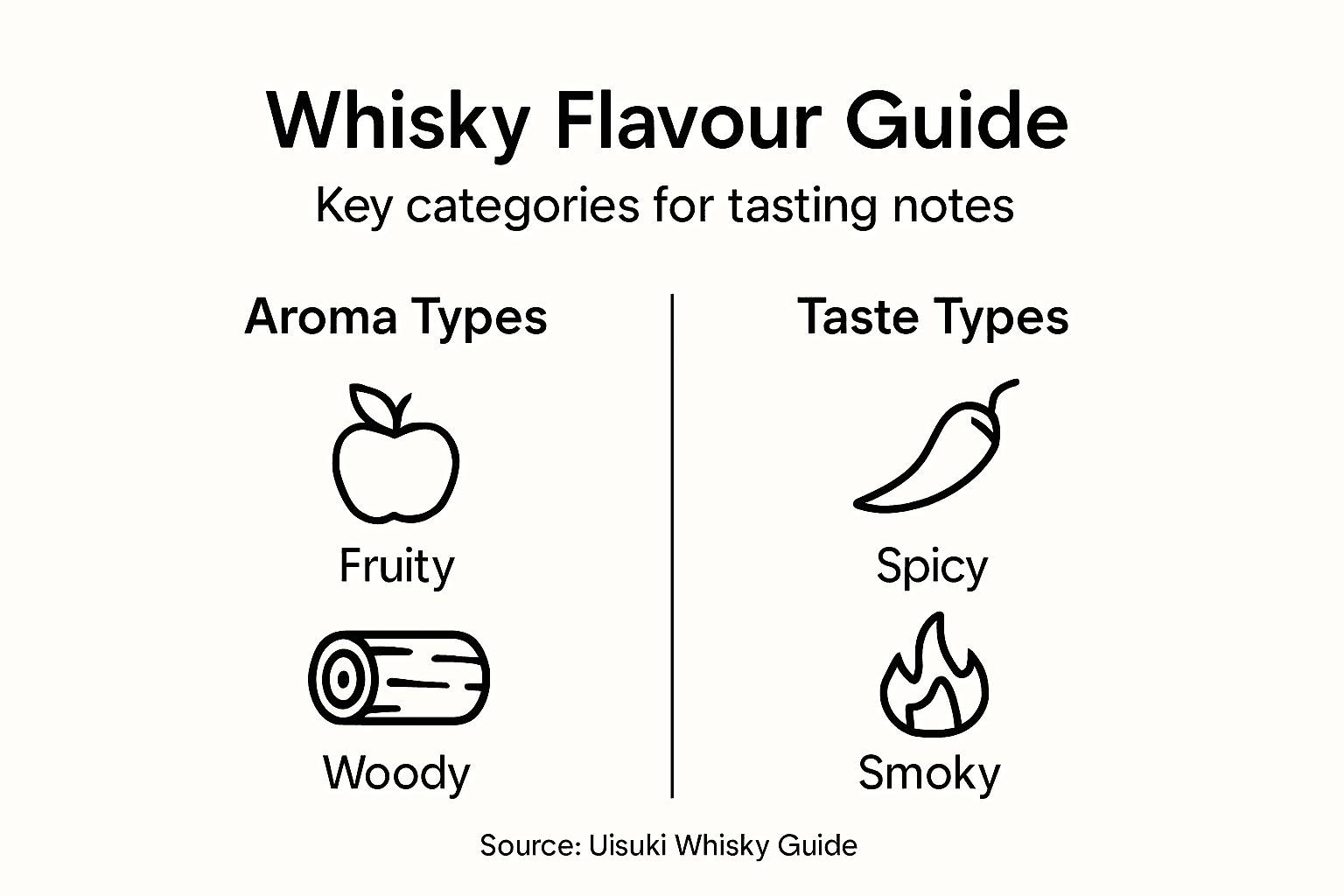
When you taste whisky systematically, you’re actually detecting hundreds of different chemical compounds working together. Scientific analysis has identified over 200 aroma-active volatiles in various whisky types, each contributing to the overall sensory profile. But you don’t need a chemistry degree to describe what you’re experiencing. The key is learning to categorise the flavours and aromas into recognisable groups that make sense to your palate. These categories form the backbone of professional tasting vocabulary and allow you to communicate precisely about what separates a delicate Japanese whisky from a full-bodied Islay expression.
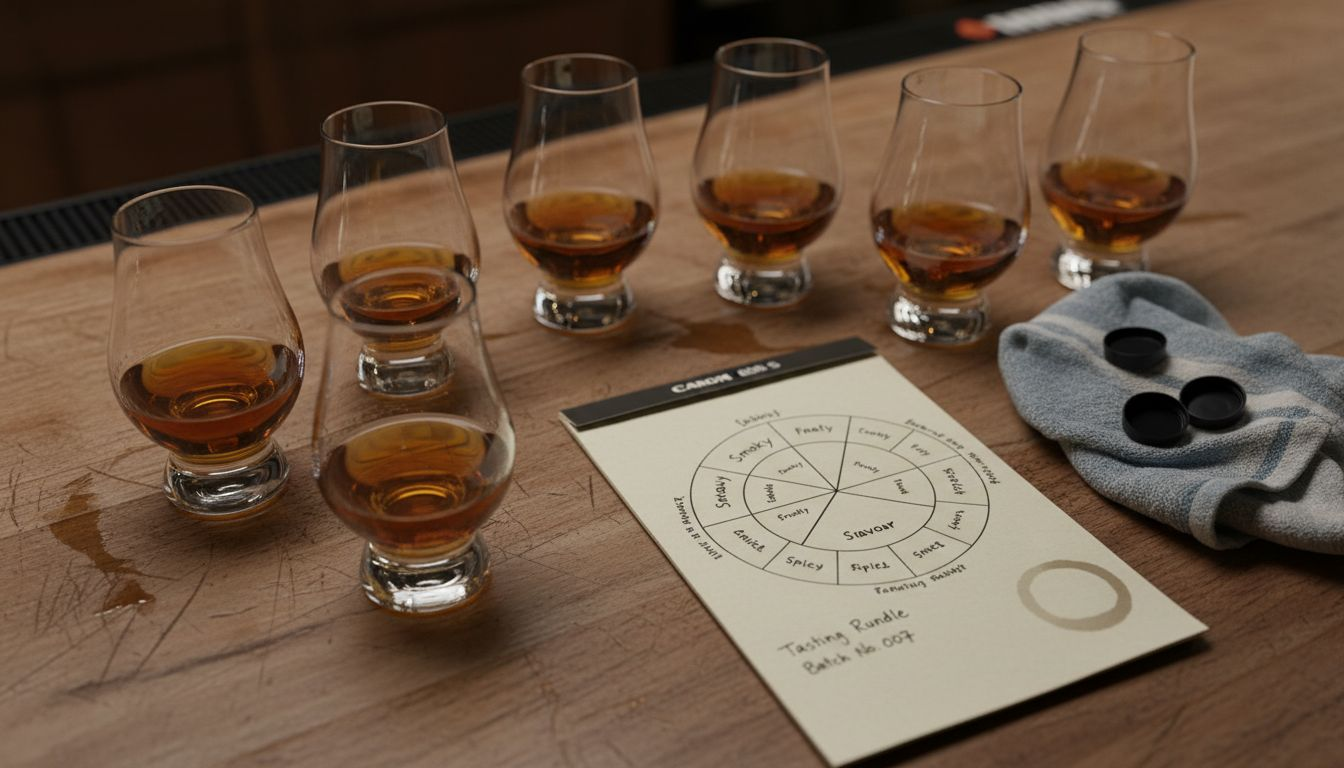
The major flavour categories break down into several distinct zones that overlap and interact within a single glass. Understanding these zones gives you a mental framework for analysing any dram you encounter.
Fruity and Floral Notes
These are often among the first impressions you’ll notice. Fruity characteristics can range from orchard fruits like apple and pear to stone fruits such as peach and apricot, and occasionally tropical notes like pineapple or banana. Floral notes manifest as honeysuckle, rose, heather, or violets. Whisky that’s spent time in first-fill casks tends to express fruitiness more prominently because the wood hasn’t been saturated with previous whisky residues. Australian collectors often gravitate toward expressions with these bright, accessible characteristics as entry points before progressing to more complex profiles. Fruity and floral notes generally suggest youth and can indicate lower wood influence, though some older whiskies maintain these characteristics through exceptional cask management.
Spicy and Woody Elements
Spice encompasses a surprisingly broad range of sensations. Black pepper, cinnamon, nutmeg, ginger, and clove are common descriptors. These typically originate from the cask, particularly oak interaction during maturation. The level of spice intensity often correlates with cask type and maturation length. American oak casks tend toward vanilla and lighter spice, whilst European oak delivers more aggressive spice and darker wood influences. Woody notes themselves break into subcategories: vanilla (sweet wood sugars), sandalwood (refined, subtle), oakiness (direct wood character), and occasionally tobacco or cedar notes. When you compare whisky types step by step, spice becomes one of your most reliable markers for distinguishing between cask types and maturation strategies.
Caramel, Vanilla, and Sweet Notes
These flavours dominate the middle palate and finish for most quality whiskies. Caramel suggests sweetness with slight bitterness. Vanilla points directly to oak-derived compounds, particularly prominent in whiskies aged in ex-bourbon barrels. Honey, toffee, butterscotch, and fudge round out the sweet category. These notes generally appeal to newcomers and experienced collectors alike, as they’re accessible yet complex enough to sustain interest across multiple tastings. Many premium whiskies balance spice and sweetness deliberately to create tension and depth on the palate.
Smoky and Phenolic Character
This category separates enthusiasts into clear camps. Smoky notes range from subtle smoke signals to peat smoke dominance. Phenolic character refers to medicinal, iodine, or seaweed-like qualities that accompany peat smoke. Islay whiskies practically define this category, but peated expressions exist across Scotland and beyond. If you’ve never encountered full-blast peat smoke before, it can feel overwhelming, even unpleasant. That’s completely normal. Your palate learns to appreciate it through exposure and context. Many collectors find that revisiting a heavily peated whisky after experiencing lighter expressions helps them perceive nuance within the smoke rather than just smoke intensity.
Earthy, Mineral, and Unusual Notes
These descriptors capture harder-to-classify sensations. Earthy suggests soil, leather, or tobacco. Mineral notes can include flint, slate, chalk, or saltiness. Some whiskies display meaty, gamey, or even funky characteristics that emerge through unusual maturation conditions or specific yeast strains. These notes intrigue serious collectors because they suggest terroir expression and distinctive production decisions.
Quick Reference Table
| Category | Typical Examples | Common Causes | Intensity Level |
|---|---|---|---|
| Fruity/Floral | Apple, pear, peach, honeysuckle, rose | Young casks, distillery character | Light to moderate |
| Spicy/Woody | Pepper, cinnamon, vanilla, oak, cedar | Cask type and age | Moderate to strong |
| Sweet | Caramel, honey, toffee, butterscotch | Oak sugars, maturation | Moderate |
| Smoky/Phenolic | Peat, smoke, iodine, medicinal | Peating levels | Variable |
| Earthy/Mineral | Leather, slate, flint, tobacco | Terroir, distillery water | Light to moderate |
The reason these categories matter is that flavour recognition compounds over time. Once you can identify vanilla, you start noticing which expressions deliver subtle vanilla versus aggressive vanilla. Once you recognise peat smoke, you can distinguish Islay smoke from Campbeltown smoke from Highland smoke. These distinctions elevate your purchasing decisions from guesswork to informed strategy.
Here’s a summary comparing how regional factors influence whisky flavour profiles:
| Region | Typical Flavour Profile | Production Influences |
|---|---|---|
| Islay | Intense peat, sea salt, smoke | Coastal climate, peat use |
| Speyside | Fruity, floral, gentle oak | Lighter cask ageing, soft water |
| Highlands | Robust spice, rich oak, heather | Mixed cask types, varied terroir |
| Japan | Delicate, balanced, subtle fruit | Precise blending, climate control |
| Australia | Bold fruit, sweet spice, vanilla | Unique casks, varied grains |
Pro tip: Taste whiskies from the same region or cask type consecutively to train your palate to recognise category patterns, then switch to different regions to understand how flavour profiles diverge and what truly distinguishes one whisky from another.
How To Interpret Aroma, Palate, and Finish
Whisky tasting follows a deliberate sequence that mirrors how your senses actually work. You don’t taste the palate first, you don’t assess the finish before nosing the dram. The progression matters because each stage builds on the previous one, and skipping steps means you’ll miss nuance that could fundamentally change how you perceive the whisky. The three stages form an interconnected sensory narrative, and learning to read that narrative transforms casual drinking into genuine appreciation.
Understanding the Nose (Aroma)
Your sense of smell is vastly more complex than your sense of taste. When you bring a whisky glass to your nose, you’re accessing information that your taste buds simply cannot detect. This is why proper nosing uses gentle, short sniffs to detect complexity without alcohol vapours overwhelming your olfactory receptors. Many beginners make the mistake of breathing in deeply and directly over the glass. That’s backwards. You’ll get a nasal burn from the alcohol that masks everything else.
The correct approach involves holding the glass at a slight angle, roughly four centimetres from your nose, and taking two or three short, controlled sniffs. Pause. Let the aromas settle. Take another sniff. Your olfactory receptors adapt to smells quickly, so continuous sniffing actually reduces your ability to perceive nuance. That’s why professional tasters work in short bursts. After those initial sniffs, pull the glass away completely for ten to fifteen seconds, then return for a fresh assessment. You’ll notice different aromas on the second and third round because you’re not fatiguing your receptors.
Start with general impressions. Does the whisky smell fruity, woody, smoky, floral, or earthy? Then narrow down. If it’s fruity, is it tropical fruit or orchard fruit? If it’s woody, does it lean toward vanilla or toward oak and spice? The aroma will guide you toward specific tasting notes. Australian collectors often discover their preferences through nose work before they ever taste. Some discover they’re drawn to light, delicate aromas and later find that preference extends to the palate. Others gravitate toward bold, smoky noses and discover they enjoy complexity overall.
Evaluating the Palate (Taste)
Once you’ve assessed the nose thoroughly, take a small sip. Not a gulp. A proper tasting portion is roughly 15 to 20 millilitres, and even then you’re taking only a small amount into your mouth initially. Let it coat your tongue and the inside of your mouth before swallowing. This is where evaluating sweetness, bitterness, texture, and balance comes into play. Notice that we’re assessing four distinct dimensions simultaneously, not just “taste.”
Sweetness tells you about the whisky’s fundamental character. Some whiskies taste naturally sweet from grain sugars or fruit esters. Others taste dry because of tannins from the cask or phenolic compounds from peat. Bitterness isn’t necessarily bad. Controlled bitterness from quality oak adds complexity and prevents the whisky from tasting one-dimensional. Texture describes mouthfeel. Is the whisky thin and watery, medium-bodied and balanced, or thick and viscous? A premium whisky should coat your mouth rather than slide through it. Balance means all these elements work together rather than one dominating and obscuring the others.
Roll the whisky around your mouth. Breathe gently through your mouth while tasting. This draws air across the whisky, volatilising more aroma compounds and sending them up your nasopharynx to your olfactory receptors. This is retronasal olfaction, and it’s why whisky tasting feels like more than just taste. You’re experiencing aroma in a different way once the whisky is in your mouth.
Note how the flavours evolve. Do they stay consistent, or do they shift and develop? A complex whisky might start fruity, develop spice in the middle, and finish with oak and bitterness. That progression is significant. It indicates good cask management and balanced distillery character.
Interpreting the Finish (Aftertaste)
After you swallow, don’t immediately reach for water or your next glass. The finish is where the whisky reveals its true quality. Professional tasters measure finish length in seconds. A short finish might be 15 seconds. A long finish extends beyond 60 seconds. But length alone doesn’t indicate quality. A beautifully balanced whisky with a 30-second finish that evolves gracefully is superior to a harsh whisky with a 90-second finish that just tastes bitter.
Pay attention to finish evolution. Does it stay consistent, or do flavours continue emerging? Some whiskies finish dry, leaving your mouth feeling desiccated. Others finish sweet and coating. Some finish hot, with alcohol warmth dominating. Others finish clean and refined. Quality Japanese whiskies often finish with elegance and restraint. Highland whiskies frequently finish with warming spice and oak. Islay expressions might finish with lingering smoke and maritime saltiness. These finish characteristics reveal the distillery’s style and cask strategy.
The finish also reveals whether the whisky is well-balanced overall. If the finish tastes harsh or metallic when the nose and palate were pleasant, something’s off with the cask or production. If the finish maintains and develops the themes you detected on the nose and palate, that’s a sign of genuine quality and coherent whisky-making.
Putting It Together
Your full tasting notes should read like a sensory journey rather than a checklist. “Nose: fruity and floral with green apple and heather. Palate: sweet initially, developing pepper and oak spice, good texture and balance. Finish: lingering vanilla and oak, clean and dry, 45 seconds.” That’s a complete picture. A collector reading your notes understands not just what the whisky contains, but how it feels to experience it from first sniff to final aftertaste.
Pro tip: Keep water and a few neutral crackers nearby whilst tasting, but cleanse your palate with water between drams rather than after each stage; this prevents flavour contamination without dulling your receptors during the tasting process itself.
Expert Techniques For Describing Whisky Flavour
Describing whisky accurately goes beyond simply pointing out flavours you notice. Professional tasters and serious collectors use structured methods that transform subjective impressions into reliable, repeatable descriptions. These techniques exist because humans are notoriously inconsistent when left to their own devices. One day your palate registers vanilla clearly. Another day you might miss it entirely because you tasted something strongly spiced beforehand. Expert techniques eliminate this inconsistency by creating systematic frameworks that guide your sensory evaluation in consistent directions.
The most effective approach combines what scientists call rapid aroma profiling with your own sensory memory. Scientific sensory evaluation integrates aroma profiling with chemical analysis to characterise whisky flavours efficiently and accurately. Professional evaluators use techniques like Rate All That Apply, which presents you with a predefined list of flavour descriptors and asks you to identify which ones match your experience. Rather than fumbling for words, you’re confirming whether specific characteristics are present. This structured approach works brilliantly for building consistency. The first time you taste a particular whisky, you might identify caramel, vanilla, and oak. The second time you return to it, the same descriptors appear, confirming your palate stability. Over time, this consistency builds your confidence and credibility when discussing whiskies with other collectors.
Building Your Personal Flavour Reference Library
The foundation of expert description is having reliable anchor points in your sensory memory. These are whiskies that exemplify specific flavour profiles. Think of them as your internal reference collection. When you encounter a new whisky that tastes fruity, you instinctively compare it to fruity whiskies you’ve tasted before. Is it similar to that Japanese expression you tried last month, or does it lean toward the stonefruit character of that particular Speyside? These comparisons give your tasting notes precision and context that generic descriptions like “fruity” simply cannot provide.
Building this library requires intentional tasting strategy. Start with well-known expressions from different regions. Tasting a benchmark Islay peated whisky, a classic Highland expression, and a refined Japanese dram creates three distinct sensory anchors. Then systematically expand outward. Taste expressions finished in different cask types back to back. This reveals how ex-bourbon casks impart vanilla and lighter spice, while ex-sherry casks deliver darker fruit and deeper wood influence. How to taste whisky like an expert involves building these comparative references until your palate recognises patterns and distinctions automatically. Your tasting notes become more precise because you’re referencing a mental library of experiences rather than grasping for isolated descriptions.
The Progressive Narrowing Technique
Experts use a specific strategy when approaching a new whisky. Start broadly, then progressively narrow your focus. On the nose, don’t immediately try to identify every note. Instead, ask yourself five simple questions in order:
- Is this whisky primarily fruity, woody, smoky, floral, or earthy?
- Within that category, which specific direction does it lean?
- Are there secondary characteristics that add complexity?
- Does the aroma evolve as the whisky opens up over several minutes?
- How intense are the aromas overall?
Once you’ve answered these five questions, you have a structural foundation for your tasting notes. You’re not listing random observations. You’re building a hierarchy of sensory information that moves from general to specific. This mirrors how expert tasters actually work. They don’t describe everything at once. They create a framework first, then populate it with details.
Apply the same narrowing strategy to the palate. First, identify the basic taste structure: Is it predominantly sweet or dry? Is the body light, medium, or full? Then explore the secondary layers: What spice notes emerge? Does oak character dominate or support other flavours? How does the texture feel? Finally, assess balance: Do all these elements work together coherently, or does one characteristic overpower the others?
Using Sensory Wheel Frameworks
Many professional tasters reference sensory wheels, visual tools that map flavour categories and subcategories hierarchically. These wheels exist specifically for whisky and allow you to navigate from broad categories down to precise descriptors. Rather than trying to remember every possible flavour word, you can visually scan a wheel and identify which descriptors resonate with your experience. This is particularly valuable when you taste something that doesn’t fit your usual vocabulary. Instead of giving up, you explore the wheel and discover that what you were experiencing was “tobacco” rather than vaguely “smoky.”
You don’t need to purchase anything. Free sensory wheels exist online and can be printed or viewed on your phone whilst tasting. The act of referencing a wheel and confirming descriptors trains your palate faster than trying to invent descriptions from scratch. Over time, repeated reference to the same wheel ingrains its categories into your memory. Eventually, you won’t need the physical wheel because the framework becomes internal.
Recording and Comparing Your Notes
The final expert technique involves disciplined documentation and regular comparison. Keep your tasting notes in a consistent format. Record the whisky name, ABV, cask type, age statement, and your systematic observations about nose, palate, and finish. Date your notes. Months later, when you encounter the same whisky again, revisit those original notes before tasting. This comparison reveals how your palate has evolved and whether your descriptions remain stable or shift significantly. Stability suggests genuine sensory perception. Significant shifts suggest your palate is developing, which is excellent. You’re learning to detect nuances you previously missed.
Share your notes with other collectors when appropriate. Seeing how experienced tasters describe whiskies you’ve also tasted provides calibration opportunities. If a professional’s notes align with your own observations, your confidence increases. If they identify characteristics you missed, you’ve discovered blind spots worth exploring in future tastings. This collaborative learning accelerates your development far more efficiently than isolated tasting ever could.
Pro tip: Create a simple spreadsheet tracking whiskies you’ve tasted, your key descriptors for each, and the cask type or region, then sort by flavour characteristics to identify patterns in your preferences and refine your search strategy for future purchases.
For quick reference, here’s how expert tasting techniques improve whisky appreciation:
| Technique | Advantage | Impact on Collecting |
|---|---|---|
| Sensory Wheel | More precise vocabulary | Sharper flavour identification |
| Progressive Narrowing | Systematic note-taking | Reduces observation bias |
| Flavour Library | Consistent benchmarking | Guides purchasing choices |
| Structured Comparison | Efficient palate training | Spot personal preference trends |
Common Pitfalls and Misunderstood Descriptors
Even experienced whisky enthusiasts stumble into predictable traps when tasting and describing whiskies. These pitfalls aren’t character flaws. They’re systematic mistakes that stem from impatience, misunderstanding, or simply not knowing better. The good news is that once you recognise them, you can eliminate them entirely. Your tasting notes will improve immediately, and more importantly, your actual sensory perception will sharpen because you’re no longer being sabotaged by your own process.
The most damaging mistake is rushing. You open a bottle, pour a measure, take a quick sniff, and declare what you’re experiencing within thirty seconds. That’s not tasting. That’s guessing. Common pitfalls include rushing the process and neglecting observation phases, which diminishes the richness of the tasting experience significantly. Quality whiskies demand time. A whisky that seems one dimensional after one minute of nosing often reveals surprising complexity after five minutes. The aromas open up. New layers emerge. Your brain processes the information differently as your olfactory receptors adapt and recover. If you rush past this crucial opening phase, you’re literally missing half the whisky’s character. Many Australian collectors report that their appreciation for specific whiskies increased dramatically once they implemented deliberate waiting periods. They realised they’d been dismissing excellent drams simply because they hadn’t given them time to breathe and reveal themselves.
Another widespread mistake involves improper glassware. The vessel you use genuinely matters because it concentrates aromas or disperses them. A wide, shallow glass spreads whisky across a large surface area, allowing alcohol vapours to dissipate before they reach your nose. Conversely, a tulip shaped glass or copita narrows at the top, trapping aromas and concentrating them toward your nose. If you’re tasting from a rocks glass or wine glass, you’re handicapping your ability to detect subtle aromas. You’re not getting an accurate picture of what the whisky actually offers. This seems minor until you realise you’ve been dismissing whiskies for years based on incomplete sensory data. Upgrading to proper tasting glassware costs very little and immediately improves your perception.
Misunderstood Descriptors That Confuse Collectors
Certain descriptors get misused so consistently that they’ve lost meaning. Understanding the precise distinctions separates genuine observers from casual commentators.
Smoky versus Peaty
These terms are not synonymous, yet many tasters use them interchangeably. Smoky refers to any smoke character, which can come from various sources. Peaty specifically indicates smoke derived from peat used during the malting process. A whisky can be smoky without being peaty. It might display smoke character from charred cask wood or even from specific yeast strains used during fermentation. Conversely, a peaty whisky is definitionally smoky because peat smoke is inherently smoky. The distinction matters because it communicates the source of the character and helps other collectors understand the whisky’s production method. When you say peaty, you’re telling someone this whisky comes from a distillery that deliberately uses peat. When you say smoky generally, you’re noting a sensory characteristic without specifying its origin.
Dry versus Bitter
Dryness describes a lack of sweetness on the palate. It’s a neutral descriptor. Bitterness is an actual taste sensation, often unpleasant when excessive. A whisky can be dry and pleasant. It can also be dry and bitter, which are two separate characteristics. Many tasters conflate dryness with harshness, assuming a dry whisky tastes unpleasant. Quality doesn’t correlate with sweetness. Some of the finest whiskies finish distinctly dry because they contain substantial tannins from quality cask wood. Understanding this distinction prevents you from unfairly dismissing dry whiskies as inferior when they’re actually displaying sophistication.
Oaky versus Woody
Oaky specifically refers to flavours directly derived from oak interaction: vanilla, spice, char, and wood sugars. Woody is broader and can include cedary, sandalwood, or herbal wood characteristics that aren’t necessarily oak. A whisky finished in non oak casks might taste woody without tasting oaky. The distinction helps you identify cask type or finishing strategy. If a whisky tastes distinctly oaky, it likely spent considerable time in oak casks. If it tastes woody but not oaky, it might have been finished in alternative wood or influenced by previous cask residents.
Floral versus Perfumed
Floral refers to specific flower scents like rose, honeysuckle, or heather. Perfumed is vaguer and suggests something smells artificial or overly processed. Using perfumed as a descriptor communicates nothing useful. Which flowers? Which notes? Precision matters. If you smell flowers, identify which ones. If you can’t pin it down, say the aroma is delicate and complex rather than resorting to perfumed.
The Descriptor Ambiguity Problem
Some words get used so broadly they’ve become nearly meaningless. Smooth, complex, and balanced appear in countless tasting notes but often without substantive detail. What makes a whisky smooth? Lower alcohol burn? Sweet palate? Lack of harsh tannins? Complex how exactly? Does it display multiple distinct flavours, or do flavours evolve? Balanced in what way? If you find yourself using these descriptors, ask yourself what you actually mean. Replace them with specific observations. Instead of smooth, say the alcohol integrates well without burning sensation. Instead of complex, identify the specific flavours that create complexity. Instead of balanced, explain which elements work together effectively.
This precision transforms your tasting notes from generic observations into genuinely useful descriptions that other collectors can learn from.
Pro tip: When you catch yourself using a vague descriptor, pause and ask what you actually mean, then write that specific observation instead; over time, this habit rewires your brain to perceive and articulate nuance automatically.
Elevate Your Whisky Tasting Experience with Uisuki
Unlocking the nuanced flavours of whisky takes more than just a sip. This article highlights the common challenges enthusiasts face such as differentiating between smoky and peaty notes, understanding complex tasting notes across nose, palate, and finish and truly appreciating regional flavour profiles. If you want to deepen your sensory vocabulary and confidently explore premium drams, Uisuki is here to guide you.
Discover our curated selection of exceptional whiskies from around the globe including the refined elegance of The Balvenie, the robust character of Scotch Whisky, and unique expressions featured in our World Whiskies collection. Each bottle’s detailed description offers insight into cask types, ABV, and flavour profiles, helping you build your personal flavour reference library with ease.

Ready to transform your tasting notes into expert assessments? Visit Uisuki.com.au today to explore rare and hard-to-find whiskies backed by thorough product information and trusted guidance. Start your journey now and make every dram an experience worth savouring.
Frequently Asked Questions
What are whisky tasting notes?
Whisky tasting notes are structured descriptions that capture the sensory experience of tasting whisky, detailing aspects like aroma, palate, and finish to help communicate a whisky’s unique characteristics.
How do I write effective whisky tasting notes?
To write effective whisky tasting notes, start with a systematic approach by assessing the nose (aroma), palate (taste), and finish (aftertaste). Use descriptive language to convey your observations and compare your notes with professional assessments for refinement.
What is the importance of tasting notes in whisky collecting?
Tasting notes are crucial for whisky collectors as they provide a common language to compare different whiskies, make informed purchasing decisions, and identify flavour profiles that match personal preferences.
How do regional factors influence whisky flavour profiles?
Regional factors influence whisky flavour profiles through varying production practices, climate conditions, and local ingredients. These elements result in distinct characteristics that differentiate whiskies from different areas, impacting their overall taste and complexity.