

Most australian whisky lovers discover that true appreciation goes far beyond simply pouring a dram. Crafting the ideal whisky tasting session means understanding how every detail from glassware choice to careful aroma evaluation shapes the final experience. With over 1,200 active distilleries worldwide and each pour revealing unique stories, learning the essentials of professional whisky tasting helps unlock complexity and enjoyment in every glass.
Table of Contents
- Stage 1: Prepare the Ideal Whisky Tasting Setup
- Stage 2: Select a Curated Range of Whiskies
- Stage 3: Evaluate Colour and Clarity Carefully
- Stage 4: Appraise Aromas Using Proper Technique
- Stage 5: Taste and Note Whisky Flavours Systematically
- Stage 6: Review and Compare Tasting Notes Confidently
Quick Summary
| Main Insight | Detailed Explanation |
|---|---|
| 1. Use proper glassware for tasting | Choose Glencairn glasses to enhance aroma capture and enjoy the whisky’s visual characteristics fully. |
| 2. Store whisky at ideal temperatures | Keep bottles at 15-20°C, away from sunlight, to maintain flavour integrity for a better tasting experience. |
| 3. Assess colour and clarity first | Examine the whisky’s colour against a white background to learn about its aging process and quality. |
| 4. Master aroma evaluation techniques | Sniff gently from a distance and take incremental breaths to uncover deeper aromatic layers without overwhelming your senses. |
| 5. Document your tasting experiences | Create detailed notes on flavour profiles and textures to develop a personal understanding and language for whiskies. |
Stage 1: Prepare the ideal whisky tasting setup
Crafting the perfect whisky tasting environment requires careful attention to detail and precise preparation. Your goal is to create a sensory experience that allows you to fully appreciate the nuanced characteristics of each whisky.
Start by selecting the right glassware essential for professional whisky appreciation. Specialised whisky glasses like Glencairn glasses are ideal for capturing and concentrating the complex aromas. These tulip-shaped vessels help direct the whisky’s bouquet directly to your nose while providing enough space to swirl and examine the liquid’s colour and viscosity. Ensure each glass is spotlessly clean and free from any residual odours that might interfere with the tasting experience.
Temperature plays a crucial role in whisky appreciation. Store your bottles at consistent room temperature between 15-20°C, avoiding direct sunlight and extreme temperature fluctuations. Have room temperature water available to help open up the whisky’s flavours and provide a palate cleanser between tastings. A small pitcher of water, clean white napkins, and a neutral palette of crackers or plain bread will help reset your taste buds and enhance your overall tasting journey.
Pro tip: Always handle whisky glasses by the stem to prevent warming the liquid with your body heat and maintain the optimal tasting temperature.
Stage 2: Select a curated range of whiskies
Designing a thoughtful whisky tasting experience requires strategic selection and careful planning. Your objective is to create a diverse and engaging collection that tells a compelling story through flavour and origin.
Consider curating your whisky selection using thematic approaches that highlight regional diversity and unique characteristics. Collectors can explore global whisky variations by selecting expressions from different countries such as Scotland, Japan, Australia, and emerging whisky nations. A ‘World Tour’ style tasting allows you to showcase the distinctive terroir and production techniques that make each region’s whiskies distinct.
Another sophisticated approach involves creating a vertical tasting that focuses on a specific distillery or age statement. By selecting multiple releases from the same producer across different years or maturation periods, you can observe how subtle variations in production and aging impact the final spirit. Aim to include 4-6 different whiskies that provide a comprehensive exploration of flavour profiles, ensuring a balanced and educational tasting experience that keeps your audience engaged and intrigued.
Pro tip: Always arrange your whiskies from lightest to most intense flavour to prevent overwhelming your palate and maintain a logical tasting progression.
Stage 3: Evaluate colour and clarity carefully
The visual assessment of whisky is a critical first step in understanding its character and potential flavour profile. This initial examination provides valuable insights before you even bring the glass to your nose.
Whisky evaluation begins with a meticulous examination of colour and clarity, which can reveal fascinating details about the spirit’s maturation journey. Hold your whisky glass against a neutral white background or soft natural light to observe its true hue. The colour spectrum ranges from pale straw yellow through rich amber to deep mahogany, each shade telling a story of cask type, age, and production technique. A deep copper tone might suggest extended aging in sherry casks, while a lighter golden colour could indicate younger spirit or aging in ex bourbon barrels.
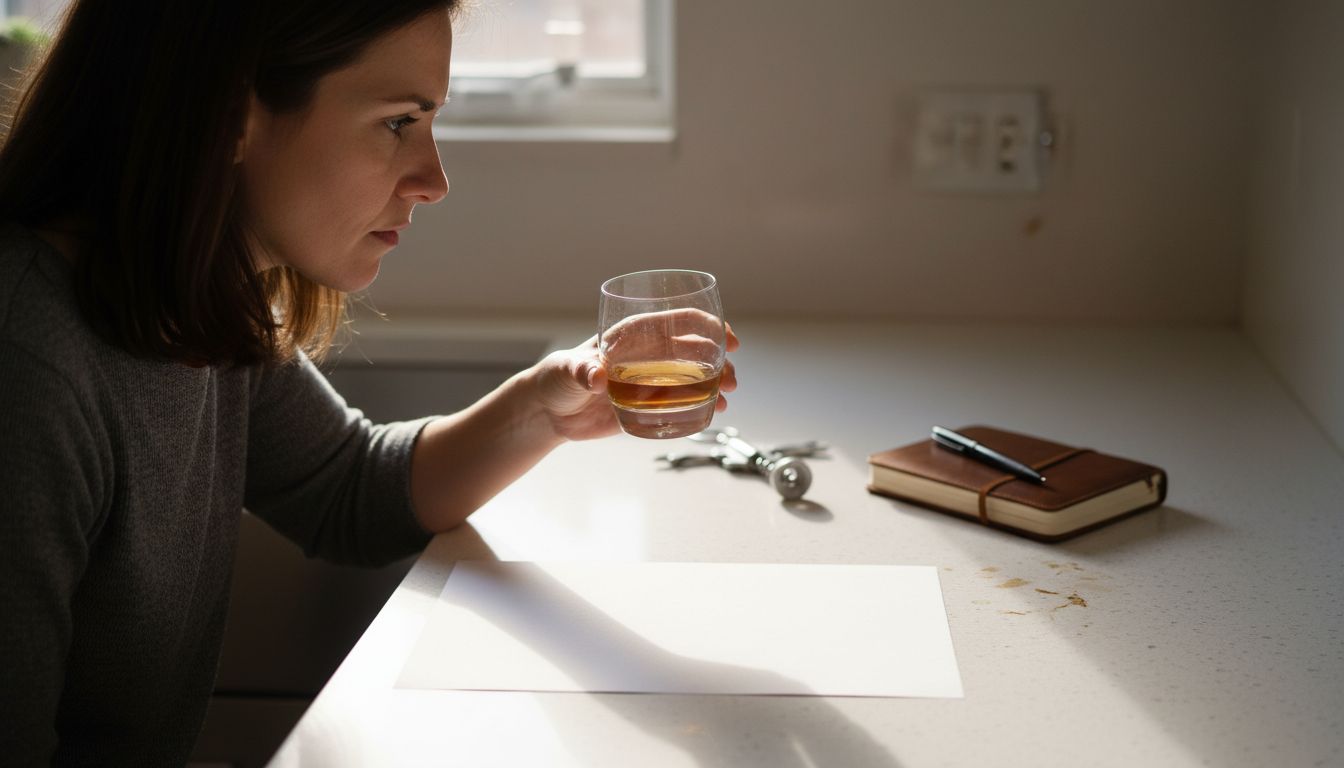
Clarity is equally important in your visual assessment. A pristine whisky should appear bright and transparent, without any cloudiness or suspended particles. Cloudiness can indicate improper filtration or temperature issues, potentially affecting the whisky’s overall quality. Gently tilt the glass and observe how the liquid moves examine its viscosity the way it clings to the glass can provide hints about its alcohol content and potential texture.
Pro tip: Use a white surface or sheet of paper behind your glass to get the most accurate colour perception free from external lighting influences.
Stage 4: Appraise aromas using proper technique
Mastering the art of whisky aroma evaluation requires patience, concentration, and a systematic approach. Your olfactory exploration will unveil the intricate stories hidden within each spirit.
Professional whisky tasting techniques begin with understanding how to properly engage your sense of smell. Start by holding the glass at a slight distance and allow the aromas to gently waft towards you. Avoid plunging your nose directly into the glass, which can overwhelm your senses and mask subtle nuances. Instead, make gentle circular motions with the glass to release the volatile aromatic compounds, then slowly bring the rim closer to your nose.
Develop a methodical approach to scent detection by taking short, incremental sniffs rather than deep inhales. Your first pass might capture broad aromatic families like fruit, wood, or spice. Subsequent passes will reveal more complex layers peaty smokiness, vanilla sweetness, maritime saltiness or dried fruit complexity. Pay attention to how the aromas evolve as the whisky sits in the glass subtle changes can indicate depth and sophistication of the spirit.
Pro tip: Clean your palate between different whisky tastings by sniffing neutral scents like coffee beans or your own skin to reset your olfactory receptors and maintain sensory clarity.
Stage 5: Taste and note whisky flavours systematically
Tasting whisky is an art form that demands patience, concentration, and a structured approach to fully appreciate the nuanced flavours dancing across your palate. Your goal is to transform each sip into a comprehensive sensory experience that reveals the spirit’s intricate character.
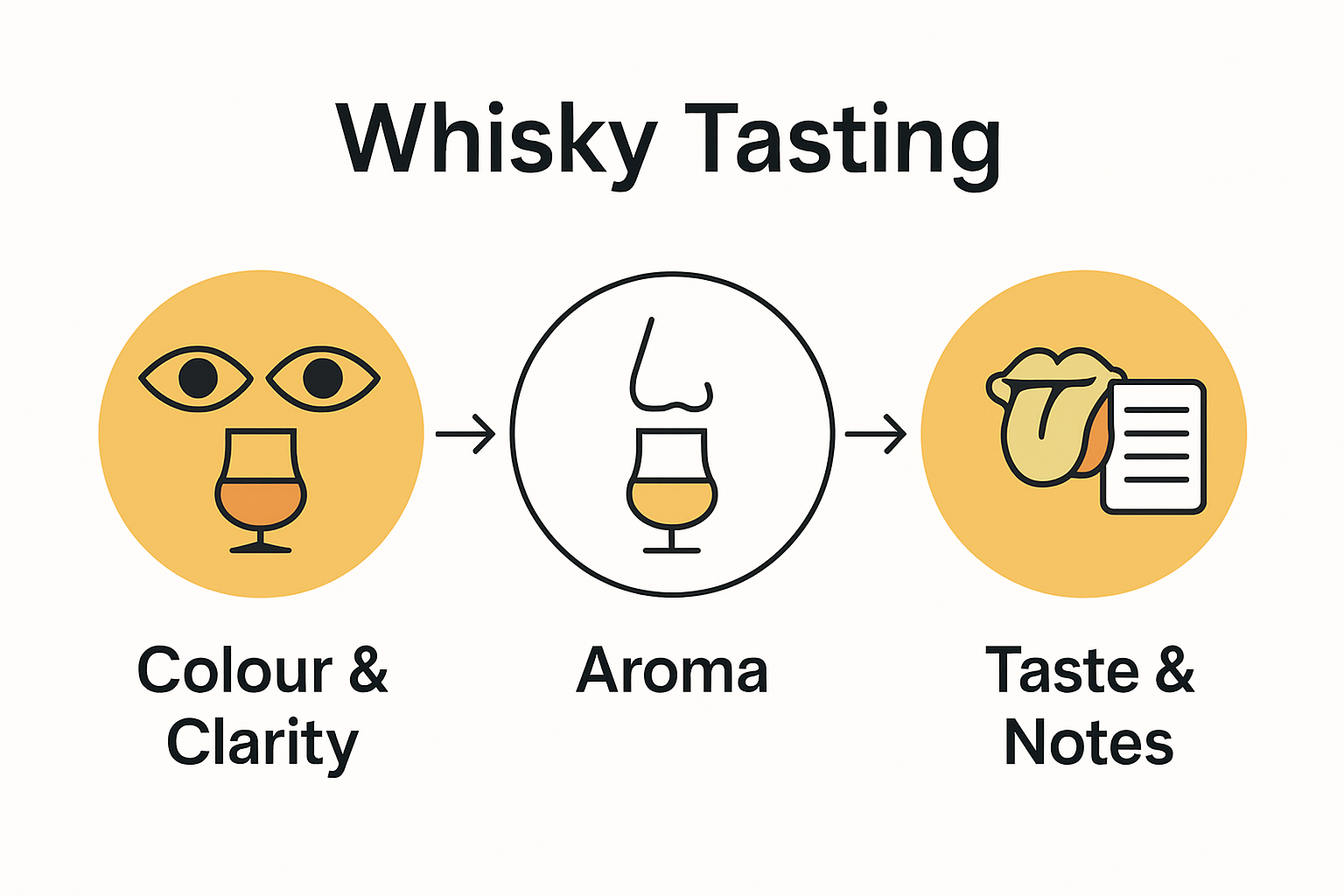
Systematic whisky tasting techniques begin with a deliberate and mindful approach to sampling. Take a small sip and allow the whisky to gently coat your entire tongue, creating a comprehensive flavour landscape. Focus first on the initial taste profile sweet, spicy, fruity or smoky then observe how these flavours evolve and transform as the liquid moves across different areas of your mouth. The first moment of contact might reveal bright, immediate notes while subsequent moments can unveil deeper, more complex undertones.
Consider documenting your tasting experience using a structured method. Note the flavour progression starting from the initial taste through to the mid palate and final finish. Pay close attention to the whisky’s texture its weight and how it feels against your tongue. Is it light and delicate or rich and viscous? Observe how long the flavours persist after swallowing a characteristic known as the finish. A long lingering finish often indicates a high quality whisky with complex and well integrated flavour components.
Pro tip: Take small sips and allow time between tastings to reset your palate avoiding flavour fatigue that can dull your sensory perception.
Stage 6: Review and compare tasting notes confidently
Transforming your whisky tasting experience from casual sampling to expert analysis requires a structured approach to documenting and comparing your sensory discoveries. The art of reviewing tasting notes is about developing a personal language that captures the intricate nuances of each spirit.
Confidently comparing whisky tasting notes begins with understanding that aroma contributes significantly to your overall flavour perception. Create a consistent documentation system in a dedicated notebook or digital app where you record key characteristics such as initial nose, palate development, texture, and finish. Use descriptive yet precise language avoid generic terms like good or nice and instead focus on specific sensory observations like green apple, toasted almond, or maritime brine.
Establish a comparative framework by grouping whiskies based on shared attributes such as region, age statement, or cask type. This approach allows you to develop a more nuanced understanding of how subtle variations impact flavour profiles. Pay attention to the progression of flavours from initial contact through mid palate to the final finish noting how different whiskies express complexity and depth. Remember that your palate is unique developing a personal lexicon takes time and repeated thoughtful tasting.
Pro tip: Taste whiskies from lightest to most intense to prevent overwhelming your sensory receptors and maintain clarity throughout your tasting journey.
Elevate Your Whisky Tasting Experience with Premium Selections from Uisuki
Mastering whisky tasting means understanding the subtle nuances in aroma, colour and flavour. For Australian collectors eager to explore diverse regional expressions or deepen their expertise with vertical tastings, discovering the right bottles is essential. Our guide highlights the importance of carefully selecting whiskies from different terroirs and age statements to create a memorable tasting journey filled with complexity and character.
Unlock new flavour profiles and refine your palate with our curated range of whiskies. From the rich heritage of Glenglassaugh Scotch Whisky to an exciting collection of World Whiskies, you can build your ideal tasting lineup with confidence.
Start exploring today at Uisuki.com.au to access rare and sought-after bottles that bring your tasting sessions to life. Take advantage of expert descriptions, ABV details and seamless shipping options to enrich your whisky collection and taste like a true connoisseur.
Frequently Asked Questions
What is the ideal way to set up for whisky tasting?
To create the perfect whisky tasting setup, select specialised whisky glasses like Glencairn for their ability to capture aromas. Ensure your glasses are clean, maintain room temperature for your whiskies, and have plain snacks ready to cleanse your palate between tastings.
How do I choose a diverse range of whiskies for tasting?
Select whiskies that represent different flavour profiles and origins for an engaging experience. Aim to include 4-6 whiskies, arranging them from lightest to most intense to maintain a logical tasting progression without overwhelming your palate.
What should I look for when evaluating the colour and clarity of whisky?
When assessing colour, hold the glass up to a neutral background to observe its true hue, which can indicate the spirit’s age and cask type. A clear whisky should be bright and free from cloudiness, which can suggest issues with filtration or quality.
How can I effectively evaluate aromas during whisky tasting?
Start by holding the glass at a distance and gently sniffing to avoid overwhelming your senses. Rotating the glass can help release aromas, allowing for a deeper exploration of the whisky’s complexity over multiple short sniffs.
What steps should I follow to taste whisky systematically?
Take a small sip and let the whisky cover your palate to identify initial flavours and how they evolve. Document your tasting experiences by noting the progression of flavours and textures, including the whisky’s finish, and take breaks to avoid palate fatigue.
How can I compare my whisky tasting notes effectively?
Create a consistent documentation system for your tasting notes, focusing on specific characteristics like aroma and flavour. Organise notes by attributes such as age statement or region, allowing for a deeper understanding of how these factors influence the whisky’s profile.