

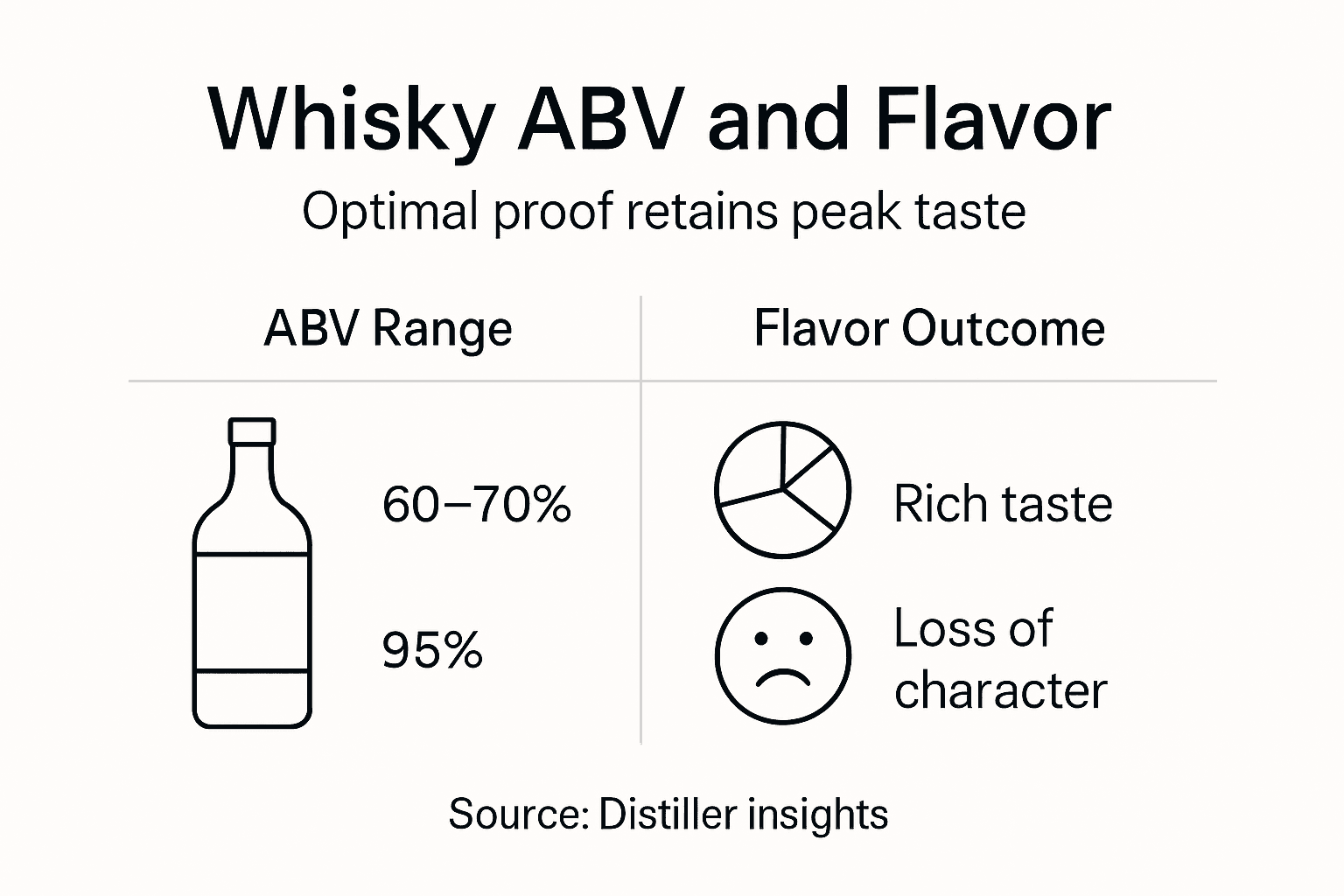
Many whisky lovers assume higher alcohol content guarantees superior quality. That’s a myth. The truth is that distillation balances alcohol strength with flavor complexity, and understanding this process transforms how you appreciate premium whisky. Pot stills typically produce spirits at 60-70% ABV retaining essential flavor compounds, while column stills reach 95% ABV but sacrifice character. This guide reveals how distillation mechanics shape the whisky in your glass.
Table of Contents
- Understanding The Science Behind Distillation
- Types Of Stills And Their Impact On Whisky Flavor
- The Role Of Distillation Cuts: Heads, Hearts, And Tails
- Comparing Regional Distillation Techniques
- Common Misconceptions About Distillation
- Practical Applications: Using Distillation Knowledge To Enhance Whisky Selection And Tasting
- Explore Premium Whiskies And Insights At Uisuki
Key Takeaways
| Point | Details |
|---|---|
| Distillation separates alcohol and flavor compounds | Uses boiling point differences to selectively vaporize ethanol at 78.4°C versus water at 100°C. |
| Pot stills retain richer flavors than column stills | Pot stills produce 60-70% ABV spirits with more congeners, column stills reach 95% ABV with lighter profiles. |
| Distillation cuts determine safety and quality | Heads contain harmful volatiles, hearts are the desirable middle cut, tails hold off-flavors. |
| Regional methods create distinct whisky profiles | Scottish pot stills, Japanese hybrids, Irish triple distillation, and Australian innovation each shape unique character. |
| Understanding distillation guides confident selection | Knowledge of still types and cuts helps you anticipate flavor profiles and choose whiskies wisely. |
Understanding the Science Behind Distillation
Distillation exploits the boiling point difference between ethanol (78.4°C) and water (100°C). When you heat fermented wash, ethanol vaporizes first along with select flavor compounds called congeners. These congeners include esters, aldehydes, and phenols that define whisky’s character.
Temperature control is everything. Distillers monitor the thermometer constantly to capture the right vapor fractions. Too hot and you boil off water, diluting the spirit. Too cool and you miss desirable compounds. This precision separates master distillers from amateurs.
Whiskies are generally distilled to 60%-95% ABV to balance flavor and alcohol concentration. Distilling beyond 95% removes essential congeners, leaving bland neutral spirits unsuitable for whisky. The sweet spot preserves complexity while achieving sufficient strength for maturation.
Selective vaporization isn’t just about alcohol. It captures volatile aromatics that give whisky its fruity, smoky, or spicy notes. Water remains mostly behind, along with heavier compounds that would muddy the flavor.
Here’s what happens during distillation:
- Fermented wash enters the still at roughly 8-10% ABV
- Heat applied causes ethanol and light congeners to vaporize first
- Vapors rise through the still neck and condense in the cooling system
- Distiller monitors temperature and flow to control which compounds pass through
- First distillation yields low wines at 20-30% ABV, second distillation produces new make spirit at 60-70% ABV
Pro Tip: When tasting whisky, consider the scientific principles of whisky distillation behind its creation. A heavier, oilier mouthfeel often signals pot still distillation with more congeners retained.
Types of Stills and Their Impact on Whisky Flavor
Pot stills and column stills represent two fundamentally different approaches to distillation. Your choice of still shapes everything from alcohol strength to flavor intensity.
Pot stills operate in batches. You fill the copper vessel with wash, heat it, collect the distillate, then start over. This method produces spirits at 60-70% ABV after double distillation. The relatively low proof means more flavor compounds survive the process. Scotch single malts famously use pot stills to achieve their rich, complex profiles.
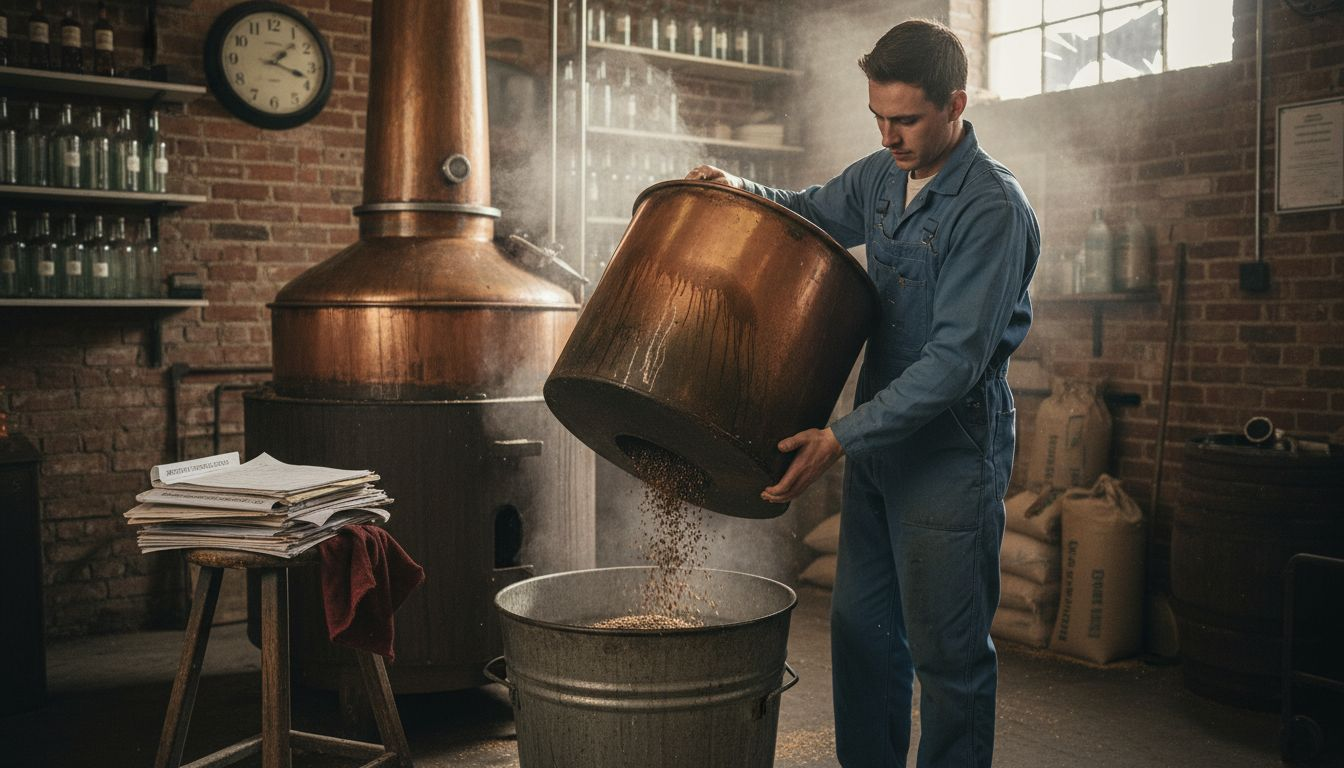
Column stills run continuously. Wash enters at the top while steam rises from the bottom, creating multiple vaporization and condensation stages within a tall column. This efficient design reaches up to 95% ABV, producing cleaner, lighter spirits. American bourbon often uses column stills for its smooth, approachable character.
Hybrid stills combine both techniques. Australian craft distillers frequently experiment with hybrid systems to create unique regional flavour differences. You might see a pot still first distillation followed by column still refinement, blending richness with purity.
| Still Type | ABV Range | Flavor Profile | Common Use |
|---|---|---|---|
| Pot Still | 60-70% | Rich, complex, full-bodied | Scotch single malts, craft whiskies |
| Column Still | 90-95% | Clean, light, subtle | Bourbon, grain whiskies |
| Hybrid Still | 70-85% | Balanced, unique character | Australian craft, experimental releases |
The pot and column still differences affect more than just alcohol content. Pot stills allow more copper contact time, which removes sulfur compounds and adds fruity esters. Column stills minimize copper contact, preserving grain character but reducing complexity.
Still shape matters too. Tall pot stills with long necks produce lighter spirits because heavier vapors condense before reaching the top. Short, squat stills yield heavier, oilier distillates. Distillers obsess over these details because millimeters can change flavor.
Pro Tip: Check a whisky’s production notes for still type. Pot still whiskies generally reward slow sipping to appreciate layered flavors, while column still spirits work brilliantly in cocktails where clean alcohol backbone matters.
The Role of Distillation Cuts: Heads, Hearts, and Tails
Distillation produces three distinct fractions that appear in sequence. Distillers must decide precisely when to separate each cut. This decision determines safety, quality, and flavor profile.
-
Heads arrive first when vapors initially condense. They contain methanol, acetone, and other volatile compounds that smell sharp and chemical. These substances can cause headaches or worse. Experienced distillers discard heads entirely or redistill them in the next batch. The heads fraction typically represents 2-5% of total distillate.
-
Hearts form the desirable middle cut. This fraction contains ethanol plus the flavor congeners you want in whisky: fruity esters, vanilla notes, subtle spice. Hearts usually run for several hours during distillation, yielding 60-70% of the total output. This is the liquid that goes into casks for maturation.
-
Tails emerge toward the end as temperature rises and heavier compounds vaporize. Tails smell musty or grainy and taste oily or bitter. They contain fusel oils and fatty acids that muddy whisky flavor. Distillers stop collecting when tails appear, though some keep a small tails fraction to add body in future distillations.
Making cuts requires skill and chemistry knowledge. Distillers use sensory evaluation, watching vapor temperature, and sometimes laboratory analysis. They taste the flowing distillate constantly, making split-second decisions about when to switch collection vessels.
The timing isn’t fixed. Wash composition, still design, and heating rate all influence when each fraction appears. A distiller might make hearts cuts earlier on one batch and later on another, responding to subtle differences in fermentation or weather conditions affecting cooling water temperature.
Cut precision separates good whisky from great whisky. Collecting too much heads introduces harsh volatiles. Cutting hearts too early wastes desirable compounds. Including tails adds weight but risks off-flavors. Master distillers develop intuition over decades.
Pro Tip: Premium whiskies often mention narrow hearts cuts in their marketing. This signals the distiller prioritized quality over yield, discarding more heads and tails to ensure only the finest spirit enters casks.
Comparing Regional Distillation Techniques
Whisky-producing regions developed distinct distillation traditions shaped by local resources, regulations, and taste preferences. These regional methods create signature flavors that enthusiasts recognize instantly.
Scottish whisky relies on traditional pot still batch distillation. Most Scotch undergoes double distillation, though some Lowland distilleries triple distill. Distillers make careful cuts to preserve peat smoke, malt sweetness, and coastal brine. The emphasis on pot stills and patient cuts yields rich, complex single malts.
Japanese whisky blends Scottish inspiration with innovation. Japanese distillers use both pot and column stills, often within the same facility. This Japanese whisky distillation flexibility allows precise flavor control. Multiple still types enable blending diverse components into harmonious expressions.
Irish whisky commonly undergoes triple distillation in pot stills. The third distillation increases purity and smoothness, creating lighter, more approachable spirits. This method distinguishes Irish whisky from Scottish counterparts, though some Irish distilleries now experiment with double distillation.
Australian craft distilleries embrace experimentation. Without centuries of tradition constraining them, Australian distillers deploy hybrid stills, varied cut timings, and unconventional fermentations. This innovation produces exciting regional whisky variations that challenge expectations.
| Region | Typical Method | Distillations | Flavor Result |
|---|---|---|---|
| Scotland | Pot still batch | Double (mostly) | Rich, complex, varied |
| Japan | Pot and column hybrid | Double or varied | Balanced, precise, harmonious |
| Ireland | Pot still batch | Triple | Smooth, light, approachable |
| Australia | Experimental hybrid | Varied | Innovative, diverse, bold |
Regional regulations also influence distillation. Scotch whisky must be distilled to less than 94.8% ABV to preserve character. American bourbon requires distillation below 80% ABV. These rules prevent producers from creating neutral spirits and calling them whisky.
Climate affects distillation too. Warmer Australian temperatures require different cooling water management than Scotland’s cold climate. This forces technical adaptations that subtly influence flavor development.
Understanding regional distillation methods helps you anticipate what’s in the bottle. A triple-distilled Irish whisky will likely taste smoother than a double-distilled Islay malt. A Japanese whisky might show remarkable balance from hybrid still blending.
Common Misconceptions About Distillation
Whisky enthusiasts repeat myths that distort how distillation actually works. Correcting these misconceptions sharpens your appreciation and buying decisions.
Myth: Higher ABV always means better quality. Distilling above 95% ABV removes essential flavor congeners, resulting in bland spirits. Premium whiskies target 60-70% ABV after distillation specifically to retain character. Cask strength bottlings offer intensity but prove nothing about distillation quality.
Myth: Distillation determines all whisky flavor. Maturation in oak casks contributes 60-70% of final flavor according to most experts. Distillation establishes the foundation, but wood interaction, oxidation, and time create the complexity you taste. A perfectly distilled spirit becomes exceptional whisky only through proper aging.
Myth: All whiskies are distilled identically worldwide. Regional traditions vary dramatically. Scottish double distillation differs from Irish triple distillation, which differs from American column still methods. Assuming uniformity ignores the diversity that makes whisky exploration exciting.
Myth: More distillations always improve quality. Triple distillation increases purity but reduces character. Irish distillers triple distill for smoothness, while Scottish distillers stop at two to preserve robust flavors. Neither approach is objectively better; they serve different style goals.
Myth: Copper stills are purely traditional aesthetic choices. Copper serves critical chemical functions. It catalyzes reactions removing sulfur compounds and promotes ester formation. Stainless steel stills would produce inferior whisky. The shiny copper vessels represent functional chemistry, not decoration.
Here are facts that counter common misunderstandings:
- Whisky flavor develops throughout production, not just in one stage
- Lower distillation proof often correlates with more interesting flavor profiles
- Regional differences reflect genuine technical variations, not marketing gimmicks
- Distillation cuts require skill because chemistry varies batch to batch
- Understanding whisky distillation myths helps you evaluate claims critically
“The art of distillation lies not in maximizing alcohol content, but in capturing the precise balance of compounds that will mature into exceptional whisky. A distiller who chases high proof sacrifices the soul of the spirit.”
Replacing misconceptions with accurate knowledge transforms casual drinking into informed appreciation. You’ll ask better questions, recognize quality markers, and avoid overpaying for marketing hype.
Practical Applications: Using Distillation Knowledge to Enhance Whisky Selection and Tasting
Now apply your distillation understanding to real-world whisky enjoyment. This knowledge guides smarter purchases and deeper tasting experiences.
Read labels strategically. Look for clues about distillation method. Phrases like “pot still distilled,” “double distilled,” or “column distilled” tell you what flavor profile to expect. Pot still signals richer character. Column still suggests cleaner, lighter style. Distillation proof listed at cask entry indicates how much flavor survived the process.
Anticipate flavor based on still type. If you know a whisky came from tall pot stills, expect lighter, more delicate notes. Short pot stills produce heavier, oilier whiskies with pronounced malt character. Column still whiskies typically show grain sweetness and vanilla without heavy congener influence.
Explore regional styles with context. When trying Scottish whisky, remember the double distillation and careful cuts preserving complexity. Japanese whiskies may reveal their hybrid still origins through unusual balance. Australian expressions might surprise you with experimental approaches not bound by tradition.
Use your expert whisky tasting techniques to detect distillation influence. Nose the whisky first. Sharp, acetone notes suggest heads contamination or young spirit. Fruity esters indicate proper hearts selection. Oily, musty qualities point to tails inclusion or heavy pot still character.
When master whisky flavor profiling during tastings, consider mouthfeel. Thicker, coating textures often come from pot still distillation retaining more congeners. Lighter, cleaner mouthfeel suggests column distillation or triple distillation reducing heavy compounds.
Apply distillation knowledge to collection building:
- Diversify still types to experience full spectrum of whisky styles
- Seek distillery information about cut points and distillation philosophy
- Compare whiskies from same region but different still configurations
- Use the expert tasting guide for Australian collectors to refine your palate systematically
- Ask retailers about distillation methods when selecting new bottles
Engage in informed conversations at tastings. Discussing how pot still design affects vapor reflux impresses fellow enthusiasts more than vague “smooth” descriptions. Understanding why Japanese distillers use multiple still types explains their blending prowess.
Your distillation knowledge also helps you identify value. A well-distilled whisky from a lesser-known distillery might outperform an expensive bottle from a famous name relying on branding over technique. Technical understanding reveals quality that marketing obscures.
Explore Premium Whiskies and Insights at Uisuki
Ready to apply your newfound distillation knowledge? Uisuki offers a curated selection of premium whiskies showcasing diverse distillation methods. You’ll find pot still Scotch single malts, Japanese hybrid still expressions, and innovative Australian craft whiskies all demonstrating the techniques covered in this guide.

Our collection includes rare releases from distilleries obsessed with distillation excellence. Each bottle tells a story of careful cuts, precise temperature control, and still designs perfected over generations. Browse by region to compare how Scottish, Japanese, and Australian distillers interpret the fundamental science differently.
Uisuki provides expert insights beyond product listings. Articles exploring why whisky is popular in 2026 and detailed top Australian whiskies comparison help you make informed decisions. Whether you’re building a collection or seeking the perfect gift, the Uisuki Whisky Store combines education with exceptional spirits to elevate your whisky journey.
FAQ
How does distillation proof affect whisky taste?
Higher proof retains more alcohol but fewer flavor congeners if distilled above 95% ABV. Optimal distillation at 60-70% ABV preserves the esters, aldehydes, and phenols that create complexity. Lower proof spirits from pot stills typically taste richer and more characterful than high-proof column still distillates.
Why do some whiskies undergo triple distillation?
Triple distillation increases purity and smoothness by removing more congeners. Irish distillers triple distill to create lighter, more approachable spirits that appeal to broader audiences. The trade-off is reduced flavor complexity compared to double-distilled whiskies, though some drinkers prefer the cleaner profile.
Can distillation style indicate whisky quality?
Distillation method suggests style, not absolute quality. Pot still whiskies aren’t inherently better than column still whiskies; they’re different. Quality depends on distiller skill, cut precision, and how well the distillation matches the intended flavor profile. Both methods produce exceptional whiskies when executed properly.
What are the safety reasons for making distillation cuts?
Heads contain methanol and volatile compounds that cause illness or worse if consumed. Distillers discard heads to ensure safe drinking spirits. Tails removal prevents unpleasant off-flavors from fusel oils and fatty acids. Proper cuts protect consumer health while guaranteeing pleasant taste experiences.
How does distillation differ between Scotch and Japanese whiskies?
Scotch typically uses double pot still distillation with traditional cut points preserving robust malt character. Japanese distillers employ multiple still types including pot and column within single facilities, allowing precise blending. This flexibility gives Japanese whisky its characteristic balance and harmony, while Scotch emphasizes regional terroir and bold single malt profiles.