

Choosing between a crystal-clear dram and a whisky showing natural haze sparks debate among passionate collectors across Australia. For many, the pursuit of authenticity leads directly to non chill filtered whisky, a category prized for its fuller body, richer mouthfeel, and layered flavours. This guide unpacks the myths, production secrets, and collector value behind non chill filtered expressions, helping Australians navigate the difference and select premium bottles that preserve the distiller’s vision.
Table of Contents
- Non Chill Filtered Whisky Definition And Myths
- How Chill Filtration Affects Whisky Flavour And Mouthfeel
- Characteristics Of Non Chill Filtered Whisky Varieties
- Risks, Benefits, And Collector Value In Australia
- Comparing Non Chill Filtered Whisky With Alternatives
Key Takeaways
| Point | Details |
|---|---|
| Non Chill Filtered Whisky Preserves Flavour | Skipping chill filtration retains essential compounds, resulting in a richer flavour and mouthfeel compared to chill filtered variants. |
| Cloudiness is a Sign of Authenticity | The natural oils and fatty acids that cause haziness are indicators of quality, not defects. |
| Higher Price Reflects Quality | Non chill filtered whiskies often command premium prices due to their genuine craftsmanship and preserved flavours. |
| Storage Conditions Matter | Proper storage is crucial for maintaining the quality of non chill filtered whisky, as temperature fluctuations can affect its integrity. |
Non chill filtered whisky definition and myths
Non chill filtered whisky is spirit that hasn’t undergone the chill filtration process during production. This distinction might sound technical, but it fundamentally affects what ends up in your glass.
When whisky is cooled to near-freezing temperatures and filtered, producers remove fatty acids and proteins that naturally occur during distillation. Non chill filtered whisky skips this step, retaining those compounds entirely. The result? More flavour, more texture, and sometimes a visual cloudiness that actually signals authenticity.
Here’s what happens during standard chill filtration:
- Whisky is cooled to minus 10 degrees Celsius or colder
- Activated charcoal or cellulose filters trap fatty compounds
- Liquid is then warmed and bottled
- The process removes roughly 5-10% of flavour compounds
Non chill filtered spirits skip steps two and three entirely. You get uncompromised flavour from the moment it’s distilled.
To better understand non chill filtered whisky, here’s a summary of its unique production choices and their impact:
| Production Choice | What Stays in the Bottle | Effect on Whisky Experience |
|---|---|---|
| Skips chill filtration | Fatty acids, proteins, esters | Fuller body, richer mouthfeel |
| Bottled at higher ABV (>43%) | More aromatic compounds remain | Enhanced complexity and deeper flavours |
| No industrial filtering agents | Authentic natural texture | Cloudiness signals genuine craftsmanship |
Common Myths About Non Chill Filtered Whisky
The biggest myth? That non chill filtered whisky is somehow “unfinished” or inferior. Australian whisky enthusiasts often assume the cloudiness that appears at low temperatures signals a problem. It doesn’t. That haziness is actually fatty esters and congeners settling out, which contribute warming spice notes and depth.
Another misconception suggests non chill filtered whisky won’t age properly in your collection. False. What determines whisky ageing involves cask quality, storage conditions, and time—not the chill filtration decision made years before bottling.
The third persistent myth claims non chill filtered whisky costs more simply for marketing reasons. Producers do charge premium prices, but this reflects the deliberate choice to preserve flavour rather than a marketing trick. You’re paying for what stays in the bottle, not what gets removed.
People often think non chill filtered whisky tastes harsh or raw. Actually, the retained congeners add roundness and complexity. Many find it smoother and more satisfying than filtered alternatives.
Key differences worth remembering:
- Appearance: May show oiliness or slight cloudiness when cold
- Flavour: Fuller body, more spice, greater depth
- Mouthfeel: Richer, slightly viscous texture
- Price point: Generally higher than chill filtered equivalents
Non chill filtered whisky isn’t a flaw—it’s a choice to preserve the distiller’s full vision without compromise.
When you’re browsing selections at Uisuki, non chill filtered bottles will typically be clearly labelled. Look for “non chill filtered” or “natural cask strength” on packaging. This transparency helps you understand exactly what you’re purchasing.
Pro tip: Let a non chill filtered whisky sit in your glass for five minutes at room temperature before tasting—this allows the flavour to fully develop and any cloudiness to settle, revealing the depth you’re actually paying for.
How chill filtration affects whisky flavour and mouthfeel
Chill filtration removes more than just haze—it fundamentally alters what you experience when you drink the whisky. The process strips away fatty acids and esters that contribute significantly to mouthfeel and texture, changing how the spirit feels on your palate.
When whisky is chilled and filtered, producers target compounds responsible for cloudiness. But here’s the problem: those same compounds deliver oiliness, viscosity, and warmth. Chill filtration’s effects on taste and texture vary based on how aggressively the process is applied, but the result is always some degree of flavour loss.
Think of it like this: you’re removing the spirit’s natural richness to improve its appearance. The trade-off rarely favours the drinker.
What Gets Lost During Filtration
The fatty acids and esters removed during chill filtration aren’t minor compounds. They contribute:
- Warming spice and peppery notes on the finish
- Rich, oily mouthfeel that coats your palate
- Layered complexity and depth
- Fuller body that makes the whisky feel substantial
- Subtle sweet and fruity nuances
Australian whisky collectors often report that chill filtered whiskies taste “thinner” compared to their non-filtered counterparts. That’s not imagination—you’re literally tasting the absence of compounds the filtration removed.
Mouthfeel: The Most Noticeable Difference
Mouthfeel changes are immediate and obvious. Chill filtered whisky tends to feel lighter, sometimes watery, with less texture coating your mouth. Non-chill filtered whisky coats your palate, leaving a longer, more satisfying finish.
The difference becomes even clearer when you taste both side by side. The filtered version disappears quickly. The non-filtered version lingers, revealing layers you’d otherwise miss.
Flavour Impact: Subtle But Real
Flavour changes are more nuanced than mouthfeel. Some experts argue chill filtration causes minimal flavour loss. Others detect measurable differences in complexity and depth. The truth? Both are correct, depending on the whisky and how aggressively it was filtered.
What matters is that non-chill filtered whisky preserves the distiller’s full vision. You’re getting everything the cask and distillation process created, without industrial removal of natural compounds.
The cosmetic benefit of clarity doesn’t justify losing the sensory experience chill filtration removes from your glass.
When comparing spirits at Uisuki, look for non-chill filtered options. Your mouthfeel and finish will tell you why this choice matters. The difference compounds over time as you drink more whisky and train your palate to detect what’s present—and what’s missing.
Pro tip: Compare a chill filtered and non-chill filtered whisky from the same distillery if possible—this direct tasting reveals the mouthfeel and flavour differences far more clearly than drinking them separately.
Characteristics of non chill filtered whisky varieties
Non chill filtered whiskies display distinctive traits that set them apart from their filtered counterparts. Understanding these characteristics helps you identify quality bottles and know what to expect when tasting.
The most obvious characteristic is appearance. Non chill filtered whisky may appear cloudy or hazy when chilled below 10 degrees Celsius or when diluted with water. This isn’t a defect—it’s a sign the spirit retains its natural compounds. The haze disappears when warmed, revealing a clearer spirit again.

These whiskies retain natural oils, fatty acids, and esters that filtration removes. These components create a richer flavour profile and noticeably fuller mouthfeel compared to filtered alternatives. Your palate experiences more texture and warmth throughout the tasting journey.
What Makes Non Chill Filtered Whisky Stand Out
Key characteristics worth knowing:
- Fuller body: Feels substantial and coating on your palate
- Richer flavours: Smoky, sherry, spice notes come through intensely
- Natural cloudiness: Appears when chilled (viewed positively by purists)
- Authenticity markers: Preserves what the distiller actually created
- Higher ABV: Typically bottled at 43-46% or stronger to keep compounds stable
- Complexity: Layered aromas and subtler notes remain intact
The flavour profiles vary significantly depending on maturation conditions and spirit origin. A non chill filtered Highland malt tastes entirely different from a non chill filtered Islay expression.
Understanding Variety Across Regions
Non chill filtered whiskies from different regions develop distinct characteristics. Scottish distilleries produce smoky, peppery expressions. Sherried bottles deliver dried fruit and spice intensity. Japanese varieties showcase delicate, refined complexity. Each region’s approach to non chill filtration influences the final result.
The key advantage: you’re tasting the complete product rather than an industrially altered version. Everything the cask contributed, every compound the distillation created, remains present in your glass.
Non chill filtered whiskies announce themselves through texture, warmth, and layered complexity that filtered spirits simply cannot match.
When browsing Uisuki’s selection, look for “non chill filtered” or “natural” on the label. Higher ABV statements (cask strength especially) often indicate non-filtered expressions. Australian collectors increasingly recognise these bottles represent genuine craftsmanship without shortcuts.
Pro tip: Taste non chill filtered whisky at room temperature first to experience the full flavour profile without the cloudiness confusion—then add ice to observe how the haze appears, proving the natural compounds are genuinely present.
Risks, benefits, and collector value in Australia
Non chill filtered whisky has become increasingly valuable in the Australian collector market. Understanding both the advantages and potential pitfalls helps you make informed purchasing decisions for your collection.
The primary benefit is authenticity and completeness. You’re acquiring whisky exactly as the distiller intended, with nothing industrially removed. This appeals deeply to Australian collectors who value genuineness over cosmetic clarity. Non chill filtered bottles command premium prices because serious drinkers recognise the superior experience they deliver.
These whiskies age well in collections. The natural compounds that remain actually stabilise over time, meaning your bottle improves or maintains quality for decades. That’s collector gold—an asset that doesn’t deteriorate like filtered alternatives sometimes do.
Here’s a reference to help collectors assess non chill filtered whisky value:
| Collector Focus | Value Driver | Key Risk |
|---|---|---|
| Rarity | Limited bottle numbers | Price volatility |
| Authenticity | Proof of untouched spirit | Fraud in sourcing |
| Ageing potential | Natural compounds stabilise | Improper storage degrades |
| Market appeal | Sought by whisky enthusiasts | Niche market limits resale |
Key Benefits for Australian Collectors
Why non chill filtered whisky matters to your collection:
- Investment potential: Rarity increases as fewer distilleries skip filtration
- Authenticity premium: Serious collectors specifically seek these bottles
- Flavour preservation: Tastes better 10 years after purchase than when bottled
- Conversation value: Demonstrates knowledge and discerning taste
- Limited availability: Fewer bottles produced means higher scarcity value
Understanding whisky collectibility trends and value factors helps you identify bottles likely to appreciate. Non chill filtered expressions from respected distilleries consistently outperform filtered releases in secondary markets.
Real Risks to Consider
Non chill filtered whisky isn’t risk-free. The main issue? Storage conditions matter enormously. Heat and temperature fluctuations cause the natural cloudiness to settle permanently in some cases. You must store bottles upright in cool, dark spaces—non-negotiable for value protection.
Pricing volatility exists. Non chill filtered bottles cost significantly more than filtered alternatives. If you’re purchasing purely for drinking enjoyment, that premium might not justify the expense. Buy these for genuine appreciation, not speculation.
Authenticity fraud occasionally occurs. Ensure you purchase from reputable sources like Uisuki that verify bottles and provide clear documentation of origin and storage history.
Non chill filtered whisky rewards patient collectors who understand storage requirements and appreciate the flavour difference worth the premium price.
Australian demand for non chill filtered whisky continues rising. International shipping challenges mean local access to premium selections becomes increasingly valuable. Building a focused collection of non chill filtered bottles through Uisuki positions you well for long-term value.
Pro tip: Purchase non chill filtered whisky from the same distillery across different release years—this demonstrates your palate’s evolution and creates a cohesive collection narrative that appeals to future buyers if you ever choose to sell.
Comparing non chill filtered whisky with alternatives
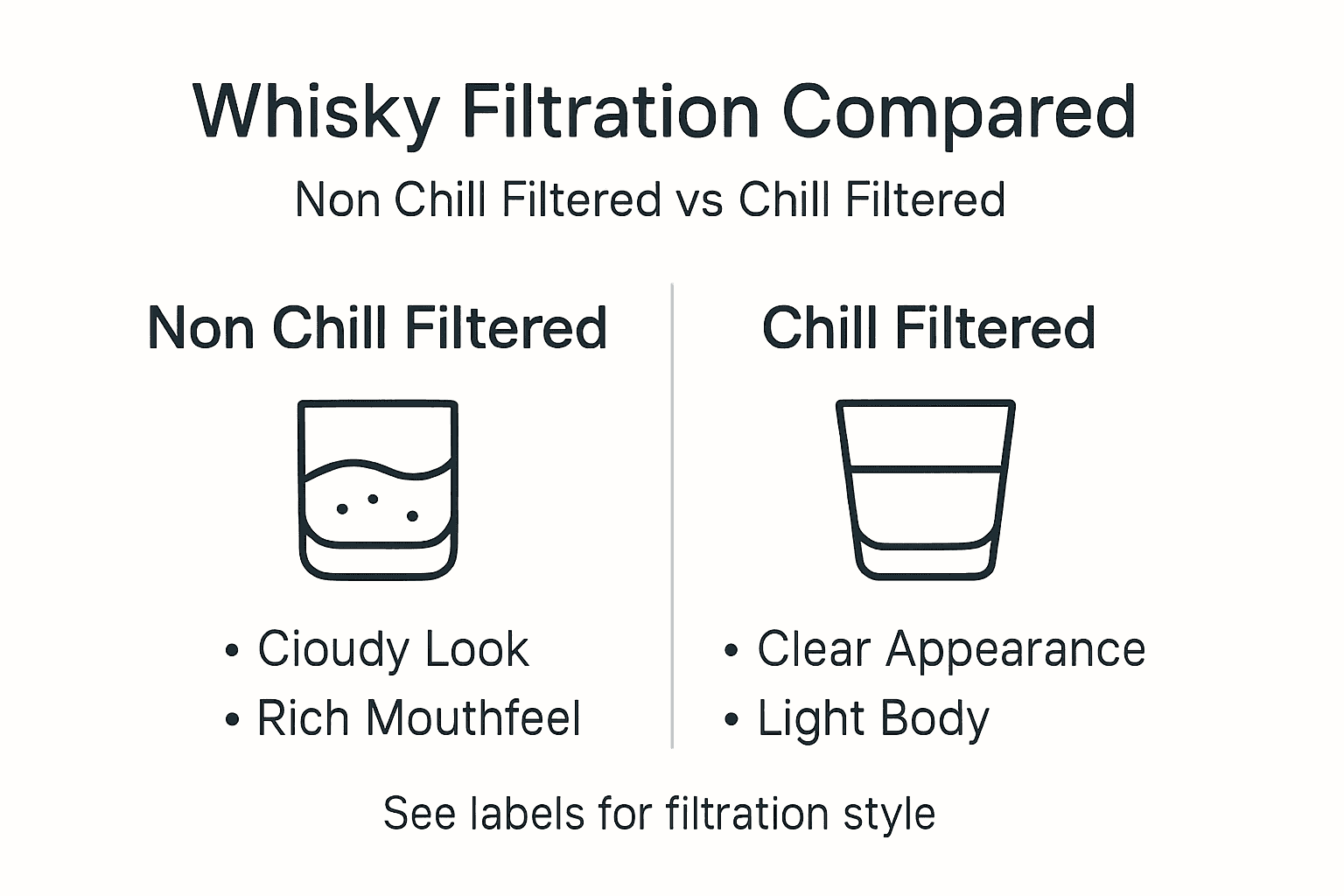
Non chill filtered and chill filtered whiskies represent fundamentally different approaches to production. The choice between them determines what actually ends up in your glass and how the spirit behaves when you drink it.
The core difference lies in what gets removed. Chill filtered whiskies lose fatty acids and proteins to achieve visual clarity. Non chill filtered whiskies retain these natural compounds entirely. That single choice cascades into differences across texture, flavour, appearance, and price.
Direct Comparison: What Changes
Here’s what distinguishes these two categories:
| Characteristic | Non Chill Filtered | Chill Filtered |
|---|---|---|
| Appearance | May cloud when chilled | Always crystal clear |
| Mouthfeel | Rich, oily, coating | Lighter, thinner palate |
| Flavour complexity | Layered, nuanced, full | Cleaner, sometimes flatter |
| Aroma intensity | Greater aromatic depth | More straightforward |
| Price point | Premium pricing | Lower cost typically |
| Target audience | Purists and collectors | Mainstream consumers |
When you taste them side by side, the mouthfeel difference becomes immediately obvious. Comparing whisky styles for expert evaluation reveals how non chill filtered spirits coat your palate while filtered alternatives fade quickly.
Why Distilleries Choose Filtration
Producers adopt chill filtration primarily for visual consistency and shelf appeal. Consumers often judge whisky by appearance first. Clear bottles sell better to mainstream markets. The trade-off? Losing the very compounds that create complexity and warmth.
Non chill filtered whiskies sacrifice marketability for authenticity. Balancing clarity and mouthfeel becomes a deliberate choice—prioritising what drinkers actually taste over what they initially see.
The Sensory Reality
Non chill filtered whisky delivers richer texture, fuller mouthfeel, and greater aroma complexity. Those fatty acids and esters aren’t impurities—they’re flavour compounds. Removing them simplifies the spirit, making it more approachable but less interesting.
Chill filtered alternatives appeal to drinkers seeking consistency and aesthetics. They’re technically easier to produce at scale. But you sacrifice depth and character in the process.
The choice between non chill filtered and chill filtered whisky isn’t about which is objectively better—it’s about whether you value visual clarity or sensory completeness.
Australian whisky enthusiasts increasingly recognise non chill filtered expressions as the authentic choice. Uisuki’s collection emphasises these bottles because serious collectors understand what filtration removes.
Pro tip: Purchase both a non chill filtered and chill filtered whisky from the same distillery if available—tasting them together immediately reveals why the filtration decision matters far more than marketing claims suggest.
Discover the Full Flavour of Non Chill Filtered Whisky with Uisuki
The challenge many whisky lovers face is finding authentic, non chill filtered expressions that preserve every rich nuance and complex mouthfeel as intended by the distiller. If you value fuller body, natural cloudiness, and deeper flavour profiles, settling for chill filtered options means missing out on those essential character traits. At Uisuki, we understand the importance of tasting whisky in its purest form without compromises.

Explore our curated selection of non chill filtered whiskies sourced from Scotland, Japan, Australia, and beyond. Each bottle speaks to craftsmanship and authenticity, ready to enrich your collection or tasting experience. Visit our store now to find rare, premium releases expertly described with ABV details and flavour notes. Dont wait to elevate your whisky journey with expressions that proudly preserve the natural oils, esters, and depth that chill filtration strips away. Start shopping at Uisuki today and taste the genuine difference only non chill filtered whisky offers.
Frequently Asked Questions
What is non chill filtered whisky?
Non chill filtered whisky is a spirit that hasn’t undergone the chill filtration process during production, retaining natural fatty acids and proteins that contribute to its flavour and texture.
How does chill filtration affect whisky taste and texture?
Chill filtration removes fatty acids and esters that contribute to mouthfeel and complexity, often resulting in a lighter, less rich spirit, while non chill filtered whisky provides a fuller body and more nuanced flavours.
Why is non chill filtered whisky often more expensive?
Non chill filtered whisky tends to be priced higher because producers intentionally choose to preserve natural compounds that enhance flavour, rather than using chill filtration for visual clarity, indicating a more artisanal approach.
Is cloudiness in non chill filtered whisky a defect?
No, cloudiness in non chill filtered whisky is not a defect. It often indicates the presence of natural flavour compounds that contribute to warmth and depth, revealing the authenticity of the spirit.