

Many whisky lovers struggle to tell whiskies apart due to inconsistent tasting methods. Common errors can distort flavor perception by up to 40%. This guide offers a clear step by step framework to compare whiskies accurately, helping you develop confidence in your purchasing decisions and deepen your appreciation of premium bottles.
Table of Contents
- Prerequisites: Tools and Environment for Effective Whisky Comparison
- Understanding Whisky Styles and Regional Flavor Profiles
- Step by Step Whisky Tasting Process for Comparison
- How to Record and Analyze Tasting Notes
- Common Mistakes and Troubleshooting When Comparing Whiskies
- Expected Results and Outcomes from Effective Whisky Comparison
- Explore Premium Whiskies and Expert Resources at Uisuki
Key Takeaways
| Point | Details |
|---|---|
| Proper tools matter | Tulip shaped glasses increase aroma detection by over 20% compared to standard tumblers |
| Tasting order is critical | Moving from lighter to heavier whiskies prevents palate fatigue and flavor distortion |
| Document systematically | Structured note taking improves recall by 35% and enables objective comparison |
| Water unlocks complexity | Adding 2 to 5 drops reveals hidden flavor layers in high ABV whiskies |
| Timing affects accuracy | Sessions lasting 45 to 90 minutes maintain sensory sharpness without overload |
Prerequisites: Tools and Environment for Effective Whisky Comparison
Before you taste anything, setting up the right environment makes all the difference. Your sensory accuracy depends on having proper tools and minimizing distractions that cloud judgment.
Start with the right glassware. Tulip shaped glasses increase aroma detection by over 20% compared to standard tumblers. The narrow opening concentrates volatile compounds, letting you pick up subtle notes that broader glasses miss. Invest in at least four identical glasses for side by side comparisons.
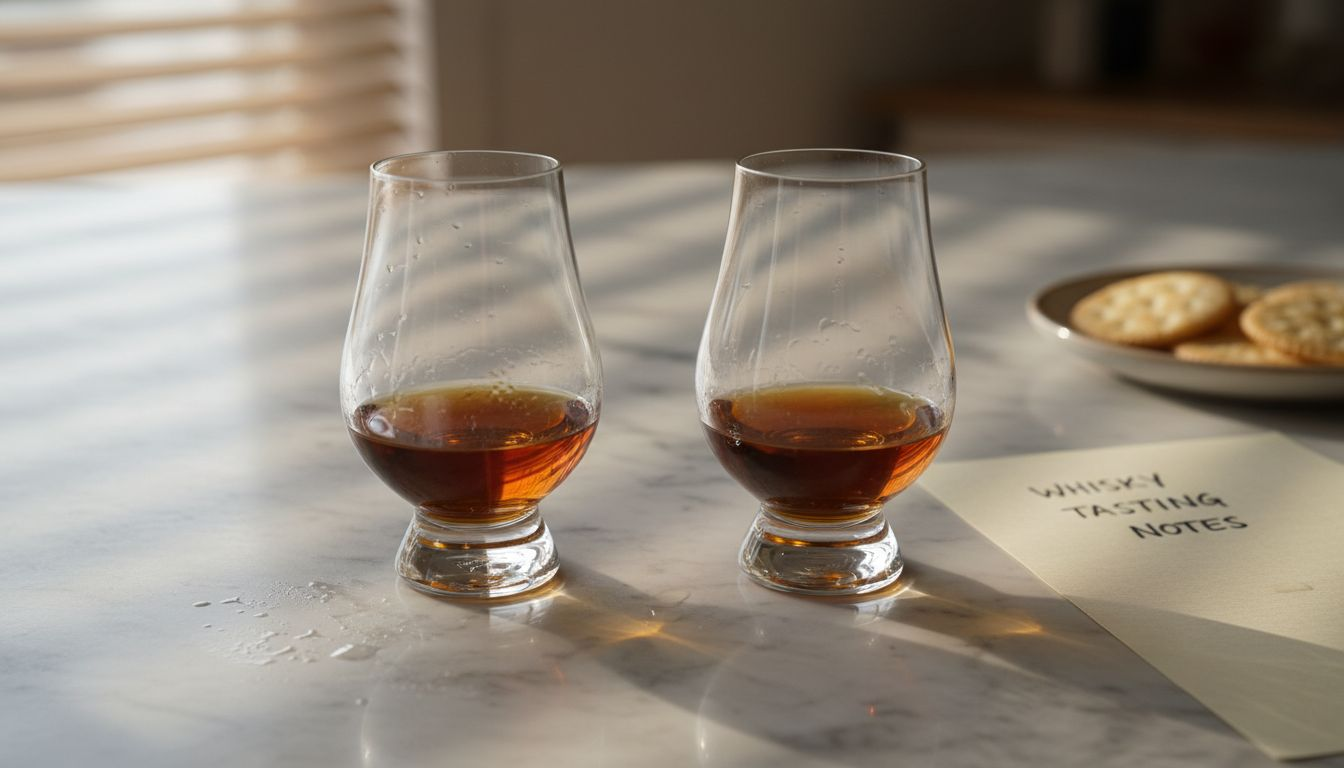
Your tasting space needs attention too. Choose a room with bright, natural light so you can assess color accurately. Eliminate strong odors like perfume, cooking smells, or scented candles that interfere with your nose. Temperature matters as well. Keep your room around 18 to 22 degrees Celsius for optimal whisky evaluation.
Prepare palate cleansers before you begin:
- Room temperature still water to rinse between samples
- Plain crackers or unsalted bread to neutralize lingering flavors
- Fresh apple slices as an alternative cleanser that refreshes without overwhelming
Finally, print or prepare standardized tasting score sheets. These forms guide your observations through appearance, aroma, taste, and finish in a consistent order. Having a structured template prevents you from skipping important details and makes comparison easier later.
Understanding Whisky Styles and Regional Flavor Profiles
Knowing what to expect from different whisky regions sharpens your ability to spot distinctions. Regional characteristics create a mental framework that helps you organize sensory information during tasting.
Distinct flavor profiles vary dramatically by origin. Islay whiskies bring intense peat smoke and medicinal notes from coastal production. Speyside expressions offer fruity, floral character with honey sweetness. Kentucky bourbons deliver vanilla, caramel, and spicy rye or corn sweetness. Japanese whiskies often present delicate, balanced profiles with subtle smoke and fruit.
Understanding these patterns helps you set sensory expectations. When you know a whisky comes from Islay, you anticipate maritime and smoky elements. This context lets you evaluate whether those characteristics appear strongly, subtly, or surprisingly absent. The comparison becomes sharper because you’re measuring against informed benchmarks.
Regional knowledge also reveals production influences:
- Peat levels in malting create smoke intensity variations
- Barrel types like ex bourbon or sherry casks add distinct flavor layers
- Climate affects maturation speed and wood interaction
- Water sources contribute mineral content and mouthfeel
This foundational understanding transforms tasting from guesswork into informed analysis. You’ll notice when a Speyside whisky shows unexpected smoke or when a bourbon presents unusual floral notes. These deviations become conversation points rather than confusion. Check out whisky flavour profiles explained for deeper regional insights.
Step by Step Whisky Tasting Process for Comparison
A systematic approach prevents the chaos that derails most whisky comparisons. Following a proven sequence ensures you capture accurate impressions while your senses stay sharp.
Taste whiskies in a specific order. Professional tasters recommend moving from lighter to heavier bodies. This sequence prevents bold, peaty, or high proof whiskies from overwhelming your palate early. Start with delicate expressions under 46% ABV, then progress to fuller bodied or cask strength bottles.
Follow these evaluation stages for each whisky:
- Appearance: Hold the glass against white paper and note color depth and clarity
- Nose: Swirl gently and take three short sniffs, noting immediate and developing aromas
- Palate: Take a small sip, let it coat your mouth, and identify flavors across your tongue
- Finish: Swallow and observe how long flavors linger and evolve
- Water test: Add 2 to 5 drops of water to high ABV samples and repeat steps 2 through 4
Timing matters significantly. Pace your session over 45 to 90 minutes. Rushing through samples fatigues your senses and reduces accuracy. Take at least five minutes between whiskies to cleanse your palate and record notes.
Pro tip: Between sips, sniff the back of your hand or a neutral fabric like unscented cotton. This resets your olfactory receptors better than constant water sipping. Also, breathe through your mouth while the whisky sits on your tongue to push flavors up through your nasal passage.
For comprehensive guidance on this method, explore our step by step whisky tasting guide tailored for Australian enthusiasts.
How to Record and Analyze Tasting Notes
Capturing your impressions immediately makes the difference between vague memories and actionable insights. Structured documentation turns subjective experience into comparable data.
Use standardized score sheets that separate sensory categories. Breaking down appearance, aroma, taste, mouthfeel, and finish into distinct sections improves recall by 35%. When you revisit notes weeks later, this structure helps you remember specific details rather than generic impressions.
Record observations as they happen, not from memory afterward. Write down initial nose impressions before tasting. Note palate sensations while the whisky’s still in your mouth. Capture finish duration immediately after swallowing. Waiting even two minutes leads to blurred details and merged impressions across samples.
Compare your notes side by side after the session ends. Lay out score sheets for all whiskies and scan across categories. This visual comparison reveals patterns you missed during tasting. Maybe three whiskies showed honey notes, but one had sharper citrus cutting through. Perhaps two finishes lasted similarly long, but one turned drying while another stayed sweet.
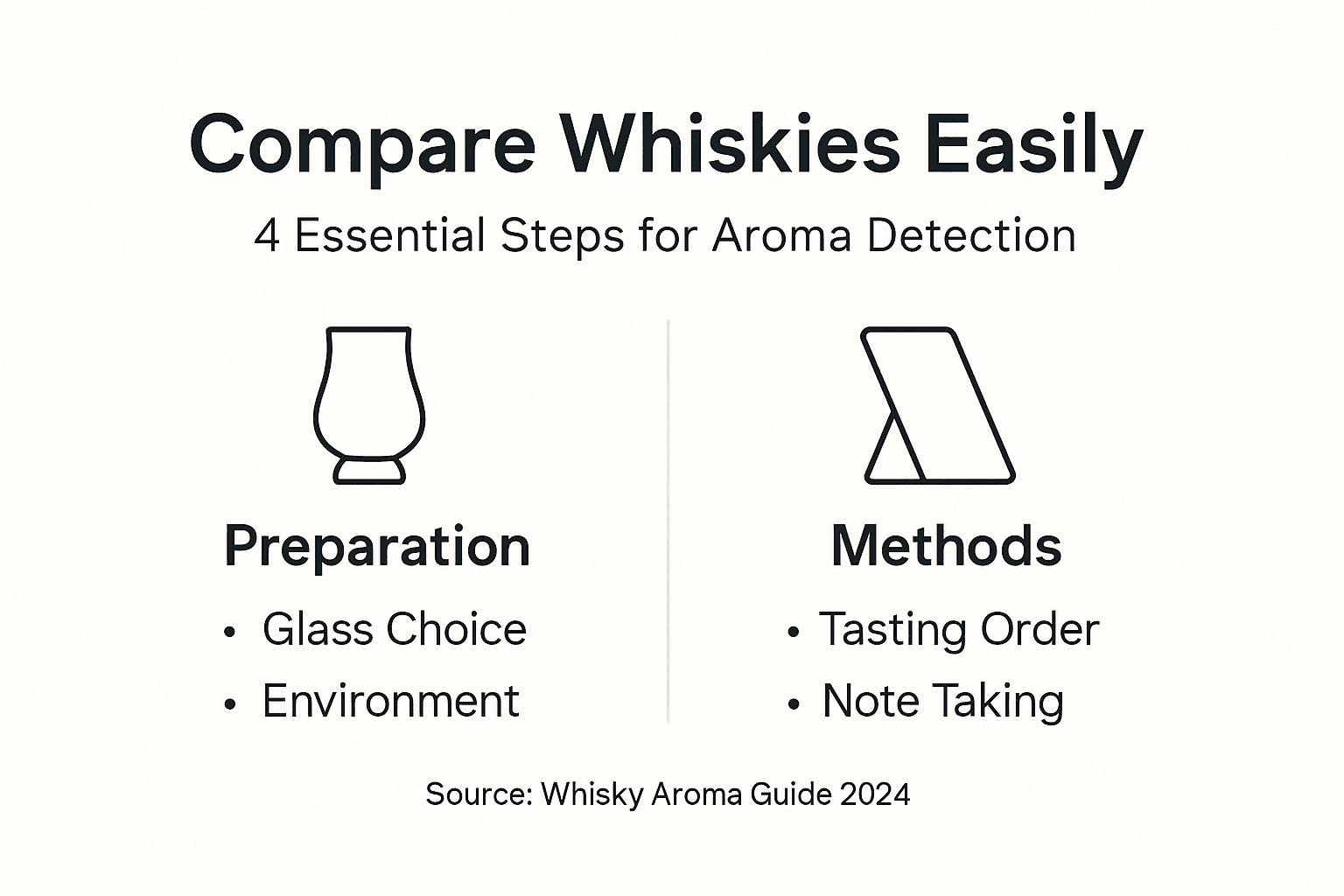
This table shows key sensory criteria and useful descriptors:
| Category | What to Note | Example Descriptors |
|---|---|---|
| Appearance | Color depth, clarity, viscosity | Pale gold, amber, mahogany, clear, cloudy, thick legs |
| Aroma | Immediate and developing scents | Vanilla, smoke, citrus, floral, oak, caramel, maritime |
| Taste | Flavor intensity and evolution | Sweet, spicy, fruity, nutty, chocolatey, peppery |
| Mouthfeel | Texture and weight | Smooth, oily, creamy, thin, warming, coating |
| Finish | Duration and changing flavors | Short, medium, long, drying, sweet, spicy fade |
For detailed note taking techniques, visit how to take whisky tasting notes on our blog.
Common Mistakes and Troubleshooting When Comparing Whiskies
Even experienced tasters fall into traps that compromise comparison accuracy. Recognizing these errors helps you correct course before they ruin your session.
Random tasting order creates the biggest problems. Evaluating whiskies randomly causes 40% flavor distortion because intense expressions numb your palate for lighter ones. Always arrange samples from lightest to heaviest based on proof and flavor intensity.
Tasting whiskies in improper order causes up to 40% distortion in flavor perception, making accurate comparison nearly impossible.
Rushing through samples kills accuracy. Taking less than three minutes per whisky means you miss developing aromas and flavor evolution. Pacing properly improves sensory precision by at least 30%. Set a timer if needed to enforce adequate evaluation time.
Other frequent mistakes include:
- Using improper glassware like tumblers that let aroma escape too quickly
- Skipping palate cleansing between samples, causing flavor carryover
- Tasting while hungry, tired, or after strong foods that linger on your palate
- Evaluating too many whiskies in one session, typically more than six
Pro tip: If your palate feels fatigued mid session, smell fresh coffee beans for 30 seconds. This olfactory reset works better than continuous water sipping. Take a five minute break, step outside for fresh air, then resume with renewed sensitivity.
Wrong temperature also affects results. Whiskies served too cold suppress aroma compounds. Too warm and alcohol vapors overwhelm subtler notes. Keep bottles at room temperature, around 18 to 20 degrees Celsius. Learn from expert whisky comparison mistakes to refine your technique further.
Expected Results and Outcomes from Effective Whisky Comparison
Applying these systematic methods delivers tangible improvements in your whisky evaluation skills. Understanding realistic benchmarks helps you measure progress and stay motivated.
Properly timed sessions between 45 and 90 minutes prevent sensory overload. You’ll notice that stretching comparisons beyond 90 minutes leads to diminishing returns as your palate fatigues. Shorter focused sessions yield better data than marathon tastings.
Your ability to detect and describe subtle differences grows noticeably:
- You’ll distinguish between vanilla from bourbon barrels versus sweetness from sherry casks
- Smoke intensity variations become clear, from light wisps to heavy peat
- Finish characteristics reveal themselves in detail, including how flavors shift over time
- Regional signatures emerge more distinctly as your sensory vocabulary expands
Purchasing confidence increases dramatically. Instead of relying on marketing descriptions or price points alone, you’ll know which flavor profiles genuinely appeal to you. This knowledge prevents expensive disappointments and helps you explore new expressions strategically.
Your overall whisky appreciation deepens through structured engagement. Casual sipping becomes intentional exploration. You’ll find yourself noticing nuances in everyday drams that previously went undetected. Social tastings become more enjoyable as you contribute informed observations rather than vague impressions.
These outcomes compound over time. Each tasting session builds your sensory library and comparison skills. After a dozen structured comparisons, you’ll spot characteristics immediately that once took minutes to identify.
Explore Premium Whiskies and Expert Resources at Uisuki
Now that you’ve mastered comparison techniques, apply them to exceptional bottles worth your attention. Uisuki offers carefully curated premium whiskies from Scotland, Japan, Australia, and beyond, selected specifically for enthusiasts who appreciate nuanced differences.
Our expert whisky tasting guide provides deeper insights tailored for Australian palates and preferences. When you’re ready to invest in collectible expressions, the guide to buying premium whisky helps you make informed decisions. Discover rare finds like Ichiros Malt and Grain Limited Edition, perfect for practicing advanced comparison techniques on world class blended whisky.
Frequently Asked Questions
How important is glassware shape in whisky tasting?
Glassware shape dramatically affects aroma detection. Tulip shaped glasses concentrate volatile compounds at the rim, increasing your ability to identify subtle notes by over 20%. Standard tumblers let aroma escape too quickly, making comparison less accurate.
Can adding water always improve whisky flavor?
Water helps high proof whiskies above 46% ABV by releasing trapped aroma compounds. Adding 2 to 5 drops opens up complexity without diluting character. Lower proof whiskies may lose intensity with water, so test cautiously.
What’s the best way to cleanse my palate between whiskies?
Room temperature still water works well for basic rinsing. Plain crackers or bread neutralize lingering flavors more effectively. Fresh apple slices offer a refreshing alternative that cleanses without overwhelming your palate for the next sample.
How often should I record tasting notes during a session?
Write observations immediately as you experience each whisky. Capture nose impressions before tasting, palate notes while the whisky’s in your mouth, and finish details right after swallowing. Waiting even two minutes causes details to blur.
Is it necessary to know whisky regions before tasting?
Regional knowledge helps you set informed expectations and spot deviations from typical profiles. Understanding that Islay whiskies tend toward smoke or Speyside toward fruit sharpens your ability to evaluate whether those characteristics appear as expected. This context transforms tasting from guessing into informed analysis.