

Every glass of whisky tells a story shaped by its region, yet many drinkers are surprised to learn just how much climate and terrain influence every sip. For an Australian enthusiast, understanding regional variation deepens both appreciation and enjoyment. From the rugged coasts of Scotland to Japan’s misty mountains, each area brings a unique character to the spirit. Discover why exploring these differences transforms drinking whisky into an adventure that reveals the world in your glass.
Table of Contents
- What Regional Variation In Whisky Means
- Influence Of Climate And Geography
- Local Ingredients And Water Sources
- Traditional Methods And Distillation Laws
- Comparing Prominent Whisky Regions Globally
Key Takeaways
| Point | Details |
|---|---|
| Regional Variation in Whisky | Whisky characteristics are shaped by geography, climate, and local ingredients, offering a diverse sensory experience. |
| Impact of Ingredients and Water | The quality of local barley and water sources greatly influences whisky’s flavour, with each region contributing unique profiles. |
| Traditional Distillation Methods | Historical practices and legal standards in whisky production ensure authenticity and quality, highlighting regional craftsmanship. |
| Global Whisky Comparison | Each whisky region, from Scotland to Japan and the USA, presents distinctive narratives of culture and climate through their spirits. |
What Regional Variation In Whisky Means
Whisky isn’t just a drink—it’s a liquid geography lesson. Every region imprints its unique character on the spirit, transforming what might seem like a simple alcohol into a complex sensory experience. Understanding regional variation means exploring how landscape, tradition, and local ingredients dramatically shape whisky’s personality.
Historically, regional styles emerged as blenders sought distinctive flavour profiles. Blenders needed a spectrum of flavours, which prompted distilleries to develop signature characteristics. This practice transformed regional differences from mere geographic markers into a sophisticated map of taste expectations. For newcomers, regional categorisation provides an accessible framework for understanding whisky’s incredible diversity.
The nuances of regional variation extend far beyond simple geographic boundaries. Climate influences grain quality, water composition affects fermentation, and local peat characteristics determine smokiness. In Scotland, for instance, Islay whiskies are renowned for their intense maritime character, while Highland malts offer more complex, rounded flavour profiles. These distinctions aren’t just marketing—they represent generations of refined craft and intimate environmental understanding. Japanese whisky producers, drawing inspiration from Scottish techniques, have also developed their own remarkable regional expressions, demonstrating how regional variation is a dynamic, evolving concept.
While regional characteristics provide an excellent starting point for understanding whisky, seasoned enthusiasts recognise that individual distillery practices, ageing techniques, and specific production methods ultimately define a whisky’s true character. Regional styles offer a compelling narrative, but they’re just the beginning of a much richer story of craftsmanship and flavour exploration.
Influence Of Climate And Geography
Whisky is far more than just a beverage—it’s a liquid reflection of its environment. The landscape, climate, and geography where barley grows and whisky is produced play a profound role in shaping the spirit’s ultimate character. Every subtle environmental nuance translates into distinctive flavour profiles that tell a complex story of place and tradition.
Scientific research has revealed that environmental conditions fundamentally impact whisky flavour, demonstrating how terroir extends beyond wine into the world of spirits. The precise location where barley is cultivated influences everything from grain quality to mineral content, creating unique flavour expressions that cannot be replicated elsewhere. Temperature variations, soil composition, rainfall patterns, and sunlight exposure all contribute to the whisky’s intrinsic characteristics.
Consider the dramatic differences between coastal and inland regions. Islay whiskies from Scotland’s windswept western islands carry intense maritime notes—briny, peaty flavours that reflect the harsh oceanic environment. In contrast, Highland whiskies grown in more sheltered inland areas develop softer, more rounded profiles with hints of heather and grain. The microclimate of each distillery becomes a critical ingredient, transforming local environmental conditions into a sensory experience that cannot be manufactured or duplicated.

Ultimately, geography isn’t just a backdrop for whisky production—it’s an active ingredient. Each region’s unique environmental signature becomes encoded in the spirit, creating a liquid narrative that speaks directly of its origins. From the misty Scottish glens to the cool Japanese mountains, geography writes a flavour story that enthusiasts can taste with every carefully crafted sip.
Local Ingredients And Water Sources
The soul of whisky lies not just in its production process, but in the very ingredients that form its foundation. Local ingredients represent more than simple agricultural products—they are the fundamental building blocks that transform a generic spirit into a distinctive regional expression with its own unique character and story.
The land itself profoundly influences whisky’s flavour, with soil, water, and local agricultural conditions playing critical roles. Barley grown in different terrains carries distinctive mineral profiles and subtle flavour nuances that become embedded in the final spirit. For instance, peaty Islay soil imparts a remarkable smoky, earthy quality to the region’s whiskies, creating a flavour profile impossible to replicate elsewhere.
Water sources are particularly crucial, with each region’s unique mineral composition contributing to the whisky’s distinctive character. Highland waters filtered through ancient granite create crisp, clean flavour profiles, while Speyside waters from mountain streams introduce complex mineral undertones. Islay’s water, naturally filtered through peat, adds an unmistakable maritime smokiness that has become synonymous with the island’s whisky tradition. These water sources are not mere ingredients but living components that breathe regional identity into every drop.
Beyond water and grain, local ingredients extend to the broader ecosystem. The surrounding vegetation, atmospheric conditions, and even the microclimates of specific valleys contribute subtle yet profound characteristics. A whisky is therefore not just a drink, but a liquid representation of its entire environmental context—a sensory journey that captures the essence of its birthplace in every carefully crafted sip.
Traditional Methods And Distillation Laws
Whisky production is a delicate dance between time-honoured tradition and precise regulatory frameworks. Each region maintains its own intricate set of practices that transform raw ingredients into a spirit with profound cultural significance, balancing centuries-old techniques with modern legal requirements.
Within the European Union, whisky must adhere to stringent production standards that protect its authenticity and quality. These regulations specify precise parameters including distillation techniques, alcohol content, and ageing processes. Distillers must carefully craft their spirits to meet specific criteria: cereals form the base mash, alcohol content must be meticulously controlled, and wooden cask ageing becomes a mandatory stage of production. The regulations demand that whisky be distilled to less than 94.8% alcohol by volume, aged for a minimum of three years in wooden casks not exceeding 700 litres, and maintain a minimum alcohol content of 40%.
Traditional distillation methods represent more than technical processes—they are living cultural narratives passed through generations. Copper pot stills, carefully monitored fermentation times, and specific cuts during distillation all contribute to a whisky’s distinctive character. Some regions maintain almost ritualistic approaches to production, with master distillers using techniques unchanged for centuries. These methods aren’t merely about creating alcohol, but preserving a profound connection to cultural heritage and local craft.
Beyond legal frameworks, traditional methods reflect a deep respect for ingredients and environment. Each step—from grain selection to final maturation—represents a deliberate choice that honours both scientific precision and artistic interpretation. The result is a spirit that transcends mere beverage, becoming a liquid embodiment of regional identity, craftsmanship, and generations of accumulated knowledge.
Comparing Prominent Whisky Regions Globally
While whisky production spans the globe, certain regions have distinguished themselves through centuries of craftsmanship, each offering a unique sensory narrative that reflects its distinct environmental and cultural heritage. The diversity of global whisky production tells a complex story of terroir, tradition, and technical expertise.
In Scotland, the Speyside region represents the heartland of whisky production, comprising an impressive 40 percent of the country’s distilleries. Located around the River Spey and its tributaries in the central highlands, this region defies simple categorisation. The sheer number of distilleries and the profound variation in their outputs makes generalisations challenging, highlighting the nuanced nature of whisky craftsmanship.
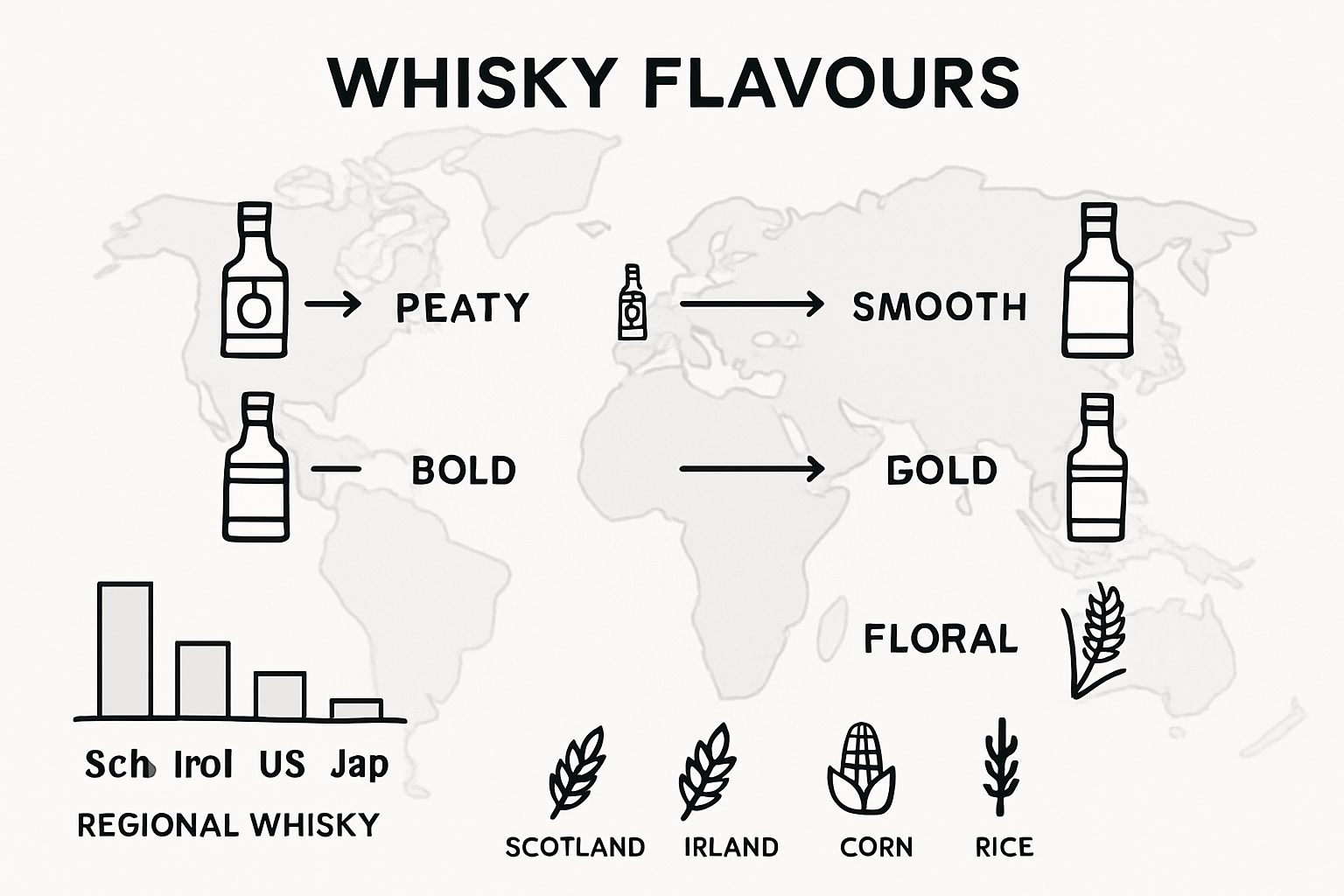
Irish whiskey regions present another fascinating landscape of diversity, with counties like Antrim, Cork, and Down each contributing distinctive characteristics to the spirit. These regional variations have become increasingly significant in the world of whisky heritage, with collectors and enthusiasts prizing the unique expressions that emerge from specific geographical areas. Japan has also emerged as a powerhouse, bringing precision and innovative techniques to whisky production, while American bourbon regions like Kentucky offer their own robust and characterful interpretations.
Ultimately, comparing whisky regions is less about determining superiority and more about appreciating the incredible diversity of human creativity. Each region tells a story through its spirits—a narrative of landscape, climate, cultural practice, and generational knowledge translated into a liquid form that can be experienced with every carefully crafted sip.
Discover the True Flavour of Regional Whisky with Uisuki
Exploring why whisky varies by region reveals the intricate role of climate, geography, water sources and traditional methods in shaping its flavour. If you want to experience these unique regional characteristics firsthand, start your journey with our carefully curated selection of premium whiskies. Dive into the diverse world of Scotch whisky including iconic choices from Glendronach – Uisuki.com.au and discover the craftsmanship behind every bottle.

Unlock the secrets behind whiskies from renowned regions and taste the stories that geography and tradition have crafted. Visit Uisuki.com.au now for expert guidance, rare finds, and fast shipping across Australia. Whether you are a seasoned enthusiast or new to whisky’s regional diversity, our collection lets you savor every distinctive flavour moment. Shop today to experience whisky as a true reflection of its origin.
Frequently Asked Questions
What factors influence the flavour of whisky?
The flavour of whisky is influenced by various factors, including climate, geography, local ingredients, water sources, traditional methods, and distillation laws. Each of these elements contributes to the unique character and taste profile of whisky from different regions.
How does geography affect whisky production?
Geography plays a critical role in whisky production by affecting the quality of barley, water composition, and even the microclimate of distilleries. These geographic factors shape the taste profile of the whisky, with each region producing distinct flavour characteristics that reflect its environment.
Why is local water important in whisky making?
Local water is essential in whisky making as its mineral composition contributes significantly to the whisky’s overall flavour. Water sources can influence crispness, complexity, and other flavour qualities, making them an integral part of the whisky’s identity.
How do traditional distillation methods impact whisky flavour?
Traditional distillation methods impact whisky flavour by incorporating time-honoured techniques, such as the use of copper pot stills and specific fermentation processes. These methods preserve cultural heritage and significantly affect the character and quality of the final product.