

Almost every whisky lover has stumbled across confusing numbers on the bottle and wondered what they truly mean. Whisky ABV typically ranges from 40% to over 60%, affecting everything from flavor to legal standards. Understanding Alcohol by Volume is more than a technical detail—it shapes taste, impacts enjoyment, and challenges some of the hobby’s biggest myths. This deep dive will clear up common misconceptions and show how ABV really influences your whisky experience.
Table of Contents
- Defining ABV In Whisky And Common Myths
- How ABV Shapes Whisky Flavor And Aroma
- ABV Variations: Cask Strength, Standard, And Beyond
- Legal Standards For ABV In Whisky Worldwide
- Collecting, Enjoying, And Storing High-ABV Whisky
- Risks, Safety, And Responsible Whisky Enjoyment
Key Takeaways
| Point | Details |
|---|---|
| Understanding ABV | Alcohol by Volume (ABV) indicates the alcohol content in whisky, crucial for flavor intensity and consumer responsibility. |
| Impact on Flavor | ABV levels affect whisky flavor and aroma; higher percentages offer more complex, robust tasting experiences. |
| Regulatory Standards | Various countries enforce minimum ABV standards (typically 40%), ensuring quality and product integrity globally. |
| Responsible Enjoyment | Mindful consumption and understanding personal limits are essential for enjoying high-ABV whiskies safely. |
Defining ABV in Whisky and Common Myths
Alcohol by Volume (ABV) is the standard measure that reveals precisely how much alcohol resides within a whisky. According to NIST, ABV represents the percentage of pure alcohol contained in a specific volume of liquid, making it a critical indicator for whisky enthusiasts and responsible consumers.
Understanding ABV goes beyond simple percentage calculation. LCB explains that different proofs correspond to specific alcohol percentages - an 80-proof whisky contains exactly 40% alcohol. This measurement matters because it directly impacts the whisky’s flavor intensity, warming sensation, and potential impact on consumption.
Common myths about ABV often perplex whisky lovers. Some believe higher ABV always means better quality, which isn’t necessarily true. While higher alcohol content can indicate more concentrated flavors, it doesn’t automatically guarantee superior taste. Whisky craftsmanship involves a delicate balance between alcohol strength and flavor profile.
Key aspects of ABV in whisky include:
- Standard whisky ranges typically fall between 40-60% ABV
- Higher ABV whiskies often provide more intense flavor experiences
- Cask strength whiskies represent the purest, undiluted alcohol content
- Professional distillers carefully manage ABV to preserve subtle taste nuances
The scientific measurement of ABV involves precise techniques like hydrometers and refractometers, which track liquid density before and after fermentation. Advanced methods such as gas chromatography ensure absolute accuracy in determining alcohol percentage, demonstrating the meticulous process behind every bottle’s alcohol content.
How ABV Shapes Whisky Flavor and Aroma
Alcohol by Volume (ABV) plays a crucial role in determining the sensory experience of whisky, fundamentally influencing its flavor complexity and aromatic profile. Higher ABV percentages can dramatically transform how a whisky tastes and feels on the palate, creating nuanced and intense drinking experiences that enthusiasts seek.
Types of Whisky reveal that ABV isn’t just a number - it’s a gateway to understanding flavor development. Lower ABV whiskies around 40% tend to offer smoother, more mellow experiences, while higher ABV expressions between 50-60% provide more concentrated, robust flavor profiles that challenge and excite the palate.
According to Whiskey Barrel Institute, barrel characteristics significantly influence how ABV interacts with flavor compounds. Heavily charred barrels intensify flavor extraction, with higher alcohol percentages acting as more effective solvents that pull complex taste elements from wooden surfaces. This interaction means that cask strength whiskies - often sporting ABVs above 55% - can deliver incredibly rich and concentrated flavor experiences.
Key flavor transformations related to ABV include:
Here’s a summary of how ABV levels influence whisky characteristics:
| ABV Range | Typical Style | Flavour Impact |
|---|---|---|
| 40-43% | Standard whisky | Soft, mellow, approachable |
| 43-50% | Medium ABV whisky | Balanced, enhanced complexity |
| 50-60% | High ABV whisky | Robust, intense, concentrated |
| 60%+ | Cask strength | Maximum extraction, richness |
- Lower ABV (40-43%): Softer, more approachable flavors
- Medium ABV (43-50%): Balanced flavor expression
- High ABV (50-60%): Intense, concentrated flavor profiles
- Cask strength (60%+): Maximum flavor extraction and complexity
Whisky enthusiasts understand that ABV isn’t just about alcohol content - it’s a sophisticated lever for flavor manipulation. Professional distillers meticulously manage alcohol percentages to craft precise sensory journeys, balancing the raw power of alcohol with delicate aromatic nuances that make each whisky unique.

ABV Variations: Cask Strength, Standard, and Beyond
Whisky ABV variations represent a fascinating spectrum of alcohol content that dramatically influences the drinking experience. Springbank 12yo Cask Strength Single Malt exemplifies how these variations can transform a whisky’s character and appeal to different palates.
According to Alcohol Addiction Center, standard whisky typically hovers around 40% ABV, while cask strength variants can exceed 55% ABV. These higher alcohol content expressions offer more intense flavors and concentrated aromatics that challenge and excite whisky enthusiasts seeking deeper sensory experiences.
The ABV spectrum reveals fascinating nuances across different whisky styles:
- Standard ABV (40-43%): Smooth, approachable, widely accessible
- Medium ABV (43-50%): Enhanced flavor complexity
- High ABV (50-58%): Robust, intense flavor profiles
- Cask Strength (58-65%): Maximum flavor concentration
Professional distillers carefully calibrate alcohol percentages to unlock specific flavor characteristics. The Prevention Technology Transfer Center Network notes that while most spirits maintain around 40% ABV, cask strength whiskies demonstrate the remarkable potential for pushing flavor boundaries through alcohol concentration. Understanding these variations allows enthusiasts to explore a rich landscape of sensory experiences, from gentle and smooth to bold and intense.
Legal Standards for ABV in Whisky Worldwide
Legal regulations surrounding whisky ABV represent a critical framework that ensures product quality, consumer safety, and industry consistency. Scotch Whisky: Complete Guide provides essential context for understanding these international standards that protect both producers and consumers.
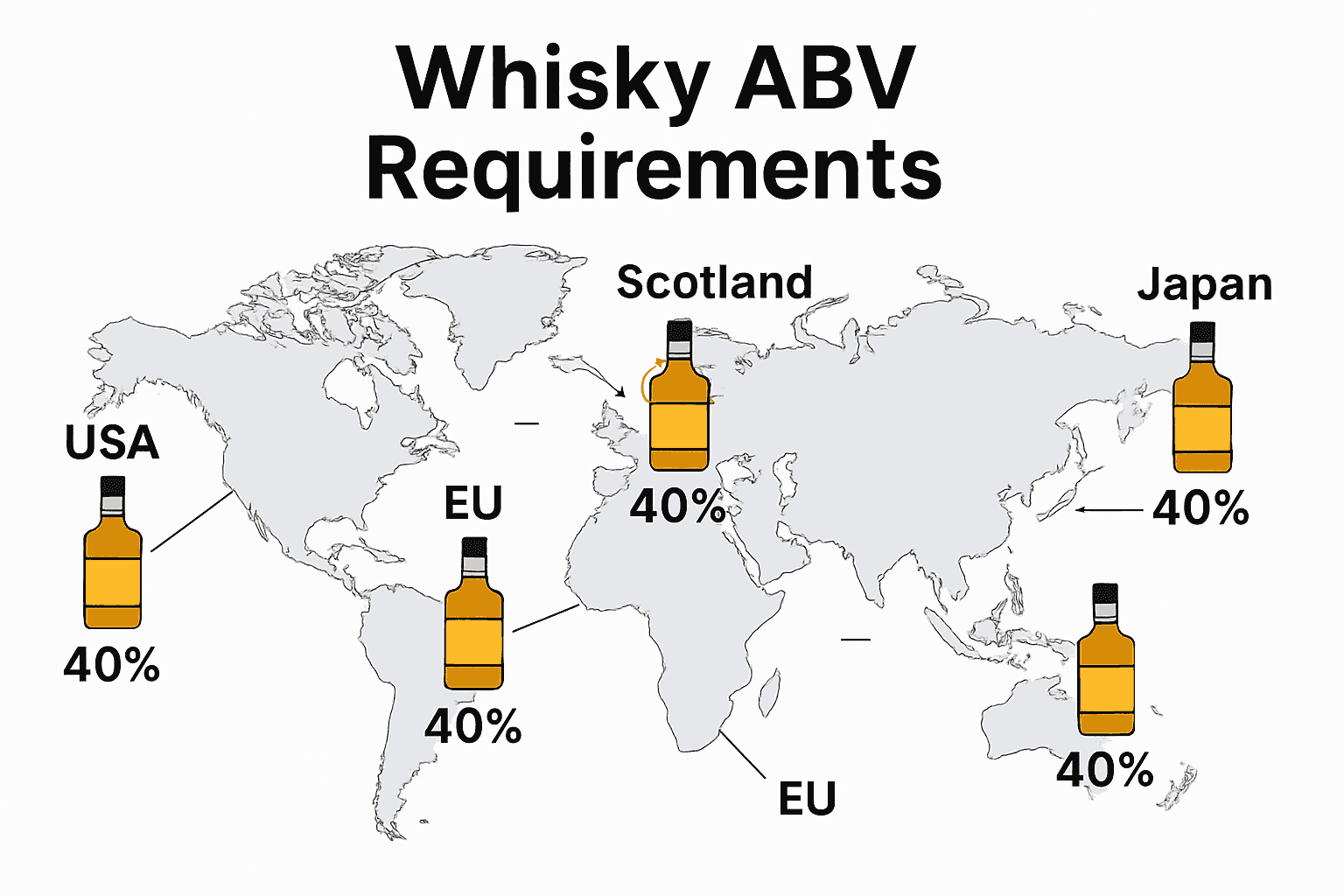
According to the International Alliance for Responsible Drinking, whisky-producing nations have established specific minimum ABV requirements to maintain product integrity. In the United States, Canada, Ireland, and Japan, whisky must have a minimum alcohol content of 40% ABV, creating a global baseline for quality and standardization.
Key legal ABV standards across different regions include:
- United States: Minimum 40% ABV
- Canada: Minimum 40% ABV
- Ireland: Minimum 40% ABV
- Scotland: Minimum 40% ABV for Scotch whisky
- Japan: Minimum 40% ABV
- European Union: Minimum 37.5% ABV for most spirits
These regulations go beyond mere numbers. They represent a commitment to preserving traditional craftsmanship, protecting consumer expectations, and ensuring that every bottle meets a fundamental standard of quality. Distilleries must carefully adhere to these legal requirements, balancing artistic expression with regulatory compliance to create exceptional whiskies that resonate with enthusiasts worldwide.
Collecting, Enjoying, and Storing High-ABV Whisky
Collecting high-ABV whisky requires a nuanced approach that balances appreciation, preservation, and sensory exploration. Understanding Why Limited Edition Whisky Matters provides valuable insights into the world of premium whisky collection and storage.
According to the Whiskey Barrel Institute, proper storage is critical for maintaining the exceptional quality of high-ABV whiskies. Environmental conditions, light exposure, and temperature play crucial roles in preserving the intricate flavor profiles of these potent spirits.
Key considerations for high-ABV whisky collectors include:
- Storage Temperature: Maintain consistent 15-20°C environment
- Light Exposure: Store in dark spaces, away from direct sunlight
- Bottle Positioning: Keep bottles upright to prevent cork degradation
- Humidity Control: Maintain 60-70% relative humidity
- Tasting Technique: Dilute high-ABV whiskies to unlock complex flavors
Whisky enthusiasts understand that high-ABV expressions demand respect and careful handling. The subtle art of enjoying these intense spirits involves understanding their unique characteristics, from dilution techniques to sensory appreciation. Professional collectors know that each high-ABV whisky tells a complex story of craftsmanship, requiring patience, knowledge, and a discerning palate to truly appreciate its intricate nuances.
Risks, Safety, and Responsible Whisky Enjoyment
Responsible whisky enjoyment requires a nuanced understanding of alcohol content and personal consumption limits. How to Enjoy Japanese Whisky serves as an excellent guide to approaching whisky consumption with mindfulness and appreciation.
According to the Distilled Spirits Council, understanding ABV is crucial for responsible alcohol consumption. Higher ABV whiskies demand even more careful consideration, as their increased alcohol content can significantly impact individual tolerance and potential health risks.
Key principles of responsible whisky enjoyment include:
- Know Your Limits: Understand personal alcohol tolerance
- Hydration: Drink water between whisky servings
- Portion Control: Use smaller glasses for high-ABV whiskies
- Eating: Consume food before and during drinking
- Alternate Beverages: Rotate with non-alcoholic drinks
Professional enthusiasts recognize that true whisky appreciation isn’t about quantity, but quality and mindful consumption. Responsible drinking means understanding your body’s response to different ABV levels, respecting your personal boundaries, and creating a safe, enjoyable experience that celebrates the craftsmanship of fine whisky without compromising personal well-being.
Discover Your Perfect Whisky ABV Match Today
Understanding the importance of ABV in whisky lets you choose spirits that truly match your taste and enjoyment style. Whether you prefer a soft, mellow sip or an intense burst of flavour, exploring options with varying alcohol content can deepen your appreciation for whisky craftsmanship. At Uisuki.com.au, we understand the challenge of navigating these choices and offer a curated range from smooth standard expressions to bold cask strength releases.
Explore our carefully selected whiskies from around the world on the World Whiskies collection or dive into the rich traditions of Scotland with premium bottles from the Scotch Whisky - Ardbeg range. Our detailed listings include ABV percentages helping you make informed decisions with confidence. Don’t wait to elevate your whisky experience. Visit us now at Uisuki.com.au and find the ideal balance of flavour intensity and alcohol strength today.
Frequently Asked Questions
What does ABV stand for in whisky?
ABV stands for Alcohol by Volume, which measures the percentage of pure alcohol within a specific volume of whisky. It is a critical indicator for consumers regarding alcohol strength and content.
How does ABV affect the flavor of whisky?
Higher ABV percentages typically result in more intense and concentrated flavors, while lower ABV whiskies offer smoother and milder taste experiences. The balance between alcohol strength and flavor profile is crucial in whisky crafting.
What is a cask strength whisky?
Cask strength whisky is a type of whisky that is bottled without dilution, often having an ABV above 60%. It retains maximum flavor concentration and complexity, offering a rich sensory experience.
How should high-ABV whisky be stored for optimal preservation?
High-ABV whisky should be stored in a consistent temperature environment of 15-20°C, away from direct sunlight, upright to prevent cork degradation, and in a relative humidity of 60-70% to maintain its quality.
Recommended
- Ardbeg Heavy Vapours Limited Edition 46% ABV 700ml – Uisuki.com.au
- Ardbeg Traigh Bhan 19 Year Old Single Malt Scotch Whisky (700ml) - Bat – Uisuki.com.au
- Choosing Single Malt Whisky: A Step-by-Step Expert Guide – Uisuki.com.au
- Ardbeg Traigh Bhan 19 Year Old Single Malt Scotch Whisky 700ml - Batch – Uisuki.com.au
- How to Spot Quality Wine in South Africa (2025) | Vinty