

TL;DR:
- Rye whisky is a regulated sub-type of whiskey made from at least 51% rye grain in the US, with distinct regulations shaping its character. It offers a spicy, dry profile that varies significantly depending on mash bill, production methods, and region, contrasting with broader whiskey styles. Understanding these differences enhances tasting, collecting, and appreciation of this complex spirit category.
Pour two glasses side by side — one a classic blended Scotch, the other a high-rye American straight — and you’re already holding proof that “whiskey” is far more layered a category than most people give it credit for. A surprisingly common assumption among newer enthusiasts is that rye whisky is simply a spicier version of whatever’s already in the cabinet, a loose synonym rather than a distinct spirit with its own regulations, grain science, and collecting culture. This guide untangles the definitions, traces the production differences, maps the flavour territory, and explains why understanding those distinctions will sharpen both your palate and your purchasing decisions.
Table of Contents
- Whiskey vs rye whisky: What’s the real difference?
- How production shapes character
- Flavour, aromas and drinking experience
- Regional differences: United States, Canada and beyond
- Why the debate matters: collecting, appreciating, and tasting with intent
- Explore and refine your rye whisky journey
- Frequently asked questions
Key Takeaways
| Point | Details |
|---|---|
| Grain choice drives flavour | Rye whisky’s hallmark spice comes directly from its high rye content, setting it apart from sweeter, milder whiskies. |
| Regional standards are crucial | American and Canadian rye whiskies use the term ‘rye’ differently, impacting flavour and collecting value. |
| Production details matter | Everything from yeast to barrel type to mash bill influences the end result more than many enthusiasts realise. |
| Label doesn’t tell all | Two spirits labelled ‘rye’ can taste completely different depending on region and mash bill details. |
Whiskey vs rye whisky: What’s the real difference?
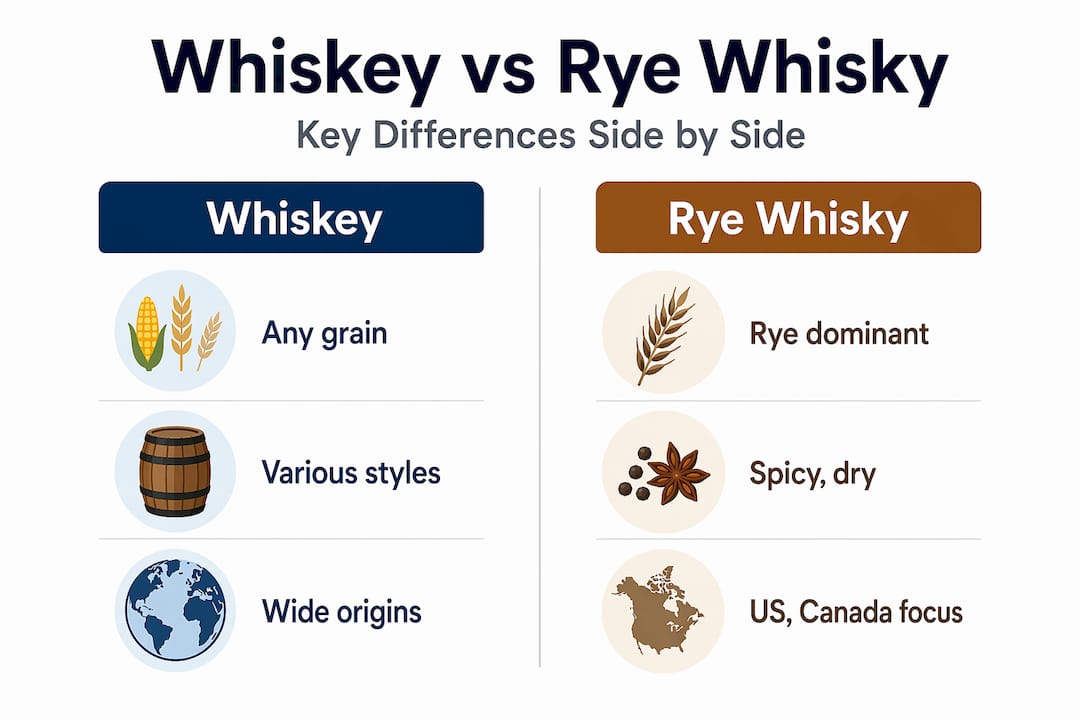
Before diving into grains and barrels, it helps to settle the terminology. The word “whiskey” (or “whisky” depending on country of origin) is a category name, not a recipe. It covers an enormous family of spirits made from fermented grain mash and aged in wood. As Britannica explains, whiskey is a broad distilled category made from fermented grain mash using corn, barley, rye, or wheat, then aged in oak barrels. Bourbon, Scotch, Irish, and rye are all whiskies. Rye is not a synonym for whiskey — it is a regulated sub-type within the broader family.
Rye whisky earns its name through strict grain requirements. In the United States, rye whiskey must meet specific legal thresholds: a mash bill of at least 51% rye grain, distilled to no more than 160 proof, filled into new charred oak at no more than 125 proof, and bottled at a minimum of 80 proof. These standards exist to protect the integrity and character of the style. For a deeper read on the nuances, our whisky versus rye guide walks through the full spectrum, and understanding grain types in whisky helps put the rye grain’s role into broader context.
The simplest way to frame it: all rye whisky is whiskey, but the reverse is absolutely not true.
“Rye whisky is a subset of whiskey, not a replacement term. Knowing the difference is the first step towards building a collection with real depth and purpose.”
| Feature | Whiskey (category) | Rye whisky (US) |
|---|---|---|
| Origin | Global | Primarily USA, Canada |
| Key grain | Varies (corn, barley, wheat, rye) | Minimum 51% rye (US) |
| Legal regulation | Country-specific | Strict US TTB standards |
| Flavour profile | Broad: sweet to smoky | Spicy, peppery, dry |
| Barrel requirement | Varies | New charred oak (US) |
How production shapes character
Knowing the definition is only the starting point. To truly appreciate what rye whisky brings to the table, you need to understand what happens in the distillery from the moment the grain arrives.
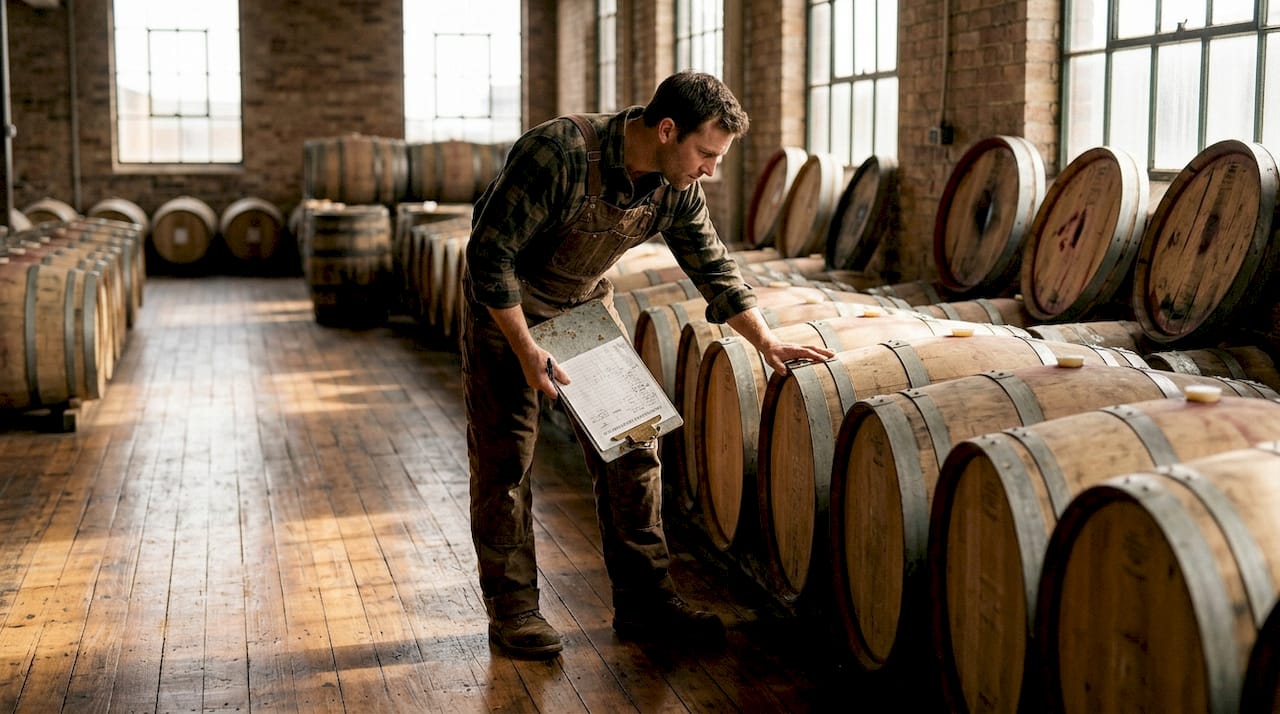
Both rye whisky and other whiskies share the same broad production framework. Grain is mashed with hot water to convert starches into fermentable sugars, yeast is added to ferment the wash, the liquid is then distilled using pot or column stills, and the new make spirit is placed into oak barrels to mature. As distillery experts confirm, the shared production process covers grain mashing, fermentation, distillation, and oak ageing, but rye introduces a specific challenge in the mash house: its high pentosan content.
Pentosans are complex carbohydrates found in the cell walls of rye grain. When rye is mashed, these compounds release a sticky, gel-like substance that dramatically increases the viscosity of the mash. Distillers must manage this carefully, often by using specific enzyme additions or adjusting water temperatures, to ensure efficient lautering and fermentation. This is not a minor inconvenience — it fundamentally shapes workflow and can influence fermentation outcomes.
Yeast selection adds another layer of complexity. Certain yeast strains, known as POF+ (phenolic off-flavour positive), convert ferulic acid in the rye grain into compounds like eugenol and guaiacol. The spice compounds in rye also come from essential oils such as carvacrol and thymol, and higher rye percentages directly increase their intensity. In plain terms, the yeast and the grain are in constant flavour conversation throughout fermentation.
| Production variable | Effect on rye whisky |
|---|---|
| 51-65% rye mash bill | Rounder body, some sweetness present |
| 80-95% rye mash bill | Pronounced spice, drier finish |
| 100% rye mash bill | Grain-forward, sharp, intense |
| New charred oak (US) | Vanilla, caramel, oak integration |
| Used oak (Canadian) | Lighter body, less wood influence |
| POF+ yeast | Elevated spice and herbal character |
Pro Tip: When reading a rye whisky label, see if the producer lists their mash bill percentage. A 95% rye mash from a producer like High West or WhistlePig will drink very differently from a 51% rye, even at the same age and proof. The number tells you more than the name.
For a thorough breakdown of how whisky flavour profiles are shaped by production decisions, and a look at different whisky grains, the resources at Uisuki go well beyond surface-level explanations.
Flavour, aromas and drinking experience
Production sets the stage. What you actually taste in the glass is where all those technical decisions come to life, and where rye whisky clearly distinguishes itself from the broader whiskey family.
Rye whisky’s signature is spice. That peppery bite comes directly from ferulic acid conversion into eugenol and guaiacol, alongside the essential oils carvacrol and thymol naturally present in the grain. Higher rye content sharpens and intensifies this character considerably. But rye is never a one-note spirit. Depending on the mash bill and maturation approach, you’ll also encounter:
- Low-rye whiskies (51 to 65% rye): Fuller body, mild sweetness in balance with spice, approachable finish. Think of these as a gateway into the style.
- High-rye whiskies (80 to 95% rye): Drier palate, pronounced pepper and herbal notes, longer and warmer finish. These are what most seasoned drinkers picture when they think of American rye.
- 100% rye (single grain): Intensely grain-forward, sharp, sometimes almost savoury. A genuine challenge for those new to the style, but rewarding once you understand what you’re tasting.
According to mash bill data, the spectrum from 51% to 100% rye produces dramatically different results, ranging from fuller-bodied sweetness balance at the low end to sharp grain-forward character at 100%.
Compare this to the broader whiskey landscape. Bourbon leans sweet, rich, and caramel-forward due to its corn dominance and new charred oak requirement. Scotch single malts range from delicately floral to intensely peated and smoky. Irish whiskey is typically light, smooth, and approachable. Rye occupies its own distinct territory: assertive, dry, spicy, and structured.
This structure is precisely why rye excels in cocktails. The Manhattan — rye, sweet vermouth, and bitters — is the quintessential example. Rye’s inherent dryness and spice stand up to the sweetness of vermouth without being overwhelmed, creating balance and complexity. Bourbon in the same recipe tends towards cloying sweetness. An Old Fashioned made with a high-rye expression is similarly more defined and less sugary than its bourbon counterpart.
Pro Tip: If you’re exploring rye for the first time in a cocktail, start with a 51 to 65% mash bill expression. Once your palate adjusts to the spice, step up to a high-rye option. The contrast between the two will teach you more in one evening than hours of reading.
For a direct comparison of bourbon vs rye whisky or practical advice on choosing rye or bourbon for your next purchase, those resources offer clear, practical guidance for enthusiasts at every level.
Regional differences: United States, Canada and beyond
Geography and legislation shape rye whisky as much as grain and yeast do. Two bottles labelled “rye whisky” can taste remarkably different depending on where they were produced, because the rules governing what qualifies as rye vary enormously across borders.
United States: The US has the most prescriptive standards. At least 51% rye grain in the mash bill, distillation to no higher than 160 proof, ageing in new charred oak containers, and bottling at no less than 80 proof. This framework produces the assertive, spice-led style that most global enthusiasts associate with the category. American rye is what tends to dominate cocktail culture and premium bottle releases internationally.
Canada: The Canadian approach is strikingly different. As Canadian regulations confirm, Canadian rye whisky has no minimum rye requirement, can include additives up to 9.09% of the final volume, must be aged at least three years in small wood (which does not need to be new or charred), and typically presents a lighter, more approachable profile than its American counterpart. This means a bottle labelled “Canadian rye” might contain a fairly small proportion of actual rye grain, resulting in a lighter flavour profile that surprises enthusiasts expecting American-style spice.
Beyond North America: Other regions are beginning to produce rye whiskies too, including distilleries in Germany, Australia, and Scandinavia. These producers are not bound by either US or Canadian standards and often take creative approaches to mash bills and maturation. The results vary widely, from surprisingly delicate expressions to bold experimental releases.
Key points for collectors approaching rye from a regional perspective:
- A Canadian rye and an American rye are legally distinct products despite sharing the same category name.
- Always check the country of origin before making assumptions about flavour profile or grain content.
- Emerging producers in non-traditional rye countries may offer distinctive styles that reward exploration.
- Label claims like “rye” or “high rye” without a stated percentage should prompt further research before purchase.
For a thorough primer on what is rye whisky across these different regulatory contexts, the full breakdown will help you read any label with confidence.
Why the debate matters: collecting, appreciating, and tasting with intent
Here is where we want to offer a perspective that goes beyond the standard comparison articles. The whisky collecting world has a tendency to chase labels, and the rye category is particularly susceptible to this problem.
There’s a certain type of collector who pursues “rye” bottles almost as a genre, accumulating releases from various distilleries without interrogating the mash bill or the production philosophy behind each one. They might hold a Canadian Crown Royal Rye next to a Rittenhouse 100 and assume they’re collecting within the same spirit tradition. They’re not. Not really. Those bottles represent two fundamentally different approaches to what “rye” means, and treating them as equivalent simply because the label says so is the kind of shortcut that limits genuine appreciation.
The more rewarding approach is to understand what you’re actually tasting and why. When you know that a 95% rye mash bill from a high-altitude distillery using POF+ yeast will deliver an almost medicinal herbal intensity, and that a 51% rye blend aged in second-fill oak will be substantially rounder and gentler, you are making informed decisions. You’re tasting with purpose.
We also think there’s enormous value in moving between styles rather than committing too early to one region or profile. Collectors who make informed choices by comparing low-rye and high-rye expressions, American and Canadian styles, and even experimenting with emerging producers from outside North America develop a much more nuanced palate. That nuance translates into better collecting decisions, more satisfying tasting experiences, and a richer relationship with the spirit overall.
The label is a starting point, not a destination. Let the mash bill, the distillation approach, and the maturation choices guide your appreciation. That’s where the real story lives.
Explore and refine your rye whisky journey
Understanding the theory is one thing; tasting the difference is where the knowledge becomes visceral and real.

At Uisuki, we’ve curated a selection of whiskies that let you explore precisely the spectrum we’ve described above. Whether you want to experience the influence of non-traditional maturation on Australian single malt with the Hobart whisky bourbon matured rum finish, appreciate the artistry of global blending through Ichiro’s Malt and Grain limited edition, or discover the layered coastal character of the Ardnamurchan MacLean’s Nose blended Scotch, we offer bottles that reward exactly the kind of mindful, informed tasting this guide encourages. Browse our full range, and reach out if you’re chasing something specific or rare.
Frequently asked questions
What is the main difference between whiskey and rye whisky?
Rye whisky uses rye grain as the dominant ingredient, typically 51% or more in the US, while whiskey broadly covers any distilled grain mash spirit aged in oak, without specifying which grain must dominate.
Is all rye whisky spicy in flavour?
Most rye whiskies are spicier than other types, but the exact intensity depends on the proportion of rye in the mash, since higher rye percentage directly increases the concentration of spice compounds.
Why do Canadian rye whiskies taste lighter than American rye?
Canadian rye often contains less rye grain and allows more blending flexibility, and as Canadian regulations confirm, there is no minimum rye requirement, resulting in a noticeably lighter profile.
Can rye whisky be used in all whiskey cocktails?
Yes, rye whisky substitutes well in most classic cocktails, though you should expect a spicier and drier outcome, particularly noticeable in Manhattans and Old Fashioneds where the spirit’s character is front and centre.
What should collectors look for on a rye whisky label?
Focus on the stated rye content percentage, country of origin, and ageing vessel type, as new charred oak versus used wood produces markedly different flavour outcomes and signals the producer’s stylistic intent.