

TL;DR:
- Proper scotch whisky tasting involves slow nosing, intentional palate evaluation, and careful attention to the finish. Using a tulip-shaped glass, a 25-30ml pour, and a neutral environment enhances sensory detection and flavor perception. Adding a few drops of water to high-ABV whiskies reveals more complex aromas and improves the overall experience.
Scotch whisky tasting is a structured sensory discipline that reveals the full complexity of a dram through three distinct phases: nosing, palate, and finish. Most beginners treat it like casual drinking. That is the single biggest mistake you can make. Up to 80% of perceived whisky taste comes from smell, not the tongue. That one fact alone should change how you approach every glass. Learning how to taste scotch whiskey properly means slowing down, paying attention, and working through each phase with intention. This guide gives you the exact method to do that.
What tools and environment do you need for scotch whisky tasting?
The right setup makes a measurable difference to what you detect in the glass. Glassware is the most important variable. Tulip-shaped glasses like the Glencairn concentrate volatile aromas at the rim and direct harsh ethanol vapours away from your nose. A wide tumbler scatters those aromas before they reach you. For anyone serious about developing their palate, the glass choice is not optional. You can read more about selecting the right vessel in this guide to whisky glass types.
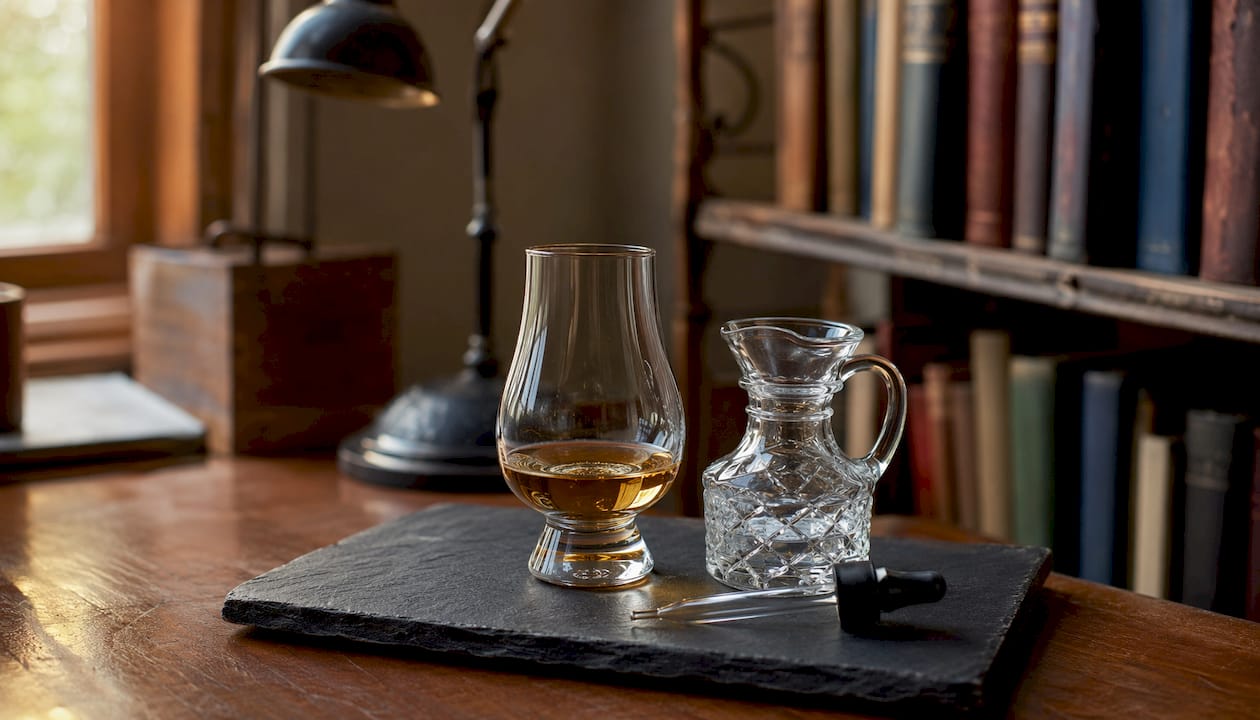
Pour size matters just as much. A structured tasting uses a 25–30ml pour. That volume gives you enough to nose and taste across multiple sips without fatiguing your palate. Larger pours overwhelm the senses quickly and reduce the quality of what you detect.
Your environment also shapes the result. Tasting in a kitchen full of cooking smells, or near strong perfume, introduces competing aromas that mask what is in the glass. Choose a neutral, odour-free space. Natural light helps you observe the whisky’s colour and viscosity, which are early quality signals.
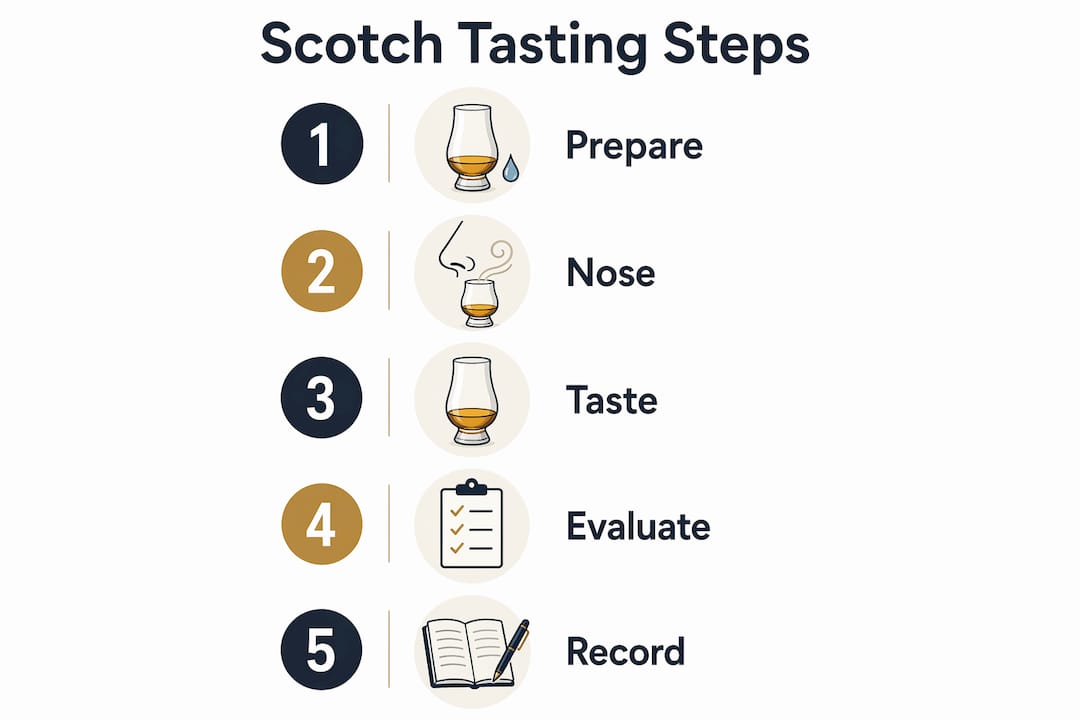
Pro Tip: Keep a small glass of still, room-temperature water nearby. Adding 2–3 drops to whiskies above 46% ABV reduces alcohol burn and releases additional flavour compounds without stripping the spirit.
Here is a quick comparison of the two most common glass types for tasting:
| Glass type | Tasting performance |
|---|---|
| Glencairn (tulip-shaped) | Concentrates aromas, reduces ethanol vapour impact |
| Wide tumbler | Disperses aromas, better for casual drinking |
Key setup checklist before you begin:
- Use a Glencairn or similar tulip-shaped glass
- Pour 25–30ml per dram
- Sit in a neutral, odour-free environment
- Have still, room-temperature water on hand
- Avoid ice entirely during structured tastings
How do you nose scotch whisky to capture its aromas?
Nosing is where the real work happens. Because smell accounts for the majority of flavour perception, spending time here pays dividends in what you detect later on the palate. The technique is specific and worth practising deliberately.
Start with the glass below your chin. Bring it up slowly toward your nose rather than plunging straight in. Holding the glass at chin level and moving it upward gradually prevents olfactory fatigue caused by a sudden hit of ethanol vapour. If you nose too aggressively at the start, the alcohol numbs your nasal receptors and you lose the subtler notes entirely.
Once the glass is near your nose, take short, gentle sniffs with your mouth slightly open. The open mouth allows air to circulate and reduces the alcohol sting. Do not inhale deeply. Short sniffs give your brain time to process each layer before moving to the next.
Spend 60–90 seconds nosing before you take your first sip. Work through aroma layers in sequence:
- Top notes — the first impressions, often light and volatile: citrus, fresh fruit, or floral tones
- Middle notes — the core character: vanilla, oak, cereal, or dried fruit
- Base notes — the deepest layer, often last to appear: smoke, leather, dark chocolate, or earth
- Switch nostrils — your left and right nostrils process aromas differently; alternating reveals nuances you would otherwise miss
- Move the glass side to side — gentle swirling releases new compounds and gives you a second wave of aromas to assess
Pro Tip: If your nose fatigues mid-session, smell the inside of your elbow or wrist. Your own skin scent resets your olfactory receptors faster than coffee beans, which is a common but less effective alternative.
Recognise broad categories first before chasing specific notes. Asking “is this fruity or earthy?” is more useful than hunting for “dried apricot” before you have the basics locked in. Specificity comes with practice.
What is the correct way to taste the palate of scotch whisky?
The palate phase begins with a small sip of roughly 5ml. That is less than a teaspoon. The purpose of this first sip is purely to prime your mouth. The first sip temporarily numbs taste receptors with alcohol, so the flavours you detect are muted and often dominated by heat. Do not judge the whisky on this sip.
The second and third sips are where the real profile emerges. On these sips, use the “Kentucky Chew” method: swirl the whisky slowly around your entire mouth, coating the tip, sides, and back of your tongue. Each zone detects different qualities. The tip picks up sweetness, the sides detect acidity and salinity, and the back registers bitterness and heat. Full mouth contact gives you the complete picture.
After swallowing, breathe out gently through your nose. This technique is called retro-nasal olfaction. Retro-nasal olfaction forces aromas up the nasal cavity from inside, revealing complex notes like smoke, baking spice, and ripe fruit that the tongue cannot detect alone. It is one of the most underused techniques in beginner tasting.
Key things to assess during the palate phase:
- Flavour depth — how many distinct notes can you identify?
- Texture (mouthfeel) — is it oily, thin, creamy, or drying?
- Sweetness vs. dryness — where does the balance sit?
- Alcohol integration — does the heat feel harsh or well-woven into the flavour?
- Evolution — does the flavour change as it sits in your mouth?
Pro Tip: Add 2–3 drops of water after your second sip and taste again. For whiskies above 46% ABV, water releases additional flavour compounds that are otherwise locked behind the alcohol. The difference can be dramatic.
How do you evaluate the finish and overall quality of scotch whisky?
The finish is the sensory impression that lingers after you swallow. It is one of the clearest quality signals in any dram. A whisky with a short, flat finish is telling you something. So is one that evolves across a full minute or more.
Short finishes dissipate in under 20 seconds. Long finishes can last 90 seconds or more. Here is how to evaluate the finish phase properly:
- Swallow slowly — do not rush past this phase; the finish begins the moment the whisky leaves your palate
- Breathe normally — let the aromas rise naturally through retro-nasal channels
- Time the finish — count how long distinct flavours remain detectable
- Track the evolution — does the finish stay consistent, or does it shift from sweet to spicy to dry?
- Note the texture — does the finish feel warming, drying, or coating?
A longer finish is not automatically better. Finish length is a complexity dimension, not a ranking system. A short, clean finish suits certain lighter styles perfectly. A long, evolving finish suits heavily sherried or peated expressions. The question is whether the finish is appropriate and interesting for the style, not simply whether it lasts.
Common mistakes at this stage include swallowing too quickly and moving on before the finish has time to develop. Give it at least 30 seconds before writing your notes.
What mistakes should beginners avoid when tasting scotch whisky?
Most beginner errors come from habits built around casual drinking. Structured tasting requires a different mindset. These are the pitfalls that most reliably undermine the experience:
- Nosing with the glass too close — jamming the glass against your nose floods your receptors with ethanol and kills your ability to detect subtle aromas. Keep the glass a few centimetres away and approach gradually.
- Taking large sips — a large first sip overwhelms the palate with alcohol heat and masks everything underneath. Stick to 5ml sips.
- Using ice — ice suppresses volatile compounds and closes down the aroma profile. It also dilutes the whisky unevenly. Reserve ice for casual serves, not tastings.
- Skipping water entirely — many beginners avoid water out of a sense that it “ruins” the whisky. The opposite is true for high-ABV expressions. A few drops open the spirit up considerably.
- Not taking notes — memory is unreliable. Writing down your impressions of nose, palate, and finish builds a reference library that accelerates palate development. Even rough notes are better than none.
Pro Tip: Taste whiskies in flights of three or four rather than one at a time. Comparative tasting sharpens your ability to identify what makes each expression distinct. Start with lighter styles and move toward heavier, peatier, or more sherried expressions to avoid palate fatigue.
For a broader look at whisky tasting etiquette in Australian settings, including how to conduct yourself at tastings and events, that guide covers the social side of the practice.
Key takeaways
Tasting scotch whisky properly requires nosing for 60–90 seconds, priming the palate with a small first sip, and evaluating the finish before writing your impressions.
| Point | Details |
|---|---|
| Nosing drives flavour perception | Up to 80% of taste comes from smell, so spend the most time here. |
| Glassware shapes the result | A tulip-shaped glass like the Glencairn concentrates aromas and reduces ethanol vapour. |
| The first sip is a primer | True flavours emerge on the second and third sips, not the first. |
| Finish length signals complexity | A long finish indicates depth, but shorter finishes suit certain styles equally well. |
| Water is a tasting tool | Two to three drops of room-temperature water opens high-ABV whiskies significantly. |
Developing a palate takes longer than most people expect
I have been tasting whisky seriously for years, and the single thing I wish someone had told me earlier is this: the first six months are mostly about learning what you do not know yet. That sounds discouraging. It is actually freeing.
When I started, I chased specific tasting notes because I thought that was the point. Vanilla, dried fruit, sea salt. I would read a bottle’s tasting notes and then try to confirm them in the glass. That is the wrong approach entirely. It turns tasting into a confirmation exercise rather than a discovery process. The better method is to nose and taste without reading the label first, write your own impressions, and then compare. The gaps between what you found and what the distillery describes are where your palate grows.
Water addition is the other thing beginners get wrong by avoiding it. I spent too long treating water as a compromise. It is not. For anything above 46% ABV, a few drops genuinely transforms the experience. The spirit opens up. Notes that were buried behind alcohol heat become clear. The expert tasting guide on Uisuki covers this well for Australian enthusiasts working through higher-strength expressions.
The most practical habit you can build is tasting in flights. Put three glasses side by side. A lighter Speyside, a sherried Highland, and a coastal or peated expression. The contrast between them teaches you more in one session than tasting the same whisky repeatedly ever will.
— Brendan
Ready to put these techniques into practice?
The best way to build your palate is to taste quality whisky with intention. Uisuki stocks a curated range of premium expressions suited to structured tasting, from approachable entry-level drams to complex single malts worth serious attention.

The Ardnamurchan Macleans Nose Blended Scotch at 46% ABV is an excellent starting point. It sits right at the threshold where a few drops of water make a noticeable difference, making it ideal for practising the water addition technique. For something with more complexity and a longer finish, the Hobart Whisky single malt offers a bourbon-matured, rum-finished profile that rewards careful nosing and a patient palate.
FAQ
What is the correct pour size for a whisky tasting?
A structured tasting uses a 25–30ml pour. That volume is enough for multiple sips and thorough nosing without fatiguing the palate.
Should you add water to scotch whisky when tasting?
Yes, for whiskies above 46% ABV. Adding 2–3 drops of room-temperature still water reduces alcohol burn and releases additional flavour compounds that improve the tasting experience.
How long should the finish of a good scotch last?
A short finish dissipates in under 20 seconds. A long finish lasts 90 seconds or more. Longer is not always better; the finish should suit the style of the whisky.
Why does the first sip of scotch taste mostly like alcohol?
The first sip temporarily numbs taste receptors with alcohol heat. Subsequent sips reveal the full flavour profile once the palate has acclimatised to the spirit.
What glass is best for tasting scotch whisky?
A tulip-shaped glass, such as the Glencairn, is the standard choice. Its shape concentrates aromas at the rim and directs ethanol vapours away from the nose, improving both nosing and overall tasting quality.