

TL;DR:
- Bourbon is made primarily from corn, resulting in a sweet, creamy flavor profile, while rye is grain-forward and spicy.
- Ageing and production methods influence each whisky’s flavor, with bourbon benefiting from longer maturation and rye often bottled younger.
- Choosing between bourbon and rye depends on use, flavor preference, and collector goals, not just popularity or trend.
Many whisky lovers assume bourbon and rye are simply two points on the same spectrum. They look similar in the glass, share a barrel-ageing heritage, and often sit side by side on the same shelf. Yet the moment you nose each one, the difference is impossible to ignore. Bourbon wraps you in sweetness and cream; rye bites back with pepper and grain. For collectors and enthusiasts making serious purchasing decisions, understanding exactly why those differences exist, and how to use them, changes everything about how you approach a bottle.
Table of Contents
- What defines bourbon vs rye whisky
- How grains and production shape flavour
- How bourbon and rye are enjoyed: sipping, cocktails, and collecting
- Making an informed choice as a collector or enthusiast
- What most whisky collectors get wrong about bourbon and rye
- Discover exclusive bourbon and rye options
- Frequently asked questions
Key Takeaways
| Point | Details |
|---|---|
| Grain choice defines style | Bourbon leans sweet from corn; rye delivers spice from its namesake grain. |
| Production rules matter | Strict regulations impact flavour, age, and collectibility for both whiskies. |
| Taste before you mix | Sampling neat reveals differences better than cocktails alone. |
| Cocktails highlight rye’s spice | Rye whisky adds punch to classics, while bourbon smooths with richness. |
| Let preferences guide collecting | Consider palate, cocktail preferences, and rarity when buying for your collection. |
What defines bourbon vs rye whisky
Start with the grain. Bourbon must be made from a mash bill containing at least 51% corn, distilled in the United States, and aged in new charred oak barrels. That corn majority is what gives bourbon its characteristic sweetness and full body. Rye whisky, at least the American variety, must contain at least 51% rye grain in the mash bill. Canadian rye operates under looser rules, which we will come back to shortly.
These legal definitions are not just bureaucratic formalities. They directly shape what ends up in your glass, how long the spirit typically ages, and even how collectable a bottle becomes. A whisky that doesn’t meet the legal definition of bourbon simply cannot be labelled and sold as one, which creates real boundaries around authenticity and value.
The difference between whisky and rye goes well beyond labelling. Rye grain is considerably more difficult to work with during fermentation, and as Food & Wine notes, rye is trickier to ferment than corn, meaning rye expressions are often bottled younger because their flavours balance with oak more quickly. Bourbon, by contrast, tends to benefit from longer maturation, building up layers of vanilla and caramel from extended contact with new wood.
Here is a quick side-by-side breakdown:
| Specification | Bourbon | US rye | Canadian rye |
|---|---|---|---|
| Minimum grain | 51% corn | 51% rye | No minimum rye % |
| Country of origin | USA | USA | Canada |
| Barrel type | New charred oak | New charred oak | Varies |
| Typical flavour | Sweet, creamy | Bold, spicy | Light, mild |
| Typical age | Longer maturation | Often bottled younger | Varies |
Understanding the difference between whiskey and bourbon also matters for collectors who want to navigate American whisky categories with confidence. A few key distinctions worth knowing:
- Bourbon: Must be made in the USA, no minimum age for “bourbon” but two years for “straight bourbon”
- US rye: Must be 51% rye grain, new charred oak barrels, same straight rules apply
- Canadian rye: No 51% rye requirement, often blended, lighter in character
- Straight designations: Both straight bourbon and straight rye must be aged at least two years
How grains and production shape flavour
Once you understand the rules, the sensory experience starts to make perfect sense. Corn is a naturally starchy, sugar-rich grain. When it dominates the mash bill, it produces a spirit with soft sweetness, creamy texture, and a round mouthfeel. Think of baked vanilla sponge with caramel drizzle. That is what bourbon is doing in your glass.
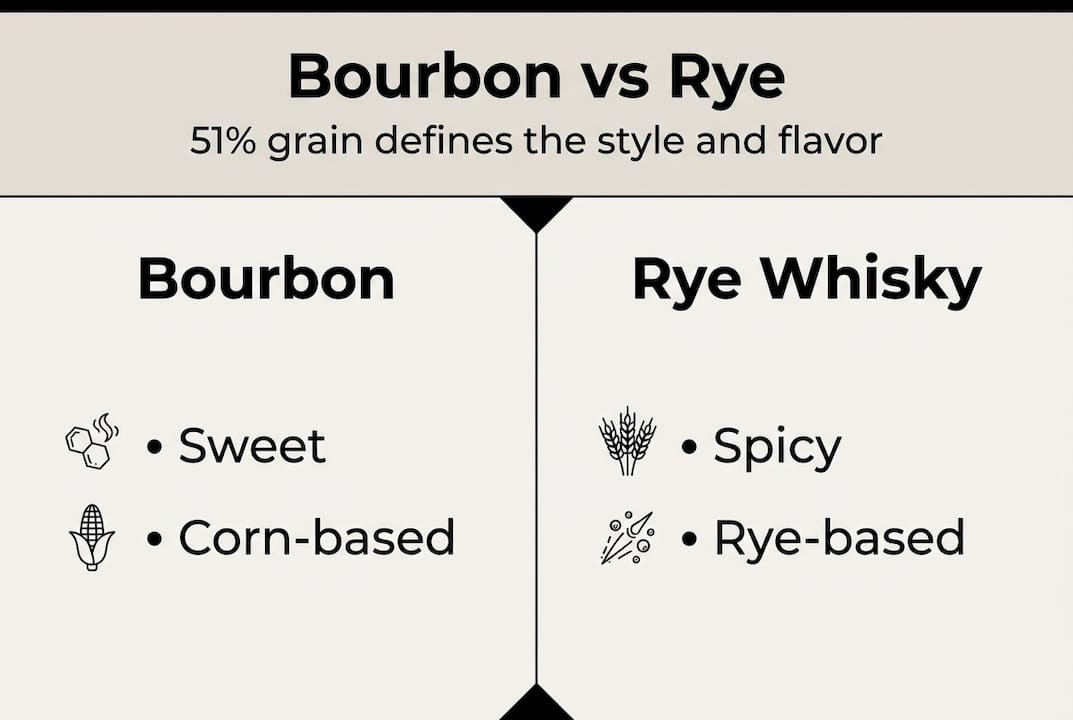
Rye grain is a different creature entirely. It contributes dryness, spice, and a peppery sharpness that cuts right through. The result is a whisky that feels more angular and assertive. As experts note, while both share oak-derived vanilla and caramel, rye asserts its grain character far more prominently than bourbon does.
American rye tends to be bold and punchy, often described as tasting of black pepper, dried fruit, and baking spice. Canadian rye sits at the other end of the dial, typically lighter and more approachable. Understanding this gap matters when you are selecting a bottle for a specific purpose.
“Rye asserts its grain character more prominently than bourbon, even when both are aged in similar oak conditions. The grain itself is the story.” — Food & Wine
Barrel ageing adds a third layer to the equation. Both bourbon and rye pick up vanilla, toffee, and caramel from new charred oak. But because rye is often bottled younger, those barrel notes play more of a supporting role rather than dominating the palate. You get vivid, grain-driven spice upfront, with oak as a backdrop. In older bourbons, the relationship flips.

For a deeper look at bourbon vs rye production differences, the distillation process also plays a role. Bourbon is typically distilled to a lower proof, preserving more corn character. Rye can be distilled slightly higher, which can strip some congeners but also concentrates the spice.
Pro Tip: Taste both bourbon and rye neat before you ever mix them into a cocktail. This gives your palate a clean reference point for what each grain actually contributes, which makes you a far more informed drinker and collector.
Exploring distinct rye whisky flavours is genuinely rewarding once you know what you are looking for. The spectrum is wider than most people expect.
How bourbon and rye are enjoyed: sipping, cocktails, and collecting
Knowing how each whisky is made tells you a lot about how it should be enjoyed. Bourbon’s rich, sweet character makes it a natural choice for sipping neat or over a single large ice cube. It is forgiving, warming, and crowd-pleasing. That accessibility is part of its mainstream appeal.
Rye earns its keep in the cocktail world. The spice in rye suits bold cocktails like the Manhattan and Old Fashioned precisely because it can cut through sweet vermouth and syrup without getting lost. Bourbon versions of those same drinks taste rounder and softer, which some prefer, but rye loyalists argue that the spice is what gives those classics their backbone.
For Australian collectors, both styles offer distinct appeal. Examples of bourbon whisky worth exploring include expressions from Kentucky’s most storied distilleries, where extended ageing and high corn bills produce bottles with serious depth and shelf presence. Rye picks worth seeking out tend to be craft expressions from smaller American producers who are leaning hard into grain-forward intensity.
Some well-regarded bottles to consider:
- Buffalo Trace: Classic bourbon with caramel and vanilla richness, approachable and benchmarkable
- Knob Creek Rye: Bold American rye with strong pepper and dried fruit notes
- Whistlepig 10 Year: Premium Canadian-style rye that punches above its weight
- Wild Turkey Rye: Reliable and affordable entry point into American rye
- Four Roses Single Barrel: A bourbon that shows how nuanced corn-forward whisky can become
The Australian whisky comparison scene is increasingly sophisticated, with local enthusiasts building collections that span both American styles alongside Scotch and homegrown expressions. Knowing your bourbon from your rye helps you have smarter conversations and make sharper choices.
Pro Tip: Let your whisky sit in the glass for three to five minutes before nosing it. Warming slightly in the glass opens up volatile aromatic compounds that are locked tight straight from the bottle.
For a broader look at rye whisky grain selection, understanding the grain’s agricultural character adds another fascinating layer to any tasting experience.
Making an informed choice as a collector or enthusiast
Choosing between bourbon and rye is not about which is better. It is about matching the whisky to your purpose. Here is a practical framework for working through that decision:
- Identify your primary use: If you mostly sip straight, bourbon’s sweetness and body often win. If you are building a cocktail repertoire, rye’s spice is your friend.
- Consider your flavour preferences: Do you lean sweet and round, or spicy and dry? Your answer almost always points directly to which category to explore first.
- Look at country of origin: American bourbon and American rye are both legally defined and flavour-consistent. Canadian rye can vary dramatically, so read producer notes carefully.
- Check for age statements: Age statements on rye bottles deserve particular attention because younger rye can be vibrant and excellent, while older rye may surprise you with barrel integration.
- Prioritise retailer reliability: Sourcing from a specialist who knows their stock means fewer disappointments and better guidance for rare or allocated bottles.
As Food & Wine notes, both styles share oak-derived character, but rye’s grain assertiveness is the element that often separates serious collectors who want a contrast in their collection from those building purely bourbon-heavy shelves.
“The grain bill is not just a technicality. It is the DNA of the whisky, and understanding it is the single most powerful tool a collector or enthusiast can have.” — Whisky trade consensus
For a full whisky shopping guide for collectors, the principles above apply whether you are buying your first serious bottle or adding a hundredth expression to your collection. And if you are new to sourcing whisky in Australia, local specialists with curated inventories are worth seeking out over general retailers.
What most whisky collectors get wrong about bourbon and rye
Here is something we see again and again: experienced collectors dismiss rye as too brash, too rough, or “not for sipping.” That view misses the point entirely. Rye’s directness is a feature, not a flaw. It tells you exactly what grain-forward whisky is supposed to taste like, and once your palate adjusts to its energy, the complexity underneath becomes genuinely fascinating.
Bourbon’s mainstream popularity has a shadow side. It tempts collectors to chase prestige labels and age statements rather than exploring what actually excites their palate. A small-batch craft rye from a lesser-known American producer will often deliver more discovery and conversation than a trophy bourbon that cost ten times as much.
The Australian whisky scene is increasingly embracing both styles with real sophistication. Knowing how to choose bourbon or rye based on genuine flavour curiosity, rather than trend or status, is what separates a collector who grows from one who simply accumulates. Trust your palate. The bottle you enjoy most is always the right bottle.
Discover exclusive bourbon and rye options
If this guide has sharpened your appetite for exploring both styles, you are in exactly the right place. At Uisuki, we curate a handpicked selection of rare, hard-to-find, and expertly chosen whiskies for collectors and enthusiasts who take their dram seriously.

For something genuinely unique, the Ichiros Malt and Grain Limited Edition offers a world blended expression that sits beautifully alongside any bourbon or rye in a serious collection. For local character with American influence, the Hobart Bourbon Matured Single Malt is a standout. Browse the full Uisuki whisky range to find your next favourite bottle, with expert guidance available every step of the way.
Frequently asked questions
Is bourbon always sweeter than rye whisky?
Bourbon is typically sweeter due to its high corn-driven sweetness, while rye is recognised for its spicy, dry, and peppery finish.
Can I use bourbon instead of rye in classic cocktails?
Yes, but the result will be noticeably sweeter. Rye’s spice is what balances sweet cocktails like the Manhattan and Old Fashioned, giving them their traditional backbone.
What makes Canadian rye whisky different from American rye?
Canadian rye has no legal requirement for 51% rye grain, which means it often delivers a lighter, subtler flavour profile than its American counterpart.
Does ageing time affect bourbon and rye flavour?
Absolutely. Rye is often bottled younger than bourbon, preserving lively grain-forward spice, while bourbon’s longer oak contact builds smoother, richer layers of vanilla and caramel.