

The terms whisky and whiskey often confuse enthusiasts and collectors who assume they are simply spelling variations of the same spirit. In reality, these distinct spellings reflect deep-rooted regional traditions, unique production methods, and centuries of distilling heritage. Understanding the difference between whisky and whiskey goes beyond spelling conventions to encompass grain selection, distillation techniques, ageing requirements, and flavour profiles that define each regional style. This guide clarifies these crucial distinctions, helping you appreciate the nuances that separate Scottish whisky from Irish whiskey and other global styles, empowering you to make informed choices for your collection.
Table of Contents
- Key takeaways
- The origins of whisky and whiskey: regional roots and historical context
- Comparing production methods: what sets whisky and whiskey apart?
- Regional variations: exploring global whisky and whiskey styles
- Choosing whisky or whiskey for your collection: tips and considerations
- Explore exclusive whisky and whiskey selections at Uisuki
- FAQ
Key Takeaways
| Point | Details |
|---|---|
| Spelling signals origin | The bottle spelling signals geographic origin and production heritage. |
| Regional production differences | Production styles vary by region, driven by grain choice and ageing requirements. |
| Grain choices differ | Scotch whisky relies on malted barley while Irish whiskey blends malted and unmalted barley with other grains. |
| Collector impact | Understanding these differences helps collectors appreciate craftsmanship and select bottles aligned with taste and collection goals. |
The origins of whisky and whiskey: regional roots and historical context
The divergence between whisky and whiskey traces back centuries to the distinct distilling traditions of Scotland and Ireland. Both nations claim ancient origins for their spirits, with evidence of distillation dating to the 15th century. Scottish distillers developed their methods around malted barley and peat smoke, creating distinctive regional styles across the Highlands, Lowlands, and Islands. Irish distillers pursued a different path, emphasising smoothness through triple distillation and mixed grain recipes.
During the 19th century, Irish distillers deliberately adopted the spelling whiskey with an ‘e’ to distinguish their products from Scottish whisky in competitive international markets. This branding strategy proved successful, establishing a clear identity for Irish spirits. When Irish immigrants brought their distilling knowledge to America, they carried this spelling convention across the Atlantic, where it took root in American whiskey production.
Scottish distillers maintained their traditional spelling without the ‘e’, a convention that spread to other whisky-producing nations including Japan, Canada, and Australia. These countries modelled their production methods on Scottish techniques, naturally adopting the Scottish spelling alongside the distilling practices. Today, the spelling serves as an immediate indicator of a spirit’s heritage and production philosophy.
Key historical milestones in spelling divergence:
- 1400s: Early distillation records appear in both Scotland and Ireland
- 1608: First licensed Irish distillery established at Bushmills
- 1824: Legal distilling framework formalised in Scotland
- 1850s-1880s: Irish distillers adopt ‘whiskey’ spelling for market differentiation
- 1920s: Japanese whisky production begins, following Scottish methods and spelling
- 1960s onwards: Global recognition of regional spelling conventions solidifies
Comparing production methods: what sets whisky and whiskey apart?
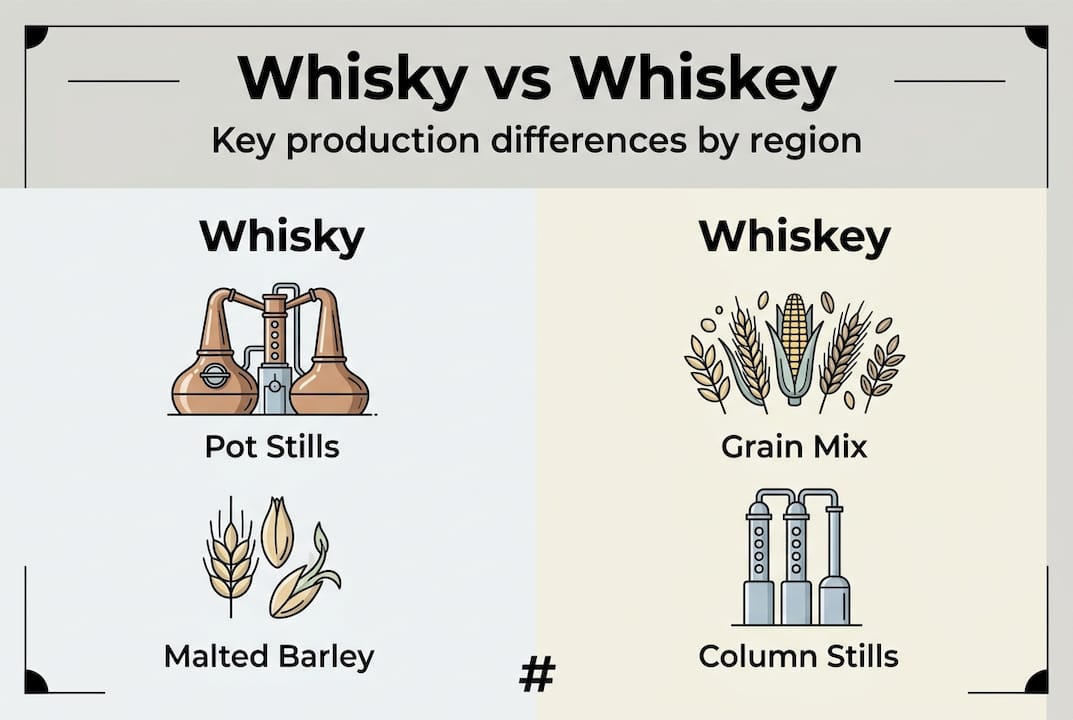
Production techniques fundamentally shape the character of whisky and whiskey, with regional traditions dictating everything from grain selection to barrel ageing. Scotch whisky typically relies on malted barley as its primary grain, processed through double distillation in copper pot stills. This method concentrates flavours whilst maintaining the spirit’s complexity. Many Scottish distilleries use peat smoke during the malting process, infusing the whisky with distinctive smoky, earthy notes that vary by region.
Irish whiskey traditionally employs triple distillation, passing the spirit through the stills three times to achieve exceptional smoothness. This additional distillation removes more congeners and heavier compounds, resulting in a lighter, more approachable spirit. Irish distillers often blend malted and unmalted barley with other grains, creating diverse flavour profiles that range from delicate to robust.
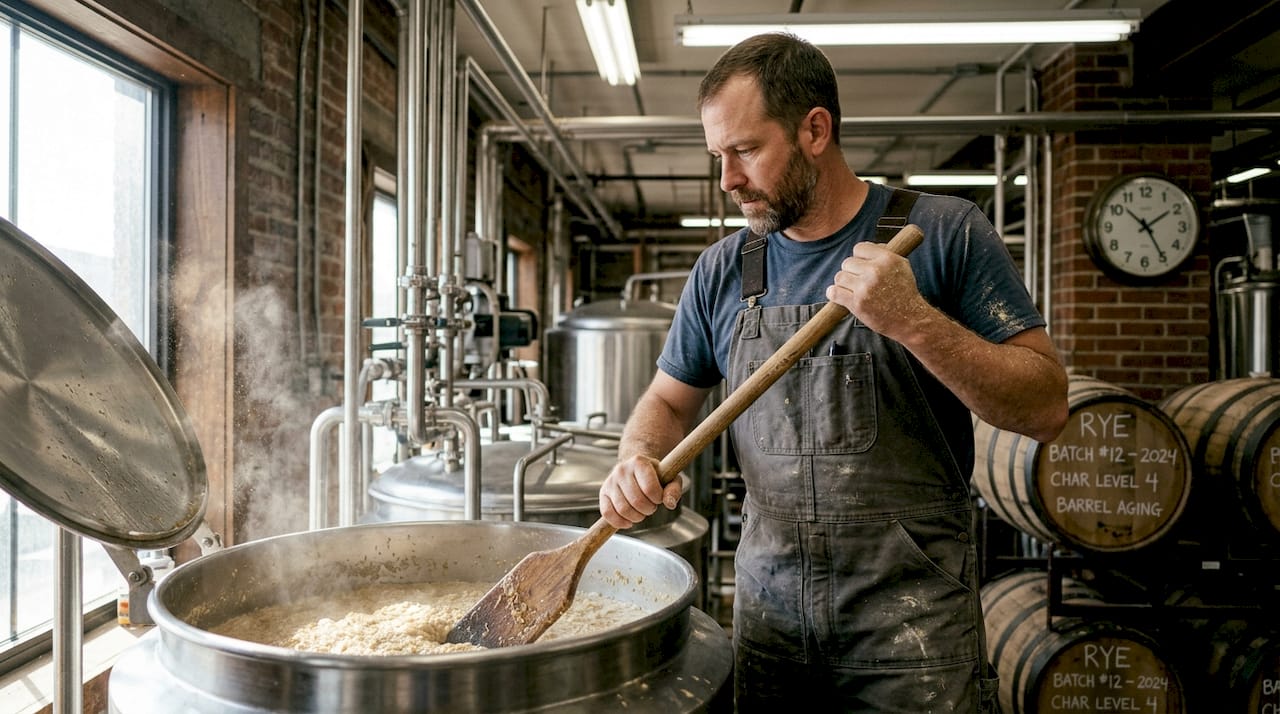
American whiskey production centres on corn-based mash bills for bourbon and rye-dominant recipes for rye whiskey. Bourbon must contain at least 51% corn and age in new charred oak barrels, which impart vanilla, caramel, and spice notes. The charring process caramelises wood sugars, creating the sweet, rich flavours characteristic of American styles. Climate variations across production regions accelerate or moderate the interaction between spirit and wood, influencing maturation rates and final flavour profiles.
| Production aspect | Scotch whisky | Irish whiskey | American whiskey |
|---|---|---|---|
| Primary grain | Malted barley | Mixed grains | Corn or rye |
| Distillation | Double | Triple | Varies |
| Barrel type | Used oak | Used and new | New charred oak |
| Peat influence | Common | Rare | None |
| Minimum age | 3 years | 3 years | 2 years (straight) |
Unique production procedures by region:
- Peating: Scottish distillers dry malted barley over peat fires, creating smoky phenolic compounds
- Mash bills: American distillers precisely formulate grain ratios to achieve specific flavour targets
- Water source: Japanese distillers prioritise soft, mineral-rich water for fermentation and dilution
- Barrel finishing: Scottish and Irish distillers increasingly use secondary cask maturation in sherry, port, or rum barrels
- Climate control: Canadian distillers navigate extreme temperature fluctuations affecting barrel ageing rates
Pro tip: Sample regional styles side by side to detect nuanced differences in mouthfeel, aroma, and finish that production methods create.
Regional variations: exploring global whisky and whiskey styles
Scotch whisky encompasses extraordinary diversity across Scotland’s distinct regions. Islay malts deliver intense peat smoke and maritime salinity, whilst Speyside whiskies offer elegant fruit and floral notes. Highland distilleries produce everything from light, grassy spirits to rich, sherried expressions. Lowland whiskies typically present gentle, approachable profiles. These regional characteristics stem from local water sources, peat availability, barrel selection, and centuries of distilling tradition.
Irish whiskey emphasises smoothness and accessibility through its triple distillation heritage. Single pot still Irish whiskey combines malted and unmalted barley in copper pot stills, creating a distinctive spicy, creamy character unique to Ireland. Blended Irish whiskeys mix grain and malt whiskeys for balanced, versatile spirits suitable for both sipping and mixing. The category has experienced remarkable growth, with new distilleries reviving historical styles and experimenting with innovative cask finishes.
American whiskey divides primarily into bourbon and rye categories, each governed by strict legal definitions. Bourbon’s corn-forward sweetness contrasts with rye’s spicy, peppery bite. Tennessee whiskey undergoes charcoal filtering before barrelling, smoothing the spirit further. These whiskeys reflect American innovation and agricultural abundance, with craft distillers now exploring heritage grains and experimental ageing techniques.
Canadian whisky traditionally features lighter, smoother blends with rye influence providing subtle spice. Distillers often age component whiskeys separately before blending, allowing precise flavour control. Japanese whisky adapts Scottish methods with meticulous attention to detail, using local water sources and Mizunara oak for finishing. The result is refined, harmonious whisky with delicate complexity that has earned global acclaim.
| Region | Typical flavour notes | Legal requirements | Notable characteristics |
|---|---|---|---|
| Scotland | Peat, fruit, malt, sherry | 3-year minimum age | Regional diversity |
| Ireland | Smooth, vanilla, honey | 3-year minimum age | Triple distillation |
| USA | Caramel, vanilla, spice | Varies by type | New charred oak |
| Canada | Light, rye spice, smooth | 3-year minimum age | Blended styles |
| Japan | Delicate, refined, subtle | No legal definition | Mizunara oak influence |
Standout regional characteristics:
- Scottish Islay: Medicinal peat, seaweed, iodine notes from coastal maturation
- Irish pot still: Creamy texture with green apple and pepper spice
- Kentucky bourbon: Sweet corn, oak tannins, warm climate rapid maturation
- Canadian rye: Gentle spice, approachable smoothness, versatile blending
- Japanese single malt: Precision blending, elegant restraint, umami complexity
Pro tip: Explore distillery exclusive releases to experience how individual producers interpret regional traditions with unique cask selections and limited batches.
Choosing whisky or whiskey for your collection: tips and considerations
Building a diverse collection requires understanding your personal taste preferences and how different styles satisfy various occasions. Start by identifying whether you gravitate towards smoky, peated expressions or prefer smooth, sweet profiles. Consider whether you enjoy bold, robust flavours or subtle, nuanced complexity. Your preferences will guide which regional styles deserve space in your collection and help you avoid purchasing bottles that don’t align with your palate.
Occasion and recipient matter significantly when selecting bottles for gifting. A heavily peated Islay malt might overwhelm someone new to whisky, whilst an approachable Irish whiskey or Japanese blend offers a welcoming introduction. For experienced enthusiasts, seek limited editions, single cask releases, or unusual finishes that expand their existing collection. Consider presentation as well, as premium whisky gift packs with glassware or tasting notes enhance the gifting experience.
Evaluating production style and regional origin ensures collection diversity. A well-rounded collection should include representatives from major whisky-producing regions, showcasing different grain recipes, distillation methods, and maturation approaches. This diversity allows you to appreciate the full spectrum of whisky and whiskey styles whilst developing your palate through comparative tasting.
Steps to selecting suitable bottles:
- Assess your current collection to identify gaps in regional representation or style diversity
- Research distillery histories and production methods to understand what makes each bottle unique
- Read tasting notes from multiple sources to gauge flavour profiles before purchasing
- Start with core expressions from respected distilleries before exploring limited releases
- Attend tastings or join whisky clubs to sample before committing to full bottles
- Consider investment potential for rare or discontinued expressions alongside drinking enjoyment
- Document your tasting experiences to refine future purchasing decisions
Common mistakes to avoid:
- Purchasing based solely on age statements without considering production quality
- Neglecting proper storage conditions that can degrade opened bottles over time
- Overlooking emerging regions like Australia and Taiwan that produce exceptional whisky
- Buying expensive bottles before developing your palate with approachable expressions
- Ignoring personal taste preferences in favour of critic scores or popular trends
- Failing to explore both whisky and whiskey categories, missing half the spectrum
Exploring both whisky and whiskey broadens your appreciation for global distilling traditions. Choosing whisky gifts thoughtfully demonstrates knowledge and consideration, whether selecting a beginner-friendly blend or a rare collector’s item. Each bottle tells a story of its origin, and understanding these narratives enriches every pour.
Explore exclusive whisky and whiskey selections at Uisuki
Now that you understand the fundamental differences between whisky and whiskey, discovering bottles that match your preferences becomes an exciting journey. Uisuki curates exceptional selections spanning Scottish single malts, Irish whiskeys, American bourbons, Japanese expressions, and distinctive Australian releases.

Our collection features rare finds and limited editions perfect for collectors seeking unique additions. Explore the Hobart whisky rum finished single malt showcasing Australian innovation, the refined Ichiro’s malt and grain blended whisky representing Japanese craftsmanship, or the characterful Ardnamurchan Macleans Nose blended scotch from Scotland’s west coast. Our expert team provides personalised guidance to help you select bottles matching your taste profile, budget, and collection goals, whether you’re building a diverse library or seeking the perfect gift.
FAQ
What is the key difference between whisky and whiskey?
The spelling difference reflects regional origins and production traditions. Whisky without the ‘e’ is used in Scotland, Japan, Canada, and Australia, whilst whiskey with an ‘e’ appears on Irish and American bottles. This distinction arose in the 19th century when Irish distillers adopted the ‘e’ spelling to differentiate their products from Scottish whisky in competitive markets.
Does the spelling affect the flavour of whisky or whiskey?
Spelling itself doesn’t influence flavour, as it’s purely a regional convention. However, the production methods associated with each spelling tradition do create distinct flavour profiles. Scottish whisky often features peat smoke and double distillation, whilst Irish whiskey emphasises smoothness through triple distillation, resulting in noticeably different taste experiences.
Can I interchangeably use whisky and whiskey when referring to spirits?
Using the correct spelling honours regional identity and centuries of distilling tradition. Collectors and enthusiasts benefit from respectful terminology that acknowledges each region’s unique heritage. Referring to Scotch as whiskey or Irish spirits as whisky demonstrates unfamiliarity with the category and can undermine your credibility amongst knowledgeable enthusiasts.
What are some examples of famous whiskies and whiskeys from different regions?
Scotland produces renowned whiskies including Glenfiddich, Macallan, Laphroaig, and Ardbeg. Ireland’s famous whiskeys include Jameson, Bushmills, Redbreast, and Teeling. American whiskeys feature Jack Daniel’s, Maker’s Mark, Buffalo Trace, and Woodford Reserve. Japanese whiskies like Yamazaki, Nikka, Hibiki, and Hakushu have achieved global recognition for exceptional quality and craftsmanship.