

The top most popular whiskies in Australia and globally right now
The most popular whiskey expressions worldwide share one thing: they earn their place through consistency, not hype. Johnnie Walker Black Label, Glenfiddich 12 Year Old, Chivas Regal, Lagavulin 16, and Jack Daniel’s dominate shelves from Sydney to Edinburgh for good reason. Each delivers a recognisable flavour profile that drinkers can rely on, bottle after bottle.
Here is where the biggest names sit globally and in Australia:
- Johnnie Walker Black Label — the world’s most recognised blended Scotch, available globally and a consistent top seller in Australian bottle shops. Aged 12 years, it balances dried fruit, vanilla, and a light smoke finish.
- Glenfiddich 12 Year Old — the benchmark single malt for millions of drinkers. Its fresh pear and oak character makes it the go-to entry point for Scotch, and it remains one of the most widely stocked expressions in Australia.
- Chivas Regal — a blended Scotch with a rich, honeyed profile. The 12 Year Old expression is particularly popular in Australia’s on-premise market, appearing across bars and restaurants nationwide.
- Lagavulin 16 — the gold standard for peated Islay Scotch. Its intense smoke, iodine, and dried fruit character attracts devoted fans, and Australian demand for it has grown steadily as palates shift toward bolder styles.
- Jack Daniel’s — around 14.1 million 9-litre cases sold globally in 2024, making it the second best-selling American whiskey in the world. Its soft banana notes, caramel sweetness, and light charcoal smoke make it the default American whiskey reference point from Melbourne to Tokyo.
- Jim Beam — the world’s best-selling American whiskey by volume in 2024, at approximately 17.5 million 9-litre cases. Widely available across Australian supermarkets and bottle shops, it anchors the bourbon category for casual drinkers.
Pro Tip: If you are new to whisky, Glenfiddich 12 and Johnnie Walker Black Label are the two expressions most likely to be stocked at any Australian retailer, making them reliable starting points before you explore further.
What actually makes a whisky popular? Types, regions, and flavour
Popularity in whisky rarely comes from a single factor. It is the combination of production method, regional character, flavour profile, and how well a whisky fits the occasion that determines whether a bottle becomes a staple or a curiosity.
The main whisky categories
The three dominant categories globally are Scotch, Bourbon, and Japanese whisky, each shaped by distinct rules and traditions:
- Scotch whisky must be distilled and matured in Scotland for a minimum of three years in oak casks. Single malts come from one distillery using 100% malted barley; blended Scotch combines malt and grain whiskies from multiple distilleries for a more approachable, consistent character.
- Bourbon is an American style that must be made from a grain mash of at least 51% corn, aged in new charred oak barrels. That charred oak is what gives bourbon its signature vanilla, caramel, and spice notes.
- Japanese whisky draws heavily on Scotch tradition but applies meticulous production standards and often uses a range of cask types, including Mizunara oak, to create delicate, layered profiles.
- Irish whiskey is typically triple-distilled for a smooth, approachable character, making it a popular gateway style.
- Australian whisky is a growing category, with distilleries across Tasmania, Victoria, and Western Australia producing expressions that rival international benchmarks.
How production shapes flavour and demand
Ageing time, cask type, and ingredients all leave a direct mark on what ends up in the glass. A whisky aged in ex-Sherry casks will carry dried fruit and chocolate notes; one finished in ex-Bourbon barrels tends toward vanilla and coconut. The flavour notes of popular whiskies generally fall into five broad families: sweet, nutty, spicy, fruity, and smoky. Within those families, you find more specific characters like honey, toffee, orange peel, cinnamon, and hazelnut.
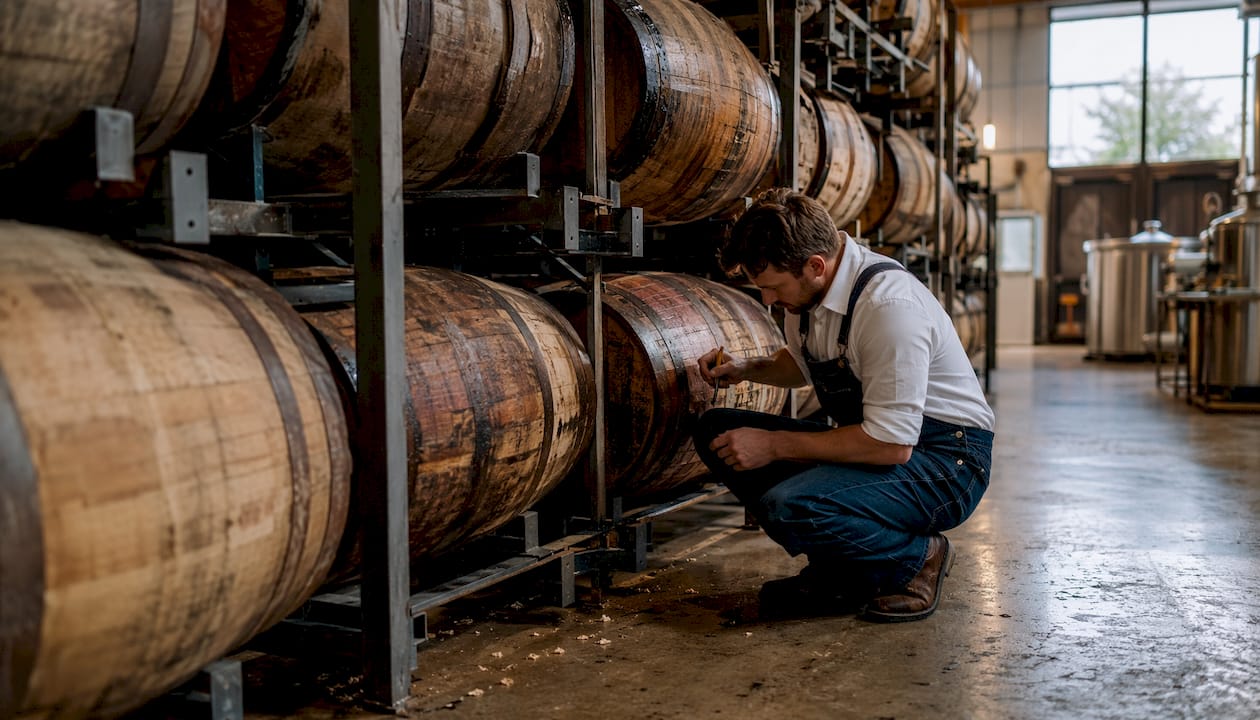
Consumer preferences have also shifted toward premiumisation and cocktail culture, pushing drinkers to explore higher-quality expressions rather than defaulting to the cheapest option on the shelf. The rise of popular whisky cocktails like the Old Fashioned, Whisky Sour, and Highball has introduced a new generation of drinkers to the category, often through a familiar brand served in an accessible format.
Occasion and drinking style
How you drink whisky shapes which style suits you. Neat or with a few drops of water suits complex single malts where you want to catch every aromatic layer. On the rocks works for lighter blends where a slight chill opens up the sweetness. A long drink with ginger ale or cola suits bourbon and blended Scotch, where the spirit’s backbone holds up against the mixer. Knowing your occasion narrows the field considerably.
Which whisky brands do Australians actually drink?
Australia’s whisky market reflects a genuine split between loyalty to international icons and growing curiosity about local craft. Australian drinkers favour a mix of domestic distillates and iconic international labels, with rising interest in Australian-crafted expressions sitting alongside established imports in 2024.
The most consistently popular bottles in the Australian market include:
- Johnnie Walker Black Label — the top-selling blended Scotch in Australia, found in virtually every bottle shop and bar across the country.
- Glenfiddich 12 Year Old — the best-selling single malt Scotch in Australia, often the first single malt a drinker buys for themselves.
- Chivas Regal 12 Year Old — strong on-premise performance, particularly in Asian-influenced dining venues where blended Scotch is a cultural staple.
- Lagavulin 16 — a cult favourite among enthusiasts. Demand consistently outpaces supply in Australia, particularly around the end-of-year gifting season.
- Jack Daniel’s Tennessee Whiskey — the dominant American whiskey in Australian retail, driven by the Jack and cola serve that remains one of the country’s most ordered pub drinks.
- Jim Beam White Label — the entry-level bourbon that most Australians encounter first, widely available and priced accessibly.
- Laphroaig 10 Year Old — another Islay Scotch with a devoted Australian following, known for its medicinal, smoky, and briny character.
- Starward Nova — the standout Australian single malt, matured in Australian red wine barrels and widely regarded as the local expression that has broken through to mainstream recognition.
- Sullivans Cove French Oak — a Tasmanian single malt that won World’s Best Single Malt at the World Whiskies Awards, putting Australian whisky firmly on the international map.
- Archie Rose White Rye — a Sydney-distilled expression that has built a loyal following among drinkers who want something distinctly Australian and outside the Scotch tradition.
The Australian whisky scene is no longer just about imports. Local distilleries are producing expressions that hold their own against Scottish and Japanese benchmarks, and drinkers are noticing.
Australian drinkers also tend to be price-conscious without being cheap. The $60–$120 price band sees the heaviest volume, covering most of the international icons listed above. Above $150, the market thins but remains active among collectors and enthusiasts, particularly for limited edition releases and rare single cask bottlings.
Why adding water to whisky changes everything
Adding a few drops of water to whisky is one of the most effective things you can do to improve your tasting experience, and it is backed by chemistry, not just preference. Water releases locked-away aromatics by chemically opening the spirit, particularly in higher-proof expressions where alcohol suppresses floral, briny, or sweet notes that would otherwise stay hidden.
The effect is most pronounced in cask-strength whiskies bottled above 55% ABV. At that alcohol level, the ethanol molecules bind tightly to aromatic compounds called guaiacol, which carry smoky and spicy notes. Adding water breaks that bond and pushes those aromatics to the surface of the liquid, where your nose can actually detect them. For standard 40–46% ABV expressions, a drop or two still softens the alcohol burn and lets the mid-palate flavours open up.
The practical approach: start with the whisky neat, take a small sip to establish a baseline, then add two or three drops of still water (not sparkling, not chilled) and nose it again. The difference is often immediate. You will notice floral or fruity notes that were buried under the alcohol heat. For a deeper look at how water interacts with whisky chemistry, the role of water in whisky is worth reading before your next tasting session.
Pro Tip: Taste your most complex or highest-quality whisky early in a session, not last. After three or four drams, palate fatigue sets in and you will miss the nuance in the bottle you most wanted to appreciate. Save heavily peated whiskies for last — their smoke overwhelms the palate and masks everything that follows.
A short history of how popular whiskies got where they are
Whisky’s global reach today is the product of centuries of refinement, trade, and occasionally, happy accident. Distillation in Scotland and Ireland dates to at least the 15th century, when monks and farmers produced rough grain spirits for medicinal and practical use. The shift from rough spirit to aged, refined whisky came gradually, as distillers discovered that storing spirit in oak casks transformed its character over time.
The 19th century changed everything. The invention of the continuous column still by Aeneas Coffey in 1831 made large-scale grain whisky production possible, which in turn made blended Scotch viable. Blending allowed producers to create consistent, approachable products at scale, and brands like Johnnie Walker and Chivas Regal built global empires on that consistency. Phylloxera, the vine disease that devastated European wine and cognac production in the 1870s and 1880s, accelerated Scotch whisky’s rise as the spirit of choice for the British Empire and its trading partners.
American whiskey followed a different path. Bourbon production in Kentucky grew through the 18th and 19th centuries, shaped by the local abundance of corn and the influence of Scots-Irish settlers who brought distilling knowledge with them. Prohibition from 1920 to 1933 nearly destroyed the American industry, but the brands that survived, including Jim Beam and Jack Daniel’s, emerged with the infrastructure and distribution networks to dominate globally once the market reopened.
Japanese whisky entered the international conversation much later. Masataka Taketsuru studied distillation in Scotland in the early 20th century and returned to Japan to found what became the Nikka distillery. His work, alongside Shinjiro Torii’s Suntory, established the Japanese style that now commands some of the highest prices at auction. Australian whisky is the newest chapter in this story, with serious commercial production beginning in Tasmania in the 1990s and accelerating rapidly through the 2010s.
Key takeaways
The most popular whiskies globally and in Australia earn their status through consistent flavour, broad availability, and a production heritage that drinkers trust.
| Point | Details |
|---|---|
| Global volume leaders | Jim Beam was the world’s best-selling American whiskey in 2024, at approximately 17.5 million 9-litre cases, followed by Jack Daniel’s at around 14.1 million cases. |
| Australian market split | Australian drinkers favour international icons like Johnnie Walker Black Label and Glenfiddich 12, alongside growing local craft expressions. |
| Water unlocks flavour | Adding a few drops of still water to higher-proof whiskies releases aromatics suppressed by alcohol, improving the tasting experience. |
| Tasting order matters | Taste your best whisky early in a session and save peated expressions for last to avoid palate fatigue masking subtler notes. |
| Australian whisky has arrived | Expressions like Starward Nova and Sullivans Cove French Oak now compete credibly with international benchmarks at their price points. |

Uisuki stocks a curated range of the world’s most celebrated whiskies alongside rare Australian expressions that rarely appear elsewhere. Whether you are after a Hobart Whisky single malt finished in rum casks or a limited edition world blend from Ichiro’s Malt and Grain, the selection at Uisuki is built for drinkers who know what they are looking for and collectors who want what nobody else has. Free shipping thresholds apply, and the team handles personalised sourcing requests for bottles that are not listed.