

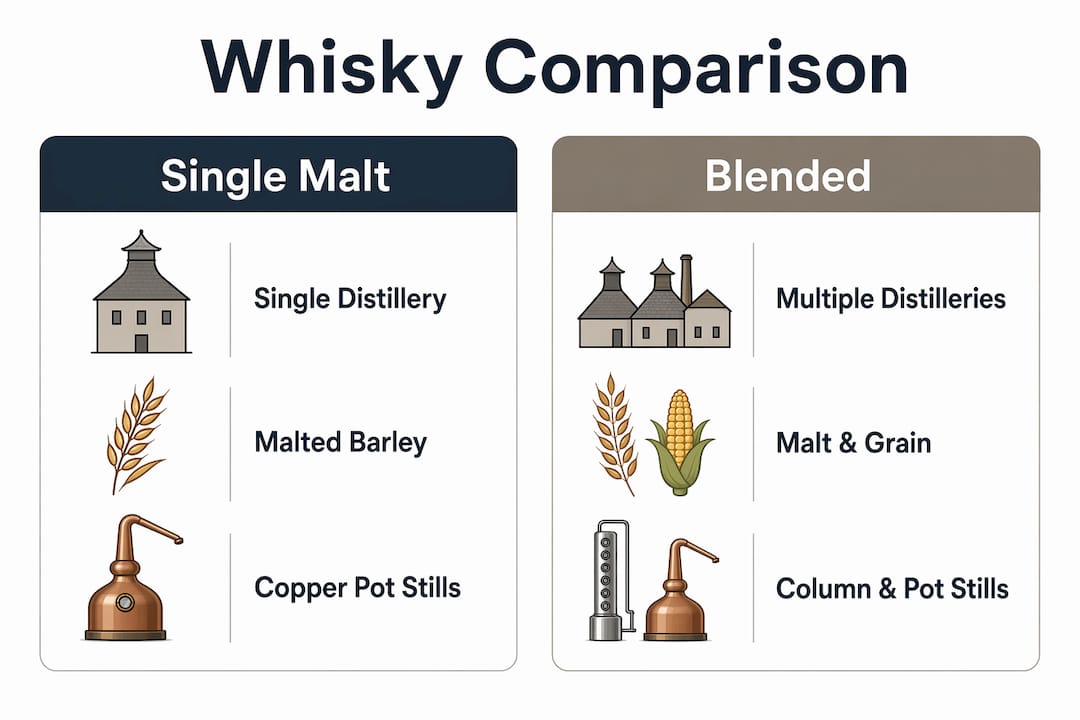
Single malt whisky comes from one distillery, uses only malted barley, and is distilled in copper pot stills. Blended whisky combines at least one single malt with at least one grain whisky, often sourced from several distilleries, to produce a consistent, approachable flavour. That production gap shapes everything: the taste in your glass, the price on the shelf, and the occasion that suits each style.
Here is a quick comparison to orient you before we go deeper:
- Single malt: one distillery, malted barley only, copper pot stills, typically more complex and regionally expressive
- Blended Scotch: malt plus grain whiskies from multiple distilleries, column and pot stills, smoother and more consistent across releases
- “Single” does not mean one barrel: most single malts are a marriage of many casks from the same distillery
- Blended does not mean inferior: master blenders craft blends with as much care and skill as any distillery team
- Market split: blended Scotch accounted for 59.4% of Scottish whisky exports by value in 2024, with single malt at 31.0%
How single malt and blended whisky are actually made
The legal definitions here are tighter than most people realise, and they drive every flavour difference you will encounter.
Single malt
A single malt Scotch must be mashed, fermented, and distilled at one distillery using only water, malted barley, and yeast. No other cereals are permitted. Distillation must happen in copper pot stills, and the spirit must mature in oak casks in Scotland for a minimum of three years before bottling.
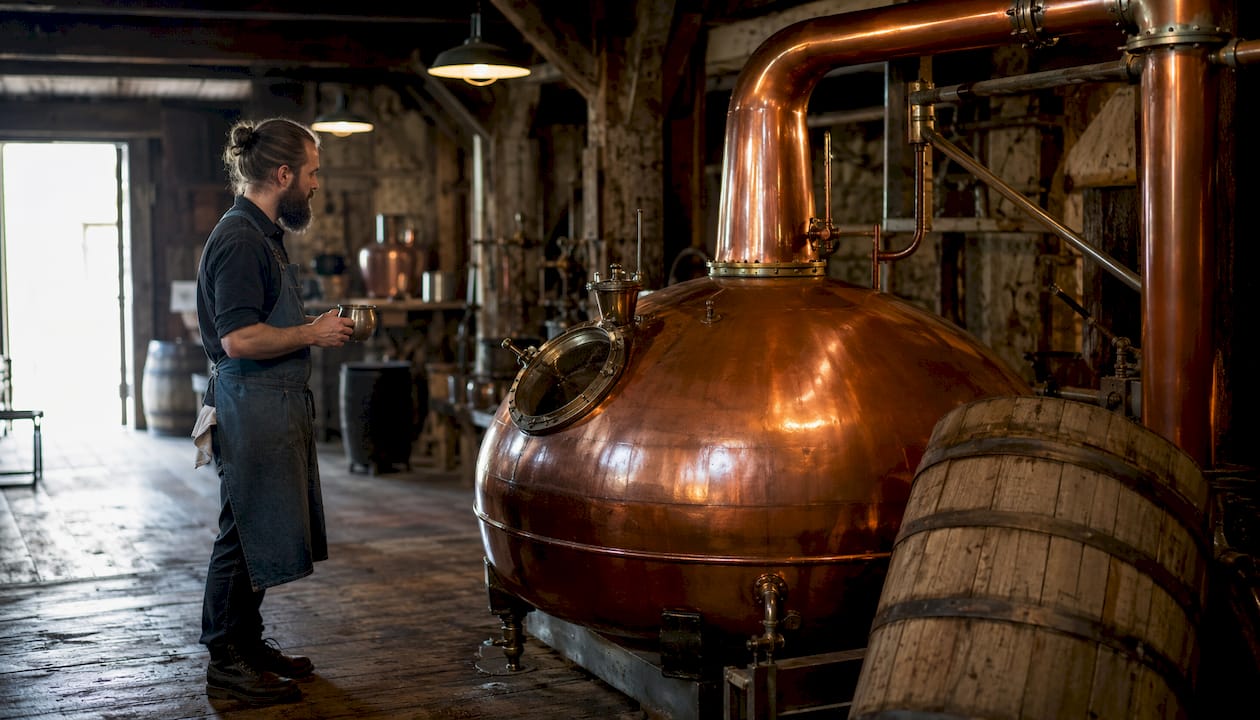
Pot stills are the key. Their rounded, bulbous shape means the spirit spends more time in contact with copper, which strips out unwanted sulphur compounds while retaining the oils, esters, and congeners that give whisky its character and texture. Copper pot stills preserve the richness and body that column distillation removes.
Pro Tip: “Single” refers to a single distillery, not a single barrel or batch. A bottle of Glenfiddich 12 Year Old likely contains whisky from dozens of casks, all produced at the Glenfiddich distillery in Speyside.
Blended Scotch
Since the Scotch Whisky Regulations were updated in 2009, a blended Scotch must contain at least one single malt whisky and at least one single grain whisky. Grain whisky can be made from any cereal, typically wheat or corn with a small portion of malted barley added to aid fermentation. It is produced in column stills, also called Coffey stills, which run continuously and yield a lighter, more neutral spirit at higher volumes.
The production differences in brief:
- Single malt: malted barley only, batch distillation, copper pot stills, one distillery
- Blended Scotch: malt plus grain whiskies, pot and column stills, multiple distilleries permitted
- Grain whisky: any cereal grain, column stills, lighter body, produced for blending volume
- Blended malt: two or more single malts from different distilleries, no grain whisky added
- Minimum age: three years in oak for all Scotch categories without exception
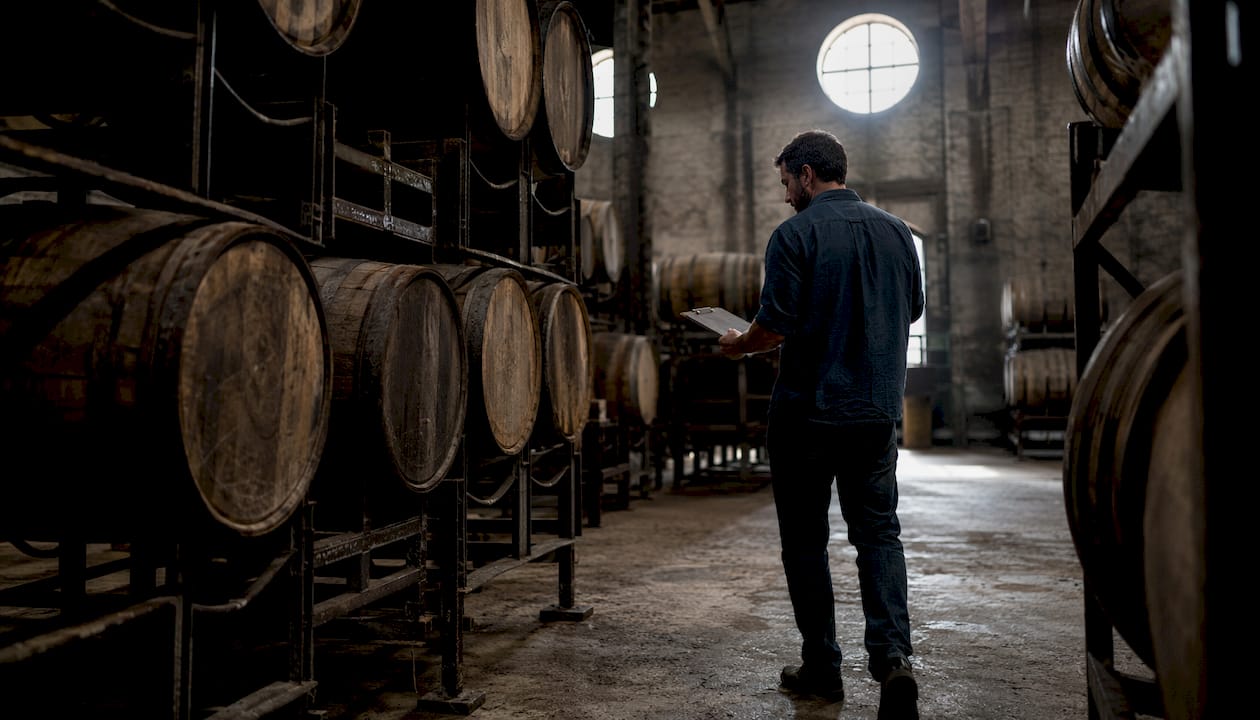
There is also a common misconception worth clearing up. When you see “blended” on a label, many people assume the whisky has been diluted or cheapened. What actually happens is that a master blender selects whiskies from multiple distilleries and cask types, then combines them to hit a specific flavour target. The grain whisky component is not filler; it is the canvas on which the malt’s character is painted.
What do single malt and blended whisky actually taste like?
Production method and blending philosophy translate directly into the glass, though the range within each category is wider than most newcomers expect.
Single malt flavour profiles
Single malts tend to be more expressive and regionally distinct. The pot still process retains oils and fatty acids that give the spirit weight and texture. A non-chill-filtered single malt bottled at 46% ABV or above will typically feel oily and coating on the palate, whereas a chill-filtered expression at 40% ABV will feel noticeably thinner, even when the flavour notes are similar. Cask type then layers on the primary flavour character:
- Ex-bourbon cask: vanilla, caramel, toasted oak, light citrus
- Ex-sherry cask: dried fruit, dark chocolate, Christmas cake, spice
- Ex-red wine cask: red berries, floral notes, sometimes a hint of chocolate
- Peated expressions: smoke, iodine, brine, medicinal qualities (classic of Islay)
- Unpeated expressions: fruit, floral, honey, grass, cereal
Blended whisky flavour profiles
Blends aim for balance and consistency rather than intensity. The lighter grain whisky softens the malt’s edges, producing a rounder, more approachable dram. Single malts highlight individual distillery character while blends offer complex, multi-layered profiles drawn from multiple malts and grains working together. Typical blended Scotch tasting notes include:
- Honey, vanilla, and light fruit on the nose
- Gentle spice, cereal sweetness, and soft oak on the palate
- A clean, relatively short finish compared to aged single malts
The exception worth knowing: premium aged blends, particularly those with a high malt content and long maturation, can rival single malts in complexity. A 25-year-old blended Scotch with a significant proportion of aged Speyside malts in the recipe is a very different proposition from an entry-level blend.
Does blended mean lower quality? Clearing up the misconceptions
The short answer is no, and the assumption that it does has more to do with marketing history than production reality.
Blended whisky is not lower quality than single malt. It is designed for flavour consistency and approachability, and achieving that consistency across millions of bottles every year requires genuine expertise. The Scotch Whisky Association’s 2024 export figures show blended Scotch generating £3.2 billion in export value, which reflects sustained global demand from drinkers who know exactly what they want.
Price reflects several factors beyond production method: brand heritage, bottle age, cask rarity, and market positioning all play a role. A 12-year-old single malt from a well-known Speyside distillery will typically cost more than an entry-level blend, but a premium aged blend from a respected house can comfortably exceed the price of a standard single malt. The single malt premium is partly real (pot still production is slower and more expensive) and partly the result of decades of marketing that positioned single malts as the connoisseur’s choice.
Award panels and expert tasters have repeatedly recognised blended whiskies alongside single malts. The craft involved in building a consistent house style across years of variable cask quality is, in its own way, as demanding as producing a great single distillery expression.
The master blender’s role in crafting a great blend
The master blender is the person most responsible for what ends up in a bottle of blended Scotch, and the job is considerably more complex than simply mixing whiskies together.
A master blender’s core responsibilities include:
- Tasting and selecting casks from multiple distilleries to identify whiskies that fit the house style
- Maintaining consistency across releases, even when individual cask quality varies year to year
- Monitoring maturation and deciding when each component whisky has reached its peak
- Balancing malt and grain ratios to achieve the target flavour profile
- Managing cask inventory across warehouses, sometimes planning decades ahead
Kevin Balmforth, blending manager and cask expert for Chivas, describes the process plainly: “A blend is a combination of single malt and grain whisky and it has to have at least one single malt and one grain whisky.” What that definition does not capture is the sensory skill required to hold a house style in your palate memory and reproduce it reliably at scale.
Brands like Chivas Regal, Johnnie Walker, and Dewar’s each maintain a distinct house style that drinkers recognise across decades. That continuity is the master blender’s achievement. When a key distillery in the blend changes its production or closes, the blender must find replacement components that preserve the profile without the drinker noticing. It is a creative and technical discipline that deserves more recognition than it typically receives.
How geography shapes single malt flavour, and where that is changing
Scotland’s whisky regions carry genuine historical weight, though their influence on flavour is more nuanced than the old regional maps suggest.
The five recognised Scotch regions each have flavour associations built over generations:
- Speyside: fruit-forward, floral, often sherry-influenced; home to Glenfiddich and Glenlivet
- Islay: heavily peated, smoky, coastal, medicinal; Laphroaig is the most recognisable example
- Highlands: broad and varied, ranging from light and grassy to rich and spiced
- Lowlands: typically lighter, triple-distilled styles, gentle and approachable
- Campbeltown: briny, slightly smoky, with a distinctive coastal character
Distillery house style and cask management increasingly define flavour more than regional origin alone. Two Speyside distilleries using different yeast strains, cut points, and cask programmes can produce whiskies that taste nothing alike, despite sitting a few kilometres apart.
Beyond Scotland, global single malt producers in the United States and Japan are expanding the category with new distillation freedoms. American single malt producers can use either pot or column stills under proposed TTB regulations, which creates a wider flavour spectrum than Scottish rules permit. Japanese distilleries, drawing on Scottish tradition but adapting to local climate and ingredients, tend towards delicate, floral, and herbal expressions that are rarely peated. The result is a global single malt category that now covers far more ground than the Scottish regional map ever did.
Pro Tip: When exploring single malt variations beyond Scotland, look for Japanese expressions aged in Mizunara oak for a distinctive sandalwood and incense character you will not find in any Scotch.
When and how to enjoy each style
Single malt and blended whisky are not interchangeable, and knowing which suits the moment makes a real difference to the experience.
Single malt occasions and serving
Single malts reward attention. They are best suited to:
- Quiet, contemplative sipping where you can focus on the nose and palate
- Whisky tasting sessions where you want to compare distillery styles
- Gifting, where the bottle’s provenance and story add to the occasion
- Pairing with dark chocolate, aged cheese, or smoked salmon (peated expressions especially)
Serve a single malt in a tulip-shaped glass, such as a Glencairn, which concentrates the aromas. A few drops of still water can open up the nose and soften the alcohol on heavily peated or cask-strength expressions. Ice is not recommended for aged single malts; it suppresses the volatile aromatics that make them interesting.
Blended whisky occasions and serving
Blends are more versatile and genuinely excel in certain contexts:
- Cocktails: the Rob Roy, Bobby Burns, and Scotch sour all work better with a consistent blended base
- Casual social settings where the whisky is part of the occasion rather than the focus
- Long drinks with ginger ale or soda, where the blend’s lighter character holds up without being overwhelmed
- Introductory drams for people new to Scotch
For storage, keep both styles upright (unlike wine, whisky does not benefit from cork contact), away from direct light, and at a stable room temperature. An opened bottle will remain in good condition for a year or more if kept sealed between pours.
A brief history of single malt and blended whisky
The story of blended Scotch is, in many ways, the story of how whisky became a global drink.
Single malt distillation in Scotland dates to at least the 15th century, with early records of aqua vitae production in the Highlands. For centuries, pot-distilled malt whisky was the only Scotch, consumed locally and largely unaged. The spirit was often rough and intensely flavoured, an acquired taste even for those who grew up with it.
The column still, patented by Aeneas Coffey in 1831, changed everything. It allowed distillers to produce large volumes of lighter grain spirit efficiently and cheaply. By the latter half of the 19th century, blenders discovered that combining this grain whisky with pot-distilled malt produced something more mellow, consistent, and palatable to a wider audience. Brands like Dewar’s, Johnnie Walker, and Chivas Regal built their reputations on this discovery, and blended Scotch boomed across the United Kingdom and its export markets through the early 1900s.
Single malt as a distinct, premium category is a more recent phenomenon. For most of the 20th century, single malts were largely sold to blenders rather than bottled independently. The modern single malt market, driven by consumer interest in provenance and craft, grew substantially from the 1980s onwards. Today, single malts command a premium positioning that would have seemed implausible to a 19th-century distiller who sold most of his output in bulk to blending houses.
Price range and market positioning of each whisky type
The price gap between blended and single malt whisky is real, but it is not as simple as one being worth more than the other.
Entry-level blended Scotch sits at the most accessible end of the market. Bottles from well-known brands are widely available in Australian bottle shops at prices that reflect high-volume production and efficient grain whisky distillation. These expressions are designed for everyday drinking and mixing, and they deliver reliable consistency at that price point.
Single malts span a much wider range. A standard 12-year-old expression from a major Speyside or Highland distillery sits at a moderate price premium over entry-level blends, reflecting the slower pot still production process and longer maturation. Age-statement expressions at 18 years and above, or limited releases from sought-after distilleries, can reach prices that rival fine wine or aged spirits from other categories. Rare and collectible single malts, particularly from closed distilleries or heavily allocated releases, trade at multiples of their retail price on the secondary market.
Premium blended Scotch occupies an interesting middle ground. Aged blends with significant malt content and long maturation are positioned as luxury products, sometimes at prices above standard single malts. The whisky market in 2024 showed that blended Scotch export values exceeded single malt in absolute terms, confirming that volume and value are not the same thing. For Australian buyers, import costs and local retail margins add to the base price of both categories, making direct price comparisons with UK or US retail figures unreliable.
How storage and ageing shape the flavour differences between styles
Ageing is where the raw spirit becomes whisky, and the conditions of that maturation affect blended and single malt expressions differently.
All Scotch must spend at least three years in oak, but most quality expressions age considerably longer. Single malts are usually aged for 10–15 years, with premium releases extending well beyond that. The oak cask does two things simultaneously: it adds flavour compounds (vanilla, caramel, spice, dried fruit depending on the cask’s previous contents) and it removes harsh, green spirit characteristics through oxidation. The longer the maturation, the more the cask’s influence dominates the spirit’s original character.
Cask type is the single biggest variable in flavour development. Ex-bourbon barrels, the most common choice globally, impart vanilla and caramel sweetness from the American oak. Ex-sherry casks from Oloroso or Pedro Ximénez production add rich fruit, nut, and chocolate notes. Red wine and port casks contribute berry fruit and floral complexity. A whisky “finished” in a secondary cask for a shorter period picks up a layer of that cask’s character without the full maturation influence.
For blended whiskies, the master blender must account for how each component has aged before combining them. A grain whisky aged in a refill bourbon cask for 10 years will behave very differently in the blend from a freshly filled first-fill sherry cask malt of the same age. Storage conditions in the warehouse, including temperature fluctuation and humidity, also affect the rate of maturation. Scottish warehouses, with their cool, damp climate, produce a slower, more gradual maturation than distilleries in warmer climates, which is one reason Australian and American whiskies can reach comparable complexity at younger age statements.
If you are storing bottles at home, keep them away from sunlight and heat sources, store them upright, and consume opened bottles within a year or two for best results. A bottle that is less than a quarter full will oxidise more quickly, so either finish it or transfer the remainder to a smaller vessel.
The whisky in your glass matters more than the label
Here is the opinion that tends to get lost in the single malt versus blend debate: the category on the label tells you about production method, not about whether you will enjoy what is in the bottle.
Spending years fixating on single malts as the only serious option is a common trap for whisky enthusiasts, and it is one worth stepping out of early. Some of the most technically impressive whisky work happening right now is in blending, where master blenders are working with components from dozens of distilleries, managing cask inventories across decades, and producing expressions with genuine complexity at accessible prices. The craft is different from single malt production, not lesser.
The more useful question is not “which is better” but “what am I in the mood for?” A heavily peated Islay single malt is the right choice when you want something that demands your full attention. A well-made blended Scotch is the right choice when you want something that works in a cocktail or suits a long evening without requiring analysis. Both answers are correct. The drinkers who get the most out of whisky are the ones who stay curious across both categories rather than planting a flag in one camp.
If you are building your palate, start with a blended Scotch to understand the baseline of the style, then move to single malts to explore how distillery character, cask type, and region diverge from that baseline. The step-by-step guide to choosing single malt on Uisuki.com.au is a practical starting point for that journey. And if you want to understand what separates grain whisky from malt before committing to a bottle, the single malt vs grain whisky explainer fills in the gaps that most introductory guides skip.
Explore single malts and blended whiskies at Uisuki
Uisuki.com.au stocks a curated selection of single malts and blended whiskies from Scotland, Japan, the United States, and Australia, chosen for quality and character rather than volume. Whether you are looking for a classic Speyside expression, a rare Japanese single malt, or a premium aged blend, the range covers the full spectrum discussed in this article.

The team at Uisuki offers personalised sourcing for bottles that are not publicly listed, along with educational content to help you make confident choices. Free shipping thresholds apply to Australian orders, and international shipping is available. Browse the full whisky collection or get in touch for a recommendation tailored to your palate and budget.
Key takeaways
Single malt whisky comes from one distillery using malted barley and pot stills, while blended Scotch combines malt and grain whiskies from multiple distilleries to deliver consistent, approachable flavour at scale.
| Point | Details |
|---|---|
| Production defines the difference | Single malt uses one distillery and pot stills; blended Scotch combines malt and grain whiskies from multiple sources. |
| “Single” means one distillery, not one barrel | Most single malts marry dozens of casks from the same distillery to achieve a consistent house style. |
| Blended Scotch dominates exports | Blended Scotch accounted for 59.4% of Scottish whisky exports by value in 2024; single malt represented 31.0%. |
| Quality is not determined by category | Master blenders craft blends with the same rigour as distillery teams; price reflects rarity and positioning, not production method alone. |
| Uisuki stocks both styles | Uisuki.com.au carries single malts and blended whiskies from Scotland, Japan, Australia, and the USA, with personalised sourcing available. |