

More than 80 percent of a whisky’s character is shaped by its grain selection, a detail often overlooked by australian connoisseurs eager to expand their collections. For serious collectors, understanding how Scottish barley, American corn, Canadian rye, and European wheat each influence aroma, texture, and value is essential. This guide helps australian whisky lovers make informed choices by revealing the real impact of grain type on flavour style and investment potential.
Table of Contents
- Defining Whisky Grain Types and Their Importance
- Comparing Barley, Corn, Rye, and Wheat Whiskies
- How Grain Affects Whisky Flavour and Mouthfeel
- Regulations and Traditions Shaping Grain Choices
- Collecting and Investing: Grain Type Impacts
Key Takeaways
| Point | Details |
|---|---|
| Grain Type Influences Whisky Character | Different grains, such as barley, corn, rye, and wheat, significantly shape the flavour profiles and mouthfeel of whisky. Understanding these influences is essential for a richer tasting experience. |
| Regulatory Frameworks | Regional regulations, such as those governing Scotch and American whiskies, dictate grain usage and production methods, preserving traditional practices and distinct styles. |
| Investment Insight | The grain type can impact the collector value of whiskies, with single malts being highly coveted, while unique grain whiskies are gaining attention among investors. |
| Exploring Flavours | Tasting whiskies made from various grains side by side can enhance understanding of the complex flavour differences introduced by each grain type. |
Defining Whisky Grain Types and Their Importance
Whisky production is fundamentally a grain-based craft, where each cereal ingredient plays a critical role in determining the final spirit’s character. Grain whisky fundamentally refers to any whisky made from cereals beyond malted barley, including versatile ingredients like maize, wheat, and rye. This diversity of grains allows distillers to create complex flavour profiles that range from light and smooth to rich and robust.
The enzymatic process is crucial in whisky production. Malted barley serves as the foundational grain, releasing essential enzymes that convert starch into fermentable sugars. According to scientific research, the raw materials, distillation process, and maturation collectively define a whisky’s ultimate flavour characteristics. While traditional Scotch regulations mandate 100% malted barley for malt whiskies, grain whiskies offer more flexibility in ingredient selection.
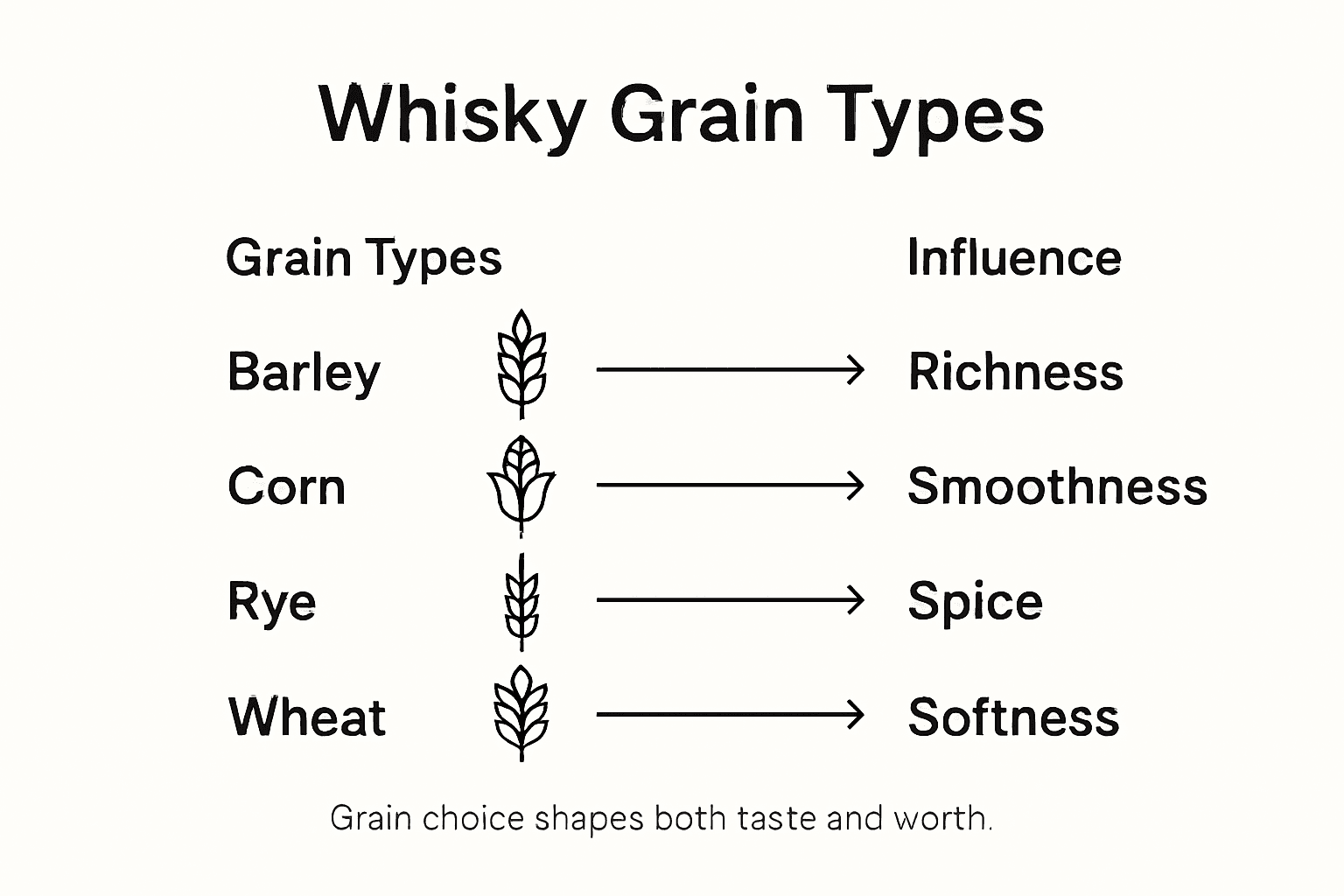
Grain selection impacts not just flavour but also the whisky’s overall value and complexity. Different grains contribute unique attributes: wheat provides smoothness, rye adds spiciness, and corn introduces sweeter notes. Distillers carefully balance these grains to create distinctive spirits that appeal to diverse palates. Single grain whiskies, though less common, showcase the nuanced potential of individual grain types.
Pro tip: When exploring whisky, pay attention to the grain bill on the label to understand the potential flavour profile and complexity of your chosen spirit.
Comparing Barley, Corn, Rye, and Wheat Whiskies
Whisky grain types represent a fascinating spectrum of flavour profiles, with each cereal bringing unique characteristics to the spirit. In the United States, whisky classification depends critically on the predominant grain used in the mash bill, creating distinctive styles that reflect regional traditions and production techniques.
Barley remains the classic whisky grain, particularly in Scottish and Irish traditions. This grain produces rich, complex malts with deep, nuanced flavours. Corn dominates American bourbon, delivering sweeter, smoother spirits with vanilla and caramel undertones. Rye whiskey, requiring at least 51% rye grain, offers a spicier, more robust flavour profile that distinguishes it from other grain whiskies, introducing peppery and sometimes fruity notes that whisky enthusiasts appreciate.

Wheat whiskies present a softer, gentler alternative, typically providing a smoother, more delicate drinking experience. The variation in grain selection allows distillers to craft spirits with remarkable diversity - from bold and spicy rye expressions to smooth, honeyed wheat-based offerings. These differences arise not just from the primary grain, but from subtle variations in mashing, fermentation, and distillation processes.
To help visualise how different grains influence whisky, consider this summary of each grain’s core impact:
| Grain Type | Main Flavour Influence | Typical Mouthfeel | Common Regions |
|---|---|---|---|
| Malted Barley | Rich, complex, malty | Textured, nuanced | Scotland, Ireland |
| Corn (Maize) | Sweet, mellow, vanilla | Full-bodied, rounded | United States, Canada |
| Rye | Spicy, peppery, fruity | Sharp, lively | United States, Canada |
| Wheat | Soft, gentle, honeyed | Smooth, delicate | United States, Germany |
Pro tip: When exploring different whisky styles, taste whiskies made from various grains side by side to appreciate the subtle yet significant flavour variations between barley, corn, rye, and wheat.
How Grain Affects Whisky Flavour and Mouthfeel
Scientific analysis reveals that whisky’s flavour complexity emerges from hundreds of molecular compounds, with grain selection playing a pivotal role in determining the spirit’s ultimate sensory experience. Each grain introduces unique molecular structures that fundamentally transform the whisky’s character, creating a complex interplay of taste, aroma, and texture.
The enzymatic processes during production critically influence flavour development. Malted barley, for instance, releases specific enzymes that convert starch into fermentable sugars, directly impacting the spirit’s fundamental flavour profile. Different grains contribute distinctive mouthfeel characteristics: wheat generates smoother, softer textures, while rye introduces a sharper, more intense tactile sensation. Mouthfeel itself can be scientifically measured through advanced techniques like rheometry and liquid chromatography, allowing distillers to precisely understand and manipulate the sensory experience.
Beyond immediate taste, grain selection impacts the whisky’s entire sensory journey. Corn-based whiskies typically present fuller-bodied experiences with pronounced sweetness, while barley-dominant spirits offer more complex, nuanced flavour landscapes. The interaction between grain type, distillation method, and oak barrel maturation creates a multifaceted sensory narrative that whisky enthusiasts spend lifetimes exploring.
Pro tip: Develop your palate by systematically tasting whiskies made from different grains, paying close attention to how each grain’s unique characteristics manifest in texture and flavour.
Regulations and Traditions Shaping Grain Choices
Whisky production remains deeply rooted in regional regulations that meticulously define acceptable grain compositions and production methods, creating a complex landscape of legal and cultural constraints that guide distillers’ grain selections. These regulations not only preserve traditional production methods but also protect the distinctive character of whiskies from different geographical regions.
Scotch whisky regulations represent a particularly stringent framework of grain requirements. The Scotch Whisky Regulations 2009 establish precise legal definitions governing whisky production, mandating specific grain usage and distillation processes. Traditional Scottish regulations require malt whisky to be exclusively produced from malted barley and distilled in pot stills, while grain whiskies can incorporate alternative cereals using column still techniques. These rules ensure that Scotch whisky maintains its renowned quality and distinctive character.
American whisky regulations present a different approach, defining spirits based on their grain composition. Straight whiskey categories demand specific grain percentages - bourbon requires at least 51% corn, rye whiskey needs 51% rye, and wheat whiskeys must feature wheat as the primary grain. These legal frameworks not only standardise production but also create unique flavour profiles that reflect regional agricultural traditions and distilling innovations.
Here’s a snapshot of grain regulations shaping major whisky styles:
| Whisky Style | Primary Grain Requirement | Key Legal Standard | Notable Tradition |
|---|---|---|---|
| Scotch Malt Whisky | 100% Malted Barley | Distilled in pot stills | Protected by UK regulations |
| Bourbon | Minimum 51% Corn | US Federal Standards | Aged in new oak barrels |
| Rye Whisky (USA) | Minimum 51% Rye | US Federal Standards | Often spicier profile |
| Grain Whisky (Scotch) | Barley + other cereals permitted | May use column stills | Greater flexibility |
Pro tip: When exploring international whiskies, pay attention to the legal designations on the label, as they provide crucial insights into the spirit’s grain composition and production methods.
Collecting and Investing: Grain Type Impacts
Whisky grain types play a nuanced role in collector value and investment potential, with each grain offering distinct characteristics that influence market desirability. While single malt whiskies traditionally dominate collector interest, sophisticated investors understand that grain diversity represents an emerging frontier of whisky investment strategy.
Single malt whiskies remain the cornerstone of serious collections, prized for their distinct flavour profiles and distillery provenance. However, rare single grain whiskies are increasingly capturing collector attention, particularly those featuring exceptional aging and limited production runs. The complexity of a whisky’s grain composition can significantly impact its long-term value, with discerning collectors seeking bottles that showcase unique grain-driven characteristics.
Investment potential varies dramatically across different grain types. Barley-based spirits typically command premium prices, especially from renowned Scottish distilleries. Corn, rye, and wheat-based whiskies offer alternative investment opportunities, with American and Canadian expressions providing intriguing value propositions. Collectors who understand the subtle interactions between grain type, production method, and maturation can identify undervalued bottles with substantial appreciation potential.
Pro tip: Build a diversified whisky collection by exploring bottles from different grain backgrounds, focusing on limited editions and expressions that showcase distinctive grain characteristics.
Discover the Impact of Grain on Your Whisky Journey
Understanding the distinct flavours and textures that different grains bring to whisky can deepen your appreciation and guide your next purchase. Whether you are seeking the rich complexity of malted barley or the smooth honeyed notes of wheat, knowing the grain type empowers you to find a whisky that truly suits your palate and collecting goals. Explore our curated range of premium whiskies including classic Scotch selections from Glenfiddich – Uisuki.com.au and innovative single grain options that highlight grain diversity.

Start your exploration today at Uisuki.com.au, where you can find rare and expertly chosen expressions from Scotland and beyond. Don’t miss the chance to expand your whisky collection or enjoy a flavour experience crafted by grain choice and tradition. Shop now and experience the subtle yet profound influence of grain on whisky flavour and value.
Frequently Asked Questions
What are the main types of grains used in whisky production?
The main types of grains used in whisky production include malted barley, corn (maize), rye, and wheat. Each of these grains contributes unique characteristics to the whisky’s flavour profile.
How does the choice of grain affect whisky flavour?
The choice of grain significantly impacts whisky flavour. Malted barley produces rich, complex flavours; corn provides sweetness; rye adds spiciness; and wheat offers a smoother, gentler taste.
What is the difference between single malt and single grain whisky?
Single malt whisky is made exclusively from malted barley, while single grain whisky can include other grains. Single grain whiskies showcase the potential of individual grain types and often exhibit a different character compared to their malt counterparts.
Why do different whisky regulations matter for grain choices?
Different whisky regulations dictate the permissible grain compositions and production methods. These regulations ensure that traditional styles maintain their integrity and quality, shaping the defining characteristics of whiskies from various styles.