

Choosing the right whisky can feel like a maze when faced with labels like Canadian and American rye. For Australian collectors and drinkers passionate about flavour and history, understanding the origins and myths behind rye whisky transforms every tasting into a richer journey. Discover how traditions from Pennsylvania to Canada shaped this bold spirit’s spicy character, and learn what makes the grain bill, barrel ageing, and national styles so important for your next purchase.
Table of Contents
- Rye Whisky Defined: Grain, History And Myths
- Global Styles: American Vs Canadian Rye Whisky
- Production Process And Tasting Notes Explained
- How Rye Differs From Bourbon Whisky
- Buying, Collecting And Serving Rye Whisky
Key Takeaways
| Point | Details |
|---|---|
| Rye Whisky Varieties | There are two primary styles of rye whisky: American, which requires at least 51% rye, and Canadian, which has more flexible regulations. |
| Flavour Profiles | American rye offers bold, spicy notes, while Canadian rye tends to be smoother and lighter with subtle rye characteristics. |
| Production Processes | The production of rye whisky involves grain selection, distillation techniques, and aging, all of which significantly influence the flavour. |
| Collecting Insights | Collectors should focus on provenance, limited editions, and proper storage to enhance the value and enjoyment of their rye whisky. |
Rye Whisky Defined: Grain, History And Myths
Rye whisky represents a distinctive spirit with deep historical roots and complex flavour profiles. Unlike traditional whisky styles, rye whisky stands out through its unique grain composition and robust character, offering whisky enthusiasts a distinctive drinking experience.
Two primary traditions define rye whisky globally: the American and Canadian styles. Historical rye whisky origins demonstrate fascinating regional variations in production techniques. The American style strictly requires at least 51% rye grain content, while Canadian rye whisky operates with more flexible regulations.
Key characteristics of rye whisky include:
- Minimum 51% rye grain requirement for American varieties
- Typically aged in new charred oak barrels
- Alcohol content ranging between 40-50% ABV
- Distinctive spicy, peppery flavour profile
- Notes of clove, cinnamon, and intense grain character
Historically, rye whisky played a significant role in North American colonial culture. The spirit emerged prominently in northeastern United States regions like Pennsylvania and Maryland during the 1800s. Rye whiskey’s complex history includes dramatic moments like the Whiskey Rebellion, highlighting its cultural significance beyond mere beverage production.
Pro tip: When exploring rye whiskies, start with American styles to understand the grain’s pure expression and gradually explore Canadian variants for nuanced comparisons.
Global Styles: American Vs Canadian Rye Whisky
The world of rye whisky presents fascinating regional variations, with American and Canadian styles offering distinctly different approaches to spirit production. Canadian rye whisky traditions demonstrate how historical practices shape contemporary distilling techniques and flavour profiles.
Key differences between American and Canadian rye whisky include:
- Production regulations
- Grain composition requirements
- Distillation and blending methods
- Flavour characteristics
- Aging processes
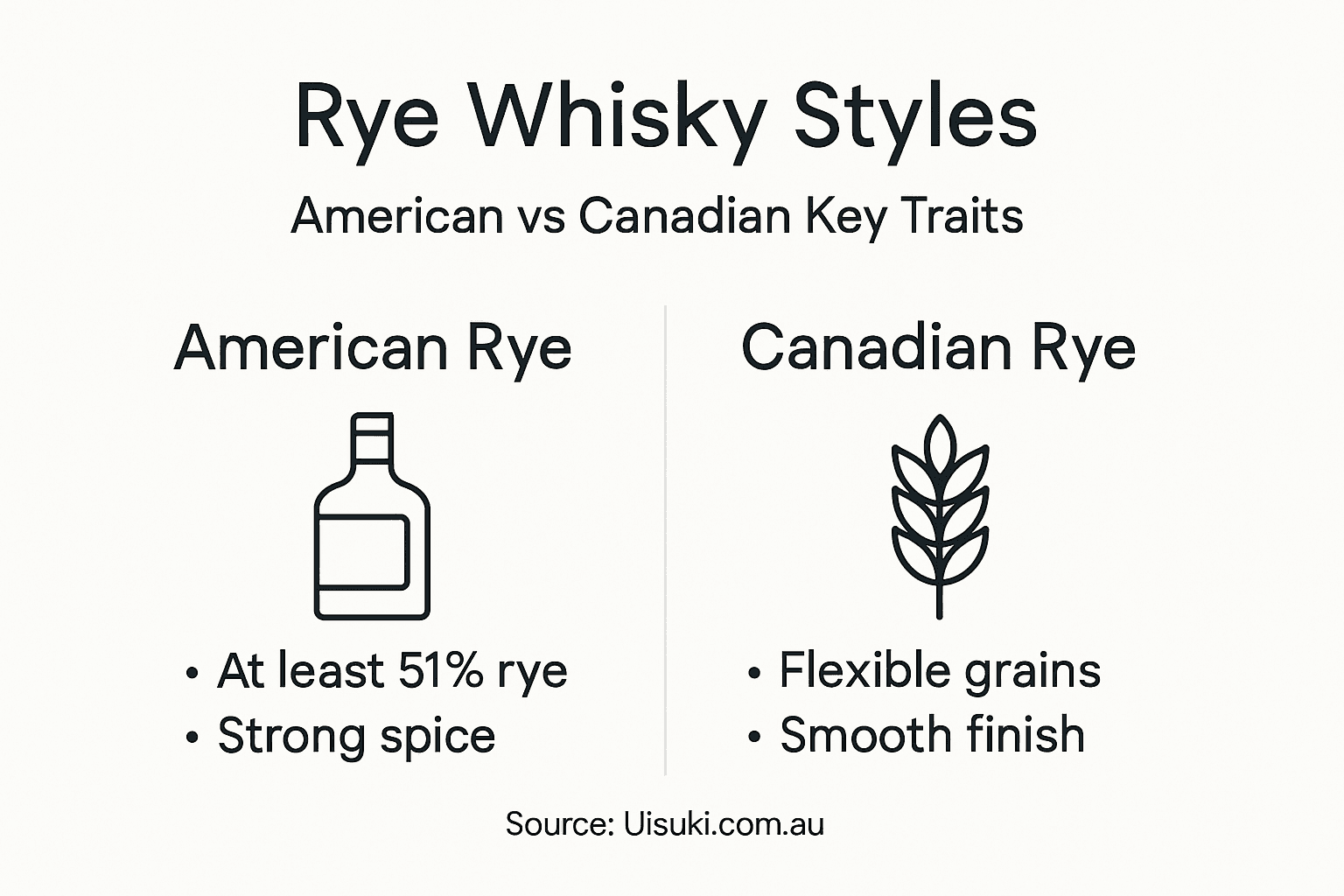
American Rye Whisky follows strict legal guidelines. Distillers must use at least 51% rye grain and age the spirit in new, charred oak barrels. This results in a bold, spicy flavour profile with intense grain characteristics. Comparative rye whisky production methods reveal that the American approach emphasises grain purity and consistent regulatory standards.
Conversely, Canadian Rye Whisky operates with more flexible regulations. Historically, the term ‘rye’ emerged from blending practices where small quantities of rye grain were added for flavour complexity. Canadian producers often blend different grain spirits after distillation, creating smoother, lighter whiskies that still maintain a subtle rye character. Notably, Canadian rye whisky must be aged for a minimum of three years but does not require new barrels.
Pro tip: When tasting rye whiskies, start with American styles for a robust experience, then explore Canadian variants to appreciate the nuanced differences in production techniques.
Here’s a concise comparison of American and Canadian rye whisky styles:
| Attribute | American Rye Whisky | Canadian Rye Whisky |
|---|---|---|
| Rye Grain Requirement | Minimum 51% rye | No minimum; flexible |
| Barrel Type | New charred oak barrels | Used or new barrels allowed |
| Minimum Aging | No legal minimum (often aged 2+) | At least three years |
| Flavour Profile | Bold, spicy, peppery | Smoother, lighter, subtle rye |
| Blending Practice | Rarely blended before bottling | Frequently blended spirits |
Production Process And Tasting Notes Explained
Rye whisky production represents a sophisticated journey transforming humble grains into a complex spirit. Comprehensive rye whisky production techniques reveal the intricate steps that shape this distinctive beverage’s character and flavour profile.
The production process involves several critical stages:
- Grain selection (minimum 51% rye)
- Mashing and fermentation
- Distillation techniques
- Barrel aging
- Flavour development
Distillation and Grain Composition play pivotal roles in creating rye whisky’s unique character. Producers carefully blend rye with complementary grains like corn and malted barley, ensuring a minimum of 51% rye content. The distillation process typically maintains proof levels below 160, preserving the grain’s essential flavour characteristics. Whisky production methods demonstrate how different yeast strains and distillation approaches can dramatically influence the final product’s taste profile.

Aging is where rye whisky truly develops its complexity. Traditionally aged in new, charred oak barrels, the spirit absorbs nuanced flavour notes of vanilla, caramel, and distinctive spicy undertones. Tasting notes typically range from bold and peppery to smooth and subtly sweet, depending on the specific production techniques and barrel aging duration.
Pro tip: When exploring rye whiskies, pay attention to the mash bill percentages and aging process to understand the subtle variations in flavour profiles.
How Rye Differs From Bourbon Whisky
Rye and bourbon whiskies represent two distinctive spirits with unique characteristics that set them apart in the world of whisky. Whisky grain composition differences reveal the fundamental distinctions that shape their flavour profiles and production methods.
Key differences between rye and bourbon include:
- Primary grain composition
- Flavour characteristics
- Distillation requirements
- Aging processes
- Sensory experience
Grain Composition is the most critical distinguishing factor. Bourbon must contain at least 51% corn, creating a sweeter, smoother spirit with pronounced vanilla and caramel notes. Rye whisky, by contrast, requires a minimum of 51% rye grain, resulting in a spicier, more robust flavour profile with herbal and peppery undertones. Comparative whisky production methods demonstrate how this fundamental difference dramatically influences the final product’s taste and character.
Both spirits share similar production standards, including aging in new charred oak barrels and adherence to strict distillation regulations. However, the grain composition creates dramatically different drinking experiences. Rye whisky offers a more intense, punchy flavour with a dry finish, while bourbon presents a smoother, sweeter alternative that appeals to different palates.
Pro tip: When exploring these whiskies, taste them side by side to appreciate the nuanced differences in grain composition and flavour profile.
The following table summarises key differences between rye and bourbon whisky:
| Aspect | Rye Whisky | Bourbon Whisky |
|---|---|---|
| Main Grain | Rye (≥51%) | Corn (≥51%) |
| Typical Flavours | Spicy, peppery, herbal | Sweet, vanilla, caramel |
| Finish | Dry and robust | Smooth and mellow |
| Appeal | Adventurous palates | Fans of sweetness |
Buying, Collecting And Serving Rye Whisky
Rye whisky collecting represents a sophisticated pursuit that blends passion with investment potential. Collectible rye whisky strategies reveal the nuanced world of rare spirits and their appreciating value.
Key considerations for rye whisky collectors include:
- Provenance and historical significance
- Limited production runs
- Distillery reputation
- Packaging and preservation
- Investment potential
Collector’s Approach demands strategic selection and meticulous preservation. Rare or limited-edition bottles can become valuable assets, with certain releases appreciating significantly over time. Serious collectors focus on small batch or discontinued expressions that represent unique moments in distilling history. Proper storage remains critical - maintaining stable temperatures, controlling humidity, and protecting bottles from direct light ensures both aesthetic and monetary value.
Serving rye whisky requires understanding its complex character. Experts recommend using specialised whisky glassware that concentrates aromatics, serving the spirit neat or with minimal water to fully appreciate its spicy, robust profile. The goal is to unlock the intricate flavour notes that distinguish high-quality rye whiskies from more generic spirits.
Pro tip: Document each rye whisky purchase with detailed notes about its origin, production method, and personal tasting experience to enhance your collection’s narrative and potential future value.
Discover The Rich Legacy Of Rye Whisky With Uisuki
Exploring the bold, spicy flavours and fascinating history of rye whisky can be challenging without the right guidance and selection. Whether you are seeking American styles with their intense peppery notes or smoother Canadian variants that offer subtle complexity you need a trusted source to navigate these distinctive spirits. At Uisuki, we understand the importance of provenance and production methods so you can expand your collection with confidence.

Dive into our curated range of premium whiskies from around the world through the World Whiskies – Uisuki.com.au collection. Experience the robust character of rye whiskies alongside other expertly chosen spirits. Visit Uisuki.com.au today to explore rare bottles that highlight rye’s unique heritage and flavour. Elevate your tasting journey now with carefully sourced picks tailored for discerning palates.
Frequently Asked Questions
What is rye whisky?
Rye whisky is a distinctive spirit that must contain a minimum of 51% rye grain, resulting in a spicy and robust flavour profile. It has historical roots and complex production techniques, differentiating itself from other whisky types.
How does rye whisky differ from bourbon?
Rye whisky requires at least 51% rye grain, leading to a spicier and more robust taste, while bourbon must consist of at least 51% corn, resulting in a sweeter and smoother spirit. These grain compositions significantly influence their flavour profiles.
What are the primary characteristics of rye whisky?
Key characteristics of rye whisky include a minimum of 51% rye grain content, a typically bold and spicy flavour profile, aging in new charred oak barrels, and an alcohol content ranging from 40-50% ABV.
How should rye whisky be served for the best tasting experience?
Rye whisky is best served neat or with minimal water to fully appreciate its complex character. Using specialised whisky glassware can help concentrate the aromas, enhancing the overall tasting experience.