

TL;DR:
- Malt variety, malting process, and fermentation duration set the foundational flavor profile of whisky. The choice of barley and malting techniques significantly influence aroma, texture, and smoke levels, which are then modified by distillation and maturation. Ultimately, the grain’s qualities dominate the whisky’s character, with cask influence serving as a refining layer.
Whisky malt contributions are the defining factors behind every flavour, aroma, and textural note in your glass. From the barley variety chosen at harvest to the peat smoke applied during kilning, malt shapes whisky character before a single drop enters a still. The malting and fermentation process interacts with distillation and cask maturation to produce the cereal, fruity, floral, and smoky profiles collectors spend years chasing. Understanding what malt actually does at each stage transforms how you taste, buy, and appreciate whisky.
How do whisky malt contributions start with barley?
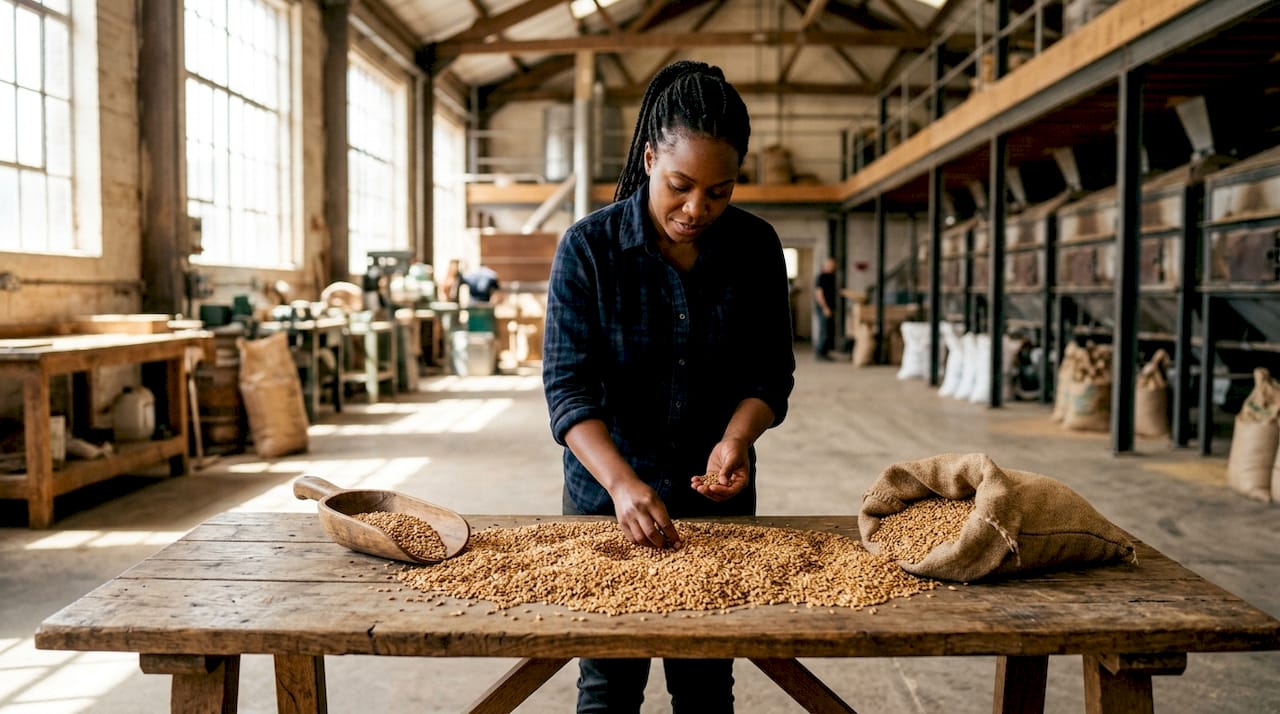
Barley variety is the first and most consequential decision in the whisky production process. The genetics of the grain determine starch content, enzyme activity, and fermentability, which together set the ceiling for spirit quality. Barley variety affects enzyme activity, controlling sugar yield and influencing wash strength, which shapes the final spirit character. Poor malt quality at this stage cannot be fully recovered downstream, no matter how skilled the distiller.
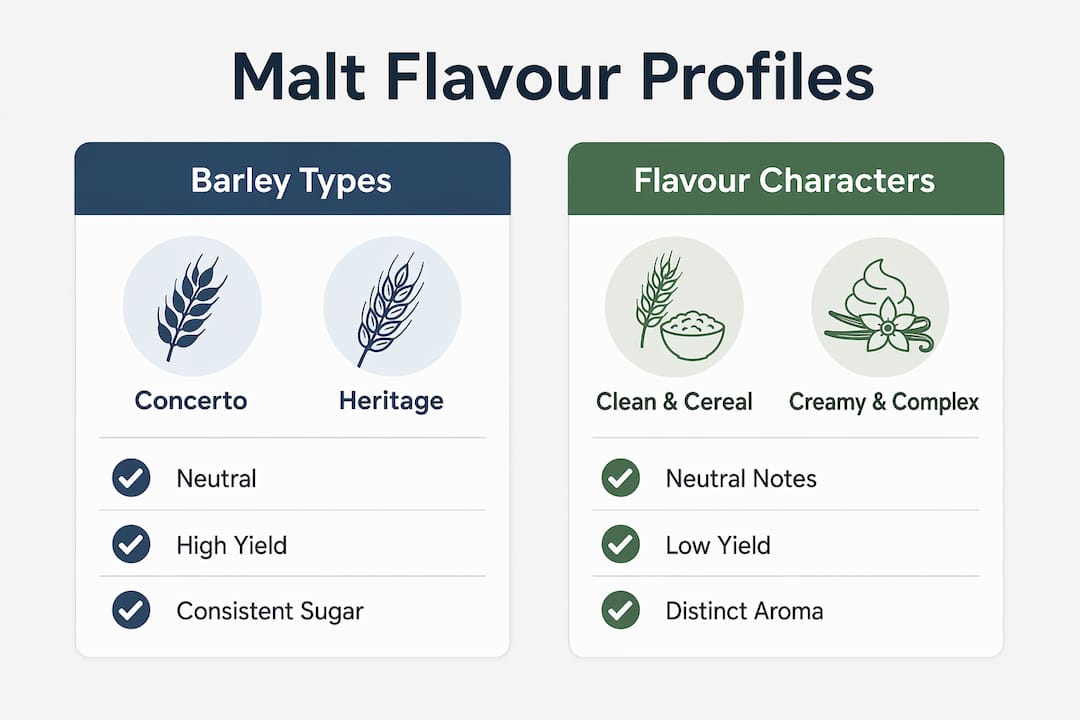
Around 70% of Scotch whisky uses the high-yield variety Concerto, valued for consistent sugar conversion and processing efficiency. Concerto delivers reliable fermentability and a clean, cereal-forward base. That reliability is exactly why large-scale distilleries favour it.
Heritage varieties tell a different story. Bere barley, one of Scotland’s oldest cultivated grains, produces lower yields but contributes a creamier mouthfeel and greater flavour complexity. Craft distilleries including Bruichladdich and Waterford have built entire product lines around single-farm and heritage barley to demonstrate terroir-driven differences in the glass. Organic barley from nutrient-rich soil is also linked to creaminess and complex texture, with Nc’Nean Distillery reporting that fertiliser-free farming boosts flavour through a richer soil ecosystem.
The table below compares key barley varieties and their contributions to the malt whisky flavour profile.
| Barley Variety | Flavour Character | Processing Notes |
|---|---|---|
| Concerto | Clean, cereal, neutral | High yield, consistent enzyme activity |
| Bere | Creamy, nutty, complex | Low yield, heritage grain, terroir-driven |
| Organic varieties | Rich, textured, layered | Nutrient-rich soil, fertiliser-free farming |
| Optic | Lightly sweet, biscuity | Widely used pre-Concerto era |
Pro Tip: When tasting a single malt from a craft distillery that names its barley variety on the label, compare it side by side with a standard expression from the same region. The textural difference alone is worth the exercise.
What role does malting and peat play in flavour?
Malting is the process that unlocks barley’s flavour potential. Barley is steeped in water, allowed to germinate, and then kilned to halt germination at the right moment. Malting activates key enzymes that convert starches into fermentable sugars during mashing, and kilning with peat smoke deposits phenolic compounds that create smoky whisky character.
Peat levels in malt are measured in parts per million (PPM) of phenolic compounds. The range is wide:
- Unpeated malt: 0–2 PPM. Flavour profile: cereal, floral, grassy.
- Lightly peated malt: 5–15 PPM. Flavour profile: subtle smoke, honey, heather.
- Medium peated malt: 15–35 PPM. Flavour profile: earthy smoke, dried fruit, spice.
- Heavily peated malt: 35–50 PPM. Flavour profile: pronounced smoke, medicinal, coastal.
- Islay-style heavily peated malt: exceeding 160 PPM. Flavour profile: intense smoke, tar, iodine, ash.
The relationship between malt PPM and what you actually taste is not linear. The same malt PPM can produce different smoke intensities depending on distillation cuts and cask selection. Distillation and maturation reduce phenol levels, so the smoke in the final whisky is always lower than the raw malt figure suggests. Octomore from Bruichladdich regularly exceeds 160 PPM in malt yet delivers a smoke experience that is intense but not overwhelming, precisely because of how it is distilled and matured.
Understanding PPM gives you a useful reference point, but it is the production choices layered on top of malt that determine the final Scotch whisky characteristics in the bottle.
How does fermentation shape malt-derived flavours?
Fermentation is where malt chemistry meets yeast biology, and the results define whether a whisky leans fruity, cereal-forward, or sulfurous. Longer fermentation cycles of 96 hours or more produce fruity esters that complement or mask the malt’s cereal base. Shorter cycles produce heavier, sulfurous notes that sit closer to the grain.
Yeast strain selection amplifies or suppresses what the malt provides. Distiller’s yeast strains bred for efficiency tend to produce clean, neutral fermentations that let malt character come through clearly. Brewer’s yeast strains, used by distilleries like Springbank, generate more complex ester profiles that add fruity layers on top of the malt base.
Free amino nitrogen from malt directly impacts yeast health and metabolism during fermentation. Sufficient nitrogen, around 150 mg/L, prevents undesirable metabolites that would otherwise spoil the malt character. This is why malt quality upstream has a direct chemical consequence on fermentation outcomes downstream.
Fermentation duration modulates malt character from heavier, sulfurous profiles at short durations to fruity, ester-rich styles at longer ones. Distilleries that run extended fermentations, such as Glenfarclas with washback times exceeding 60 hours, consistently produce spirits with more pronounced fruit and floral notes sitting above a clean malt foundation.
Pro Tip: When reading tasting notes, look for “sulfurous” or “meaty” descriptors as a signal of short fermentation. “Stone fruit” or “tropical” notes usually point to extended fermentation working in harmony with the malt base.
How do distillation and maturation transform malt character?
The malt’s enzymatic potential sets sugar availability, which influences fermentation strength and distillation efficiency. During distillation, the distiller’s cut points determine which congeners from the malt make it into the new-make spirit. A narrow cut produces a lighter, cleaner spirit. A wider cut retains more malt-derived oils and esters, producing a heavier, more textured base for maturation.
Maturation in oak casks complements and modifies malt-derived flavours, introducing vanilla, spice, and fruity notes that interact with the malt base. The cask does not replace malt character. It transforms and builds on it. A malt with strong cereal and nutty notes will absorb oak influence differently than a heavily peated malt, which tends to push back against wood tannins.
Malted barley contributes key flavour precursors including cereal esters and sulfurous compounds that persist through distillation and evolve during maturation. Unmalted grains contribute lighter, more neutral profiles. This is why single malt whiskies, built entirely on malted barley, carry more inherent complexity into the cask than grain whiskies.
The table below shows how different malt types carry their character through the production stages.
| Malt Type | New-Make Character | Post-Maturation Flavour |
|---|---|---|
| Unpeated heritage barley | Creamy, nutty, cereal | Rich vanilla, dried fruit, biscuit |
| Unpeated commercial barley | Clean, light cereal | Honey, floral, gentle oak spice |
| Lightly peated malt | Subtle smoke, sweet grain | Smoked honey, heather, light spice |
| Heavily peated malt | Intense smoke, medicinal | Tar, iodine, dark fruit, coastal salt |
Exploring the full range of whisky flavour profiles across these malt types reveals just how much the grain drives the final drinking experience.
Key takeaways
Malt variety, malting method, and fermentation duration collectively determine the flavour ceiling of any whisky, and no amount of cask work fully overrides what the grain establishes at the start.
| Point | Details |
|---|---|
| Barley variety sets the base | Heritage varieties like Bere deliver creaminess; commercial Concerto provides clean, consistent cereal character. |
| Peat PPM guides smoke intensity | Malt phenol levels range from 0 to 160+ PPM, but distillation reduces the final smoke perception. |
| Fermentation duration shapes ester profile | Longer fermentation (96+ hours) builds fruity esters; shorter cycles produce heavier, sulfurous notes. |
| Malt quality cannot be recovered downstream | Poor enzyme activity and low nitrogen in malt directly compromise fermentation and spirit quality. |
| Maturation builds on malt, not over it | Oak casks transform malt-derived flavours but preserve the fundamental character established by the grain. |
Why malt deserves more credit than it gets
Most whisky conversations start and end with the cask. Sherry bomb, bourbon matured, port finish. The wood gets the headline. After years of tasting and sourcing whiskies across Scotland, Japan, and Australia, I think that framing undersells what malt actually does.
The cask is a modifier. Malt is the source material. A distillery using Bere barley on a short fermentation cycle will produce a fundamentally different spirit than one using Concerto on a 72-hour washback, regardless of what cask they both end up in. The grain sets the character. The cask refines it.
What I find genuinely exciting right now is the shift toward provenance-driven malting. Distilleries like Waterford in Ireland and Nc’Nean in Scotland are publishing detailed malt provenance data, farm by farm. That transparency is changing how serious collectors evaluate bottles. A whisky from a single farm’s heritage barley is not just a marketing story. It is a measurably different flavour outcome.
For enthusiasts building a collection, I’d suggest paying attention to the grain statement on the label before the cask note. When a distillery names its barley variety or farming method, that is a signal of intentionality at the most foundational level of production. Those bottles tend to age interestingly in the glass and in the collection.
— Brendan
Discover malt-forward whiskies at uisuki
If this breakdown of malt’s role in whisky has sharpened your appreciation for grain-driven character, the next step is tasting the difference in the bottle.

At Uisuki, we curate whiskies where malt character is front and centre. The Hobart Whisky Bourbon Matured Rum Finished Single Malt is a standout example of Australian single malt where the grain-driven base interacts with two distinct cask influences, showing exactly how malt character persists and evolves through maturation. For those interested in how malt and grain interact across blended expressions, the Ichiro’s Malt and Grain Limited Edition offers a world-class comparison point. Browse the full range at Uisuki to find expressions that put the grain first.
FAQ
What are whisky malt contributions?
Whisky malt contributions refer to the flavour, aroma, and textural impacts that barley variety, malting method, and peat application have on the final spirit. These factors establish the foundational character of a whisky before distillation or maturation begins.
How does barley variety change whisky flavour?
Heritage varieties like Bere barley produce creamy, complex whiskies, while commercial varieties like Concerto deliver clean, cereal-forward profiles. Barley genetics and enzyme activity directly control sugar yield and fermentability, which shape spirit character.
What does peat PPM mean for whisky smoke?
Peat PPM measures phenolic compounds in malt, ranging from 0 in unpeated malt to over 160 PPM in heavily peated Islay expressions. Distillation and maturation reduce these phenol levels, so the smoke you taste is always lower than the raw malt figure.
Does fermentation affect malt character in whisky?
Fermentation duration significantly modulates malt-derived flavours. Cycles of 96 hours or more build fruity esters, while shorter cycles produce heavier, sulfurous notes that sit closer to the raw grain.
Can cask maturation override malt character?
Maturation transforms malt-derived flavours by adding vanilla, spice, and fruit from oak, but it does not replace the malt base. The fundamental character established by barley variety and malting method persists through to the finished whisky.