

Bold flavours and subtle aromas in whisky rarely happen by chance. For collectors in Australia keen to improve their palate, understanding malted barley is a gateway to appreciating what sets single malts apart from blended spirits. Malted barley’s journey through steeping, germination, and kilning is the secret behind those biscuit, caramel, and grain notes you taste. This article breaks down how each stage shapes whisky’s complexity, giving you practical knowledge to recognise malt signatures during your next tasting.
Table of Contents
- What Is Malted Barley in Whisky Production
- Varieties of Malted Barley and Their Traits
- How Malting Impacts Whisky Flavour Profile
- Malted Barley Compared to Other Grains
- Common Misconceptions Among Whisky Fans
Key Takeaways
| Point | Details |
|---|---|
| Importance of Malting | Malting transforms barley through steeping, germination, and kilning, essential for flavour development and fermentation processes in whisky production. |
| Varieties Impact Flavour | Different malted barley varieties, such as Concerto and Maris Otter, produce unique flavours and enzyme strengths that influence whisky character. |
| Barley vs Other Grains | Barley is superior for malt whisky due to its high enzyme content, essential for efficient fermentation, unlike other grains which require additional malted barley. |
| Myths About Malted Barley | Many enthusiasts misunderstand malted barley’s role, thinking it solely impacts flavour, while it is vital for fermentation and overall whisky complexity. |
What Is Malted Barley in Whisky Production
Malted barley is the foundation of whisky flavour. It’s grain that’s been specially treated to unlock sugars and enzymes that yeast needs for fermentation. Without malting, you’d have raw barley seeds that yield nothing but bitterness.
The malting process transforms ordinary barley through three distinct stages:
- Steeping: Barley soaks in water for days, awakening dormant enzymes and starting germination
- Germination: The grain sprouts as enzymes develop, converting starches into fermentable sugars
- Kilning: Heat dries the grain, stopping growth and developing colour, flavour, and aroma
This careful process is what separates malted barley from unmalted alternatives. The malting process includes steeping, germination, and kilning, each stage contributing critical compounds to your final whisky’s character.
Why Malted Barley Matters for Taste
When you sip a quality whisky, you’re tasting the direct result of malted barley’s chemistry. The enzymes created during malting convert starch into glucose, which yeast transforms into alcohol and flavour compounds.
Malted barley contributes signature taste notes you’ll recognise across different styles:
- Nutty, biscuity undertones that remind you of breakfast cereal
- Caramelised sweetness reminiscent of toffee or honey
- Subtle grain complexity that grounds the spirit
The choice of malted barley type and kilning temperature directly determines whether your whisky tastes light and floral or rich and toasted.
Australian collectors often notice these differences immediately. A lightly kilned malt produces delicate, fresh flavours. Heavily kilned malts deliver deep, smoky, almost chocolate-like profiles.
The quality of malted barley you’re drinking reflects decisions made months earlier during production. Distillers select specific barley varieties and malting methods to achieve their desired flavour profile. This isn’t random—it’s precise control over chemistry.
Understanding the difference between malt and grain in whisky helps you appreciate why single malts taste distinctly different from grain whisky blends.
Pro tip: When tasting your next whisky, intentionally hunt for the malt notes—the biscuit, caramel, or nuttiness—rather than focusing solely on alcohol heat. This trains your palate to recognise malted barley’s unique signature across different bottles.
Varieties of Malted Barley and Their Traits
Not all malted barley is created equal. Different barley varieties produce distinctly different flavour profiles, enzyme levels, and fermentation characteristics. As an Australian whisky collector, you’re essentially tasting the genetics of the barley used during production.
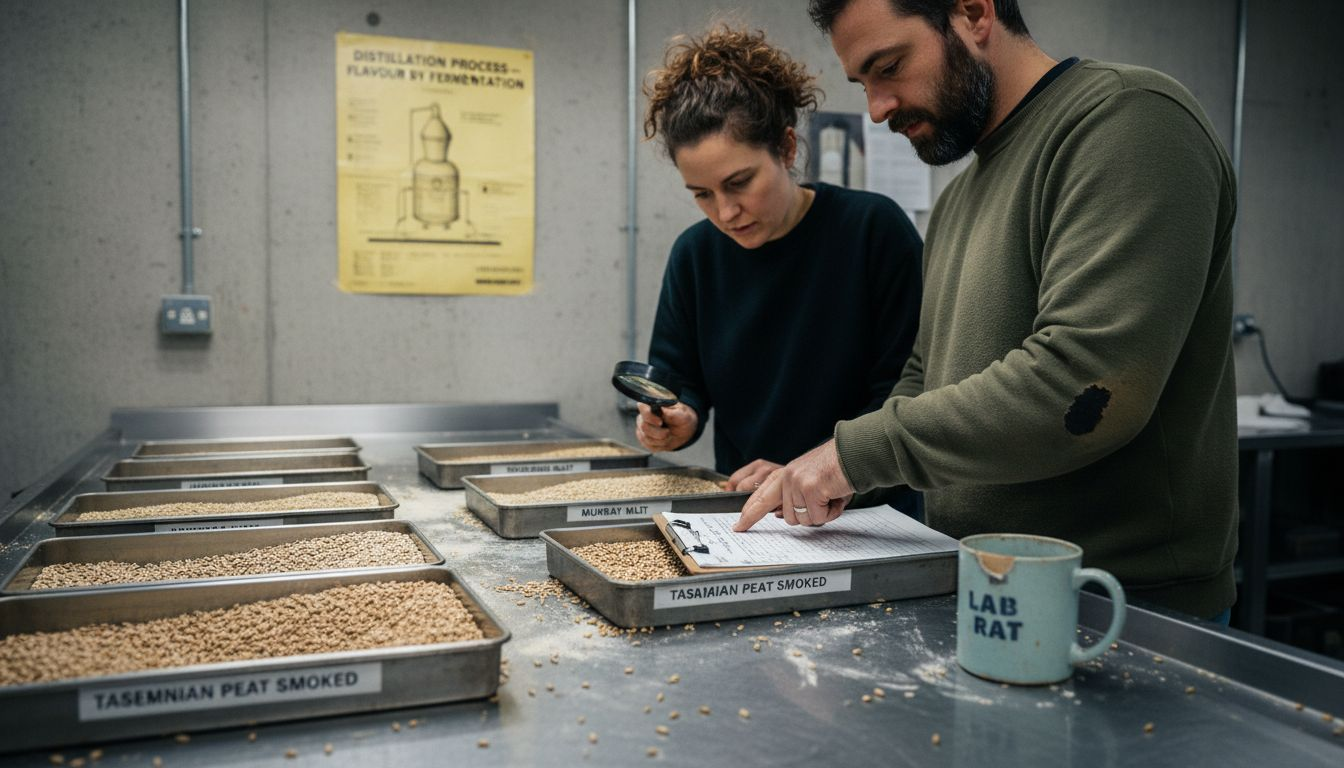
Distillers select barley varieties based on specific qualities they want in the final spirit. Barley varieties have been developed with focus on suitability for malting and whisky distillation, emphasising characteristics like fermentability, enzyme content, and flavour traits.
Common Malted Barley Varieties
Several barley types dominate Scotch whisky production, each bringing its own character to the glass:
- Concerto: A modern variety balancing yield with malt quality, increasingly popular with contemporary distilleries
- Optic: Known for consistent enzyme levels and predictable fermentation, favoured by producers seeking reliability
- Golden Promise: An older heirloom variety producing complex, full-bodied malts with distinctive character
- Maris Otter: Delivers rich, biscuity flavours and strong enzyme activity, beloved by traditional distillers
Each variety brings different strengths to the malting process. Some excel at producing fermentable sugars quickly. Others develop deeper colour and flavour compounds during kilning.
Here’s a summary of common malted barley varieties used in whisky and their main traits:
| Variety | Flavour Profile | Enzyme Strength | Typical Use in Whisky |
|---|---|---|---|
| Concerto | Balanced, modern malt | Good for consistency | Widely used in new distilleries |
| Optic | Smooth, clean | High and reliable | Consistent fermentation results |
| Golden Promise | Rich, complex | Moderate | Heirloom single malts |
| Maris Otter | Biscuity, robust | Strong | Traditional craft expressions |
Understanding barley genetics helps you recognise why whiskies from different distilleries taste so distinct, even when using similar malting and distillation methods.
How Barley Genetics Shape Your Whisky
The protein content, enzyme strength, and starch composition of your barley variety directly influence fermentation speed and flavour development. Higher enzyme content means faster sugar conversion. Specific protein structures create different flavour compounds during fermentation.
These genetic traits matter significantly for consistency. Distillers who switch barley varieties often notice subtle shifts in their whisky’s profile. Some collectors can identify which variety was used simply by tasting the spirit.
Modern breeding programmes continue developing improved barley varieties. Advanced selection enhances yield whilst maintaining malt quality and flavour complexity. This ongoing refinement benefits whisky producers worldwide, including those sourcing Australian and regional distillery releases.
Pro tip: Check your whisky’s tasting notes for mentions of barley variety—many premium bottles now highlight this detail. Compare expressions using different varieties side-by-side to train your palate and discover which barley genetics resonate with your taste preferences.
How Malting Impacts Whisky Flavour Profile
Malting doesn’t just prepare barley for fermentation—it fundamentally shapes every flavour you taste in your glass. The three stages of malting (steeping, germination, and kilning) create thousands of flavour compounds that define the whisky’s character.
Think of malting as controlled flavour engineering. Malting profoundly influences whisky flavor by controlling enzyme development and the degree of kilning, which impacts the malt’s colour, aroma, and taste. Each decision distillers make during malting reverberates through the final spirit.
The Three Flavour-Building Stages
During steeping, dormant enzymes awaken as barley absorbs water. Germination activates these enzymes further, creating the machinery needed to convert starch into fermentable sugars. But the real flavour magic happens during kilning.
Kilning is where colour and taste develop:
- Low temperatures (50–65°C) preserve light, delicate, biscuity flavours
- Medium temperatures (65–75°C) develop richer, caramelised sweetness
- High temperatures (75°C+) create smoky, roasted, chocolate-like complexity
Different Malt Types, Different Flavours
Distillers create distinct malt types by adjusting kilning temperature and duration. Different malt types such as pale, caramel, peated, and chocolate malts provide variations from sweet and biscuity to smoky and roasted flavours.
The kilning temperature controls whether your whisky tastes bright and cereal-like or deep and warming—a seemingly small decision with enormous impact.
Pale malts stay light, contributing subtle grain flavours. Caramel malts develop sweetness reminiscent of honey or toffee. Chocolate malts deliver deep, almost coffee-like notes. Peated malts introduce smoky, medicinal intensity that dominates the palate.
Australian collectors often notice this variation immediately. A Highland whisky made with pale malt tastes completely different from one using chocolate malt, despite coming from neighbouring distilleries.
How Flavour Compounds Form
Kilning triggers chemical reactions that generate flavour precursors. These compounds don’t taste like finished whisky flavours yet—yeast and barrel ageing transform them during fermentation and maturation. But the foundational profile begins during malting.
This is why whisky profiles vary so dramatically across regions. Scottish distilleries, Japanese producers, and Australian craft operations each select malts and kilning methods that align with their desired character.
Pro tip: Buy two bottles from the same distillery—one made with pale malt, one with peated malt. Taste them side-by-side to experience directly how malting shapes flavour. This single comparison teaches more about whisky chemistry than reading pages of information.
Malted Barley Compared to Other Grains
Whisky comes from grain, but not all grains are created equal. Barley dominates the malt whisky category for a reason: it simply performs better than alternatives at converting starch into fermentable sugar whilst developing complex flavours.
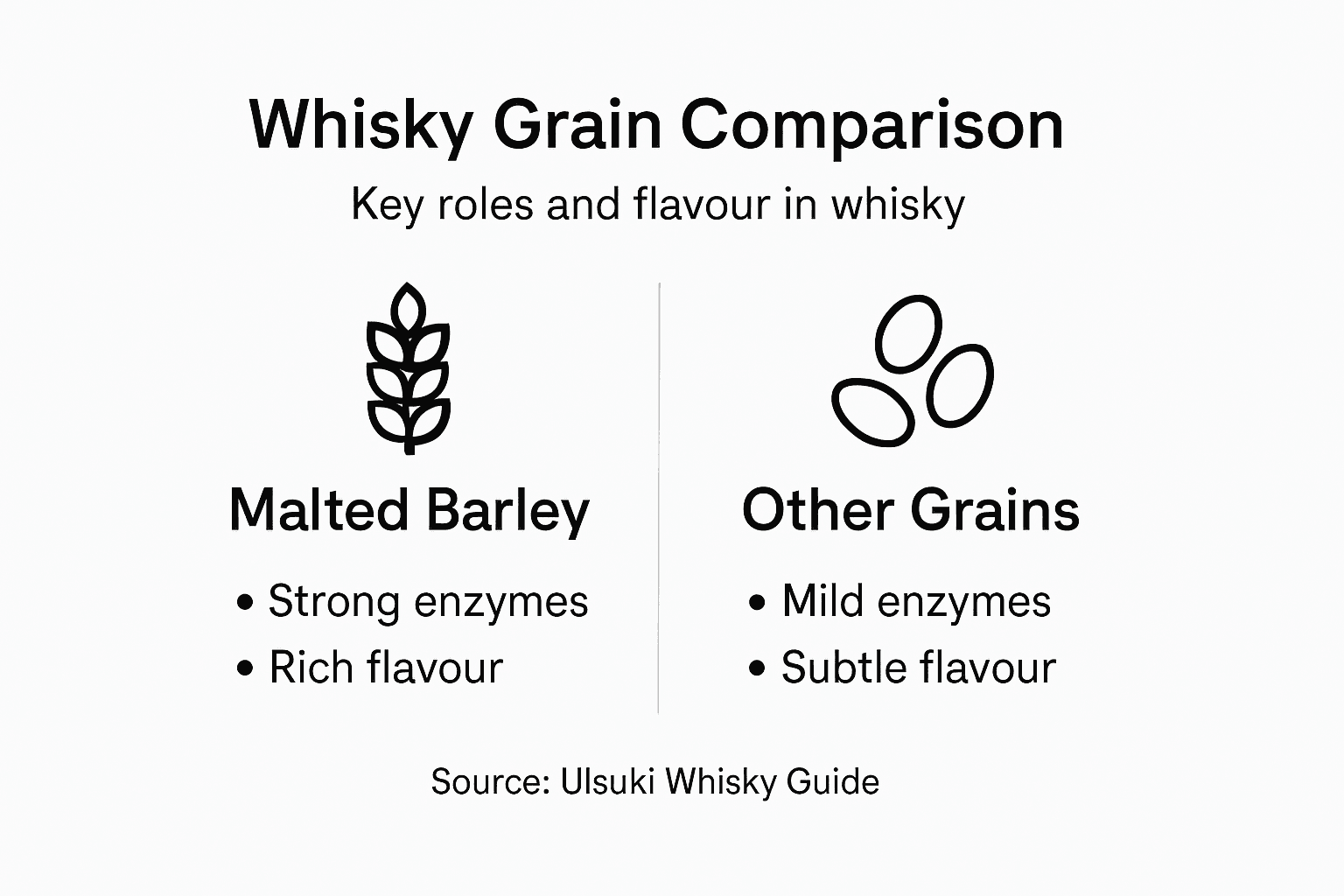
Other grains like corn, rye, and wheat appear in whisky production, but they play different roles. Barley is favoured for malt whisky production because its malted form contains a suitable balance of enzymes and starch for efficient fermentation and rich flavour development.
Why Barley Wins
Barley’s enzyme content is naturally suited to whisky production. When malted, barley develops powerful enzymes (particularly alpha and beta amylase) that break starch into fermentable sugars efficiently. This built-in chemistry means distillers need only malted barley to complete the conversion.
Other grains lack this biochemical advantage. Corn contains enzymes but in weaker forms. Rye and wheat require additional malted barley or external enzymes to ferment properly.
Other Grains in Whisky Production
While barley dominates, other grains serve specific purposes in whisky blending:
- Corn: Creates lighter, sweeter spirit; commonly used in American bourbon and blended whiskies
- Rye: Delivers spicy, peppery notes with higher flavour intensity; popular in American rye whisky
- Wheat: Produces softer, milder character; used in select blends seeking smoothness
- Oats: Rare but adds creamy, oily mouthfeel when included
These grains contribute distinct flavour profiles, but they can’t replace barley’s role as the primary fermentation engine.
The table below compares how different grains impact whisky character and production:
| Grain | Enzyme Activity | Flavour Impact | Typical Whisky Style |
|---|---|---|---|
| Barley | High (ideal for malting) | Complex, layered malt | Single malt, craft whisky |
| Corn | Low (needs barley help) | Sweet, mellow | Bourbon, blended whisky |
| Rye | Moderate | Spicy, robust | American rye, flavourful blends |
| Wheat | Low | Soft, gentle | Light blends, some Scotch styles |
Malt Whisky vs Grain Whisky
The term “malt whisky” specifically means whisky made primarily from malted barley. Grain whisky uses unmalted grains alongside a smaller percentage of malted barley to provide fermentation enzymes.
Grain whisky relies on malted barley as its enzyme source, even though the final spirit tastes completely different—lighter, drier, and less complex than single malts.
Australian collectors often notice this distinction immediately. Single malt whiskies showcase barley’s full potential with rich, layered flavours. Grain whiskies taste cleaner, almost neutral, with subtle sweetness.
This difference explains why premium bottles cost significantly more. Malted barley whisky requires precise control over malting, distillation, and ageing to develop its complex character. Grain whisky production is more straightforward and consistent.
Pro tip: Try a single malt and a grain whisky side-by-side, even if the grain whisky costs less. The taste comparison instantly clarifies why distillers invest so heavily in malted barley quality and why collectors prize malt whiskies for their superior depth.
Common Misconceptions Among Whisky Fans
Whisky enthusiasts often hold beliefs about malted barley that don’t quite match reality. These misconceptions shape how collectors think about flavour, quality, and what makes certain bottles special. Clearing them up improves your tasting experience significantly.
The most widespread misunderstanding centres on what malted barley actually does. Many assume it’s purely about flavour, but that’s only half the story. A common misconception is confusing barley with malted barley; malted barley undergoes germination which activates enzymes crucial for converting starches into sugars necessary for fermentation.
Myth: Malted Barley Only Affects Flavour
This misconception misses malted barley’s primary role entirely. Yes, it contributes taste notes like biscuit and caramel. But without malted barley’s enzymes, fermentation simply doesn’t happen.
Think of it this way: yeast needs sugar to produce alcohol. Raw barley contains starch, not sugar. Malted barley’s enzymatic properties are essential for converting starch to fermentable sugar, making alcohol production possible. Without this conversion, you have grain soup, not whisky.
Myth: All Whiskies Use Only Malted Barley
Many collectors assume every whisky bottle contains 100 percent malted barley. This isn’t true. Grain whiskies blend malted barley with unmalted corn, wheat, or other cereals. Blended whiskies mix malt and grain spirits together.
The category matters:
- Single Malt: 100 percent malted barley from one distillery
- Grain Whisky: Unmalted grains with malted barley as enzyme source
- Blended Whisky: Mix of malt and grain spirits
- Blended Malt: Malted barley from multiple distilleries
Only single malts guarantee exclusive malted barley use. Everything else blends ingredients strategically.
Myth: Malted Barley Determines Your Whisky’s Complete Flavour
Collectors often credit malted barley with their entire tasting experience. This oversimplifies whisky’s complexity dramatically. Malted barley provides the foundation, but fermentation, distillation, and barrel ageing shape the final profile equally.
Malted barley’s flavour contributions are nuanced and complementary rather than overwhelming, debunking ideas that malted barley alone determines whisky taste.
A peated malt produces different results in Scottish, Japanese, and Australian distilleries because each operation ferments and ages differently. The malt is just the starting point.
Myth: Older Malting = Better Whisky
Some collectors assume ancient malting methods produce superior spirits. Modern malting technology actually delivers more consistency, control, and efficiency. Older techniques were necessary because distillers lacked better options.
Contemporary malting produces exceptional whisky. The difference between old and new isn’t quality—it’s precision and reliability.
Pro tip: Stop assuming you know a whisky’s profile from its malt type alone. Taste expressions from the same distillery using different malts, then try the same malt from different distilleries. This comparison reveals how fermentation and ageing matter just as much as malted barley selection.
Discover the True Essence of Malted Barley in Your Next Whisky
Understanding malted barley unlocks the rich, complex heart of every fine whisky you taste. Whether you seek biscuity, caramel sweetness or deep smoky layers, the barley variety and malting process shape these flavours in powerful ways. If you want to explore whiskies that celebrate these subtle differences and elevate your palate, you need access to carefully curated bottles that reflect these nuances.

Explore our premium selection at Uisuki, where each whisky listing includes detailed flavour profiles highlighting malt characteristics like barleys used and malting styles. Our expert recommendations help you find expressions showcasing everything from light, floral notes to rich, toasted complexity. Don’t wait to experience whiskies crafted with precision at every stage including the malt. Start your journey today by visiting Uisuki and deepen your appreciation for malted barley’s pivotal role in whisky flavour.
Frequently Asked Questions
What is malted barley and why is it important in whisky production?
Malted barley is barley that has undergone a specific processing method to unlock sugars and enzymes essential for fermentation. It is crucial in whisky production as it contributes to the flavour, aroma, and overall character of the spirit.
How does the malting process affect the flavour of whisky?
The malting process includes three stages: steeping, germination, and kilning. Each stage influences enzyme development and colour, which ultimately shapes the flavour profile of whisky. Low, medium, and high kilning temperatures create varying taste notes ranging from light and cereal-like to deep and smoky.
What are the common varieties of malted barley used in whisky?
Common varieties include Concerto, Optic, Golden Promise, and Maris Otter. Each variety has unique flavour profiles and enzyme strengths, which affect the final whisky’s taste, such as full-bodied complexity or biscuity notes.
How do malted barley and other grains differ in their roles in whisky production?
Malted barley excels in converting starch into fermentable sugars due to its enzyme content, making it ideal for malt whisky. Other grains like corn, rye, and wheat have different attributes and are often used for blending, resulting in different styles and flavours in whisky.