

TL;DR:
- Age is an important but not definitive factor; cask type, climate, and skill influence quality.
- Over-aging can lead to excessive oak tannins and loss of vibrancy in whisky.
- Evaluating old whisky involves careful tasting, provenance check, and understanding maturation processes.
Age is the most seductive number in whisky collecting. A 30-year-old bottle commands reverence, while a 10-year-old sits quietly on the shelf. But here’s what surprises even seasoned collectors: older is not always better, and excessive ageing can strip a whisky of its vibrancy, leaving behind a wall of oak tannins with little else to say. The truth is that age is just one variable in a far more complex equation. Cask type, climate, distillation style, and the skill of the blender all shape what ends up in your glass. This guide unpacks what age really means, when it matters, and how to evaluate old whisky like a true collector.
Table of Contents
- What does ‘old whisky’ really mean?
- How ageing transforms whisky: Science and artistry
- When does age matter—and when is it too much?
- Evaluating and enjoying old whisky: A collector’s approach
- Why old whisky is more than just a number
- Start your hunt for old and rare whisky
- Frequently asked questions
Key Takeaways
| Point | Details |
|---|---|
| Age is not everything | Old whisky’s taste depends on many factors, not just years in barrel. |
| Balance over age | Heightened complexity is best found in well-balanced, matured whiskies—some younger, some older. |
| Science meets art | Ageing involves chemistry and careful craftsmanship, which can be influenced by climate and barrel type. |
| Taste trumps prestige | Trust your palate and enjoyment above impressive numbers or labels. |
| Explore and experiment | The best collecting journey involves trying a variety of ages, regions, and styles. |
What does ‘old whisky’ really mean?
Ask ten collectors to define ‘old whisky’ and you’ll get ten different answers. Some say anything over 18 years qualifies. Others draw the line at 25. The reality is that there’s no universal standard. Definitions shift depending on the region, the distillery, and the tradition behind the bottle.
One thing that is consistent: when a bottle carries an age statement, it refers to the youngest whisky in the blend or vatting. A 12-year-old Scotch could contain whiskies aged 12, 15, and 20 years, but the label only tells you the minimum. This matters because it means age statements are a floor, not a ceiling.
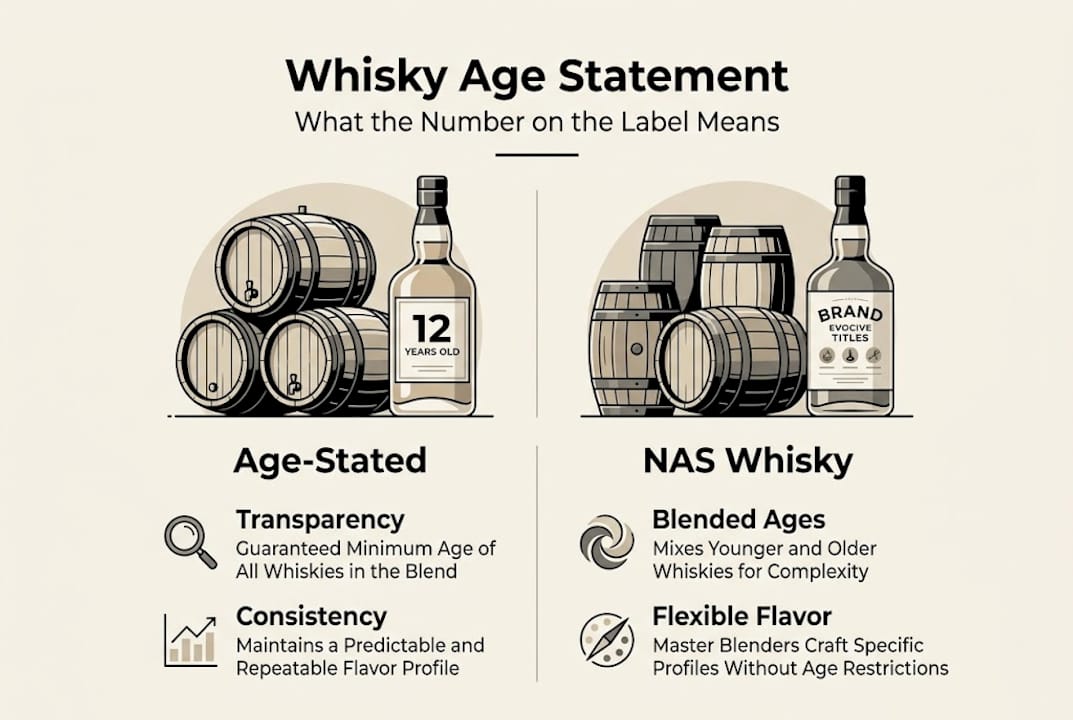
| Feature | Age-stated whisky | Non-age statement (NAS) whisky |
|---|---|---|
| Transparency | High | Lower |
| Consistency | Can vary year to year | Often more consistent |
| Collector appeal | Generally higher | Growing rapidly |
| Flavour flexibility | Limited by age rules | Greater blending freedom |
| Price | Often premium | Variable |
The debate between age-stated and non-age statement whisky is genuinely interesting. Traditionalists prefer age-stated for transparency; modernists favour NAS for flavour flexibility. Neither camp is wrong. They simply value different things.
What collectors sometimes miss is that the number on the label is a marketing tool as much as a quality indicator. Distilleries know that a higher age statement commands a higher price. That commercial reality shapes what gets bottled and when.
The smarter approach is to treat the age statement in whisky as context, not conclusion. It tells you something about the whisky’s journey, but not everything about its destination. Age is one factor among barrel quality, cask type, entry proof, and warehouse conditions; your palate should always have the final say.
Here’s a quick checklist of what to consider beyond the number:
- Cask type: Ex-bourbon, sherry, port, or new oak all impart radically different flavours
- Distillery character: Some spirit profiles age more gracefully than others
- Bottling strength: Higher ABV often preserves more complexity
- Production batch: Limited releases often outperform standard expressions
- Provenance: Where the cask was stored matters enormously
“The number on the label starts the conversation. What’s in the glass finishes it.”
How ageing transforms whisky: Science and artistry
When new-make spirit enters a cask, it is raw, sharp, and often harsh. What happens over the following years is a slow, fascinating transformation driven by chemistry, climate, and craft.
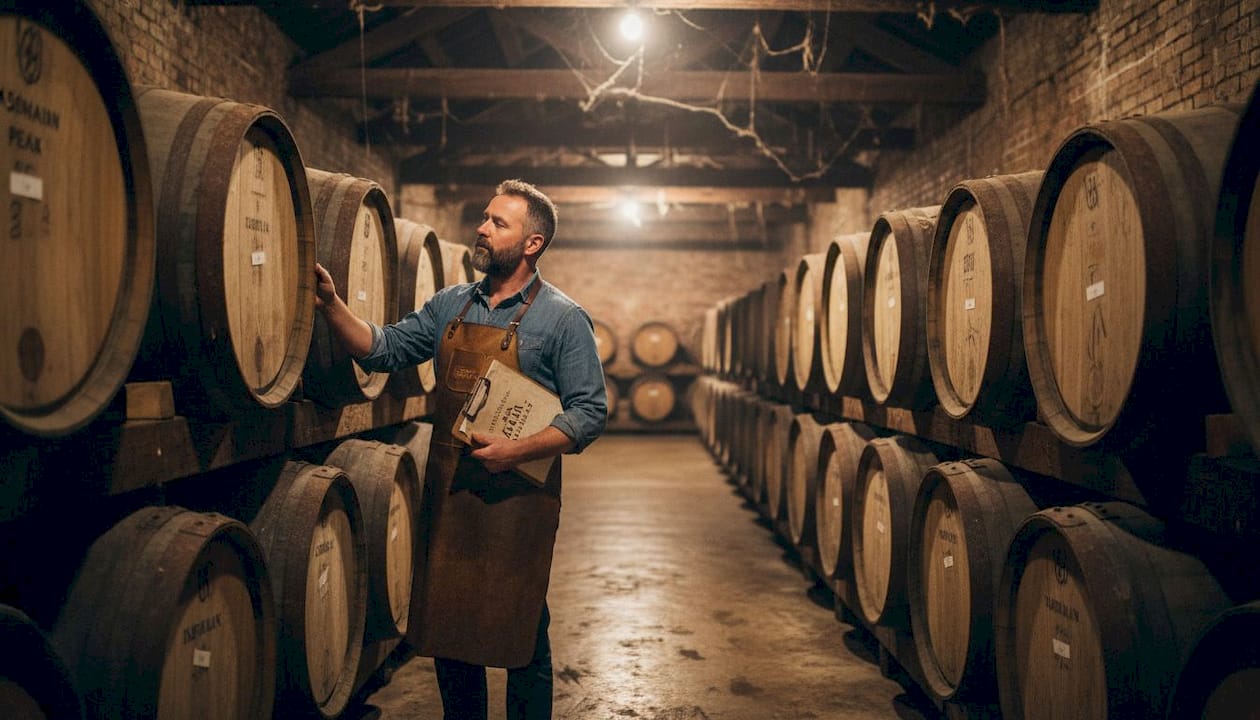
The oak cask does most of the heavy lifting. As the whisky expands into the wood during warmer months and contracts back during cooler ones, it extracts compounds like vanillin (vanilla sweetness), lactones (coconut and woody notes), and tannins (structure and dryness). These key maturation processes also include oxidation, which softens harsh spirit notes, and char filtration, which removes unwanted sulphur compounds.
| Maturation process | What it does | Flavour impact |
|---|---|---|
| Extraction | Draws compounds from oak | Vanilla, spice, wood |
| Oxidation | Softens spirit harshness | Smoothness, roundness |
| Evaporation (angel’s share) | Concentrates remaining liquid | Richer, more intense |
| Char filtration | Removes sulphur compounds | Cleaner, sweeter profile |
The angel’s share is one of the most poetic concepts in whisky. Every year, a percentage of the liquid evaporates through the porous oak. In Scotland, this is typically 1 to 2 per cent annually. What remains becomes more concentrated, often richer and more intense.
Climate plays a starring role in all of this. The benefits of whisky ageing look very different in the cool, damp Highlands of Scotland versus the sweltering heat of Rajasthan, India. Warmer climates drive faster wood interaction, which is why an Indian single malt aged 8 years can taste as mature as a 15-year-old Scotch.
The cask influence on flavour is equally dramatic. A whisky finished in a sherry butt will taste completely different from the same distillate aged in a first-fill bourbon barrel, even if both carry the same age statement.
Here’s how the maturation journey typically unfolds:
- Years 1 to 3: Spirit loses its raw edge; light wood influence begins
- Years 4 to 8: Vanilla, caramel, and fruit notes develop; character emerges
- Years 9 to 15: Complexity deepens; spice and dried fruit become prominent
- Years 16 to 25: Rich, layered flavours; risk of wood dominance increases
- 25 years and beyond: Exceptional or over-oaked; depends heavily on cask and climate
Pro Tip: When evaluating an aged whisky, smell it before adding water. The nose at full strength often reveals the most honest picture of how well the spirit has matured.
When does age matter—and when is it too much?
This is where conventional wisdom starts to crack. The idea that more years automatically means a better whisky is one of the most persistent myths in collecting. In reality, every whisky has an optimal maturation window, and once that window closes, quality can decline.
Bourbon peaks at 6 to 12 years, while Scotch can go longer but still has a sweet spot. Bourbon ages in new charred oak, which is far more aggressive than the used casks favoured by Scotch producers. Leave a bourbon in the barrel for 20 years and you’re likely drinking a glass of sawdust.
Scotch has more flexibility, but it’s not unlimited. A 40-year-old single malt from a great distillery can be extraordinary. The same age from a lesser cask can taste tired, flat, and overwhelmingly tannic.
Warning signs that a whisky has been aged too long:
- Excessive dryness with a bitter, astringent finish
- Dominant wood tannins that mask fruit and floral notes
- Flat or muted nose with little aromatic complexity
- Short, harsh finish rather than a long, warming one
- Loss of distillery character entirely replaced by oak
In hot climates, maturation accelerates but risks over-extraction. An Indian or Taiwanese whisky aged in a hot warehouse can extract more wood character in 5 years than a Scottish whisky does in 15. That’s exciting when it works, and problematic when it doesn’t.
Understanding why age matters in whisky means accepting that the relationship is not linear. It’s more like a curve, rising steeply at first, plateauing, then potentially declining. The skill is in knowing when to bottle.
Pro Tip: If you’re unsure whether a high-age whisky is worth the premium, look for independent bottler releases. They often bottle at cask strength from specific years, giving you a more transparent view of how that particular cask performed.
Learning to understand whisky age statements properly means you’ll stop paying premium prices for over-oaked bottles and start finding genuine value where others overlook it.
Evaluating and enjoying old whisky: A collector’s approach
Knowing the theory is one thing. Putting it into practice at the tasting table is where collecting becomes genuinely rewarding. Old whisky deserves careful, unhurried attention.
Experts emphasise balance over years when assessing quality. A whisky that scores 95 points at 12 years is more impressive than a 95-point score at 30 years, because achieving that balance with less time is harder.
Here’s a practical approach to evaluating old whisky:
- Pour and rest: Give the whisky 5 minutes in the glass before nosing. Let it breathe.
- Nose at distance: Hold the glass at chest height first, then bring it closer. This prevents alcohol burn overwhelming the aromas.
- Identify primary aromas: Fruit, floral, grain, wood, or spirit character?
- Taste neat: Take a small sip and let it coat the entire palate before swallowing.
- Add a few drops of water: This often opens up hidden layers, particularly in older, higher-ABV expressions.
- Assess the finish: How long does it last? Is it warming, drying, or bitter?
For collectors, evaluation goes beyond the glass. Provenance matters. A bottle with clear documentation of its cask number, distillation date, and bottling run is more valuable and more trustworthy than one without. Check for original packaging, intact seals, and consistent fill levels.
“Great old whisky doesn’t announce itself loudly. It reveals itself slowly, one sip at a time.”
Understanding whisky tasting notes explained gives you the vocabulary to articulate what you’re experiencing. Building that language makes you a sharper buyer and a more confident collector. Pair this with practical whisky tasting tips and you’ll find that tasting notes for collectors become an essential part of building and managing a serious collection.
Personal preference is not a weakness. It’s the whole point. The most expensive bottle in the room is worthless if it doesn’t speak to you.
Why old whisky is more than just a number
We’ve spent years watching collectors fixate on age statements, passing over genuinely brilliant bottles because the number wasn’t impressive enough. It’s one of the most common and costly mistakes in this hobby.
Conventional wisdom in whisky collecting idolises age. A 25-year-old bottle feels like an achievement. A 12-year-old feels ordinary. But that framing misses so much of what makes whisky wonderful. Some of the most complex, memorable drams we’ve encountered have been NAS releases or younger expressions from distilleries that simply know their craft.
The real satisfaction in collecting comes from exploration. Finding a bottle that surprises you, that doesn’t fit the expected profile, that makes you rethink what you thought you knew. That’s the reward. Why consider age-statement whiskies is a question worth asking, but so is: why only age-statement whiskies? Broadening your search to include well-crafted younger releases and NAS expressions doesn’t mean lowering your standards. It means raising your curiosity.
Start your hunt for old and rare whisky
If this guide has sharpened your eye for what genuinely makes old whisky worth seeking out, the next step is finding bottles that deliver on every front: cask quality, balance, provenance, and character.

At Uisuki, we curate a selection built for collectors who think beyond the label. Whether you’re drawn to the richly layered Hobart old single malt whisky, the globally celebrated Ichiro’s limited edition old whisky, or the characterful Ardnamurchan aged Scotch whisky, there’s something here that will challenge and reward your palate. Browse our curated range and let the whisky speak for itself.
Frequently asked questions
How does climate affect old whisky maturation?
Hot climates dramatically speed up whisky maturation through higher evaporation rates, sometimes delivering years’ worth of oak interaction in a fraction of the time. In hot climates, the angel’s share can reach 8 to 12 per cent annually, accelerating maturation but also risking over-extraction if left too long.
Is older whisky always better than younger whisky?
No. Excessive ageing can cause over-oaking, stripping a whisky of balance and vibrancy. Many experts and seasoned collectors value complexity and harmony in the glass far above the number on the label.
What are non-age statement (NAS) whiskies?
NAS whiskies blend spirit of different ages to achieve a consistent flavour profile without disclosing a specific minimum age. NAS allows blending for consistency amid aged stock shortages, and many NAS releases are genuinely exceptional in quality.
Why do some collectors pay so much for old whisky?
Rarity, perceived prestige, and a belief in superior flavour profiles all drive premium prices for old whisky on the collector market. Limited production runs and the finite nature of aged stock also create genuine scarcity that supports high valuations.
How do I best enjoy a rare old whisky bottle?
Taste slowly and thoughtfully, noting the complex aromas, the texture on the palate, and the length of the finish. Sharing the experience with a fellow collector often deepens appreciation and helps you articulate what makes the whisky truly special.