

Over 60 percent of whisky fans believe age guarantees quality, yet even experienced australian collectors debate what age statements truly mean. Understanding these labels matters because the number on your bottle influences price, taste, and your perception of value. This guide breaks down the facts behind age statements, clears up myths about maturation, and helps you navigate the bold world of australian and global whisky with confidence.
Table of Contents
- What Age Statement Means
- How Age Shapes Flavour
- Legal And Regional Age Rules
- Age Statement Versus Nas Value
- Risks And Misconceptions About Age
- Making Smart Whisky Choices
Key Takeaways
| Point | Details |
|---|---|
| Age Statement Importance | An age statement on whisky bottles indicates the minimum time the youngest component has matured, influencing the spirit’s character and quality. |
| Aging Process Effects | Maturation in oak barrels transforms whisky, enhancing complex flavours and refining the overall taste, with older whiskies typically presenting smoother profiles. |
| Regulatory Variations | Different countries have distinct regulations for age statements, affecting authenticity and consumer protection in whisky production. |
| NAS Whiskies Distinction | No Age Statement (NAS) whiskies focus on flavour and creativity in blending, challenging the traditional valuation based solely on age. |
What Age Statement Means
Age statements represent a whisky’s precise maturation journey, offering enthusiasts a transparent window into its careful crafting. When you spot a number on a whisky bottle, like “12 Years Old”, this indicates the minimum time the youngest whisky component spent aging in oak barrels, revealing crucial details about its character and quality.
The age statement serves as a quality benchmark in whisky production. Each year spent in oak transforms the spirit, allowing it to develop complex flavours, smooth out harsh edges, and absorb subtle characteristics from the wooden barrel. Younger whiskies typically present sharper, more spirited profiles, while older expressions tend to showcase deeper, more refined taste experiences. This nuanced aging process means that a 12-year-old whisky will have dramatically different sensory attributes compared to a 3-year-old or an 18-year-old variant.
Understanding age statements helps collectors and enthusiasts make informed purchasing decisions. Distilleries are legally required to indicate the youngest whisky’s age, which ensures transparency and allows consumers to compare maturation levels accurately. Some premium whiskies might blend spirits of different ages, but the statement always reflects the youngest component’s time in barrel. This regulation protects consumers and maintains industry standards of honest representation.
Pro Tip for Whisky Lovers: Always examine the age statement carefully and remember that a higher number doesn’t automatically guarantee superior taste. Consider your personal flavour preferences and experiment with different aged expressions to discover your ideal whisky profile.
How Age Shapes Flavour
The aging process is a magical transformation that fundamentally reshapes a whisky’s character, turning raw spirit into a complex sensory experience. During maturation in wooden casks, whisky undergoes intricate processes of extraction, evaporation, oxidation, concentration, filtration, and coloration, each contributing to the liquid’s evolving personality.
As whisky rests in oak barrels, it develops remarkable depth and nuance. Younger whiskies typically exhibit brighter, more spirited characteristics with sharper alcohol notes and pronounced grain flavours. With time, the spirit interacts with the wood, drawing out tannins, sugars, and compounds that soften its initial intensity. A 12-year-old whisky will demonstrate significantly more mellowness compared to a 3-year-old variant, with increased smoothness and a more rounded flavour profile.
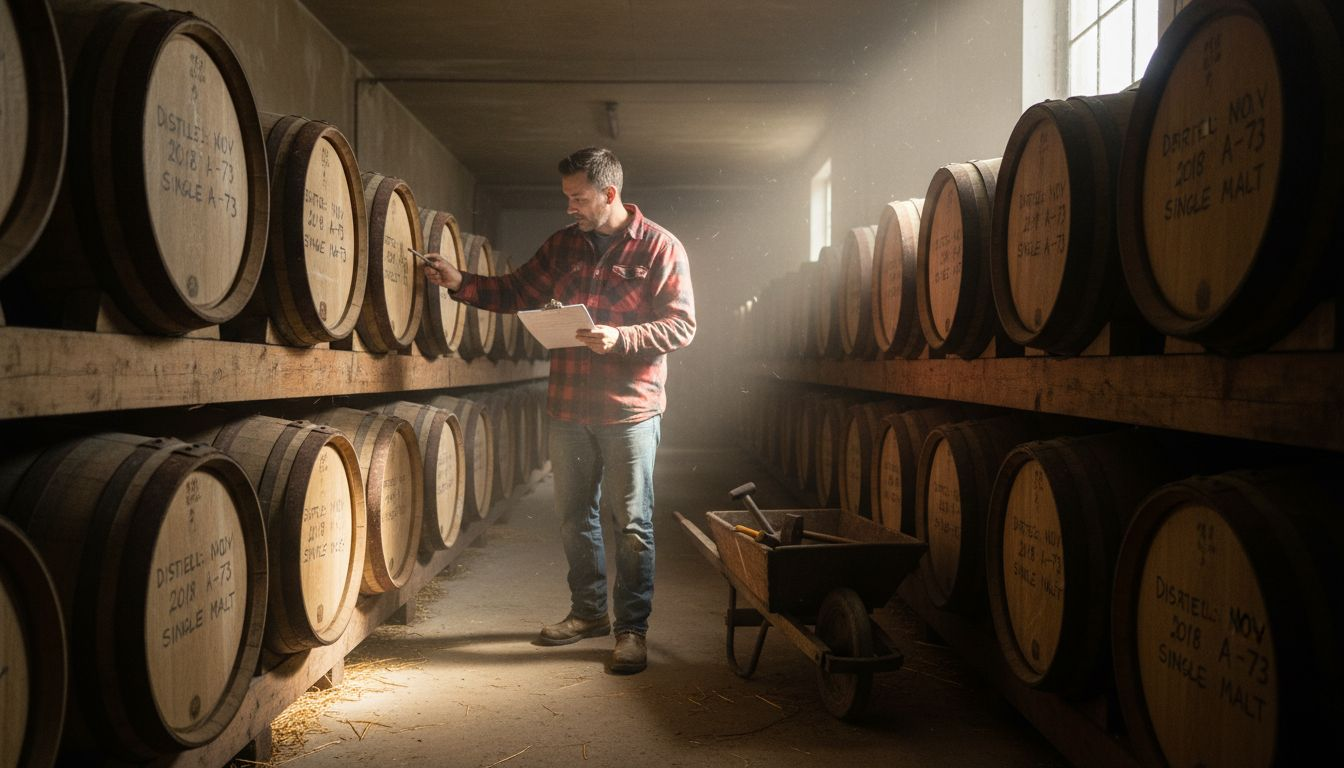
The wood itself plays a crucial role in flavour development. Different barrel types oak species, previous barrel contents (like sherry or bourbon), and barrel treatment dramatically influence the whisky’s final taste. Charred American oak tends to impart vanilla and caramel notes, while European oak might introduce more dried fruit and spice characteristics. Longer aging allows these wood-derived flavours to integrate more seamlessly, creating a harmonious and sophisticated drinking experience.
Pro Tip for Whisky Explorers: Experiment with whiskies of different ages side by side to develop your palate and understand how aging transforms the spirit’s fundamental character.
Legal And Regional Age Rules
Whisky regulations vary significantly across different regions, with each country establishing unique standards for age statements and production. In the United States, specific legal requirements mandate that whiskies must be aged in oak barrels, with particular specifications for different styles. For instance, bourbon must be aged in new charred oak barrels, creating a distinctive set of legal parameters that directly impact the spirit’s production and labelling.
Scotland, renowned for its whisky production, maintains stringent regulations through the Scotch Whisky Association. Scottish law requires that any whisky labelled as Scotch must be aged for a minimum of three years in oak barrels within Scotland. This legal framework ensures authenticity and preserves the traditional production methods that have defined Scottish whisky for centuries. Japanese and Irish whisky producers have similarly developed robust regulatory frameworks, though with some nuanced differences in their specific aging requirements.
Interesting regional variations emerge in age statement regulations. Some countries allow blended whiskies to display the age of their oldest component, while others mandate showing the youngest spirit’s age. This approach ensures transparency for consumers, preventing misleading marketing practices. Australia, for example, follows international standards that require clear and honest representation of a whisky’s maturation period, protecting both producers and consumers in the marketplace.
Pro Tip for Whisky Enthusiasts: Always check the specific regional regulations when purchasing international whiskies, as legal requirements can significantly impact the bottle’s age statement and overall quality representation.
Here’s a comparison of key regional whisky ageing requirements and their impact on whisky style:
| Region | Minimum Age Requirement | Key Ageing Rule | Typical Style Impact |
|---|---|---|---|
| Scotland | 3 years | Must be aged in oak within Scotland | Complex, mellow, often peated |
| United States | No minimum for whisky, 2 years for straight types | New charred oak barrels | Bolder, sweeter, caramel notes |
| Japan | 3 years | Must be aged in wood casks | Delicate, harmonious blends |
| Australia | 2 years | Wood maturation required | Often rich, diverse flavour |
| Ireland | 3 years | Aged in wood casks in Ireland | Light, smooth, fruity whiskies |
Age Statement Versus NAS Value
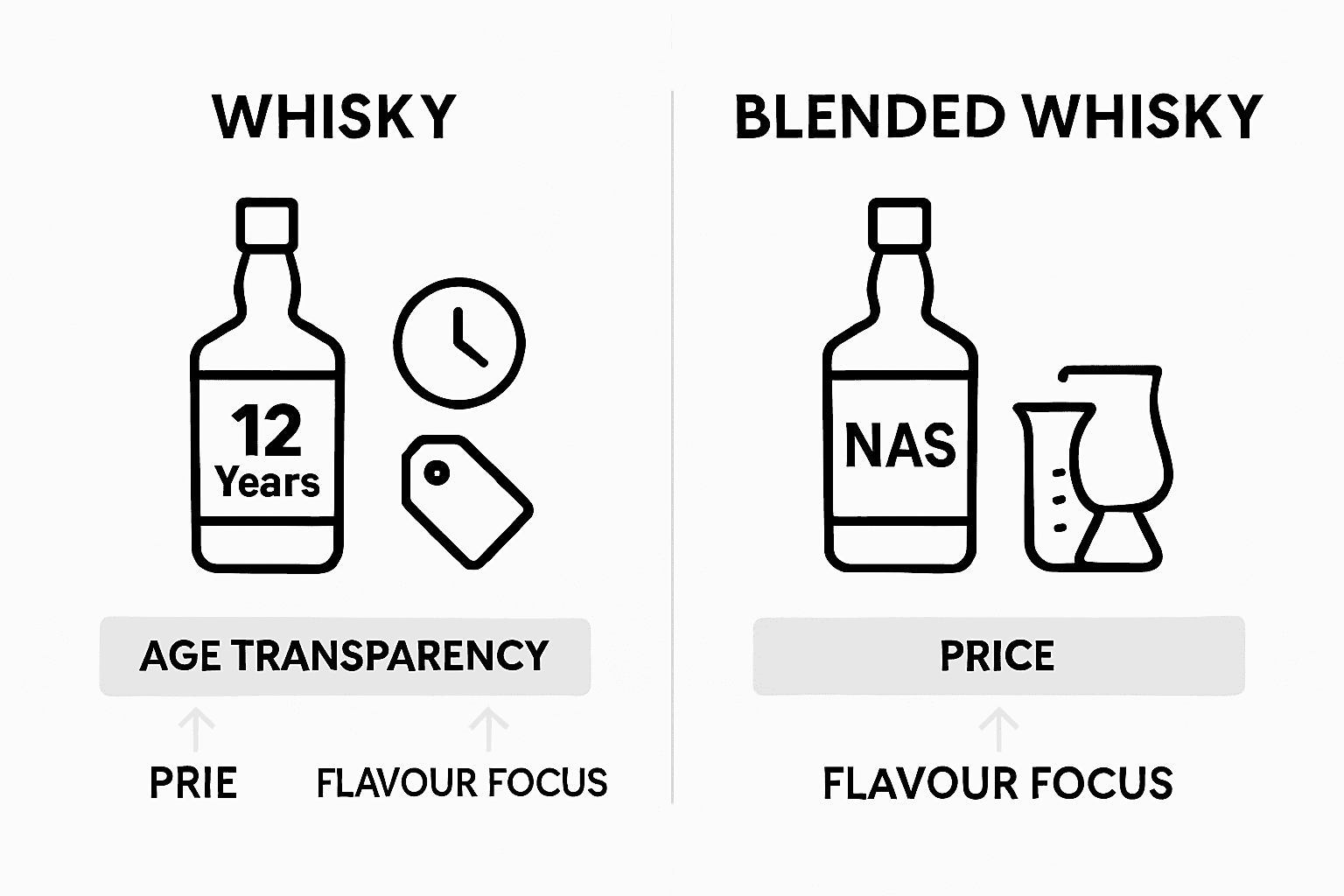
No Age Statement (NAS) whiskies represent a modern approach that allows distillers greater creative flexibility in blending spirits, challenging traditional perceptions about whisky maturation. Unlike traditional age-stated whiskies that prominently display a specific numerical age, NAS expressions focus on flavour complexity and craftsmanship rather than strictly adhering to numerical aging requirements.
Traditional age statements provide consumers with clear information about a whisky’s minimum maturation period, typically offering a sense of predictability and perceived quality. In contrast, NAS whiskies invite drinkers to explore flavour profiles without being constrained by numerical expectations. While age statements have long been considered a quality indicator, modern distilleries demonstrate that blending whiskies of various ages can create exceptional taste experiences, proving that chronological age isn’t the sole determinant of a spirit’s excellence.
The rise of NAS whiskies reflects evolving production techniques and changing consumer preferences. Distilleries now use innovative blending strategies, combining younger and older spirits to craft unique flavor profiles that might be impossible with traditional age-restricted approaches. This method allows master blenders to create more dynamic and interesting whiskies, potentially offering more complexity and depth than strictly age-limited expressions. Some collectors and enthusiasts initially viewed NAS whiskies with scepticism, but increasing quality and creative blending have gradually shifted perceptions.
Pro Tip for Whisky Explorers: Approach NAS whiskies with an open mind and focus on the overall flavor experience rather than fixating solely on numerical age statements.
Below is a summary of differences between age statement and NAS (No Age Statement) whiskies:
| Factor | Age Statement Whisky | NAS (No Age Statement) Whisky |
|---|---|---|
| Label Info | Shows youngest component’s age | Focuses on flavour, no age shown |
| Blending Approach | Limited by youngest age | Greater flexibility in blending |
| Consumer Perception | Seen as more traditional | Increasingly accepted, innovative |
| Price Range | Often higher for older ages | Wide range, not tied to age |
Risks And Misconceptions About Age
One of the most pervasive misconceptions in whisky appreciation revolves around the relationship between age and quality. Many enthusiasts mistakenly believe that older automatically means better, a notion that oversimplifies the complex art of whisky production. Critically, whiskies do not continue maturing once bottled, with aging occurring exclusively during the cask maturation period, challenging the common assumption that a bottle’s age from bottling impacts its flavour profile.
The risk of overemphasising age statements lies in overlooking the nuanced craftsmanship of distilleries. Younger whiskies can possess remarkable complexity, while some older expressions might become overly woody or lose their vibrant character. Factors such as barrel selection, distillation technique, and blending skill play equally significant roles in determining a whisky’s ultimate quality. Some master blenders deliberately create younger expressions that outperform older counterparts by carefully selecting and combining spirits with complementary characteristics.
Financial considerations further complicate the age perception. Older whiskies typically command higher prices, not solely because of superior taste, but due to increased production costs, longer storage requirements, and natural evaporation (known as the ‘angel’s share’). This pricing model can mislead consumers into equating higher price with inherent superiority. Sophisticated whisky collectors understand that value emerges from a delicate balance of age, crafting technique, and individual flavour profile rather than a simple numerical indicator.
Pro Tip for Whisky Connoisseurs: Always taste a whisky before judging it by its age statement, as remarkable flavours can emerge from unexpected places in a distiller’s range.
Making Smart Whisky Choices
When selecting whisky, savvy collectors understand that quality transcends simple numerical age indicators, requiring a more nuanced approach to evaluation. Sophisticated whisky appreciation demands considering multiple factors beyond the age statement, including flavour complexity, distillery reputation, and personal palate preferences.
Effective whisky selection involves developing a discerning approach that balances technical knowledge with sensory exploration. While age statements provide valuable context, they represent just one dimension of a spirit’s potential. Informed consumers recognise that No Age Statement (NAS) whiskies can offer exceptional quality and complexity, challenging traditional assumptions about maturation and value. Exploring diverse expressions from different distilleries helps enthusiasts expand their understanding and discover unexpected gems.
Practical selection strategies involve developing a personal flavour profile map. This approach means tracking the characteristics you enjoy most: whether you prefer smoky Islay profiles, sweet Speyside expressions, or robust bourbon-style whiskies. Tasting events, sample sets, and systematic note-taking can help refine your understanding. Consider factors like cask type, alcohol strength, production method, and regional variations alongside age statements to make more informed choices.
Pro Tip for Whisky Explorers: Start a tasting journal to document your preferences, tracking not just age statements but the specific flavour notes, aromas, and emotional responses each whisky evokes.
Discover The True Value Behind Your Whisky Selection
Understanding the significance of age statements is essential for making confident whisky choices that delight your palate and respect your investment. If you want to explore how ageing influences flavour and quality, our curated range of Older Bottling’s – Uisuki.com.au offers exceptional examples that showcase the nuanced craft of maturation. From the mellow complexity of aged Scotch to innovative blends, you can find whiskies that match your preferences and challenge misconceptions about age and flavour.

Dive into the art of whisky appreciation with expert guidance and carefully selected bottlings at Uisuki.com.au. Whether you are drawn to the renowned character of Glenfiddich – Uisuki.com.au or the rich heritage behind Glendronach – Uisuki.com.au, now is the perfect time to embrace informed whisky collecting. Act today to explore our exclusive inventory, gain insights on maturation, and elevate your whisky journey with bottles that truly embody quality and value.
Frequently Asked Questions
What does an age statement on a whisky bottle signify?
An age statement indicates the minimum time the youngest whisky component has spent aging in oak barrels, revealing important information about its character and quality.
How does the aging process affect the flavour of whisky?
The aging process transforms whisky by allowing it to develop complex flavours, smooth out harsh edges, and absorb characteristics from the barrel. Older whiskies tend to be more refined, while younger ones often have sharper, spirited profiles.
Are No Age Statement (NAS) whiskies inferior to age-stated ones?
No Age Statement whiskies offer greater blending flexibility, allowing distillers to focus on flavour complexity rather than strictly adhering to a specific age. Some NAS whiskies can deliver exceptional quality and complexity, sometimes rivaling older aged whiskies.
What should I consider when choosing a whisky based on its age statement?
When selecting a whisky, consider factors like flavour complexity, distillery reputation, and personal palate preferences instead of solely relying on the age statement, as higher age does not always equate to better quality.