

TL;DR:
- Scotch whisky flavors depend on production methods, regional origin, and cask type, not age alone.
- Understanding these factors helps identify and appreciate different flavor profiles, from fruity to smoky.
Scotch whiskey flavours are defined as the distinct taste and aroma profiles produced by barley, peat, fermentation, distillation, and cask maturation in Scotland. The industry term is “flavour profile,” and understanding it transforms a casual dram into a genuinely rewarding experience. The Scotch Whisky Association recognises five official categories of Scotch whisky: Single Malt, Single Grain, Blended Malt, Blended Grain, and Blended Scotch. Each category carries its own sensory signature, shaped by ingredients, production choices, and the region where the whisky was made. Whether you are new to the spirit or building a more discerning palate, knowing what drives these flavours is the fastest way to find what you love.
What are the primary scotch whiskey flavors and where do they come from?
Scotch whisky flavour falls into recognisable families: fruity, floral, malty, smoky, peaty, medicinal, briny, nutty, vanilla, and dried fruit. Each family traces back to a specific point in production. That connection is what makes Scotch one of the most traceable spirits in the world.
Flavour derives from barley type, peat levels, fermentation, distillation, and maturation casks, predominantly ex-bourbon and ex-sherry barrels. Esters produced during fermentation create fruity notes like green apple, pear, and tropical fruit. Phenolic compounds from peat-smoked barley deliver the smoky, medicinal, and tarry notes that define heavily peated whiskies.
Cask type shapes the final third of the flavour equation. Ex-bourbon barrels contribute vanilla, coconut, and light caramel. Ex-sherry casks add dried fruit, Christmas cake, and dark chocolate. A whisky matured in both cask types will carry layers from each.
| Flavour family | Primary source | Example notes |
|---|---|---|
| Fruity | Fermentation esters | Green apple, pear, tropical fruit |
| Smoky/Peaty | Phenols from peat kilning | Bonfire smoke, tar, iodine |
| Vanilla/Caramel | Ex-bourbon cask maturation | Vanilla pod, butterscotch, coconut |
| Dried fruit/Spice | Ex-sherry cask maturation | Raisin, dark chocolate, cinnamon |
| Floral/Grassy | Lowland distillation style | Lavender, cut grass, light honey |
| Briny/Maritime | Coastal maturation | Sea salt, seaweed, kelp |
Pro Tip: Smell the empty glass after you finish a dram. The residual aroma, stripped of alcohol, often reveals the truest flavour character of the whisky.
How do Scotch whisky regions shape flavour profiles?
Scotland’s whisky regions are not just geographic labels. They are reliable flavour predictors. Each region’s climate, water source, and distilling tradition produce a consistent sensory signature that you can learn to identify.

Speyside is known for fruity and sweet sherry-influenced styles, while Islay delivers the peaty and smoky whiskies that divide opinion more than any other style. The Highlands offer the widest range, from light coastal expressions to rich, full-bodied malts. Lowland whiskies tend to be light and floral, making them the most approachable for newcomers. Campbeltown sits in its own category, producing oily, maritime, and slightly sulphurous whiskies with a character found nowhere else.
Understanding regional flavour profiles is the most practical shortcut for choosing a bottle you will enjoy. If you prefer sweetness and dried fruit, Speyside is your starting point. If you want smoke and brine, Islay is the answer.
| Region | Typical flavour profile | Character notes |
|---|---|---|
| Speyside | Sweet, fruity, sherry-influenced | Honey, apple, dried fruit, gentle spice |
| Highland | Varied, full-bodied | Heather, malt, light peat, dried fruit |
| Lowland | Light, floral, delicate | Grass, citrus, cream, soft vanilla |
| Islay | Peaty, smoky, medicinal | Bonfire, iodine, sea salt, tar |
| Campbeltown | Oily, maritime, complex | Brine, vanilla, light smoke, sulphur |
Islay’s intensity comes from the island’s abundant peat bogs and the tradition of drying malted barley over peat fires. The Lowlands, by contrast, typically use unpeated malt and triple distillation, which strips away heavier compounds and leaves a cleaner, lighter spirit. Speyside’s concentration of distilleries along the River Spey benefits from soft, mineral-rich water that supports clean fermentation and the development of delicate fruit esters.
For a deeper look at how these regional traits translate into specific bottles, the Scotch whisky characteristics explained guide covers the sensory notes typical of each area in practical detail.
How can you develop your tasting skills to recognise Scotch flavours?
Tasting Scotch well is a learnable skill. Structured tasting evaluates aroma, palate, development, and finish sequentially to capture the full sensory experience. Following a consistent process every time you pour a dram trains your palate faster than any other method.
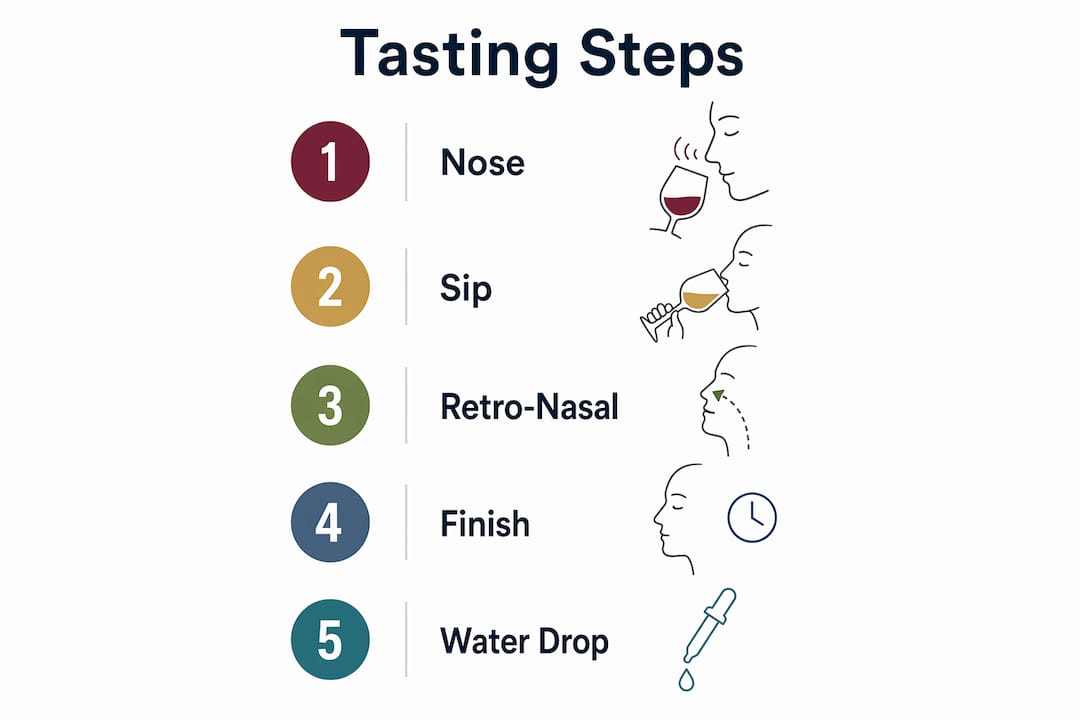
Step 1: Nose the whisky. Hold the glass at chin height and breathe in gently through your mouth and nose together. Avoid burying your nose in the glass. Ethanol vapour at close range numbs your olfactory receptors and masks the actual aroma.
Step 2: Take a small sip and hold it. Move the liquid around your mouth to activate all taste zones. Brand Ambassador Jo Garrow notes that moving Scotch around your mouth primes the palate and reduces perceived alcohol burn while expanding flavour perception. This is the single most underused technique among casual drinkers.
Step 3: Use retro-nasal olfaction. Breathing out through your nose while the whisky is in your mouth forces volatile aromatic molecules through the nasal cavity from the throat, revealing notes that standard nosing misses entirely. This is how professionals detect subtle layers of dried fruit, floral notes, or smoke that casual tasters overlook.
Step 4: Assess the finish. The finish is how long the flavour lingers after you swallow. A long, warming finish with evolving notes signals a complex, well-matured whisky. A short, clean finish is not a flaw; it is a characteristic of lighter styles.
Step 5: Add a few drops of water. Water dilution up to about a 1:4 ratio enhances complexity without diminishing flavour clarity in whiskies under 46% ABV. Over-dilution blurs the flavour, so add water gradually and taste after each addition.
Pro Tip: Tasting whisky vertically within a single style and horizontally across regions sharpens your ability to identify flavour differences and understand how maturation affects character.
Beginners often find peated whiskies harsh. Starting with lighter, fruity Speyside or Highland expressions before moving to Islay builds palate tolerance gradually and makes the smoky layers enjoyable rather than confronting. The 7 best whiskies for beginners guide offers a practical starting list for this exact progression.
What are the five official Scotch whisky categories and their flavour distinctions?
The Scotch Whisky Association defines five categories, each matured for at least three years in Scotland and bottled at a minimum of 40% ABV. Knowing the category tells you a great deal about what to expect in the glass before you even open the bottle.
-
Single Malt Scotch Whisky is made from malted barley at a single distillery using pot stills. It delivers the most distillery-specific character, ranging from the delicate florals of a Lowland expression to the intense peat smoke of an Islay malt. Single malt is where regional identity is most pronounced.
-
Single Grain Scotch Whisky is made at a single distillery but uses grains other than malted barley, typically wheat or maize, in a column still. The result is a lighter, sweeter spirit with notes of vanilla, toffee, and light cereal. Single grain is often underrated as a standalone drink.
-
Blended Scotch Whisky combines malt and grain whiskies from multiple distilleries. This category accounts for the majority of Scotch sold globally. Blending allows master blenders to achieve consistency and balance across flavour families, producing approachable, crowd-pleasing profiles.
-
Blended Malt Scotch Whisky combines single malts from two or more distilleries without any grain whisky. The result can be more complex than a single malt from one site, as the blender draws on contrasting regional characters. Expect layered fruit, spice, and smoke depending on the source distilleries.
-
Blended Grain Scotch Whisky combines grain whiskies from multiple distilleries. This is the rarest category in retail. The flavour profile tends toward light sweetness, vanilla, and soft cereal notes, making it one of the most accessible styles for newcomers.
The industry is shifting from age-led categorisation to flavour-first profiles, recognising that younger whiskies can be equally complex. Sensory character now matters more than the number on the label. This shift benefits drinkers who are willing to explore beyond well-known age statements and trust their palate instead. For a full breakdown of how these categories translate into real bottle choices, the types of scotch brands guide is a practical next read.
Key takeaways
Scotch whisky flavour is determined by production method, regional origin, and cask type, not by age statement alone.
| Point | Details |
|---|---|
| Five official categories | Single Malt, Single Grain, Blended, Blended Malt, and Blended Grain each carry distinct flavour profiles. |
| Region predicts flavour | Speyside runs sweet and fruity; Islay runs peaty and smoky; Lowlands stay light and floral. |
| Production drives character | Peat kilning, fermentation esters, and cask type (bourbon vs sherry) are the three biggest flavour levers. |
| Tasting technique matters | Retro-nasal olfaction and careful water addition reveal flavour layers that casual sipping misses. |
| Start light, build up | Beginning with Speyside or Highland styles before moving to Islay builds palate tolerance and enjoyment. |
Brendan’s take on learning to love Scotch
The first peated Islay whisky I ever tried tasted like a burning hospital. I put the glass down and assumed Scotch was not for me. That was a mistake born entirely from starting at the wrong end of the flavour spectrum.
What changed everything was working backwards. I spent a few months with Speyside malts, learning to identify the apple and honey notes that fermentation esters produce. Then I moved into Highland expressions with their dried fruit and heather character. By the time I returned to Islay, the smoke made sense. It was no longer a wall. It was a layer sitting on top of everything else I had already learned to recognise.
The other thing nobody tells beginners is that the glass matters as much as the whisky. A tulip-shaped nosing glass concentrates the aroma in a way that a tumbler simply cannot. You are not being precious by using the right glass. You are giving yourself a genuine advantage.
My honest view is that the flavour-first approach the Scotch Malt Whisky Society now champions is the right one. Age statements are useful context, but they are not a reliable proxy for quality or complexity. Some of the most interesting drams I have had were young whiskies with no age statement and a flavour profile that told the whole story. Trust your palate. It will get sharper faster than you expect.
— Brendan
Scotch whisky worth tasting at Uisuki
Knowing the theory is one thing. Tasting it is another entirely.

Uisuki stocks a curated range of Scotch whiskies that span the full flavour spectrum discussed here, from light and floral expressions to richly peated island malts. The Ardnamurchan Macleans Nose Blended Scotch Whisky at 46% ABV is a well-balanced blend that showcases the coastal and malty character of the Scottish Highlands, making it a strong choice for drinkers moving beyond entry-level expressions. For those ready to explore the complexity of single malt, the Hobart Whisky Bourbon Matured Rum Finished Single Malt demonstrates how cask finishing layers additional flavour dimensions onto a base spirit. Uisuki ships across Australia with free shipping thresholds and supports personalised sourcing requests for harder-to-find bottles.
FAQ
What gives Scotch whisky its smoky flavour?
Smoke in Scotch comes from phenolic compounds absorbed when malted barley is dried over burning peat. Islay whiskies carry the highest phenol levels and the most intense smoke character.
What is the difference between blended and single malt Scotch?
Single malt comes from one distillery using only malted barley, delivering a site-specific flavour profile. Blended Scotch combines malt and grain whiskies from multiple distilleries for a consistent, balanced style.
How do I start tasting Scotch if I find it too strong?
Start with lighter Speyside or Lowland expressions, which carry fruity and floral notes with minimal peat. Gradual exposure to heavier styles builds palate tolerance without overwhelming your senses.
Does adding water to Scotch improve the flavour?
Adding a small amount of water to whiskies under 46% ABV can reveal hidden flavour compounds by reducing ethanol’s masking effect. Keep the ratio to around 1:4 water to whisky to avoid over-dilution.
What does “finish” mean in Scotch tasting notes?
The finish is the flavour that lingers after you swallow. A long finish with evolving notes indicates a complex, well-matured whisky, while a short, clean finish is typical of lighter grain-forward styles.