

Most whisky lovers are surprised to learn that a bottle’s age statement is not just a suggestion, it is a strict legal guarantee—even the popular Australian brands must follow these rules. This labeling tells you exactly how long the youngest drop inside has matured, shaping how collectors and casual fans judge quality and price. Discover why a single number on the label can influence a whisky’s flavour, reputation, and how much you pay at the store.
Table of Contents
- What An Age Statement Means
- Global Legal Age Requirements
- How Maturation Shapes Character
- Why Age Influences Pricing
- Reasons For No‑Age (NAS) Releases
Key Takeaways
| Point | Details |
|---|---|
| Understanding Age Statements | Age statements indicate the minimum maturation period of the youngest whisky in a blend, providing insight into the spirit’s character and quality. |
| Global Age Requirements | Legal ageing periods for whisky vary by country, with minimum standards set to ensure quality and authenticity in production. |
| Impact of Maturation | Whisky maturation involves complex interactions with barrels, influencing flavour profiles and characteristics beyond mere aging time. |
| Value of Age vs NAS Releases | Age-statement whiskies tend to hold higher market value due to scarcity and consumer perception, while NAS releases offer innovative flavour flexibilities. |
What An Age Statement Means
A whisky age statement is far more than a simple number on a bottle. It represents a precise legal definition that indicates the youngest spirit’s maturation period within that particular whisky blend. According to legal standards, an age statement reveals the minimum time the youngest whisky has been aged in oak barrels after distillation and before bottling.
The age statement provides whisky enthusiasts with crucial information about the spirit’s character and maturation process. When a bottle displays a 12-year label, it guarantees that every whisky component in that blend has been aged for at least 12 years in wooden barrels. This requirement ensures consistent quality and allows collectors and drinkers to understand the precise ageing characteristics of their chosen whisky.
Understanding age statements involves recognising that the youngest whisky determines the entire blend’s classification. Older whiskies might be included in the blend, but the youngest spirit’s age becomes the defining number on the label. This regulatory approach protects consumers by providing transparent information about the product’s maturation process and preventing misleading marketing practices.
Pro Tip: Always check the age statement closely and remember that a higher number doesn’t automatically mean a better whisky – taste, craftsmanship, and individual preferences matter most when selecting your perfect dram.
Global Legal Age Requirements
Legal age requirements for whisky production are complex and vary significantly across different regions. According to international standards, countries have established specific minimum aging periods to ensure quality and authenticity of their national spirits. In Scotland, Ireland, Japan, and Canada, whisky must be aged for a minimum of three years to be legally classified as whisky, while the United States typically requires a two-year minimum for straight whisky.
These regulations serve multiple purposes beyond simple time tracking. They protect traditional production methods, guarantee a baseline quality standard, and provide consumers with a reliable framework for understanding spirit maturation. The minimum aging requirements ensure that whiskies develop essential flavour profiles and characteristics through interaction with wooden barrels, which contribute significantly to the spirit’s complexity and depth.
Regional variations reflect unique cultural and production traditions. For instance, Scotch whisky regulations are particularly stringent, requiring not just minimum aging but also specifying the types of barrels permitted and the geographical origin of production. Such detailed standards help maintain the reputation and integrity of whiskies from specific regions, protecting both producers and consumers from substandard products.
Pro Tip: When exploring international whiskies, pay attention to the country of origin’s specific legal requirements – these regulations dramatically influence the spirit’s character and quality.
Here’s how minimum legal ageing requirements compare among major whisky-producing countries:
| Country | Minimum Age Requirement | Common Barrel Type | Unique Legal Features |
|---|---|---|---|
| Scotland | 3 years | Oak | Must be aged in Scotland, strict barrel rules |
| Ireland | 3 years | Oak | Geographical requirements, pot still tradition |
| Japan | 3 years | Oak | Inspired by Scotch law, local water sources |
| Canada | 3 years | Oak | Often used ex-bourbon barrels |
| United States | 2 years (straight whisky) | New charred oak | New barrels required, bourbon and rye styles |
How Maturation Shapes Character
Whisky maturation is a transformative process that goes far beyond simple aging. Complex interactions between whisky and wooden casks create a remarkable sensory journey, involving intricate chemical processes like extraction, evaporation, oxidation, concentration, and coloration. These interactions fundamentally reshape the spirit’s molecular structure, developing rich flavour profiles and nuanced characteristics that distinguish exceptional whiskies.
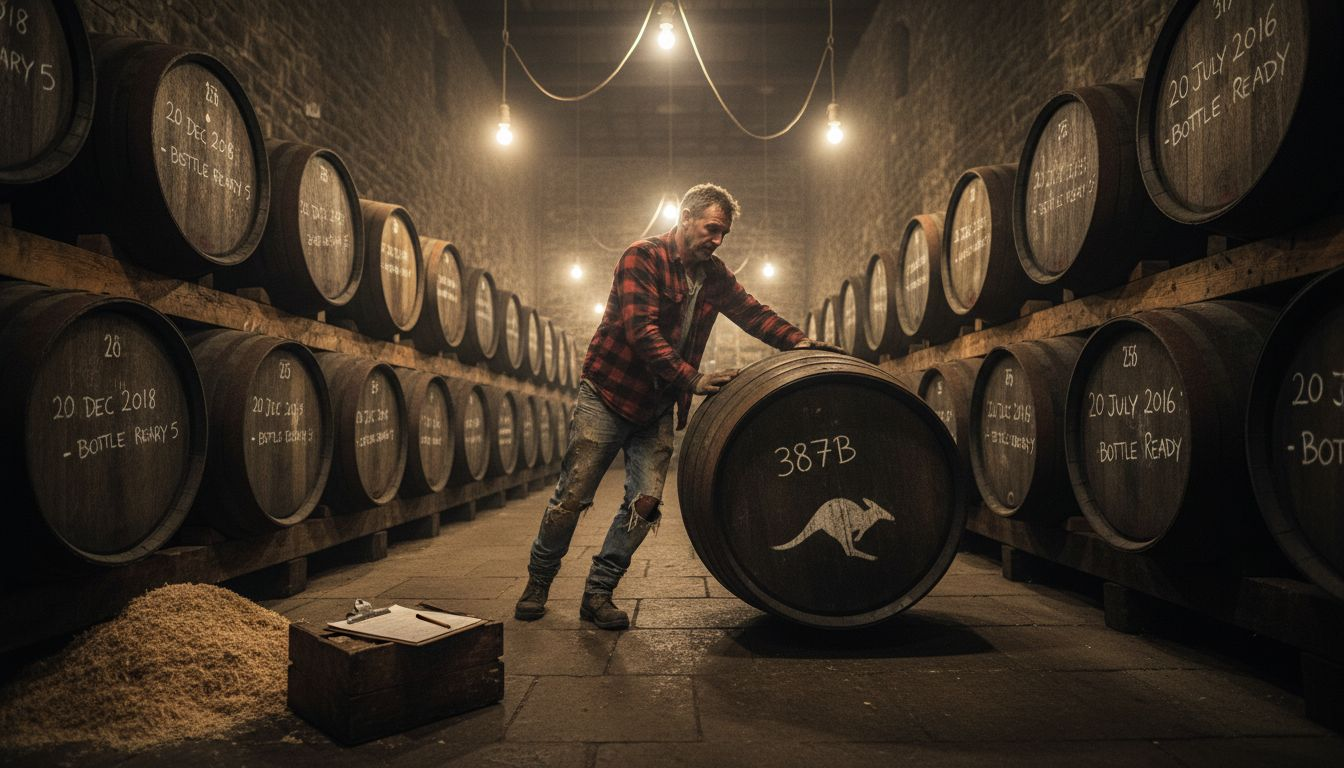
The type of wooden barrel plays a critical role in character development. Oak barrels are particularly prized for their unique properties, with different wood types and previous barrel contents introducing distinctive notes. Bourbon barrels, sherry casks, and wine barrels each contribute unique flavour dimensions. Charred interiors of American oak barrels, for instance, impart smoky vanilla undertones, while European oak casks might introduce more robust, spicier characteristics.
Maturation is not just about time, but about the dynamic environment within the barrel. Temperature fluctuations, humidity, barrel positioning, and even the warehouse’s geographical location influence how a whisky evolves. Some distilleries carefully rotate barrels or select specific storage locations to create precise flavour profiles, treating the maturation process as both an art and a science.
Pro Tip: When tasting whiskies, pay attention to the barrel type and aging duration listed on the label – these details reveal fascinating insights into the spirit’s unique maturation journey.
Why Age Influences Pricing
Whisky pricing mechanisms are deeply rooted in the complex economics of maturation. As whiskies age, they undergo significant transformations that dramatically impact their market value. The most fundamental factor driving price is the substantial loss of liquid during aging, a phenomenon known as the ‘angel’s share’. With each passing year, distilleries lose approximately 2% of their barrel’s volume, meaning older whiskies become progressively more scarce and expensive to produce.
The economics of whisky aging extend far beyond simple volume loss. Longer maturation requires substantial investment in storage infrastructure, barrel maintenance, and extended inventory holding times. Each additional year of aging represents increased operational costs, including warehouse space, insurance, and opportunity costs associated with capital tied up in slowly maturing spirits. Sophisticated collectors and investors understand these complex production economics, which directly contribute to the premium pricing of aged whiskies.
Consumer perception plays an equally crucial role in age-related pricing. Whisky enthusiasts typically associate longer aging with enhanced complexity, deeper flavour profiles, and superior craftsmanship. This perception creates a market dynamic where older whiskies are not just viewed as beverages, but as collectible artisan products. The rarity factor further amplifies pricing, with limited-edition older releases often commanding extraordinary prices among serious collectors and investment-minded consumers.
Pro Tip: When evaluating whisky investments, look beyond the age statement and consider the specific distillery’s reputation, barrel type, and overall production quality – age is just one component of a whisky’s true value.
Reasons For No‑Age (NAS) Releases
No-Age Statement (NAS) whiskies have emerged as a dynamic response to complex market challenges facing modern distilleries. Blending flexibility allows master distillers to create exceptional spirits without being constrained by strict age requirements. This approach enables them to craft unique flavour profiles by combining whiskies of different ages, focusing on taste rather than a singular numerical marker.
Economic pressures significantly drive the NAS trend. Traditional aged whiskies require substantial inventory holding times, with distilleries losing approximately 2% of barrel volume annually through evaporation. NAS releases provide a strategic solution, allowing producers to bring high-quality spirits to market more quickly and at more accessible price points. Younger whiskies can be masterfully blended to create complex, interesting flavour experiences that challenge traditional age-statement expectations.
The global whisky market has also evolved, with emerging consumer preferences valuing creativity and craftsmanship over rigid aging protocols. Younger whisky enthusiasts are more interested in innovative production techniques, unique flavour combinations, and the storytelling behind a spirit. NAS releases offer distilleries an opportunity to showcase their blending expertise, experiment with different barrel types, and create more dynamic, experimental product lines that appeal to a broader, more adventurous audience.
Pro Tip: When exploring NAS whiskies, focus on the distillery’s reputation, tasting notes, and blending philosophy – the absence of an age statement doesn’t necessarily indicate lower quality.
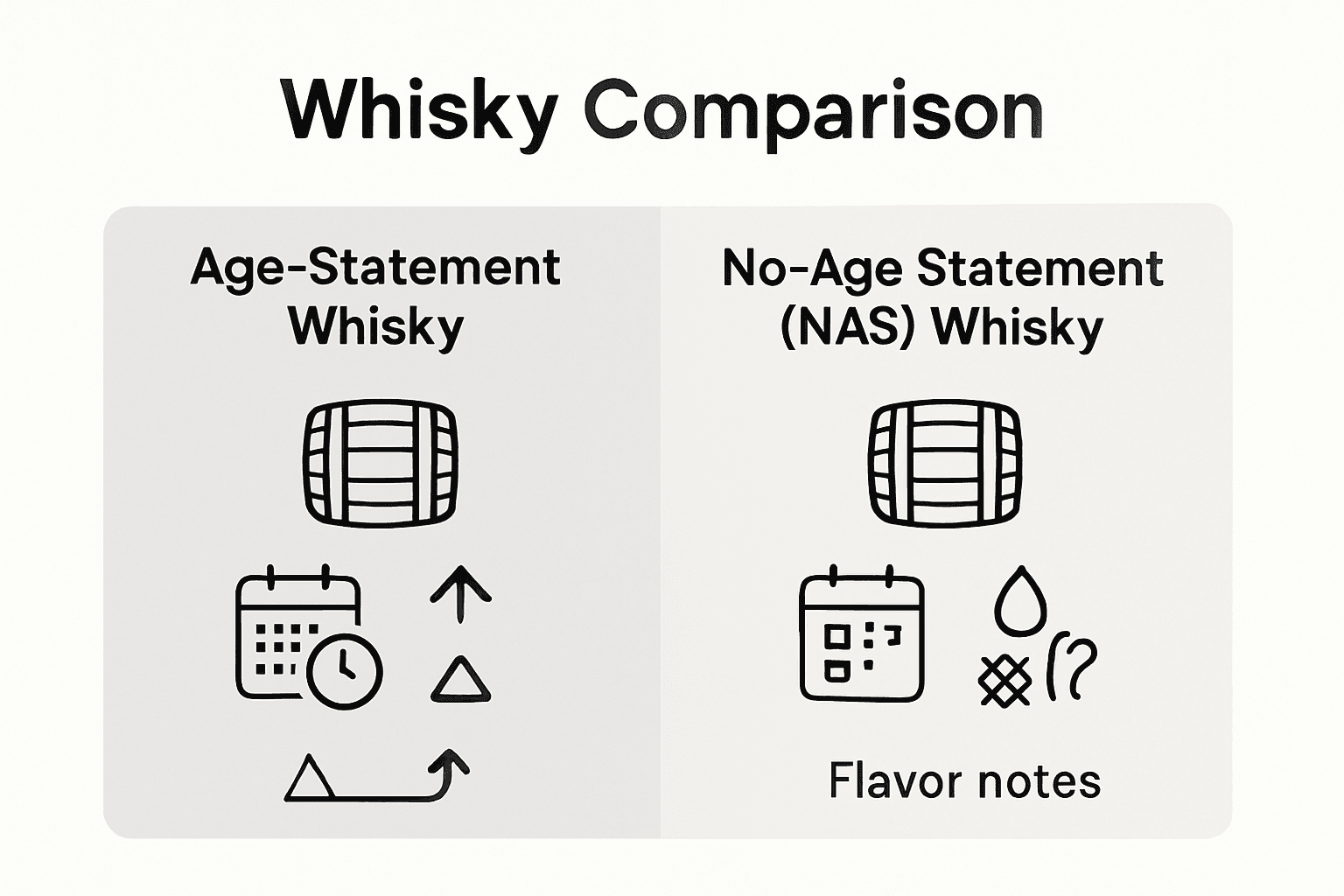
To understand whisky value, consider the factors driving age-statement and NAS whisky releases:
| Factor | Age-Statement Whisky | NAS (No-Age Statement) Whisky |
|---|---|---|
| Blending Flexibility | Limited by youngest whisky age | Can combine a broad range of ages |
| Production Cost | Higher due to longer storage | Lower, faster market availability |
| Consumer Appeal | Traditional collectors, investors | Modern drinkers seeking innovation |
| Flavour Focus | Maturity and complexity | Experimentation and unique profiles |
Discover the True Value Behind Whisky Age Statements
Understanding why an age statement matters unlocks a deeper appreciation for each dram’s journey and taste. Whether you seek the rich complexity of longstanding maturation or the innovative flavours of expertly blended no-age whiskies, recognising these differences is key to selecting your ideal bottle. At Uisuki, we understand the challenges whisky lovers face when navigating age statements, scarcity, and value. Our curated Older Bottling’s collection brings you rare matured gems, while brands like Glendronach offer exceptional examples of aged craftsmanship.

Elevate your whisky experience today with expert guidance and a wide range of premium selections at Uisuki.com.au. Dive into the stories behind the age, barrel type, and maturation to transform your next purchase into a truly memorable dram. Start exploring now and find the perfect whisky that reflects your taste and passion.
Frequently Asked Questions
What does an age statement on whisky mean?
An age statement on whisky indicates the youngest spirit’s maturation period in a blend. It guarantees that every whisky component has been aged for at least the stated number of years in oak barrels, ensuring consistent quality.
How does whisky maturation affect its flavour?
Whisky maturation involves complex interactions between the spirit and wooden casks, which shape its flavour profiles and characteristics. Factors such as barrel type, environmental conditions, and time spent in the barrel all contribute to the whisky’s final taste.
Why is age important in whisky pricing?
Age influences whisky pricing due to factors like scarcity, production costs, and consumer perception. As whiskies age, they lose volume through evaporation and become rarer, potentially increasing their market value among collectors and enthusiasts.
What are No-Age Statement (NAS) whiskies?
No-Age Statement whiskies are products that do not specify an age on the label. These whiskies provide master distillers with blending flexibility, allowing them to craft unique flavours without being limited by stringent age requirements.