

Sorting through the premium whisky shelf can feel daunting when age statements offer only part of the story. For collectors in Australia, understanding what terms like twelve or eighteen years actually mean is key to uncovering true value. A whisky age statement always reflects the youngest spirit in the bottle, setting a baseline for quality and flavour complexity. This guide steps through the meaning and importance of age statements, so you can make smarter, more rewarding choices.
Table of Contents
- Step 1: Analyse The Meaning Of Age Statements On Whisky Bottles
- Step 2: Identify How Ageing Impacts Flavour And Quality
- Step 3: Compare Age Statement Rules Across Whisky Regions
- Step 4: Check Authenticity And Labelling Standards
- Step 5: Apply Knowledge To Make Informed Whisky Purchases
Quick Summary
| Essential Insight | Clear Explanation |
|---|---|
| 1. Understand Age Statements | Age statements reveal the youngest whisky in the blend, indicating maturation quality and potential flavour depth. |
| 2. Aging Impacts Flavour | The type of barrel, time, and storage influence the whisky’s flavour profile, offering unique characteristics. |
| 3. Compare Regional Regulations | Whisky age statement rules vary by region; knowing these helps consumers identify authentic and quality spirits. |
| 4. Verify Authenticity Carefully | Always check labels for key details such as origin and age to ensure you are purchasing genuine whisky. |
| 5. Apply Knowledge Strategically | Use whisky knowledge to make informed purchases, considering authenticity, price, and individual taste preferences. |
Step 1: Analyse the meaning of age statements on whisky bottles
Understanding whisky age statements is crucial for making informed purchasing decisions about premium spirits. These statements reveal critical information about the maturation process and potential flavour complexity of the whisky you’re considering.
Age statements on whisky bottles indicate the youngest spirit contained in the bottle, which means a 12-year age statement guarantees that all whisky in the blend is at least 12 years old. This minimum age requirement helps assure quality and provides insight into the spirit’s potential depth of flavour. Different regions have varying regulations about age statements:
- In Scotland, age statements reflect the youngest whisky in the blend
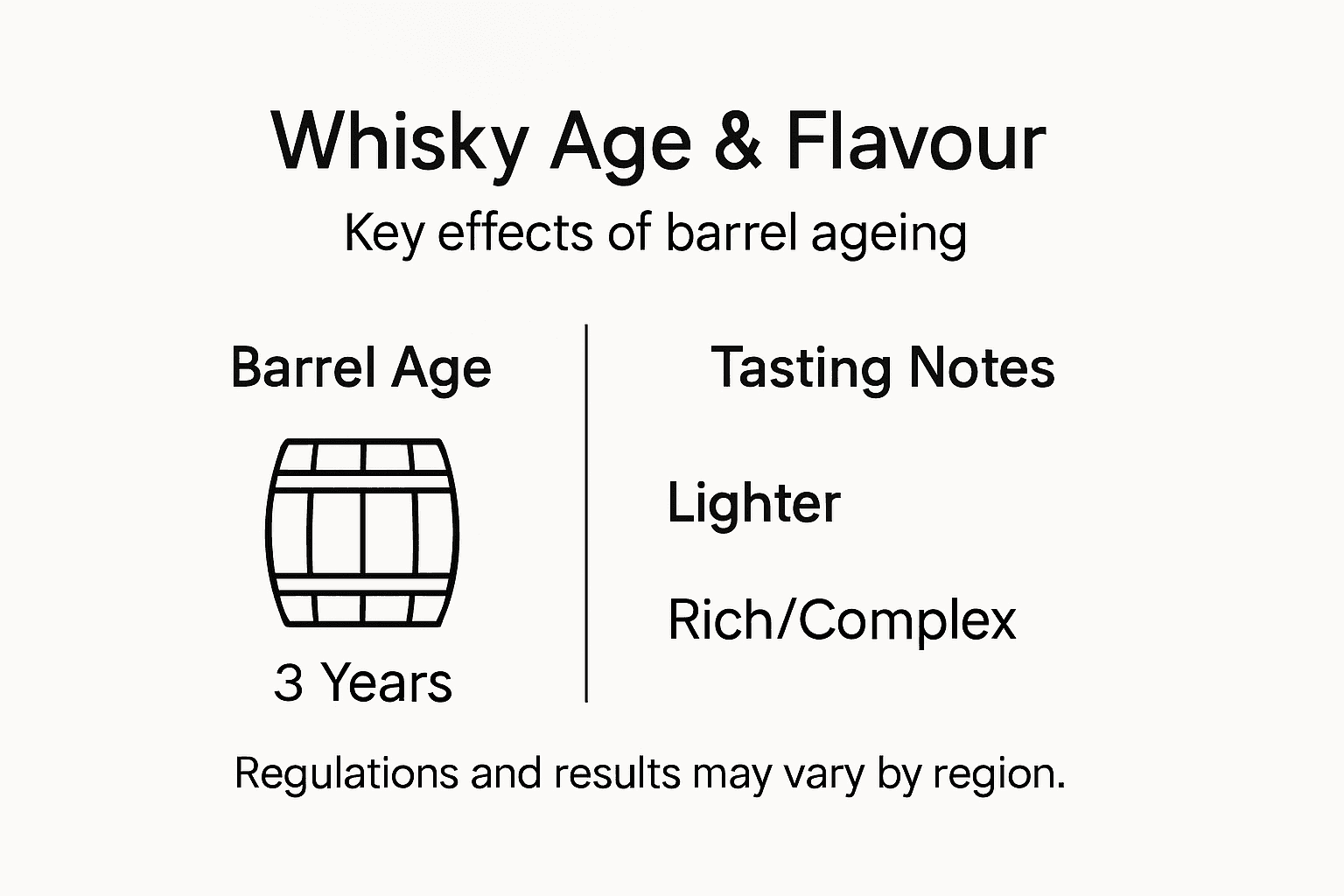
- Scotch whisky must be aged at least three years in oak barrels
- American straight whiskeys often require aging in new charred oak barrels
When examining age statements, remember that older doesn’t always mean better. While longer maturation can develop more complex flavours, the specific barrel type, distillery techniques, and individual whisky characteristics also significantly impact taste. Some distilleries produce exceptional younger whiskies that rival their older counterparts.
An age statement provides transparency about the minimum maturation period, helping you understand the whisky’s potential quality and character.
Pro tip: Always compare multiple aspects of a whisky beyond its age statement, including region, distillery reputation, and your personal flavour preferences.
Step 2: Identify how ageing impacts flavour and quality
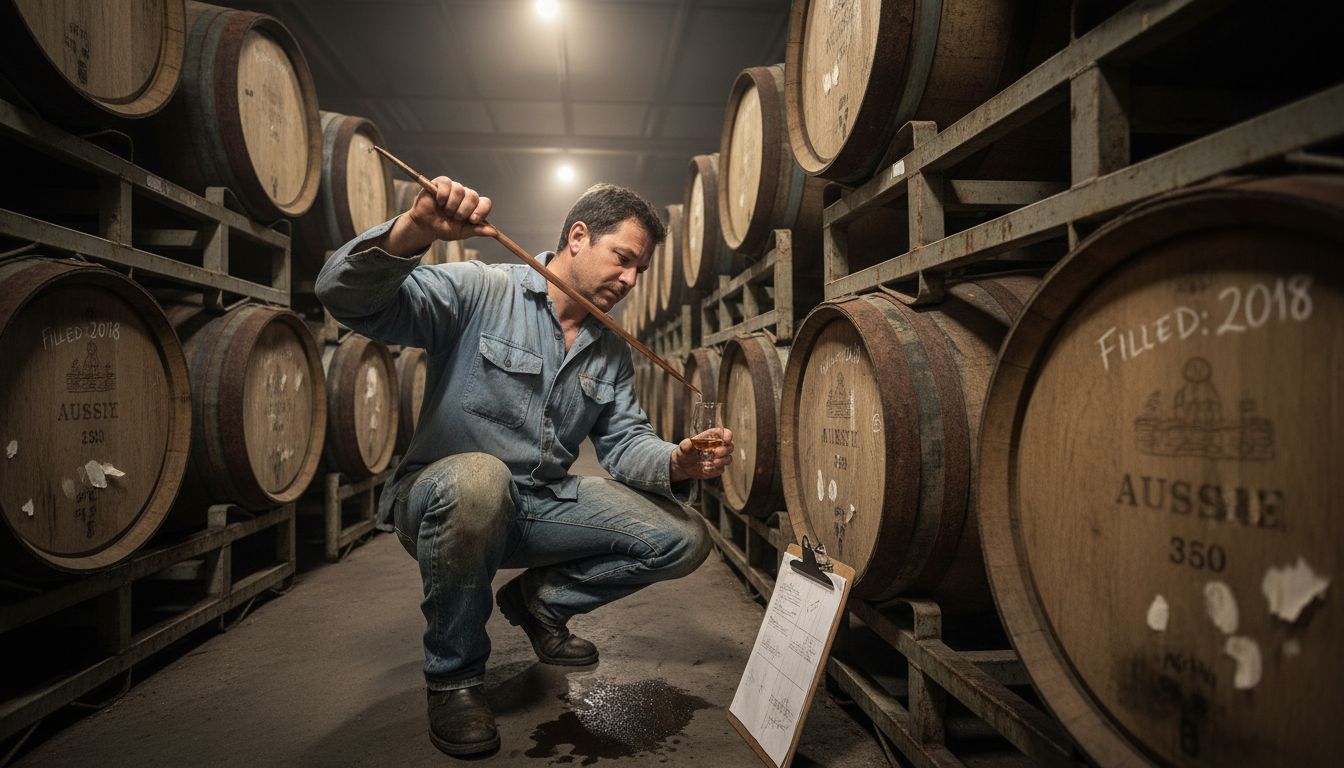
Delving into the science of whisky ageing reveals a fascinating transformation process that dramatically influences the spirit’s character. Whisky interaction with oak barrels fundamentally changes its flavour profile, colour, and overall drinking experience.
The ageing process extracts multiple compounds from wooden casks, creating a complex sensory journey. As whisky matures, it develops distinctive flavour characteristics:
- Woody notes from lignin and tannin extraction
- Vanilla undertones emerging through wood interaction
- Smoothness from mellowing harsh alcohol edges
- Colour deepening as the spirit absorbs barrel pigments
Understanding ageing involves recognising that time isn’t the only factor. The barrel type, previous contents, charring level, and storage environment all contribute to the final flavour. Some whiskies reach peak complexity relatively quickly, while others require decades of patient maturation.
Review this quick reference table showing how barrel ageing impacts whisky qualities:
| Ageing Factor | Influence on Flavour | Typical Visual Changes |
|---|---|---|
| Time in Barrel | Enhances complexity, depth | Darkens colour |
| Barrel Type | Distinct notes from wood | Varies with barrel char |
| Storage Climate | Alters evaporation, taste | May change hue subtly |
| Previous Contents | Adds residual flavours | Tint may reflect cask |
Extended barrel ageing transforms raw spirit into a nuanced, sophisticated beverage through carefully controlled chemical interactions.
Pro tip: Always taste whiskies of different ages side by side to develop a sophisticated understanding of how maturation progressively influences flavour complexity.
Step 3: Compare age statement rules across whisky regions
Understanding regional variations in whisky age statements is crucial for making informed purchasing decisions. Scotch whisky regulations provide a fascinating framework for understanding how different countries approach whisky maturation and labelling.
Each whisky-producing region has unique rules governing age statements and maturation processes. These regulations ensure product quality and provide transparency for consumers:
- Scotland: Minimum three-year maturation in oak casks
- United States: Minimum two-year ageing for straight whiskies
- Minimum age statement required for products aged less than four years
- No age statement (NAS) whiskies allowed if meeting minimum maturation requirements
The differences extend beyond simple time requirements. Barrel specifications, such as the United States’ requirement for new charred oak barrels, dramatically influence the final product. Some regions prioritise specific ageing conditions that impact flavour complexity and character.
Here’s a concise comparison of whisky age statement regulations across major regions:
| Region | Minimum Age Requirement | Barrel Specification | Labelling Rule |
|---|---|---|---|
| Scotland | 3 years in oak casks | Oak casks (can be reused) | Youngest spirit age is stated |
| United States | 2 years for straight whiskies | New charred oak barrels required | Age stated if under 4 years |
| Australia | No national minimum age | Variable, often ex-wine casks | No standardised age statement |
| Ireland | 3 years in wooden casks | Oak or other approved wood | Youngest spirit age is stated |
Regional whisky regulations protect traditional production methods and ensure consistent quality for consumers worldwide.
Pro tip: Always check the specific regional regulations when purchasing international whiskies, as maturation rules can significantly impact flavour and quality.
Step 4: Check authenticity and labelling standards
Authenticity in whisky requires careful examination of the bottle’s labelling, ensuring you’re getting exactly what you expect. U.S. federal regulations provide a robust framework for understanding what makes a genuine whisky product.
When checking a whisky’s authenticity, focus on these critical elements:
- Origin details: Country and specific region of production
- Age statements: Mandatory for whiskies under four years old
- Alcohol percentage: Must be clearly displayed
- Whisky type: Specific legal designation (bourbon, rye, etc.)
- Distillery information: Exact production location
International labelling standards help protect consumers by requiring transparent product information. Some key indicators of a legitimate whisky include precise legal terminology, clear production details, and compliance with regional regulations. Collectors and enthusiasts should pay special attention to protected terms like ‘bourbon’, which can only be used for whiskies produced in the United States under strict guidelines.
Authentic whisky labelling provides a window into the spirit’s heritage, production methods, and quality standards.
Pro tip: Photograph the label and cross-reference official distillery websites to verify the whisky’s authenticity and track its precise production details.
Step 5: Apply knowledge to make informed whisky purchases
Transforming your whisky knowledge into smart purchasing decisions requires a strategic approach. Informed consumer strategies can help you navigate the complex world of whisky selection with confidence.
To make the most intelligent whisky purchase, consider these critical evaluation criteria:
- Verify authenticity: Check official certifications and production details
- Compare price points: Research market values across different retailers
- Understand regional variations: Know specific production standards
- Assess personal taste preferences: Match whisky characteristics to your palate
- Consider long-term value: Evaluate potential investment potential
Beyond technical specifications, trust your sensory experience. Tasting notes, recommendations from experienced collectors, and understanding the subtle nuances of different whiskies will elevate your selection process. Remember that price doesn’t always correlate directly with quality, and sometimes lesser-known distilleries produce exceptional spirits.
Educated whisky purchasing is an art that balances technical knowledge with personal appreciation.
Pro tip: Always sample before committing to a full bottle, and don’t be afraid to ask knowledgeable retailers for detailed insights about a whisky’s unique characteristics.
Unlock the True Value Behind Whisky Age Statements with Uisuki
Making sense of whisky age statements can be challenging when selecting the perfect bottle. You want clarity on how age reflects flavour complexity, authenticity, and regional maturation rules without being overwhelmed. This article highlights key pain points like understanding minimum maturation requirements, detecting genuine labelling, and appreciating how ageing impacts flavour. At Uisuki, we bridge this knowledge gap by offering a curated collection of premium whiskies where age statements meet expert curation.
Discover a fine range including our Older Bottling’s – Uisuki.com.au and explore the nuanced profiles found in our extensive Scotch Whisky (all) – Uisuki.com.au category. Whether seeking a whisky matured for decades or a distinguished younger expression, Uisuki delivers transparency and quality you can trust.
Take the guesswork out of buying whisky by exploring Uisuki’s carefully sourced selection today. Visit Uisuki.com.au and empower your choices with refined knowledge and authentic bottles waiting to enrich your collection.
Frequently Asked Questions
What does an age statement on a whisky bottle indicate?
An age statement on a whisky bottle indicates the youngest whisky in the blend. For instance, a 12-year age statement means all the whisky in the bottle is at least 12 years old. When evaluating a whisky, check its age statement to gauge the minimum maturation period and potential quality.
How does the ageing process affect the flavour of whisky?
The ageing process significantly impacts whisky’s flavour by allowing it to extract compounds from the wood barrels. This interaction can introduce woody notes, vanilla undertones, and an overall smoother palate. Consider comparing different whiskies side by side to understand how varying age and barrel types can enhance flavour complexity.
What are the age statement regulations for whisky around the world?
Different regions have specific regulations governing whisky age statements. For example, Scotch whisky must be aged for at least three years in oak casks, while American straight whiskies need a minimum of two years. Research these regulations to better understand how age statements might vary between different whiskies.
How can I verify the authenticity of a whisky label?
To verify the authenticity of a whisky label, check for key elements such as origin details, age statements, alcohol percentage, and distillery information. Ensure these details comply with the relevant regulations to confirm you are purchasing a genuine product. Examine the label thoroughly and consider cross-referencing with official distillery information for additional assurance.
What factors should I consider to make informed whisky purchases?
When making whisky purchases, consider verifying authenticity, comparing price points, acknowledging regional variations, and reflecting on your personal taste preferences. Create a checklist to evaluate these criteria before buying a bottle to ensure it aligns with your expectations and needs.
How important is the type of barrel used in whisky ageing?
The type of barrel used in whisky ageing plays a crucial role in shaping the final flavour profile of the spirit. Different barrels impart unique characteristics, such as sweetness from bourbon barrels or spice from sherry casks. Research various barrel types and their influence on flavour to enhance your whisky selection process.