

TL;DR:
- A whisky flavour guide explains the sensor,y aspects that define each dram, helping drinkers understand and enjoy whisky more deeply. Nosing is the most critical step in tasting, as up to 80% of perceived flavour comes from smell alone. Using tools like the flavour wheel, proper glassware, and tasting notes enhances accuracy and builds tasting confidence.
A whisky flavour guide categorises the sensory notes and characteristics that define each dram, giving you a practical framework to understand and enjoy whisky at a deeper level. The industry term for this framework is a whisky flavour profile, and it covers everything from the first scent in the glass to the lingering warmth after you swallow. Up to 80% of perceived whisky flavour comes from smell alone, which means nosing is the single most important step in any tasting. Tools like the whisky flavour wheel, tulip-shaped glasses, and structured tasting notes turn a casual sip into a genuinely rewarding experience.
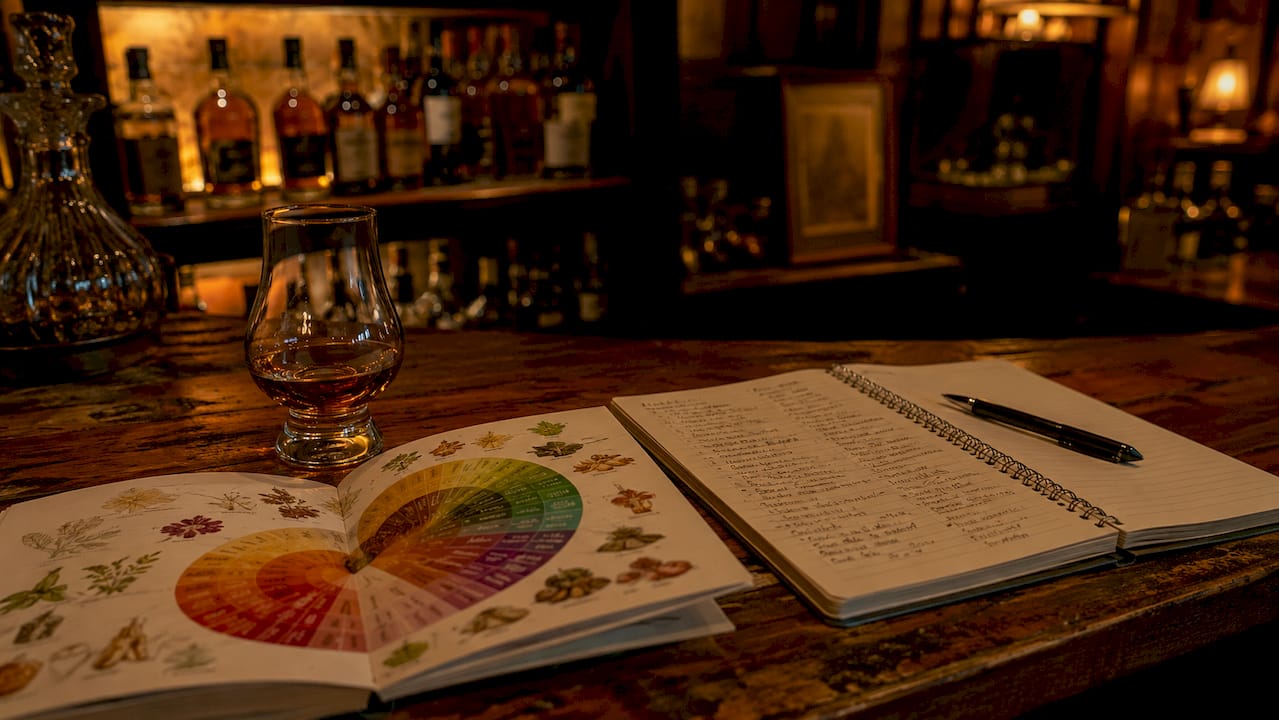
What are the main components of a whisky flavour profile?
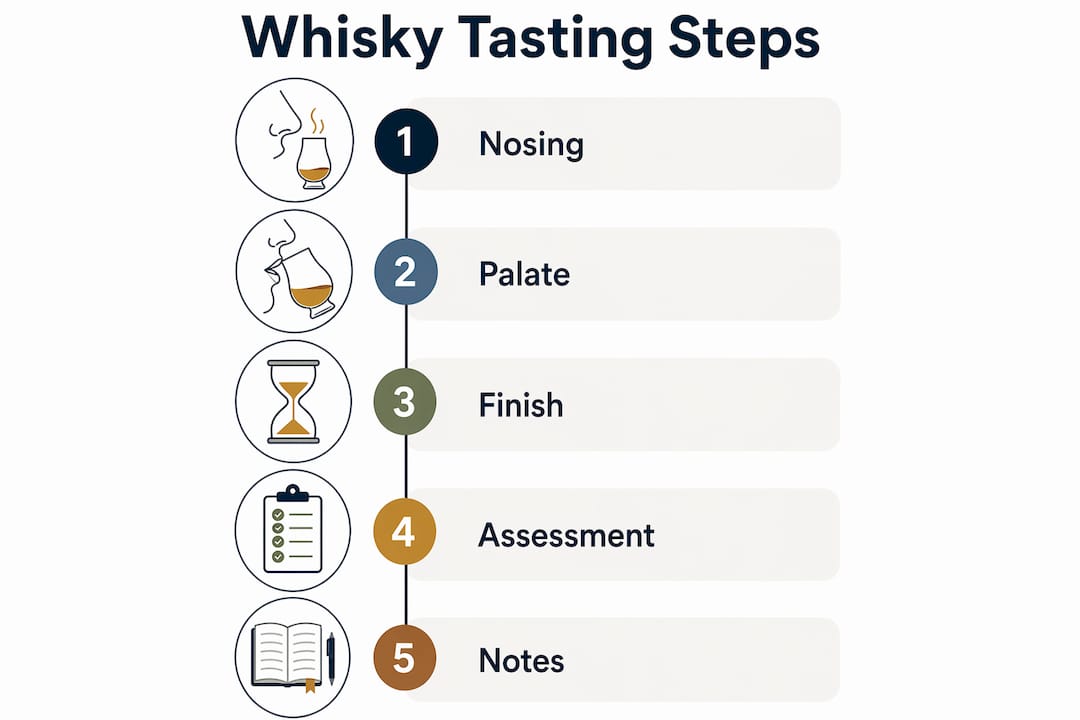
Every whisky flavour profile breaks down into three stages: the nose, the palate, and the finish. Each stage reveals different information, and skipping any one of them means missing part of the picture.
The nose
The nose is where most of the work happens. Lean over the glass with your mouth slightly open, breathe in gently, and let the aromas settle. Opening your mouth while nosing prevents the alcohol vapour from overwhelming your senses, which is a trick most casual drinkers never learn. You will pick up fruit, wood, spice, or smoke at this stage, depending on the whisky’s origin and maturation.
The palate
The palate reveals texture and layered flavour. Take a small sip, let it coat your tongue, and hold it for a few seconds before swallowing. The mouthfeel tells you whether the whisky is oily and rich or light and watery. A Speyside single malt like Glenfiddich 12 tends to feel silky, while a cask-strength Islay expression can feel thick and almost chewy.
Pro Tip: The first sip acts as a primer; do not judge a whisky’s quality until at least the second sip. Your palate adjusts to the alcohol on the first pass, and the real flavour opens up from the second sip onwards.
The finish
The finish is the flavour that lingers after you swallow. A long, warming finish with evolving notes signals a well-made whisky. A short, flat finish often indicates a younger or lighter expression. Retro-nasal olfaction, which means breathing out gently through your mouth after swallowing, reveals complex notes that your tongue simply cannot detect on its own. Most drinkers skip this step entirely, and it is the single biggest gap between a casual tasting and a genuinely informed one.
How do you use a whisky flavour wheel and tasting tools?
The whisky flavour wheel divides aromas and tastes into broad outer categories, then narrows them down to specific sub-notes. It is the most practical tool available for building tasting vocabulary and moving beyond vague descriptions like “it tastes like whisky.”
A structured tasting approach
Follow these steps to get the most from any tasting session:
- Choose the right glass. A tulip-shaped glass concentrates aromas at the rim. A standard tumbler disperses them. The difference is significant.
- Pour the right amount. A 25–30ml pour with five minutes of resting time lets the whisky open up before you nose it.
- Use the flavour wheel. Start at the outer ring with broad categories (fruity, smoky, sweet, spicy) and work inward to specific notes (dried apricot, bonfire smoke, toffee, white pepper).
- Add water carefully. Two to three drops of room-temperature, non-chlorinated water opens aromas without stripping flavour. Ice masks subtleties and is best avoided during a serious tasting.
- Write your notes. Even a few words per stage builds your palate faster than tasting without recording.
Pro Tip: Tasting wheels empower novices to describe flavours precisely, which builds confidence and enjoyment over time. Keep a printed wheel beside your glass for the first few sessions.
Common beginner pitfalls
Over-sniffing is the most common mistake. Nosing too aggressively numbs your receptors within seconds. Gentle, short sniffs with your mouth slightly open give you far more information. Rushing the palate is the second mistake. Swallowing immediately after sipping means you miss the mid-palate development entirely.
| Tool | Purpose | Common mistake |
|---|---|---|
| Tulip-shaped glass | Concentrates aromas at the rim | Using a tumbler or wide-mouthed glass |
| Flavour wheel | Builds specific tasting vocabulary | Skipping it and guessing at notes |
| 25–30ml pour | Allows proper nosing without waste | Pouring too much, which is overwhelming |
| Room-temperature water | Opens aromas without diluting flavour | Using ice, which masks subtleties |
What are the main whisky flavour profiles and what shapes them?
Whisky flavour profiles fall into four broad camps, and production choices determine which camp a whisky lands in. Understanding these camps is the fastest way to predict whether you will enjoy a bottle before you open it.
The four flavour camps
- Fruit-forward. Light, approachable, and often sweet. Driven by ester production during fermentation. Speyside Scotch whiskies like Glenfiddich and The Glenlivet sit firmly here, with notes of green apple, pear, and citrus.
- Vanilla and oak. Rich, warm, and sweet. Driven by maturation in new American oak or ex-bourbon casks. American bourbon and Tennessee whiskey, including expressions from distilleries like Maker’s Mark and Jack Daniel’s, are the clearest examples.
- Smoky and peaty. Bold, earthy, and medicinal. Driven by peat-dried malted barley. Islay distilleries like Laphroaig and Ardbeg produce the most intense examples, with notes of bonfire smoke, iodine, and seaweed.
- Spicy and dry. Peppery, herbal, and sometimes nutty. Driven by rye grain content or long maturation in ex-sherry casks. Rye whiskey and Highland Scotch expressions often land here.
How production shapes flavour
Cask type is the single biggest driver of flavour after distillation. Ex-bourbon casks deliver vanilla, coconut, and light caramel. Ex-sherry casks add dried fruit, chocolate, and spice. Double distillation, used in most Scotch single malts, produces a lighter, more delicate spirit than the single distillation common in Irish pot still whiskey.
| Whisky style | Typical cask | Core flavour notes |
|---|---|---|
| Speyside single malt | Ex-bourbon | Apple, pear, honey, vanilla |
| Islay single malt | Ex-bourbon or virgin oak | Peat smoke, iodine, brine |
| American bourbon | New charred oak | Vanilla, caramel, oak, corn sweetness |
| Japanese single malt | Mizunara or ex-bourbon | Sandalwood, citrus, subtle smoke |
| Australian single malt | Ex-bourbon or port | Stone fruit, toffee, eucalyptus |
Peat level is measured in phenol parts per million (ppm). Glenfiddich 12 sits near zero ppm. Laphroaig 10 Year Old sits around 40–45 ppm. That difference explains why one is a gentle entry point and the other divides opinion at every tasting table.
Which whiskies are best for beginners based on flavour?
The best whisky for beginners is soft, fruit-forward, and under £50 (roughly $95 AUD). Starting with a heavily peated or cask-strength expression is the fastest way to decide you dislike whisky before your palate has had a chance to develop.
Strong starting points include:
- Glenfiddich 12 Year Old. Non-peated, fruity, and approachable. The world’s most widely distributed single malt for good reason.
- The Glenlivet 12 Year Old. Floral, light, and sweet. A reliable introduction to Speyside character.
- Maker’s Mark. Soft wheat-based bourbon with caramel and vanilla. No harsh rye bite.
- Nikka From The Barrel. A Japanese blend with remarkable depth for its price. Fruit, spice, and a long finish.
High-quality blends can be more enjoyable and better value than harsh entry-level single malts. Do not let the single malt prestige push you toward a bottle that is too aggressive for where your palate is right now.
Pro Tip: Keep a tasting notebook from your very first dram. Writing down three words per stage (nose, palate, finish) builds your flavour vocabulary faster than any other method. After ten bottles, patterns emerge and your preferences become clear.
Experiment within one flavour camp before jumping to another. If you enjoy Glenfiddich 12, try The Macallan 12 Sherry Oak next. The sherry cask adds dried fruit and spice while keeping the approachable character. That single comparison teaches you more about cask influence than any article can. For a curated starting point, the beginner whisky selection guide at Uisuki covers seven bottles matched to different flavour preferences and price points.
Key takeaways
A whisky’s flavour profile is shaped by cask type, peat level, and distillation method, and reading it accurately requires nosing, palate assessment, and retro-nasal olfaction in sequence.
| Point | Details |
|---|---|
| Smell drives flavour | Up to 80% of perceived flavour comes from nosing, so always nose before tasting. |
| Use the right tools | A tulip glass, a 25–30ml pour, and a flavour wheel make tasting measurably more accurate. |
| Cask type defines character | Ex-bourbon casks add vanilla and caramel; ex-sherry casks add dried fruit and spice. |
| Start approachable | Beginners should choose fruit-forward, non-peated whiskies under $95 AUD to build palate confidence. |
| Retro-nasal olfaction matters | Breathing out through the mouth after swallowing reveals complex notes the tongue cannot detect alone. |
Why patience is the real secret to reading whisky flavours
The most common mistake I see from enthusiasts who are just starting out is treating the first sip as the verdict. It is not. The first sip primes your palate; the flavour you are actually after shows up on the second. I spent my first two years dismissing whiskies that I now consider favourites, simply because I was too impatient to let them open up.
The other mistake is avoiding peat entirely because it sounds intimidating. Peated whisky is not a test of toughness. It is a flavour category, the same as fruity or spicy. Starting with a lightly peated expression like Bowmore 12 rather than jumping straight to Laphroaig 10 makes the category accessible without the shock. Most people who say they hate peated whisky have only tried the most extreme examples.
Tasting wheels get dismissed as overly technical by a lot of casual drinkers, and that is a mistake. They are not there to make you feel like a sommelier. They give you a shared language, which means you can describe what you are tasting to someone else and actually be understood. That shared language is what turns a solo hobby into a social one.
My honest advice: taste slowly, write everything down, and resist the urge to decide whether you like a whisky until you have had it at least twice. The second encounter almost always changes the assessment. For a deeper look at building your palate from scratch, the whisky flavour profiling guide at Uisuki is worth bookmarking.
— Brendan
Whisky by flavour profile at Uisuki
Uisuki stocks whiskies from Scotland, Japan, Australia, and the USA, curated by flavour profile so you can shop by what you actually enjoy rather than by region or brand recognition alone.

Whether you are after a fruit-forward Speyside for your first serious tasting or a sherry-matured expression to push your palate further, Uisuki’s editorial content and product listings work together to guide your selection. The whisky flavour profiles guide breaks down every major flavour camp with bottle recommendations at each level. For glassware that actually improves your tasting experience, the whisky glasses guide covers the seven types worth knowing. Browse the full range at Uisuki and find your next bottle matched to your flavour preferences.
FAQ
What is a whisky flavour profile?
A whisky flavour profile describes the full sensory character of a whisky across its nose, palate, and finish. It captures aromas, tastes, and textures shaped by cask type, peat level, and distillation method.
How do I use a whisky flavour wheel?
Start at the outer ring of the wheel with broad categories like fruity, smoky, or sweet, then narrow inward to specific sub-notes. Flavour wheels build vocabulary from broad to specific, which makes tasting notes more accurate and repeatable.
Does adding water to whisky change the flavour?
Yes. Two to three drops of room-temperature water opens aromas and softens alcohol without stripping flavour. Ice is different; it masks subtleties and is best avoided during a proper tasting.
What whisky should a beginner start with?
Beginners should start with a non-peated, fruit-forward whisky under $95 AUD. Glenfiddich 12 Year Old and The Glenlivet 12 Year Old are the most reliable entry points for developing palate confidence.
What do “legs” on a whisky glass tell you?
Legs or tears on the inside of the glass indicate viscosity and alcohol content. They do not signal quality or age, despite the common assumption.