

Most australian collectors know that mastering whisky comparison starts with the right selection of styles. With over 5,000 whisky distilleries worldwide, every bottle offers a unique journey shaped by its region and production method. For those passionate about building a well-rounded collection, understanding the subtleties between Scottish, Irish, Japanese, Canadian, and American whiskies can transform both your purchasing strategy and your tasting enjoyment.
Table of Contents
- Step 1: Select Essential Whisky Styles to Compare
- Step 2: Prepare Your Tasting Environment and Tools
- Step 3: Identify Key Aroma and Flavour Notes
- Step 4: Evaluate Body, Finish and Mouthfeel
- Step 5: Record and Reflect on Your Tasting Impressions
Quick Summary
| Important Insight | Explanation |
|---|---|
| 1. Select Diverse Whisky Styles | Choose six primary styles like Scotch and Bourbon to explore unique characteristics and regional influences. |
| 2. Create an Ideal Tasting Environment | Use neutral lighting, stable temperature, and proper glassware to enhance the tasting experience. |
| 3. Systematically Identify Aroma Notes | Train your nose by categorising aromas into familiar experiences to improve descriptive capabilities. |
| 4. Evaluate Body and Finish Effectively | Focus on the whisky’s texture and the evolution of flavours for a thorough evaluation. |
| 5. Document Tasting Impressions | Keep a detailed journal of your notes and reflections to track your palate’s development over time. |
Step 1: Select Essential Whisky Styles to Compare
Selecting the right whisky styles is crucial for conducting an expert tasting session. Your goal is to create a comparative framework that allows you to explore the nuanced differences between distinct whisky regions and production styles. Essential whisky types offer a strategic approach to understanding the complex world of whisky.
Start by mapping out six primary whisky styles that represent global diversity: Scotch from Scotland, Irish whiskey, American bourbon, Japanese whisky, Canadian whisky, and rye whisky. Each style brings unique characteristics shaped by geographical origin, grain selection, distillation processes, and barrel maturation techniques. Consider selecting one representative whisky from each region to maximise your comparative tasting experience. This approach helps you understand how terroir, local traditions, and production methods influence flavour profiles.
When choosing your comparison set, aim for variety while maintaining some structural similarity. For instance, select whiskies of similar age ranges or comparable alcohol strengths to ensure a fair assessment. Your goal is not just tasting different spirits but understanding the subtle nuances that make each whisky distinctive.
Top tip: Always start with lighter styles like Lowland Scotch or Irish whiskey before progressing to more intense varieties like Islay Scotch or peated whiskies to prevent palate fatigue.
Here’s a comparison of primary whisky styles and their defining characteristics:
| Whisky Style | Region | Typical Grain Used | Notable Flavour Profile |
|---|---|---|---|
| Scotch | Scotland | Barley | Peaty, smoky, malty |
| Irish Whiskey | Ireland | Barley | Light, smooth, floral |
| American Bourbon | USA | Corn | Sweet, vanilla, caramel |
| Japanese Whisky | Japan | Barley | Subtle, balanced, nuanced |
| Canadian Whisky | Canada | Rye & Corn | Mild, spicy, smooth |
| Rye Whisky | Various | Rye | Spicy, dry, bold |
Step 2: Prepare your tasting environment and tools
Setting up the ideal whisky tasting environment requires careful consideration to ensure you capture every nuanced flavour and aroma. Optimal tasting conditions are crucial for a professional and enjoyable experience that allows you to fully appreciate each whisky’s unique characteristics.
Choose a quiet space with neutral lighting and minimal distractions. Ensure the room temperature remains stable around 20 degrees Celsius to prevent altering the whisky’s sensory profile. Select appropriate glassware specifically designed for nosing whiskies such as tulip shaped glasses with narrow tops that concentrate aromas. Have water and neutral crackers available as palate cleansers between tastings. Limit your tasting group to four to six people to maintain focus and enable meaningful discussion about each spirit.
Prepare your tasting area with white surfaces or plain placemats to help you accurately assess each whisky’s colour and clarity. Line up your selected whiskies in a logical progression from lightest to most intense flavour profiles. Have clean tasting sheets and pencils ready to document your observations, allowing you to capture detailed notes about appearance, aroma, flavour, and finish for each whisky.
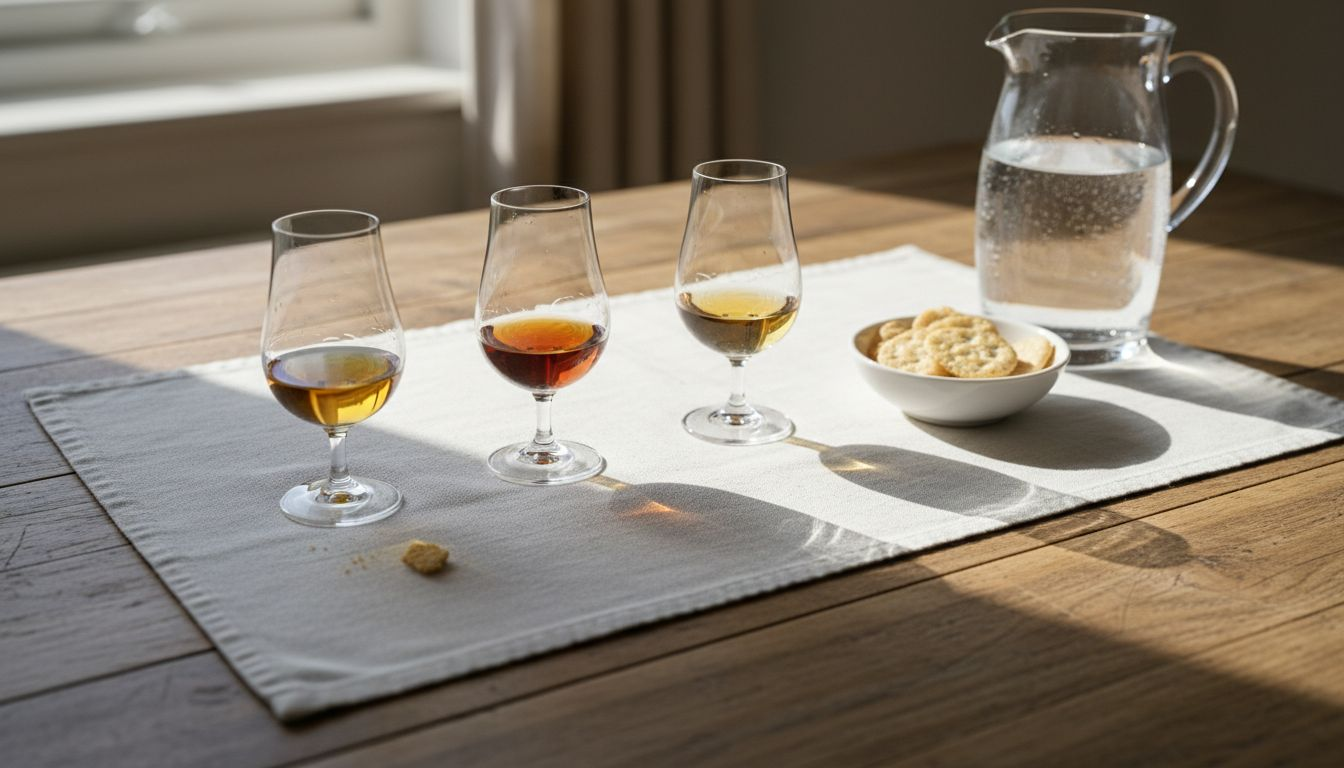
Top tip: Always use a white surface and good natural light when assessing whisky colour to ensure accurate visual evaluation of the spirit’s true hue and clarity.
Step 3: Identify Key Aroma and Flavour Notes
Mastering the art of identifying whisky aromas requires a systematic approach that develops your sensory perception and descriptive capabilities. Whisky flavour classification transforms an intimidating tasting experience into a structured exploration of complex sensory landscapes.
Begin by understanding the primary flavour categories: floral, fruity, woody, peaty, spicy, and malty. Train your nose to distinguish subtle nuances by taking short, gentle sniffs rather than deep inhales. Start at the rim of the glass and gradually move your nose closer, allowing the aromas to unfold naturally. Pay attention to the whisky’s progression from initial scent to deeper underlying notes. Listen to your own sensory experience and avoid being intimidated by complex descriptors professional tasters might use.
Document your observations systematically. Note the intensity and character of aromas at different stages: initial nose, after swirling, and post tasting. Consider the whisky’s evolution in the glass by revisiting its aroma at intervals. Describe what you smell using specific, evocative language rather than generic terms like “nice” or “interesting”. Compare the aroma to familiar experiences like fresh cut grass, baked pastry, sea spray, or dried fruits to anchor your perception.
Top tip: Practice nosing different whiskies regularly and keep a detailed tasting journal to track your developing sensory skills and flavour recognition.
Use this sample flavour descriptor reference during tastings:
| Flavour Category | Common Aromas | Example Descriptions |
|---|---|---|
| Floral | Heather, blossom | Fresh cut grass, spring flowers |
| Fruity | Apple, dried fruit | Stewed pears, sweet raisins |
| Woody | Oak, cedar | Vanilla, old barrel, earthy bark |
| Peaty | Smoke, moss | Bonfire, sea spray, brine |
| Spicy | Cinnamon, pepper | Nutmeg, warming spice, clove |
| Malty | Toasted grain, cereal | Baked bread, digestive biscuit |
Step 4: Evaluate Body, Finish and Mouthfeel
Understanding the complex sensory experience of whisky extends beyond initial aroma into its physical characteristics and lingering impression. Whisky texture analysis provides a scientific approach to decoding the intricate sensations that define a truly exceptional spirit.
Begin by assessing the whisky’s body through its viscosity and weight on your palate. Take a small sip and let it coat your entire mouth, paying attention to its thickness and how it feels against your tongue. Some whiskies will feel light and delicate, while others might present a rich, oily texture that lingers extensively. Consider the spirit’s weight like you would assess a fabric lightness or heaviness evaluate whether it feels thin and sharp or full and rounded.
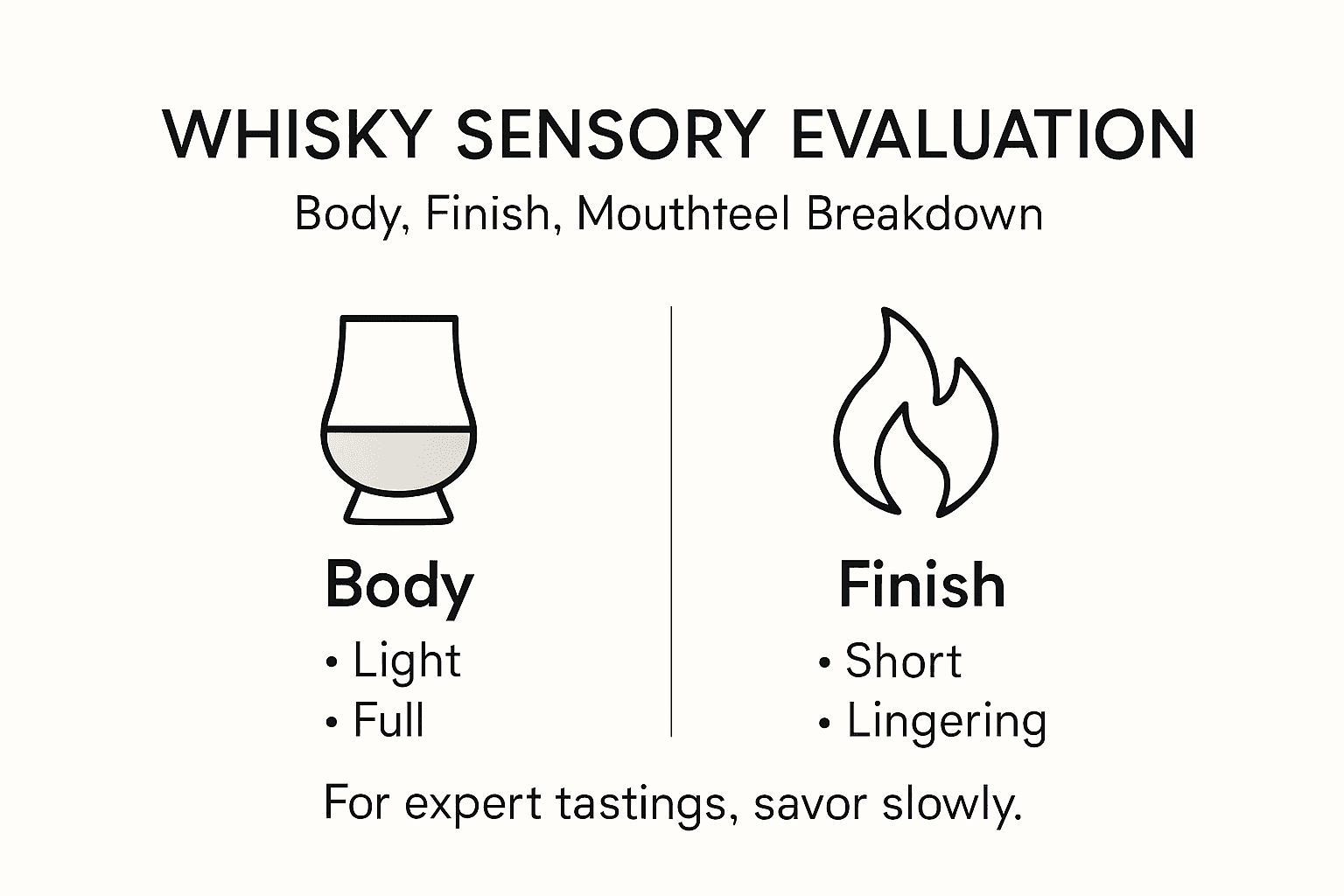
The finish represents the whisky’s final impression and how long its flavours persist after swallowing. Note how the flavour evolves from initial taste through to its conclusion. A complex whisky will often have a finish that changes and reveals different characteristics over several seconds. Some finishes might be short and crisp, while others develop slowly with warming spice notes or lingering smokiness. Document these sensations systematically, tracking how the whisky’s personality emerges and transforms across your palate.
Top tip: Allow each whisky to rest momentarily in your mouth and breathe gently through your nose to fully appreciate the subtle nuances of body and finish.
Step 5: Record and Reflect on Your Tasting Impressions
Documenting your whisky tasting experience transforms a momentary sensory encounter into a lasting learning opportunity. Sensory evaluation techniques provide a structured approach to capturing the nuanced characteristics of each whisky you explore.
Develop a consistent note taking system that captures multiple dimensions of your tasting experience. Create a template with dedicated sections for appearance, nose, palate, body, and finish. Use descriptive language that goes beyond generic terms like “good” or “nice” and instead focuses on specific sensory impressions. Compare the whisky’s characteristics to familiar experiences such as specific fruits, spices, or environmental aromas that help anchor your perception.
Reflect on your notes after the tasting to deepen your understanding. Look for patterns in your preferences, compare different whiskies side by side, and consider how factors like age, region, and production method influence the spirit’s profile. Engage with other whisky enthusiasts to share your observations and learn from their perspectives. Your tasting journal becomes a personal reference that tracks your evolving palate and appreciation for whisky’s incredible complexity.
Top tip: Photograph your tasting notes and whisky bottles to create a visual memory archive that complements your written impressions.
Elevate Your Whisky Tasting Experience with Uisuki
Mastering the art of comparing whisky styles requires access to a carefully curated selection that reflects the nuanced differences between regions and production methods. If you are seeking to explore and document flavours from Scotch to Japanese whisky in your expert tastings, facing challenges in sourcing authentic, well-chosen bottles can hold you back. Key goals include tasting diverse profiles, understanding aromas, and refining your ability to identify body and finish—critical steps in becoming a confident whisky connoisseur.
Discover the ideal solution with Scotch Whisky (all) - Glenglassaugh – Uisuki.com.au and other premium collections like Glenfiddich – Uisuki.com.au.
Unlock access to rare older bottlings and new arrivals that perfectly suit your tasting journey. Start building your personalised whisky tasting set today to capture every subtle complexity covered in your expert sessions. Shop now at https://uisuki.com.au and take the next step in refining your palate.
Frequently Asked Questions
How do I choose the best whisky styles to compare for expert tasting?
To select the best whisky styles for expert tasting, focus on six primary types: Scotch, Irish whiskey, American bourbon, Japanese whisky, Canadian whisky, and rye whisky. Opt for one representative whisky from each type to explore their unique characteristics.
What tools do I need for a whisky tasting session?
Essential tools for a whisky tasting session include tulip-shaped glasses, water, neutral crackers for palate cleansing, tasting sheets, and a quiet space with stable lighting. Prepare your area by lining up the selected whiskies and ensuring you have white surfaces to assess their colours accurately.
How can I effectively identify aroma and flavour notes in whisky?
Effectively identify aroma and flavour notes in whisky by taking short, gentle sniffs from the glass and noting aromas at different stages – before swirling, after swirling, and post-tasting. Practice regularly and document your observations to refine your sensory skills and flavour recognition.
What should I look for when evaluating the body, finish, and mouthfeel of whisky?
When evaluating the body, finish, and mouthfeel of whisky, focus on its viscosity, the sensations it creates in your mouth, and how long flavours linger after swallowing. Take a small sip and note how the whisky feels and evolves on your palate.
How should I record my impressions during a whisky tasting?
Record your impressions during a whisky tasting by developing a consistent note-taking system that captures appearance, aroma, flavour, body, and finish. Use detailed, descriptive language to document your thoughts and consider comparing different whiskies to deepen your understanding of their characteristics.
What is the importance of reflecting on my tasting notes?
Reflecting on your tasting notes is crucial for recognising patterns in your preferences and understanding how various factors influence whisky profiles. After each tasting, review your notes to track your evolving palate and engage with other enthusiasts to share insights.