

Selecting a whisky can be a pleasure, but unravelling its full character often comes down to the art of nosing. For Australian whisky enthusiasts looking to refine their palate, whisky nosing unlocks the hidden complexity shaped by fermentation, distillation, and maturation in oak casks. This essential practice helps reveal nuanced aromas and deeper stories within every bottle, offering collectors and connoisseurs a richer, more informed tasting journey.
Table of Contents
- What Is Whisky Nosing: Key Principles
- Essential Nosing Techniques and Glassware
- The Impact of Aroma Profiles on Tasting
- Common Mistakes and How to Avoid Them
- Using Nosing to Assess Whisky Quality
Key Takeaways
| Point | Details |
|---|---|
| Whisky Nosing Technique | Use specialised glassware and follow a methodical approach to enhance aromatic exploration. |
| Aroma Profile Importance | Understanding aroma categories significantly influences the tasting experience and identification of unique flavour characteristics. |
| Common Nosing Mistakes | Avoid inappropriate glassware and aggressive inhalation to enhance sensory engagement and appreciation of whisky’s complexity. |
| Assessing Whisky Quality | Nosing can reveal production history and quality indicators, allowing a deeper understanding of the whisky before tasting. |
What Is Whisky Nosing: Key Principles
Whisky nosing represents a sophisticated sensory technique that allows enthusiasts to explore the intricate aromatic landscape of this complex spirit. Understanding whisky’s aroma profile involves more than casual sniffing - it’s a deliberate, nuanced practice that reveals the spirit’s hidden characteristics.
At its core, whisky nosing involves carefully examining the spirit’s aromatic compounds through a methodical approach. Key principles include:
- Using specialised glassware with a narrow mouth to concentrate aromas
- Holding the glass at a slight angle to prevent direct alcohol burn
- Inhaling gently and repeatedly to uncover layered scent profiles
- Keeping an open mouth to reduce alcohol intensity
- Allowing the whisky to breathe and evolve in the glass
The technique requires patience and practice, as whisky aromas are complex and dynamic. Different regions and production methods contribute unique scent characteristics, making nosing an art form that rewards careful attention. Hundreds of aromatic compounds interact to create the whisky’s distinctive sensory experience.
Pro tip: Start your nosing practice by taking small, gentle inhalations and gradually developing your ability to detect subtle aromatic nuances.
Essential Nosing Techniques and Glassware
Mastering whisky nosing requires understanding both technique and the right whisky glass selection. The glassware you choose plays a critical role in capturing and concentrating the spirit’s complex aromatic profile, transforming a simple tasting into a sensory exploration.
When selecting nosing glassware, whisky enthusiasts typically focus on glasses with specific design characteristics:
- Bulbous shape to concentrate aromas
- Narrow mouth to trap volatile compounds
- Thin, colourless glass for visual assessment
- Stem to prevent hand warming the whisky
- Capacity of around 150-200ml for optimal nosing
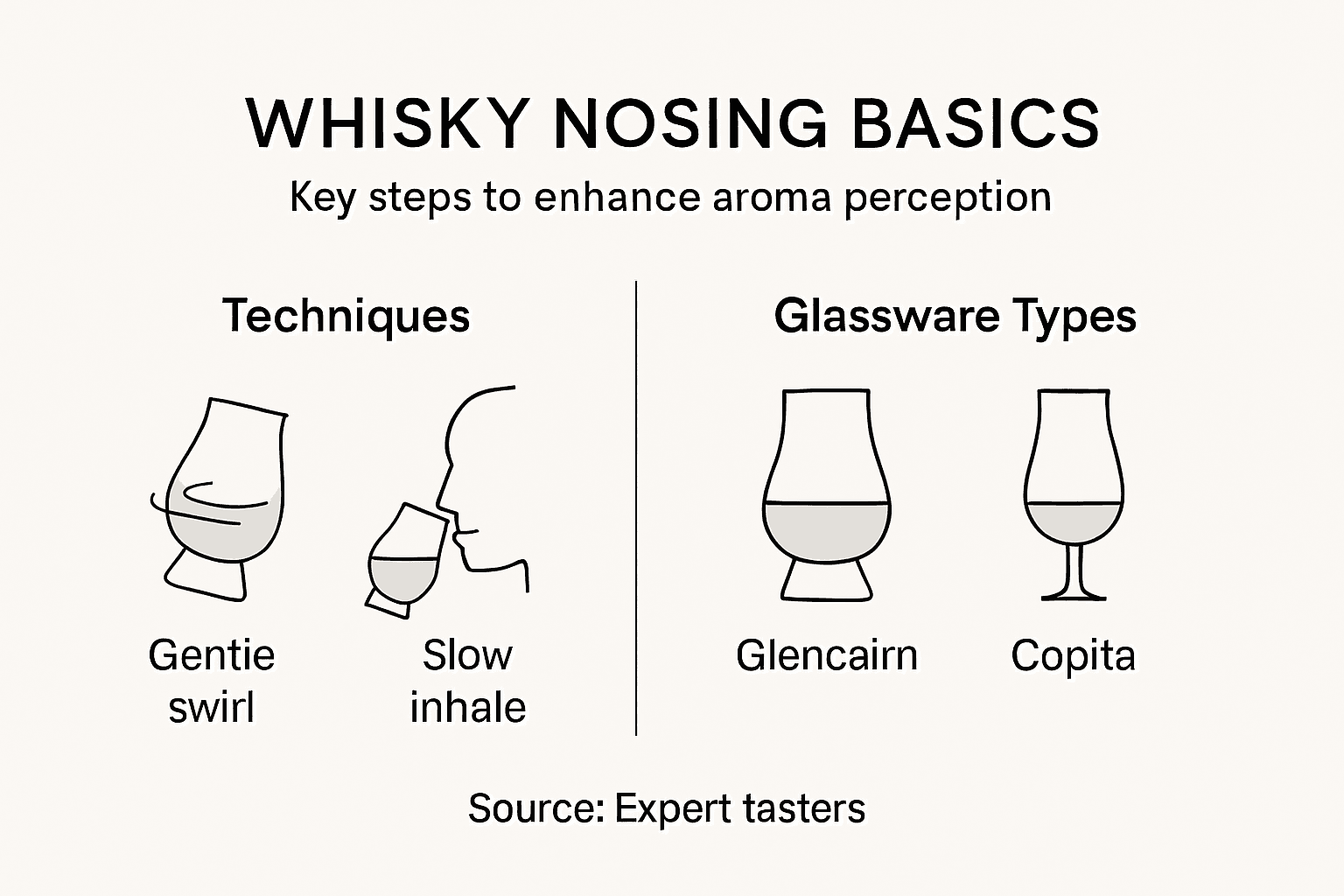
Glencairn glasses and copita glasses are considered the gold standard for serious whisky nosing. These specialised vessels feature a distinctive tulip-shaped design that narrows at the top, which helps funnel and intensify the whisky’s aromatic compounds directly towards the olfactory receptors.

Here’s a comparison of popular whisky nosing glass types for enthusiasts:
| Glass Type | Aroma Concentration | Ease of Handling | Typical Use Case |
|---|---|---|---|
| Glencairn | Excellent | High | Formal tastings, home nosing |
| Copita | Superior | Moderate | Professional assessments, distilleries |
| Tumbler | Poor | Very high | Social drinking, casual settings |
| Tulip-Shaped Flute | Very good | Moderate | Advanced nosing, competitions |
Practical nosing techniques complement your glassware choice. Pour approximately one-third of the glass, allowing space for aromas to develop. Approach the glass slowly, keeping your mouth slightly open to reduce alcohol burn and enable more nuanced scent perception. Gentle, repeated inhalations will help you uncover the whisky’s layered aromatic landscape.
Pro tip: Warm the glass gently in your hands and let the whisky breathe for 5-10 minutes before nosing to unlock its most subtle aromatic characteristics.
The Impact of Aroma Profiles on Tasting
Whisky tasting is fundamentally transformed by understanding its complex aroma profile categories. Each whisky carries a unique sensory signature influenced by its production journey, with distinctive flavour characteristics emerging from different stages of crafting.
Traditional aroma profiles typically encompass several key categories:
- Woody: Hints of oak, cedar, or timber
- Fruity: Notes of citrus, stone fruits, or dried fruits
- Floral: Delicate hints of lavender, rose, or honeysuckle
- Peaty: Smoky, earthy undertones
- Spicy: Pepper, cinnamon, or nutmeg sensations
- Sulphury: Subtle mineral or industrial-like nuances
The olfactory experience goes beyond simple smell, engaging both orthonasal and retronasal perception. When you nose a whisky, you’re actually decoding a complex chemical interaction that reveals the spirit’s entire narrative - from malting and fermentation through to distillation and maturation.
Below is a summary of how typical whisky aroma categories influence the overall tasting experience:
| Aroma Category | Perceived Flavour Impact | Common Australian Whisky Example |
|---|---|---|
| Woody | Adds depth and dryness | Starward Nova |
| Fruity | Provides sweetness and vibrancy | Sullivan’s Cove Double Cask |
| Floral | Contributes lightness | Bakery Hill Classic Malt |
| Peaty | Offers smokiness and earthiness | Limeburners Peated Single Malt |
| Spicy | Enhances warmth and complexity | Archie Rose Rye Malt |
| Sulphury | Indicates mineral or wild edge | Some single barrel releases |
Professional tasters develop remarkable sensitivity, training their senses to distinguish incredibly subtle aromatic variations. This skill transforms whisky from a mere beverage into a sophisticated sensory exploration, where each inhalation unveils layers of intricate flavour compounds.
Pro tip: Create your personal aroma reference library by systematically smelling and documenting different whisky profiles to enhance your sensory memory and tasting skills.
Common Mistakes and How to Avoid Them
Whisky enthusiasts often stumble when nosing, making critical errors that compromise their tasting experience. Common nosing mistakes can significantly diminish the intricate sensory journey whisky offers, transforming a potentially sublime experience into a mere casual drinking moment.
Key mistakes to avoid include:
- Using inappropriate glassware that disperses aromas
- Inhaling too aggressively, which overwhelms olfactory senses
- Rushing the nosing process without allowing whisky to breathe
- Drinking immediately after nosing, disrupting sensory exploration
- Consuming strong foods or coffee before a tasting session
- Neglecting to cleanse your palate between different whiskies
Proper technique requires patience and deliberate sensory engagement. When nosing, approach the glass gently, keeping your mouth slightly open to reduce alcohol intensity. Allow the whisky to rest in the glass for several minutes, observing how its aromatic profile evolves and transforms. This approach reveals nuanced characteristics that rapid, aggressive nosing would otherwise mask.
Professional tasters understand that nosing is an art form demanding concentration and respect for the spirit’s complexity. By avoiding common pitfalls and developing a methodical approach, you’ll gradually enhance your ability to detect subtle aromatic variations and truly appreciate the whisky’s narrative.
Pro tip: Practice nosing with a consistent, clean palate by drinking water and avoiding strong-flavoured foods for at least an hour before your tasting session.
Using Nosing to Assess Whisky Quality
Whisky quality assessment through nosing is a sophisticated art that transforms a simple tasting into a profound sensory investigation. Detecting subtle aroma indicators reveals the spirit’s intricate production history and potential complexity.
Key quality assessment indicators include:
- Wood Influence: Detecting vanilla, oak, or cedar notes
- Maturation Complexity: Identifying depth of aging characteristics
- Fermentation Quality: Recognising clean, balanced fruity undertones
- Production Authenticity: Detecting characteristic regional scent profiles
- Alcohol Integration: Assessing how well alcohol is balanced with aromatic compounds
- Consistency: Comparing aroma profile against expected characteristics
Professional tasters approach nosing as a methodical process, understanding that each aromatic layer tells a story about the whisky’s origin, crafting, and potential quality. The absence or presence of specific scent characteristics can indicate refinement, potential flaws, or exceptional craftsmanship.
A trained nose can distinguish between mass-produced spirits and artisanal creations by detecting nuanced aromatic signatures that reflect meticulous production techniques. These sensory insights provide a preview of the tasting experience, allowing connoisseurs to assess quality before the first sip.
Pro tip: Develop your nosing skills by systematically comparing whiskies from different regions, noting how geographic origins influence distinct aromatic profiles.
Elevate Your Whisky Nosing Experience with Premium Selections
Mastering whisky nosing reveals the complex and evolving aroma profiles that define each unique dram. If you are eager to explore the nuanced depths of woody, fruity, or peaty scents mentioned in the article then selecting the right whisky is crucial. At Uisuki, we understand the importance of quality and authenticity that make each nosing session a sensory journey rather than a casual sip. Our curated collection, including exquisite offerings like The Balvenie and distinguished Scotch Whisky (all) - Glenglassaugh, ensures you can experience the distinct regional aromatic profiles and maturation complexities firsthand.

Discover rare and premium whiskies that allow you to practise refined nosing techniques and enhance your appreciation of whisky craftsmanship. Visit Uisuki today to explore carefully selected bottles that bring aroma and flavour to life. Take the next step in your whisky journey by choosing from our exceptional range, equipped with expert descriptions and customer insights designed to deepen your tasting pleasure at home.
Frequently Asked Questions
What is whisky nosing and why is it important?
Whisky nosing is a sensory technique used to explore the aromatic profile of whisky, revealing its complex characteristics. It is important because it enhances the overall tasting experience by allowing enthusiasts to appreciate the nuances in aroma that contribute to the flavour.
What techniques should I use for effective whisky nosing?
To effectively nose whisky, use a specialised glass with a narrow mouth, hold it at a slight angle, and inhale gently and repeatedly. Keeping your mouth open while nosing helps reduce the intensity of alcohol, allowing you to detect subtle aromas.
How does the choice of glassware impact the nosing experience?
The choice of glassware is crucial as it can concentrate and trap aromatic compounds. Ideal glasses, like Glencairn or copita glasses, have a bulbous shape and narrow mouth, enhancing the whisky’s aromatic profile compared to standard tumblers.
What common mistakes should I avoid when nosing whisky?
Common mistakes include using inappropriate glassware, inhaling too aggressively, and rushing the process. It’s essential to allow the whisky to breathe and to cleanse your palate between tastings to fully appreciate the aromas without interference.