

TL;DR:
- A higher alcohol percentage in whisky does not necessarily equate to better quality, as balance is the key measure. Different ABV levels shape aroma intensity, mouthfeel, and flavour complexity, with 46% often serving as a sweet spot for richness and authenticity. Recognizing the role of ABV helps enthusiasts select, taste, and collect whiskies that best suit their preferences and occasions.
Whisky enthusiasts often assume that a higher alcohol percentage signals a finer, more flavour-packed dram. It is a widespread belief, and the marketing around cask strength releases does little to discourage it. But balance is the real measure of a great whisky, and alcohol level shapes intensity, perceived heat, and how readily aromas reach your nose. Understanding ideal ABV ranges transforms the way you shop, taste, and build a collection worth being proud of.
Table of Contents
- What ABV means in whisky and why it matters
- Comparing common ABV bands: Entry-level, sweet spots and cask strength
- How to choose your ideal ABV for tasting and collecting
- The special role of 46% ABV: Sweet spot and chill filtration
- Our take: Why chasing high ABV can miss the point
- Find your ideal ABV whisky with Uisuki
- Frequently asked questions
Key Takeaways
| Point | Details |
|---|---|
| ABV influences flavour | The alcohol content in whisky shapes aroma, taste, and mouthfeel in every bottle. |
| No universal best ABV | Different strengths suit different palates, moods, and collecting aims; there’s no single ideal. |
| 46% ABV is a sweet spot | Many premium whiskies use 46% ABV to preserve flavour and avoid chill filtration. |
| Water enhances cask strength | Adding drops of water to cask strength whiskies can reveal deeper aromas and softer finishes. |
| Choose ABV for your goals | Select whisky ABV based on whether you want approachability, balance, or intensity in your tasting. |
What ABV means in whisky and why it matters
ABV stands for Alcohol By Volume, the standard measurement of how much of a liquid is pure ethanol. In whisky, it is expressed as a percentage, and it is usually printed clearly on the label. Most Scotch, Japanese, American, and Australian whiskies are bottled anywhere from 40% up to 65% or beyond for single cask releases.
What ABV actually does to your experience is often misunderstood. The influence of ABV in whisky runs deeper than just strength. Higher alcohol carries aromatic compounds to your nose more forcefully, which can be a double-edged thing. At very high ABVs, the alcohol itself can overwhelm delicate notes before you even register them.
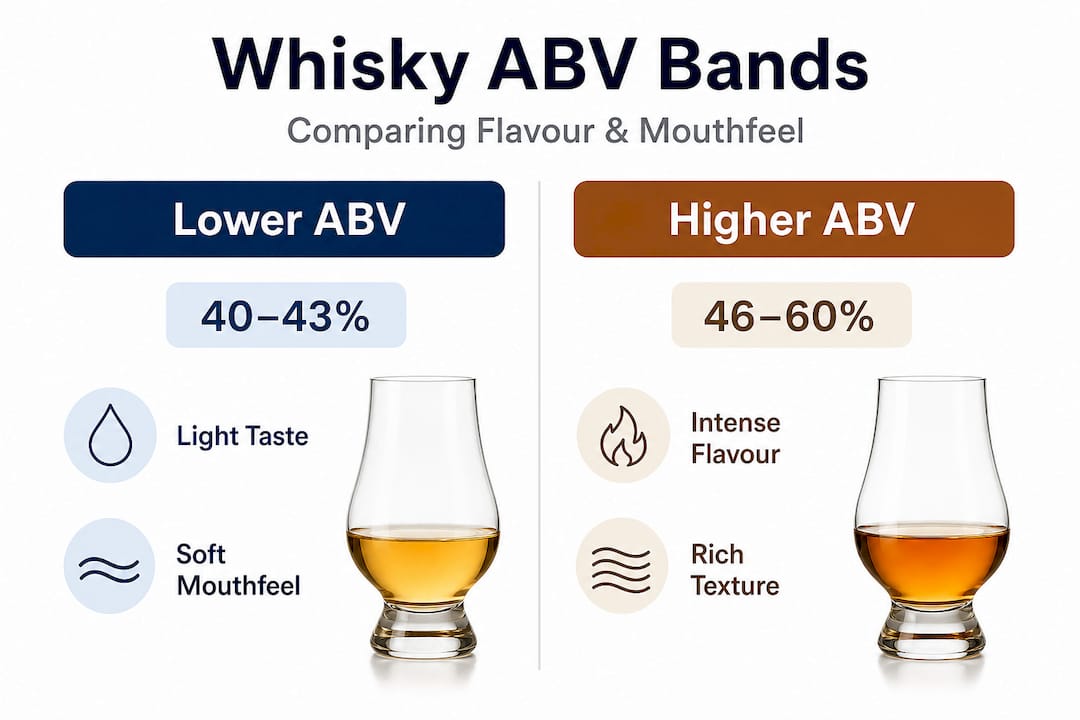
Mouthfeel is another dimension. Lower ABV bottlings tend to feel lighter and softer on the palate, while higher ABV whiskies deliver a rounder, oilier texture, particularly when bottled without chill filtration. Alcohol also acts as a solvent for flavour compounds, so how much alcohol is present affects which flavours are released and when.
There is also the question of chill filtration. Most commercial bottlings below 46% ABV are chill-filtered to prevent clouding when cold water or ice is added. This process can strip out esters and fatty acids that contribute to body and flavour. Understanding why ABV matters in this context helps explain why so many enthusiasts specifically seek out bottlings at 46% and above.
Here is a quick summary of what different ABV levels typically deliver:
- 40% ABV: Legal minimum for Scotch, approachable, often lighter in texture, usually chill-filtered
- 43% ABV: Slightly more presence on the palate, still widely approachable, popular commercial strength
- 46% ABV: Non-chill-filtration threshold for many bottlers, fuller mouthfeel, richer texture
- 48–50% ABV: Noticeably more intensity, still manageable without water for most palates
- 50%+ ABV (cask strength): Maximum flavour concentration, can require water to fully appreciate
Pro Tip: If a bottle lists “non-chill filtered” and sits at 46% ABV or above, it is very likely to deliver a richer mouthfeel and more authentic flavour profile than a comparable bottling at 40%.
A good starting point for most enthusiasts is the 40 to 46% band, which covers the majority of premium, widely available bottlings and represents a well-balanced tasting experience for a broad range of palates.
Comparing common ABV bands: Entry-level, sweet spots and cask strength
Once you understand what ABV does, the next step is making sense of the main bands and how they serve different purposes for tasting and collecting. Think of it as a spectrum rather than a scale of quality.
ABV benchmarks for Australian collectors typically fall into three recognisable zones. Here is how they compare:
| ABV band | Flavour profile | Mouthfeel | Collectability |
|---|---|---|---|
| 40–43% | Light to medium, clean | Softer, thinner | Everyday enjoyment |
| 46–50% | Layered, aromatic, richer | Full, often non-chill filtered | Strong collector appeal |
| 50%+ (cask strength) | Intense, bold, complex | Heavy, oily, warming | High collectability, investment potential |
Most premium retail bottlings in Australia land between 40% and 46% ABV. This makes sense commercially: these strengths are approachable for newer drinkers and cost-effective to produce at scale. But for serious enthusiasts, the 46 to 50% sweet spot is where things get genuinely interesting.
A useful way to think about your progression as a collector is this numbered pathway:
- Start in the 40–43% zone to develop your palate vocabulary. Learn the difference between a peated and unpeated Scotch, or a Japanese single malt versus a blended expression. Lower strength makes the nuances accessible without alcohol distraction.
- Move into the 46–50% range as your palate develops. You will notice richer texture, longer finish, and more aromatic complexity. This is the zone where non-chill filtration becomes common and the whisky shows you more of itself.
- Explore cask strength at 50%+ once you are confident in your baseline. These bottlings reward patience and a drop or two of water. They are intense, sometimes polarising, but often revelatory when approached correctly.
It is important to note that higher ABV increases intensity but is not a guarantee of better flavour. A masterfully crafted 43% expression from a respected distillery can outshine a clumsy, unbalanced cask strength release every single time. The ABV band sets the context; the distillery’s craft and cask selection determine the quality.
Stat to know: Most premium whisky bottles available in Australian bottle shops and online retailers sit between 40% and 46% ABV, making this the most commercially represented range and the easiest starting point for building a collection.
How to choose your ideal ABV for tasting and collecting
Knowing the bands is one thing. Knowing which band suits your situation is where the practical value lies. Your ideal ABV is not fixed. It changes depending on mood, setting, palate readiness, and what you plan to do with the bottle.
Here is a practical data table to help map your scenario to an ABV suggestion:
| Tasting scenario | Suggested ABV range | What to expect |
|---|---|---|
| Relaxed evening sipper | 40–43% | Easy drinking, light warmth, subtle complexity |
| Focused tasting session | 46–48% | More aromatic lift, textured palate, non-chill filtered |
| Sharing with whisky newcomers | 40–43% | Approachable, crowd-pleasing, less confronting |
| Gifting a premium bottle | 43–46% | Recognisable quality, suitable for most palates |
| Advanced exploration | 48–55% | Intense, layered, rewards attention and water |
| Collector and investment purchase | 50%+ or rare 46% | Limited editions, distillery character at full expression |
When choosing for gifting, the 43 to 46% range is almost always the safest bet. It signals premium quality without intimidating someone who is newer to whisky. For more on this, the guide to gifting premium whisky in Australia covers the important considerations beyond just strength.
For those building a tasting progression, here are a few practical steps:
- Begin your session with the lowest ABV bottle and work upward. Your palate becomes accustomed to heat over time, so starting with high-strength drams can mask the subtleties in lighter ones.
- Let high-ABV whiskies rest in the glass for two to three minutes before nosing. The alcohol dissipates slightly, and the aromas open up.
- Explore how water’s effect on flavour changes a cask strength whisky. A few drops can fundamentally shift the aromatic profile, sometimes for the better, sometimes revealing flaws that alcohol was masking.
- Consider non-chill filtered whisky as a benchmark. Once you taste the difference in texture, going back to heavily processed bottlings can feel like a step backward.
Pro Tip: With any cask strength whisky, always taste it neat first, then add water drop by drop. This way you experience the full-strength character before you alter it. You cannot undo water, but you can always add more.
The special role of 46% ABV: Sweet spot and chill filtration
There is a reason you see 46% printed on so many premium bottles. It is not arbitrary. This specific ABV sits at the threshold where many distilleries choose to bottle without chill filtration, which preserves the natural oils, esters, and fatty acids that give whisky its characteristic richness and texture.
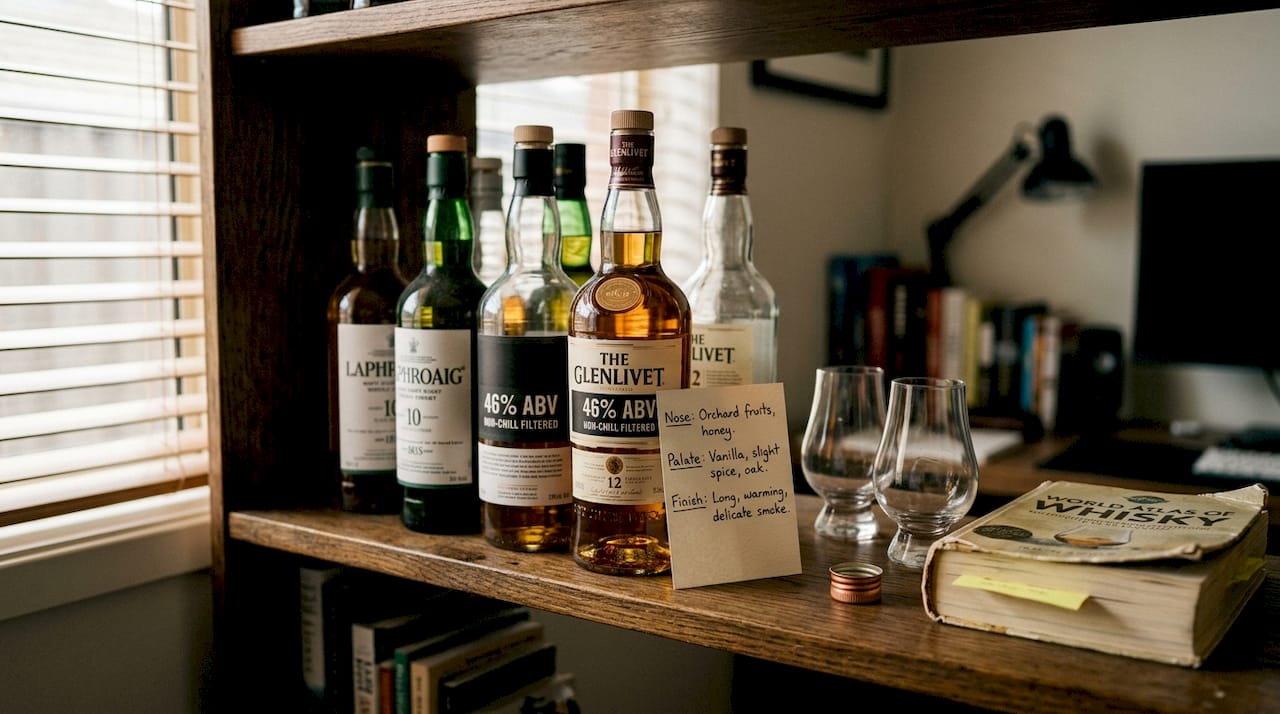
46% is widely recognised as a popular sweet spot for flavour and mouthfeel, and the preference among premium bottlers for this strength reflects real craft decisions, not just marketing.
Here is what makes 46% ABV particularly valued among collectors:
- Full flavour preservation: The higher strength holds more volatile compounds in solution, meaning more of the whisky’s character reaches your nose and palate.
- Non-chill filtration compatibility: At 46% and above, most distilleries choose to skip chill filtration, keeping the whisky as close to its natural state as possible.
- Better texture: The mouthfeel at 46% tends to be noticeably more substantial than at 40% or 43%, giving a satisfying, lingering finish.
- Versatility for collectors: Bottles at 46% age gracefully in a collection, often becoming more interesting over years of storage as minor oxidisation develops complexity.
- A marker of intent: When a bottler chooses 46% over 40%, it often signals a commitment to quality and character rather than simple cost efficiency.
“46% ABV has become a benchmark for enthusiasts who want the full story of a whisky without committing to the intensity of a full cask strength release. It represents the distiller’s character at its most honest.”
In Australia, recognising 46% bottlings is worth developing as a habit. Look for the combination of “46% ABV” and “non-chill filtered” on the label. This pairing almost always signals a more texturally rich and flavour-forward experience. A great example is the Ardnamurchan 46% ABV expression, which demonstrates exactly how impactful this strength can be when paired with quality distillation and smart chill filtration decisions.
Our take: Why chasing high ABV can miss the point
There is a trend in the collector community that we find worth questioning. Cask strength releases are marketed with a kind of bravado, as though maximum alcohol percentage represents maximum quality. We understand the appeal. A 63% single cask bottling feels exclusive, powerful, and serious. But the logic breaks down quickly under scrutiny.
Higher ABV is often marketed as purer, especially in the cask strength category, but experts consistently note it is no guarantee of better flavour. Some of the most complex and rewarding drams we have encountered came in at 43 or 46%. The alcohol was not fighting for attention. It simply carried the flavour to where it needed to go.
Think about some of the most celebrated Japanese expressions available to Australian collectors. Many are bottled between 43% and 48%. Their complexity comes from meticulous blending, exceptional cask selection, and precise distillation, not from raw proof. The same is true for well-regarded Scotch expressions that have defined categories for decades at 43%.
The Australian collector ABV guide touches on this point well: build your collection around balance, not benchmarks. A whisky at 56% that scorches every note into oblivion is not serving you better than a refined 46% expression that opens progressively across a long finish.
We also notice that newer collectors sometimes conflate courage with quality, gravitating toward the highest proof bottling on the shelf as if avoiding it signals weakness. This sells whisky short as a craft. The real challenge, and the real pleasure, is learning to read what a distillery intended at whatever strength they chose, and appreciating whether they achieved it.
Value complexity. Seek balance. Treat ABV as a tool for understanding rather than a score to maximise.
Find your ideal ABV whisky with Uisuki
Understanding ABV is one thing. Finding bottles that genuinely deliver on their promise is another entirely.
At Uisuki, we have curated a selection of premium whiskies across every ABV band, from elegantly approachable 40% expressions through to rare cask strength releases that reward experienced palates. For those seeking the sweet spot, we particularly recommend exploring bottlings in the 46 to 48% range. The Ardnamurchan 46% ABV blended Scotch is a compelling example of how this strength delivers genuine depth, and the Ichiro’s Malt 48% ABV world blended whisky sits beautifully in that intensity sweet spot. Browse our full collection to find your next bottle, whether for tasting, collecting, or gifting someone who deserves something special.
Frequently asked questions
Why is 46% ABV considered a ‘sweet spot’ for whisky?
46% ABV preserves full flavour and mouthfeel, is the common threshold for non-chill-filtered bottlings, and strikes a balance between approachability and genuine depth that both newcomers and experienced collectors appreciate.
Can adding water improve the taste of higher-ABV whiskies?
Yes, adding small amounts of water to cask strength whisky can open up aromas and soften alcohol heat. Experts recommend tasting neat first, then adding water drop by drop to find your preferred point.
Is higher ABV always better for whisky collectors?
No. Higher ABV increases intensity and mouthfeel but does not guarantee superior flavour. Balance, integration of flavour, and distillery craft matter far more than raw proof for genuine quality and enjoyment.
What ABV range is best for gifting whisky in Australia?
The 40 to 46% band is ideal for gifting, as it covers widely available premium bottlings that are approachable and enjoyable for most Australian whisky enthusiasts regardless of their experience level.