

Chill filtration doesn’t always diminish whisky quality, contrary to popular belief among collectors. This polarising process removes certain compounds to enhance clarity, but the flavour impact remains subtle and context dependent. Understanding chill filtration helps you make informed choices when selecting premium bottles. This guide explores the science, sensory effects, and how to recognise filtration on labels.
Table of Contents
- Introduction To Chill Filtration
- Why Whisky Develops Haze And The Science Behind Chill Filtration
- Impact Of Chill Filtration On Whisky Flavour And Texture
- Non-Chill Filtered Whisky: Characteristics And Market Trends
- Common Misconceptions About Chill Filtration
- How To Identify Chill Filtration On Whisky Labels And What It Means For Collectors
- Explore Premium Whiskies With Confidence At Uisuki
Key takeaways
| Point | Details |
|---|---|
| Process mechanics | Chill filtration cools whisky to 0-5°C and filters it to remove fatty acids and proteins that cause haze. |
| Clarity vs flavour | It improves visual stability but may reduce mouthfeel richness and complexity slightly. |
| Non-chill filtered appeal | Non-chill filtered whiskies develop natural haze below 10°C but often preserve fuller flavour profiles. |
| Label identification | Terms like ‘non chill filtered’ or ‘natural colour’ signal filtration status and production philosophy. |
| Collector value | Enthusiasts increasingly favour non-chill filtered expressions for authenticity and perceived quality retention. |
Introduction to chill filtration
Chill filtration is a mechanical process where whisky is cooled to near-freezing temperatures before passing through fine filters. Distillers employ this technique primarily to prevent cloudiness when the spirit encounters cold temperatures or water dilution. The process targets specific compounds that solidify and create visual haze, improving bottling consistency.
The chill filtration process operates within a precise temperature window. Most facilities cool whisky to somewhere between 0°C and 5°C before filtration begins. At these temperatures, fatty acid esters and certain proteins precipitate from the liquid, forming tiny solid particles.
Filtration equipment uses extremely fine pores, typically ranging from 0.45 to 1 micron in diameter. These microscopic openings trap the precipitated compounds while allowing the alcohol and other flavour components to pass through. The filtered whisky then returns to room temperature for bottling.
Key operational parameters include:
- Temperature control maintaining consistent chilling throughout the filtration cycle
- Filter mesh size calibrated to capture haze-causing particles without excessive flavour compound loss
- Flow rate management ensuring thorough particle removal without damaging delicate aromatics
- Post-filtration warming to restore the whisky to bottling temperature
Distillers adopted chill filtration to solve a practical problem. Consumers perceived cloudy whisky as flawed or contaminated, despite haze being entirely harmless. The process became industry standard for mass-market bottlings, where visual consistency across batches matters commercially. Premium producers now reassess this practice as educated consumers increasingly value natural presentation over artificial clarity.
Why whisky develops haze and the science behind chill filtration
Whisky naturally contains fatty acid esters and proteins derived from the distillation process and cask maturation. These compounds remain dissolved at room temperature but behave differently when chilled. As temperature drops below 10°C, they lose solubility and form visible particles.

The chemistry involves long-chain fatty acids that bond with alcohol molecules. Warmth keeps these bonds stable and the mixture transparent. Cold temperatures disrupt molecular interactions, causing the fatty compounds to cluster together. These clusters scatter light, creating the characteristic cloudy appearance.
Chill filtration exploits this temperature-dependent behaviour through a controlled sequence:
- Cool the whisky gradually to the target temperature range, allowing maximum precipitation
- Maintain the low temperature while pumping the liquid through filter plates or cartridges
- Collect precipitated solids on the filter media while clarified whisky passes through
- Warm the filtered spirit back to ambient temperature for bottling
- Quality check for clarity under refrigerated conditions to verify haze removal
Filter media selection proves critical to success. Most operations use cellulose pads or synthetic membranes with precisely controlled pore sizes. The 0.45 to 1 micron range captures haze-forming particles effectively while permitting smaller flavour molecules to pass.
Natural haze in non-chill filtered whisky signals authenticity rather than defect, representing a deliberate choice to preserve full flavour complexity over cosmetic perfection.
Physical filtration differs fundamentally from chemical treatment. No additives enter the whisky during chill filtration. The process relies purely on temperature manipulation and mechanical separation. This distinction matters to purists who oppose any intervention beyond distillation and maturation.
Some compounds removed during filtration contribute positively to sensory experience. Fatty acids enhance mouthfeel through their viscous properties. Certain proteins carry aromatic compounds that add complexity. Removing these components trades visual perfection for subtle flavour reduction.
Impact of chill filtration on whisky flavour and texture
The sensory consequences of chill filtration remain hotly debated among collectors and blenders. Scientific analysis confirms that specific fatty acid esters contribute to perceived richness and body. Their removal necessarily alters the drinking experience, though the magnitude varies.
Mouthfeel changes most noticeably after chill filtration. Unfiltered whisky often presents a slightly oily or creamy texture coating the palate. This tactile sensation derives from the same compounds that cause haze. Filtered versions feel cleaner but potentially less substantial on the tongue.
Aromatic impact proves harder to quantify. Some volatile flavour compounds bond weakly to fatty acids and proteins. Removing these carrier molecules may reduce aromatic intensity marginally. Blind tastings suggest trained palates sometimes detect differences, though casual drinkers rarely notice.
Balancing act considerations include:
- Preserving core flavour profile whilst eliminating haze-causing compounds
- Maintaining ABV and aromatic strength through gentle filtration parameters
- Avoiding over-filtration that strips character beyond visual clarity goals
- Matching filtration intensity to whisky style and target market expectations
Collectors frequently prefer whisky flavour retention over cosmetic perfection. This preference drives the premium market towards non-chill filtered expressions. Distillers respond by highlighting filtration absence as a quality marker, particularly for cask strength releases.
Pro Tip: Purchase identical expressions in both filtered and non-filtered versions when available. Conduct side-by-side tastings at room temperature and chilled to experience the actual sensory differences rather than relying on theoretical assumptions.
Modern filtration technology allows more selective compound removal. Advanced systems can target haze-forming molecules whilst preserving flavour-active components more effectively than traditional methods. This technological evolution may eventually render the filtration debate obsolete.
Non-chill filtered whisky: characteristics and market trends
Non-chill filtered whiskies represent a growing segment attracting enthusiasts who prioritise natural production. These expressions skip the chilling and filtration steps entirely, proceeding directly from cask to bottle. The result preserves complete chemical complexity at the cost of potential haze formation.
Visual characteristics set non-chill filtered spirits apart immediately. Below 10°C, these whiskies typically develop cloudiness ranging from slight turbidity to pronounced milkiness. Adding water at any temperature may also trigger haze as dilution changes compound solubility. Educated consumers recognise this behaviour as normal and desirable.
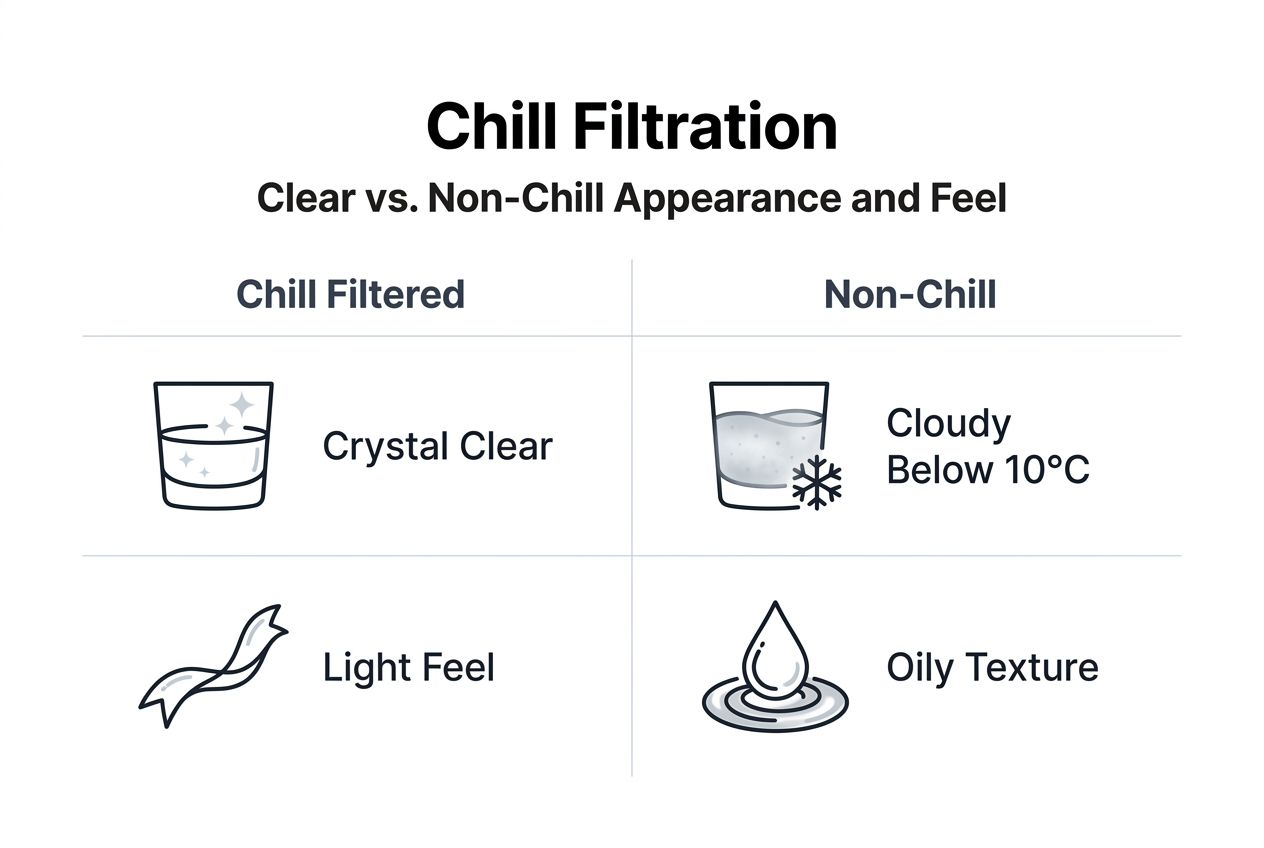
| Characteristic | Chill filtered | Non-chill filtered |
|---|---|---|
| Visual clarity | Always clear regardless of temperature | May haze when chilled or diluted |
| Mouthfeel | Lighter, cleaner texture | Fuller, richer, sometimes oily |
| Flavour intensity | Subtle reduction possible | Maximum complexity retained |
| Market positioning | Mass market and entry premium | Premium and collector focused |
| Price premium | Standard pricing | Often commands 10-20% higher prices |
| Consumer perception | Accessible and consistent | Authentic and uncompromised |
Market analysis reveals significant growth in non-chill filtered offerings. Premium non-chill filtered whisky demand grew approximately 15% between 2021 and 2026, reflecting educated consumers seeking authentic experiences. This trend accelerates particularly in craft and independent bottling segments.
Typical characteristics attracting enthusiasts include:
- Complete preservation of cask-derived compounds enhancing complexity
- Richer mouthfeel appreciated by experienced palates
- Philosophical alignment with minimal intervention production values
- Collector appeal through perceived higher quality and authenticity
- Natural presentation valued over artificial consistency
Producers capitalise on this trend by prominently labelling bottles as non-chill filtered. The designation functions as both technical specification and marketing advantage. Premium releases almost universally avoid filtration, positioning the choice as quality signifier rather than production shortcut.
Whisky market trends in 2026 show continued movement towards transparency in production methods. Consumers demand detailed information about filtration, colouring, and cask selection. Distillers respond with comprehensive technical specifications previously reserved for industry communications.
Common misconceptions about chill filtration
Misunderstandings surrounding chill filtration persist despite increasing consumer education. These myths often stem from incomplete information or misinterpretation of the process and its effects. Clarifying these points helps enthusiasts make informed decisions.
Myth: Chill filtration removes harmful or undesirable substances requiring elimination for health reasons. Reality: All compounds removed during filtration are entirely safe, natural components of properly distilled whisky. The process addresses only cosmetic concerns about haze formation.
Myth: Filtration improves whisky’s aging potential or extends shelf life significantly. Reality: Chill filtration affects visual stability when chilled but doesn’t influence maturation or long-term storage. Whisky’s high alcohol content already provides preservation without filtration intervention.
Myth: Chill filtration drastically changes whisky character, making filtered versions unrecognisable compared to non-filtered equivalents. Reality: Sensory impacts remain subtle in most cases. Differences emerge primarily in mouthfeel and minor aromatic nuances rather than wholesale flavour transformation.
Myth: Non-chill filtered whisky is unsafe or inferior due to cloudiness. Reality: Haze indicates retained natural compounds providing fuller flavour and texture. Quality and safety remain completely uncompromised by filtration absence.
Common misunderstandings clarified:
- Filtration doesn’t reduce alcohol content beyond minor losses during processing
- Non-chill filtered expressions aren’t necessarily higher quality, just different in production approach
- Visual clarity provides no reliable indication of flavour quality or maturation excellence
- Both filtered and non-filtered whiskies can achieve exceptional quality through skilled production
- Consumer preference rather than objective superiority should guide purchasing decisions
Education initiatives by distillers and retailers help dispel these myths. Transparent communication about production choices allows consumers to understand trade-offs without value judgements. The industry benefits when drinkers select whiskies matching personal preferences rather than following misinformation.
How to identify chill filtration on whisky labels and what it means for collectors
Label analysis provides crucial information about filtration status, though regulations don’t mandate disclosure in all markets. Understanding common terminology and marketing language helps decode production methods from bottle information.
Explicit statements offer clearest guidance. Labels stating ‘non chill filtered’ definitively confirm filtration absence. Similarly, ‘natural colour’ often accompanies non-chill filtered production, signalling minimal intervention philosophy. These declarations target informed consumers who value transparency.
Implied indicators require more interpretation:
- Cask strength bottlings (typically above 50% ABV) rarely undergo chill filtration due to higher alcohol content maintaining compound solubility
- Single cask releases frequently skip filtration to preserve barrel character completely
- Craft distillery products often highlight natural production including filtration absence
- Limited edition series may specify filtration status as distinguishing feature
- Budget-friendly expressions almost certainly use chill filtration for consistency
Marketing language sometimes obscures rather than clarifies. Terms like ‘traditionally crafted’ or ‘artisanal production’ sound appealing but lack specific meaning regarding filtration. Cross-referencing label claims with producer websites or independent reviews confirms actual practices.
Collectors prioritise non-chill filtered whisky flavour when building collections focused on maximum authenticity. Understanding whisky label details enables informed purchasing decisions aligning bottles with collection goals and taste preferences.
Pro Tip: Research distillery production standards before purchasing unfamiliar brands. Many producers maintain consistent filtration policies across their range, allowing you to infer practices even when labels lack explicit statements.
Decision-making factors include:
- Personal preference for clarity versus potential flavour richness
- Storage conditions affecting likelihood of haze development
- Serving temperature habits influencing haze visibility
- Collection focus on natural production versus visual consistency
- Price sensitivity to premiums commanded by non-chill filtered expressions
Informed consumers recognise filtration as one factor among many determining whisky quality. Maturation length, cask selection, distillation skill, and blending artistry all contribute more significantly to final character than filtration choices alone.
Explore premium whiskies with confidence at Uisuki
Applying your new understanding of chill filtration transforms how you select and appreciate premium whiskies. Uisuki curates exceptional expressions showcasing both production approaches, allowing you to explore filtration’s impact firsthand.

Our collection includes standout examples like Ichiro’s Malt and Grain Limited Edition, which preserves full flavour complexity through minimal intervention. Australian craft offerings such as Hobart Bourbon Matured Rum Finished Whisky demonstrate how local distillers prioritise natural production methods.
Browse the complete Uisuki whisky collection to discover expressions matching your preferences. Our detailed product descriptions specify filtration status when known, supporting informed choices aligned with your taste priorities and collecting goals.
Frequently asked questions
What is chill filtration and why do distillers use it?
Chill filtration is a process where whisky is cooled to near-freezing temperatures and passed through fine filters to remove fatty acids and proteins. Distillers use it to prevent cloudiness when whisky is chilled or diluted, ensuring consistent visual clarity across all serving conditions.
How does chill filtration affect whisky clarity and flavour?
Chill filtration guarantees crystal-clear appearance regardless of temperature or dilution. It may subtly reduce mouthfeel richness and aromatic intensity by removing compounds contributing to texture and complexity, though most drinkers notice minimal flavour difference.
How can I tell if a whisky is chill filtered?
Look for explicit label statements like ‘non chill filtered’ confirming filtration absence. Cask strength bottlings above 50% ABV and single cask releases rarely undergo filtration. Budget expressions almost always use chill filtration for production efficiency and visual consistency.
Why do some distillers deliberately avoid chill filtration?
Premium producers skip filtration to preserve maximum flavour complexity and mouthfeel richness. Non-chill filtered whiskies retain all natural compounds from distillation and maturation, appealing to collectors who value authenticity over cosmetic perfection despite potential haze formation.
Does filtration status matter for whisky collectors?
Collectors increasingly prioritise non-chill filtered expressions as markers of quality and minimal intervention. Filtration status influences mouthfeel and potentially aromatic complexity, making it relevant for serious enthusiasts. Personal preference ultimately determines whether filtration absence justifies premium pricing in your collection.