

Every whisky lover knows grain and cask shape a spirit’s soul, yet water proves just as defining in the premium bottles gracing Australian shelves. From mineral content and pH shaping fermentation chemistry to the way dilution unlocks aroma and flavour, water is the silent architect behind a dram’s profile. Exploring water’s intricate role reveals why regional nuances, distillery tradition, and even local climate deliver truly distinctive tasting experiences.
Table of Contents
- Water In Whisky Production Explained
- Mineral Content And Regional Variations
- How Water Impacts Flavour Chemistry
- Dilution, Mouthfeel, And Aroma Release
- Risks Of Poor Water Quality And Common Mistakes
Key Takeaways
| Point | Details |
|---|---|
| Water is Essential in Whisky Production | Water influences every stage of whisky production, from mashing to bottling, affecting the final spirit’s character. |
| Mineral Content Affects Flavour | The mineral profile of water significantly determines whisky taste, with different regions producing distinctive styles based on their water sources. |
| Quality Control is Crucial | Poor water quality can ruin whisky batches and disrupt fermentation, making regular testing and treatment vital for consistent results. |
| Dilution Enhances Experience | Adding water to whisky not only reduces strength but unlocks hidden flavours and aromas, influencing overall tasting experience. |
Water in whisky production explained
Water sits at the core of whisky production, yet it’s often overlooked compared to yeast, grain, or cask quality. The truth is that water fundamentally shapes every stage of the whisky-making journey. Without it, distilleries simply couldn’t function, and the character of the final spirit would be entirely different.
Water plays multiple critical roles throughout distillery operations, from the initial mashing process to fermentation and finally distillation. Each stage demands different water qualities and volumes. A distillery might require access to several water sources simultaneously to meet these varying demands, which is why location remains such a determining factor in whisky production. Scottish distilleries positioned near pristine springs, burns, and lochs have built their reputations on consistent water access.
The mineral content in water directly influences yeast behaviour during fermentation. Hard water rich in calcium and magnesium actually promotes yeast activity, leading to more complete fermentation and distinct flavour development. Soft water tends to slow fermentation, creating longer mash times and potentially developing different flavour characteristics. This chemistry isn’t academic—it’s the reason whiskies from different regions taste noticeably different, even when using identical grain and yeast strains.
Water quality also affects the distillation process itself. During distillation, water acts as a cooling agent in condensers. The purity and temperature of this cooling water impact how effectively alcohol vapours condense, which in turn influences the final spirit’s smoothness and character. Some distilleries obsess over maintaining specific water temperatures throughout distillation because they know it directly affects their product.
During maturation and bottling, water takes on yet another role. Cask-strength whiskies are often diluted with water before bottling to bring them to standard alcohol volumes. The water used here matters tremendously—many distilleries use the same water from their production process to maintain consistency in the finished product. Understanding how maturation shapes your whisky’s development reveals how water choices during maturation inform the final flavour profile.
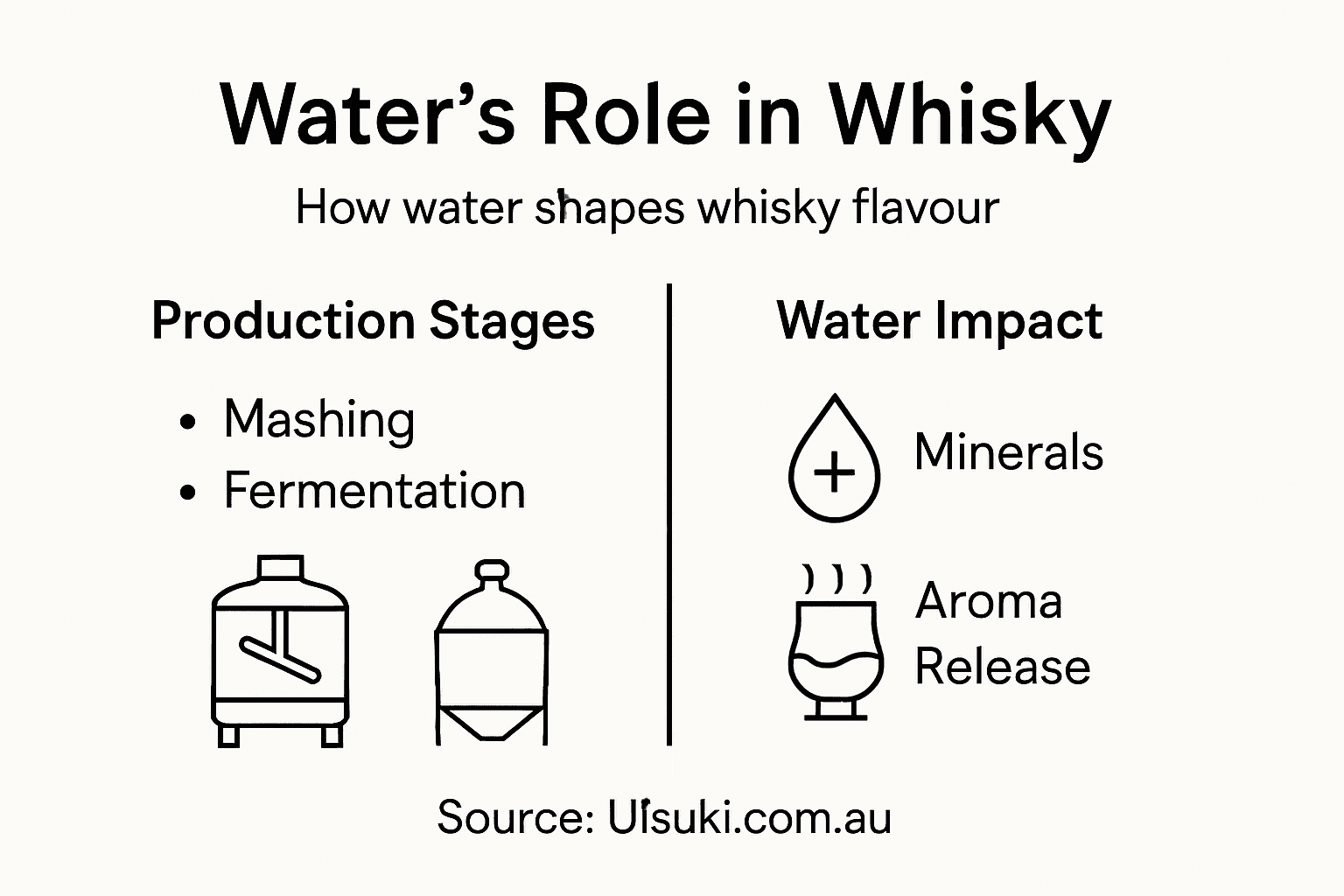
Below is a summary of water’s impact at each whisky production stage:
| Process Stage | Main Water Function | Key Impact on Whisky |
|---|---|---|
| Mashing | Converts starch to sugar | Influences fermentable sugars |
| Fermentation | Solvent and yeast medium | Affects flavour development |
| Distillation | Cooling/compression agent | Alters spirit smoothness |
| Maturation | Dilutes cask strength | Defines final flavour balance |
| Bottling | Final proofing/dilution | Ensures product consistency |
For Australian whisky enthusiasts evaluating bottles, consider where the distillery sources its water. Distilleries with protected water supplies producing consistent, mineral-rich water sources typically deliver more stable flavour profiles year after year. This consistency translates to better investment value and more predictable tasting experiences.
Pro tip: When comparing whiskies from different regions, research their water sources—this single factor often explains flavour differences more reliably than production methods alone.
Mineral content and regional variations
The mineral profile of water fundamentally determines what your whisky will taste like. Different regions across Scotland, Japan, Australia, and beyond have dramatically different water compositions, and this geological lottery shapes everything about the spirit. It’s not random chance—it’s pure chemistry translating into flavour.
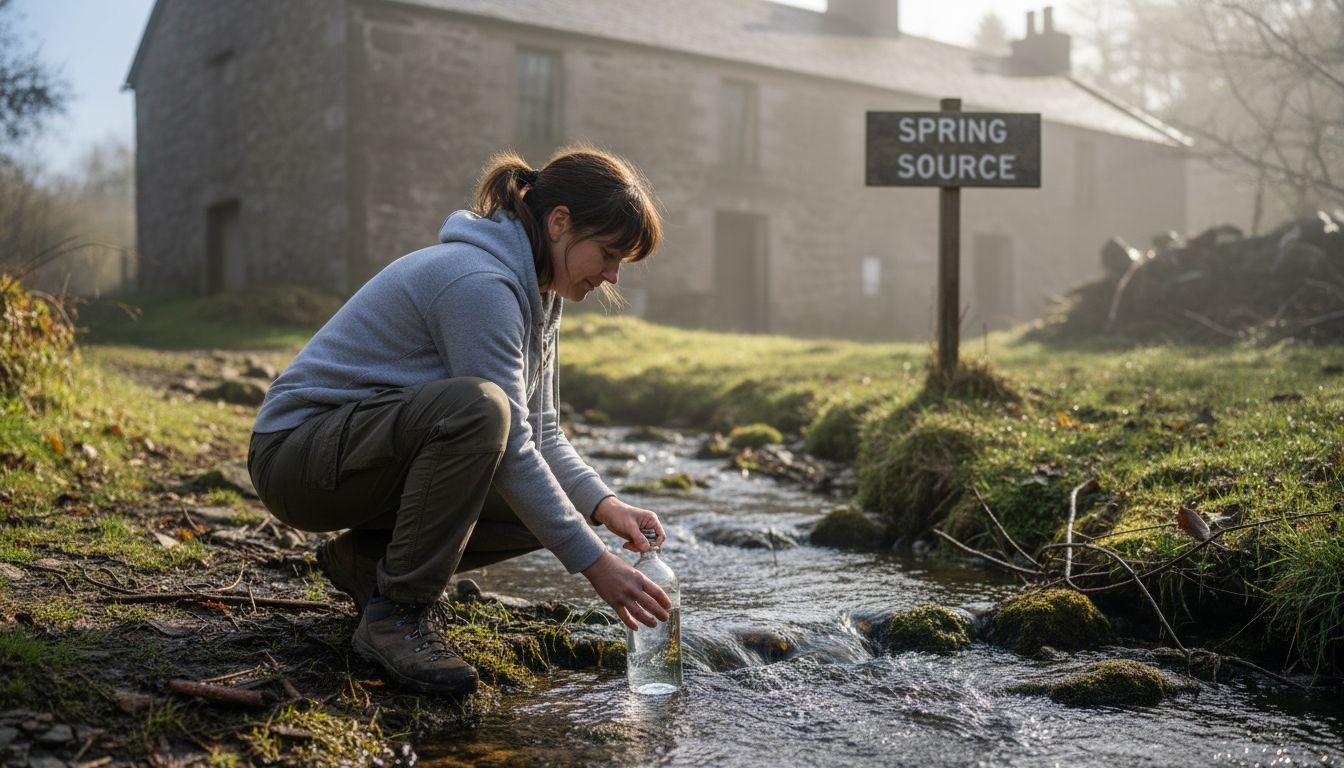
Scottish distilleries draw water from springs, rivers, lochs, and boreholes, each source carrying distinct mineral signatures. Speyside distilleries tap soft water from granite and heather-covered hills, producing those signature delicate, fruity whiskies you find so easy to drink. Meanwhile, Highland and Islay distilleries access harder water rich in minerals like calcium and magnesium, creating bolder, more robust spirits. The geology beneath each distillery acts as nature’s filtration system.
Water pH levels vary considerably by region, and this acidity or alkalinity directly impacts fermentation chemistry. Soft water from glacial sources produces delicate whisky profiles, whilst harder mineral water encourages vigorous yeast activity and heavier flavour compounds. This explains why you can taste a geographical difference in whiskies even before knowing where they came from.
Australian craft distilleries face their own water challenges and opportunities. Regional variations in Australian water—from Tasmania’s pristine, soft water supplies to the mineral-heavy bores of the mainland—create entirely distinct whisky styles emerging from local producers. Some Australian distilleries deliberately source specific water to replicate European styles, whilst others embrace their local water profiles to develop uniquely Australian expressions.
The mineral content also affects how whiskies age in cask. Harder water can accelerate certain chemical reactions during maturation, whilst softer water creates slower, more delicate development. Distillery managers monitor water composition seasonally because spring rains and summer droughts actually shift mineral content throughout the year, subtly influencing year-to-year consistency.
Here’s how regional water types influence whisky style:
| Region | Common Water Type | Typical Mineral Content | Influence on Whisky Style |
|---|---|---|---|
| Scotland (Speyside) | Soft, from granite hills | Low calcium, low magnesium | Delicate, fruity profiles |
| Scotland (Islay/Highland) | Hard, mineral-rich sources | High calcium and magnesium | Bold, robust spirits |
| Japan | Soft, volcanic spring | Low minerals, slightly acidic | Elegant, subtle flavours |
| Tasmania | Pristine, very soft | Minimal dissolved minerals | Light, clean expressions |
| Mainland Australia | Bore water, often hard | High salinity, varied minerals | Robust, unique regional notes |
Pro tip: When tasting whiskies from different regions, research the local water’s mineral content and pH level—this single factor explains regional flavour patterns far more reliably than marketing copy ever will.
How water impacts flavour chemistry
Water doesn’t just dissolve ingredients in whisky production—it actively participates in the chemical reactions that create flavour. The molecules in water interact with alcohol and flavour compounds in ways that dramatically reshape what you taste in your glass. This is where whisky science becomes genuinely fascinating.
During fermentation, water chemistry determines how efficiently yeast converts sugars into alcohol and flavour compounds. Water’s mineral content and pH affect fermentation efficiency and aroma release, with calcium and magnesium playing particularly active roles. Hard water rich in these minerals accelerates yeast metabolism, producing more complex esters and congeners—the compounds responsible for fruit, floral, and spicy notes. Soft water creates slower fermentation, leading to different chemical pathways and entirely distinct flavour profiles.
The pH level of water influences sugar extraction during mashing. Acidic water (lower pH) enhances enzymatic activity that breaks down starches into fermentable sugars, whilst alkaline water (higher pH) can inhibit this process. Distillery chemists carefully monitor and sometimes adjust water pH because even small shifts change how much sugar becomes available for yeast to work with.
When you add water to your whisky at home or when distilleries dilute cask-strength expressions, something remarkable happens at the molecular level. Water-ethanol interactions influence flavour compound distribution, affecting how smoky, fruity, and spicy notes reach your nose and palate. Adding water doesn’t just reduce alcohol strength—it physically separates flavour molecules, allowing aromas like guaiacol (that signature smoky character) to release more freely into the air where your nose can detect them.
Certain minerals can actually introduce unwanted flavours if present in excess. Iron, for instance, can create metallic or astringent notes, whilst sulphur compounds produce off-flavours reminiscent of rubber or struck matches. This is why distilleries invest heavily in water testing and sometimes treat water before use.
Pro tip: When nosing a dram, add a few drops of water and wait 30 seconds—the dilution releases volatile flavour compounds, revealing hidden complexity that straight cask-strength spirits often mask.
Dilution, mouthfeel, and aroma release
Adding water to whisky isn’t about making it weaker. It’s about unlocking flavours that remain trapped in the undiluted spirit. The chemistry of dilution is genuinely counterintuitive, and understanding it transforms how you experience premium whiskies.
When you add water to whisky, you’re changing the environment where aroma compounds exist. Dilution alters headspace concentrations of different aroma compounds, affecting what your nose detects. Hydrophilic compounds (those that love water) become less concentrated in the air space above your glass, whilst hydrophobic compounds (those that avoid water) actually increase in concentration. This shifts your entire aroma perception—suddenly you notice different fruity or spicy notes that were previously masked by alcohol burn.
Mouthfeel changes dramatically with dilution too. Cask-strength whiskies often deliver a viscous, oily sensation that coats your palate intensely. Adding water reduces this mouthfeel thickness, allowing your taste receptors to detect subtle sweetness and flavour nuances buried beneath the alcohol’s protective layer. It’s not a weakness—it’s strategic revelation.
The type of water you use for dilution matters considerably. Different water types influence sweetness, burn sensation, and flavour profile when diluting whisky. Using the same water source a distillery employed during production creates continuity, maintaining the intended flavour balance. Adding mineral-heavy tap water or soft bottled water creates entirely different sensory experiences from the same bottle.
Distilleries take proofing (diluting to bottling strength) seriously because speed affects the final product. Slow proofing allows water and alcohol to integrate gradually, resulting in sweeter initial tastes and reduced ethanol burn. Fast proofing creates a harsher integration where alcohol bite remains prominent. This is why vintage distillery bottlings often taste smoother than newly proofed expressions.
Australian whisky enthusiasts should experiment actively. Start with a premium dram at cask strength, add a few drops of water, and wait two minutes before nosing and tasting. You’ll consistently discover hidden layers that justify the premium price point.
Pro tip: Use the distillery’s own water source when available, or mineral water matching your region’s profile—this preserves the intended flavour balance and prevents unwanted mineral interactions that generic dilution water introduces.
Risks of poor water quality and common mistakes
Poor water quality doesn’t just create subtle flavour problems. It can destroy an entire batch of whisky and halt production entirely. For distilleries and home enthusiasts alike, understanding water risks prevents costly mistakes.
Poor water quality, especially high iron or impurities, causes off-flavours and disrupts fermentation. Iron is the primary culprit—even trace amounts create metallic, astringent, or blood-like notes that ruin drinkability. Sulphur compounds produce rubber or struck-match aromas that are nearly impossible to remove once formed. These contaminations don’t dissipate during distillation or ageing; they persist and worsen over time.
Fermentation disruption presents another serious risk. Bacteria and other microorganisms in contaminated water compete with your whisky yeast, either consuming sugars meant for alcohol production or producing unwanted byproducts. A batch that should yield 40% ABV might produce only 35% with sluggish, incomplete fermentation. Your investment in grain and time vanishes.
Climate change and water scarcity now threaten even established distilleries. The Scotch Whisky industry acknowledges critical risks from climate change and water scarcity, which threaten production quality and availability. Without reliable water access, distilleries face production halts or forced relocations. This isn’t theoretical—it’s already affecting production planning across Scotland and beyond.
Common mistakes distilleries and home producers make include insufficient water testing and infrequent monitoring. Water composition changes seasonally. Spring floods dilute mineral concentrations, whilst summer droughts concentrate contaminants. Distilleries that test water annually rather than quarterly miss these critical shifts. Another mistake is skipping water treatment. Boiling removes some bacteria but not all contaminants. Proper filtration and sometimes mineral balancing are necessary for consistent results.
Australian producers face unique challenges. Mainland bore water often contains high salinity or specific mineral profiles unsuitable for whisky without treatment. Tasmania’s advantage is pristine, naturally soft water, but this doesn’t guarantee purity without testing.
Pro tip: Test your water source quarterly for iron, sulphur, bacteria, and mineral composition before starting production—this single step prevents batch failures and ensures consistent quality across multiple production runs.
Discover How Water Shapes Your Favourite Whisky Flavours
Understanding the crucial role of water in whisky production unlocks new appreciation for each dram’s unique character. Whether it is the mineral-rich waters influencing yeast fermentation or the delicate water used for dilution to reveal hidden aromas, knowing these factors helps you choose whiskies with confidence and deeper enjoyment. Explore our premium selection of iconic Scotch whiskies, including the carefully crafted expressions from The Balvenie – Uisuki.com.au and discover how their regional water sources bring distinct flavour profiles to life.

Ready to experience the impact of water on whisky firsthand? Shop now at Uisuki.com.au and enjoy expert guidance in selecting whiskies that celebrate these subtle nuances. Dive into our curated collections and elevate your tasting journey today.
Frequently Asked Questions
How does water impact the whisky fermentation process?
Water plays a crucial role in fermentation by acting as a solvent and providing essential minerals that influence yeast activity. Hard water rich in calcium and magnesium promotes vigorous yeast fermentation, leading to more complex flavour development, while soft water may slow down the fermentation process.
What is the significance of water quality in whisky production?
Water quality affects every stage of whisky production, including mashing, fermentation, distillation, and maturation. Poor water quality can lead to off-flavours and disrupt fermentation, ultimately compromising the quality and character of the whisky.
How do different water mineral contents affect whisky flavours?
The mineral profile of water determines the flavour characteristics of whisky. Hard water tends to produce bold and robust spirits, while soft water can yield lighter, more delicate flavours. Minerals like calcium and magnesium are particularly influential during fermentation and maturation.
Why is dilution important in whisky tasting?
Dilution is important because it can unlock hidden flavours in whisky. Adding water changes the concentration of aroma compounds, enhancing the sensory experience. It also alters mouthfeel, allowing for a smoother and more layered tasting experience.