

TL;DR:
- Higher ABV does not automatically mean better whisky; flavor and production methods are more important.
- ABV is measured at 20°C using precise lab equipment in Australia, with a legal tolerance of ±0.5%.
- Distillation and maturation processes directly influence final ABV, affecting flavor and complexity.
Many whisky collectors assume a higher ABV automatically signals a superior bottle. It’s one of the most persistent misconceptions in the hobby. The reality is far more interesting. Whisky is legally defined in Australia as a spirit distilled from cereal grains and matured in wood for at least two years, and the alcohol content sitting on that label is shaped by everything from distillation craft to barrel chemistry. This guide walks Australian collectors through what ABV actually means, how Australian standards govern what ends up in your glass, and how to use alcohol content as one smart tool among many when selecting premium bottles.
Table of Contents
- What is whisky alcohol content and how is it measured?
- How distillation and maturation shape whisky alcohol content
- Australian legal standards and labelling tolerance for whisky alcohol content
- Choosing and comparing whiskies by alcohol content: Practical tips for collectors
- Why ABV is only part of the story: A collector’s perspective
- Explore premium Australian whiskies by alcohol content
- Frequently asked questions
Key Takeaways
| Point | Details |
|---|---|
| ABV matters for flavour | Alcohol content significantly shapes whisky taste and mouthfeel, guiding collectors to select bottles that match their preference. |
| Australian legal standards | Strict regulations govern whisky production and labelling, ensuring authenticity and protecting buyers from misleading claims. |
| Maturation lowers ABV | Extended ageing in wood, as required in Australia, reduces initial distillation strength and deepens flavour for premium results. |
| Collector’s selection strategy | Smart collectors use ABV alongside other factors like rarity, history, and maturation to identify the finest whiskies for their collection. |
What is whisky alcohol content and how is it measured?
Alcohol content in whisky is expressed as ABV, short for Alcohol by Volume. It tells you what percentage of the liquid in your bottle is pure ethanol. A whisky labelled at 46% ABV contains 46 millilitres of alcohol in every 100 millilitres of spirit. Simple enough, but the way that number is measured and reported varies by country, which creates real confusion for collectors shopping across regions.
In Australia, ABV is standardised at 20°C using calibrated laboratory equipment. Temperature matters because alcohol expands and contracts with heat, so a consistent measurement temperature ensures accuracy and comparability across producers and markets.
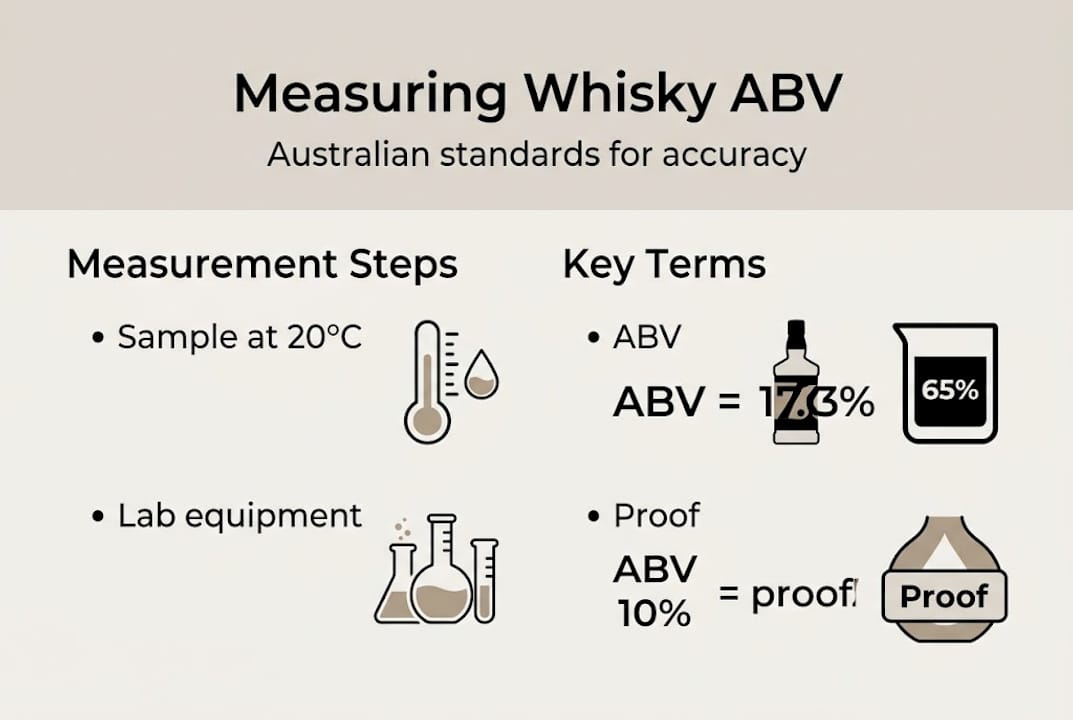
The term proof adds another layer. In the United States, proof equals twice the ABV, so a 50% ABV whisky is labelled as 100 proof. The UK historically used a different system entirely, based on gunpowder ignition tests, before adopting the metric ABV standard. Australia uses ABV exclusively, so when you encounter proof on an imported American bottle, simply halve the number.
Here is a quick reference for common ABV ranges and what they signal:
| ABV range | Style descriptor | Typical examples |
|---|---|---|
| 40% | Entry level, lighter body | Standard blends, everyday Scotch |
| 43 to 46% | Mid-weight, good complexity | Single malts, Japanese expressions |
| 46 to 50% | Full flavour, often non-chill filtered | Premium releases, craft Australian |
| 50% and above | Cask strength, intense | Collector editions, limited releases |
Why does this matter beyond the label? The role of ABV in whisky extends to flavour delivery, mouthfeel, and how aromas behave in the glass. Higher ABV amplifies volatile compounds, which is why a cask strength whisky can feel almost electric on the nose. Lower ABV tends to produce a softer, rounder palate experience.
A common misconception is that chill filtration, which removes fatty acids and proteins that can cause cloudiness at low temperatures, is only applied to lower ABV whiskies. In practice, most distilleries skip chill filtration above 46% ABV because the alcohol itself keeps the spirit clear. That is one reason whisky proof and its impact on texture is worth understanding before you buy.
“The ABV on a label is not just a regulatory requirement. It is a window into how the whisky was made, what the distiller prioritised, and how the spirit will behave in your glass.”
How distillation and maturation shape whisky alcohol content
The journey from fermented grain wash to bottled whisky involves two major processes that directly determine the final ABV: distillation and maturation. Understanding both gives collectors a genuine edge.
During distillation, the spirit is separated into three fractions called heads, hearts, and tails. The heads contain harsh, volatile compounds like acetaldehyde. The tails carry heavier, oily congeners. The hearts are the prize. Skilled distillers identify the hearts cut at 65 to 70% ABV for optimal flavour, using a combination of sensory evaluation, temperature monitoring, and density measurement to make precise cuts.
The width of the hearts cut is where distillery character is built. A narrow cut produces a lighter, cleaner spirit. A wider cut retains more congeners and creates a heavier, more complex new make. Neither approach is objectively better. They simply produce different styles, and those differences carry through into the finished whisky.
Here is how the three cuts compare:
| Fraction | ABV range | Flavour character | Used in whisky? |
|---|---|---|---|
| Heads | Above 75% | Harsh, solvent-like | Discarded |
| Hearts | 65 to 70% | Clean, fruity, floral | Yes, the core spirit |
| Tails | Below 60% | Meaty, sulphurous, oily | Partially, for body |
Once in the barrel, maturation takes over. Wood is not a passive container. It actively interacts with the spirit, contributing colour, tannins, vanilla, and spice while also allowing slow oxidation through the barrel staves. Crucially, evaporation occurs during maturation, and this is where the famous angel’s share comes in. Each year, roughly 2% of the cask’s volume evaporates, and because alcohol is more volatile than water, the ABV of the remaining spirit gradually decreases over time.
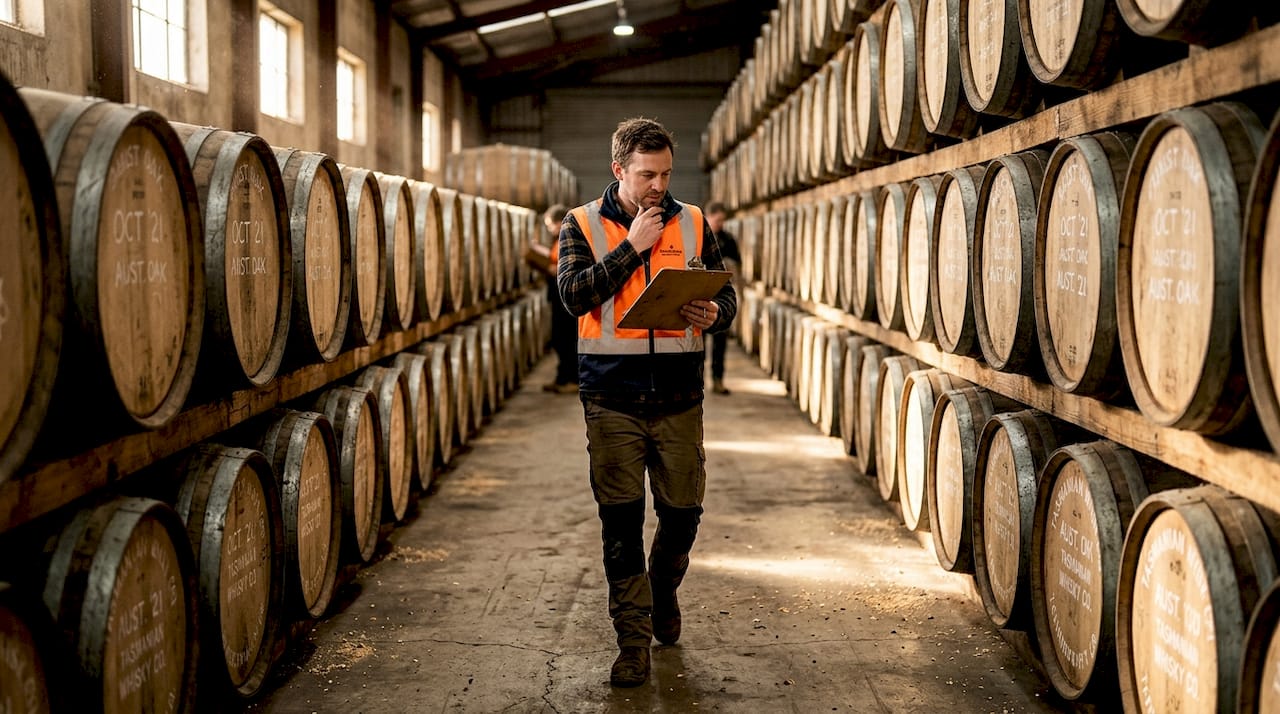
This is why longer-aged whiskies often have lower ABV than their younger counterparts from the same distillery, unless water has been added to the younger expression at bottling.
Australia’s requirement for a minimum two-year maturation in wood ensures that any spirit carrying the whisky label has undergone meaningful barrel interaction. For collectors, this baseline matters because it filters out immature spirits masquerading as whisky.
Pro Tip: When comparing two whiskies at similar price points, check whether one is cask strength and the other is diluted to 40%. The cask strength bottle often represents significantly more raw spirit per litre, which can make it better value for serious tasting or investment.
The numbered steps a collector can use to assess distillation quality from the label alone:
- Check ABV. Above 46% often indicates non-chill filtration and minimal dilution.
- Look for “cask strength” or “single cask” designations, which signal undiluted bottling.
- Research the distillery’s cut point philosophy if available on their website or tasting notes.
- Note the age statement. Longer maturation in Australian conditions often means lower final ABV due to the angel’s share.
Australian legal standards and labelling tolerance for whisky alcohol content
For collectors, authenticity is everything. Australia has clear legal standards that define what qualifies as whisky and how its alcohol content must be communicated on the label.
The Australian Tax Office defines whisky as a spirit distilled from a fermented mash of cereal grain, matured in wood containers for a minimum of two years, and possessing the characteristic aroma, taste, and other properties associated with whisky. This definition rules out shortcuts. A spirit aged for 18 months, no matter how good it tastes, cannot legally be sold as whisky in Australia.
On the labelling side, Australian spirits labelling allows ±0.5% alc/vol tolerance from the stated ABV for products above 6.5% ABV. In practical terms, a bottle labelled at 46% ABV could legally contain anywhere from 45.5% to 46.5% ABV.
For most drinkers, this tolerance is irrelevant. For serious collectors, it matters in a few specific scenarios:
- Investment bottles: When buying for resale or auction, slight ABV variances can affect perceived authenticity if buyers are comparing against known batch records.
- Cask strength comparisons: When tracking batch variations across releases from the same distillery, the tolerance window explains minor differences between batches.
- Import verification: When comparing an imported bottle’s stated ABV against the producer’s official records, a discrepancy within ±0.5% is legally compliant.
“A label is a legal document as much as it is a marketing tool. Understanding the tolerance rules means you read it with the right level of scrutiny.”
To spot legitimate labels and avoid misleading marketing, look for these markers when browsing:
- Clear statement of ABV as a percentage, not just a descriptor like “full strength”
- Country of origin and distillery name
- Age statement or a note that no age statement applies
- Bottler information if different from the distillery
For a deeper look at verifying authenticity before purchase, the authentic whisky guide for Australian buyers covers the full checklist in detail.
Choosing and comparing whiskies by alcohol content: Practical tips for collectors
Now the knowledge becomes practical. ABV is a genuinely useful shopping filter when you know how to apply it. The key is treating it as one signal among several rather than a ranking system.
Distillation cuts and ABV directly shape the flavour profile you will encounter in the glass, which means ABV can help you predict your tasting experience before you open the bottle. Here is how to use it:
| ABV | Likely profile | Best for |
|---|---|---|
| 40 to 43% | Soft, approachable, lighter finish | Everyday drinking, gifting |
| 43 to 46% | Balanced, moderate complexity | Food pairing, regular tasting |
| 46 to 50% | Rich, full, often non-chill filtered | Serious tasting sessions |
| 50%+ | Intense, layered, requires water | Collector investment, special occasions |
For collectors focused on investment, higher ABV cask strength releases from reputable distilleries tend to hold value well at auction. They represent the spirit in its most unadulterated form, which appeals to buyers who want to experience or resell the whisky as the distiller intended.
Pro Tip: Add a few drops of still water to a cask strength whisky before nosing. This releases aromatic compounds that are suppressed at very high ABV, often revealing floral or fruity notes that would otherwise be hidden beneath the alcohol heat.
A practical checklist for evaluating any whisky by alcohol content:
- Is the ABV stated clearly on the front or back label?
- Is it cask strength, or has water been added to reach a standard bottling strength?
- Does the ABV align with the age and style? A very old whisky at 60%+ ABV is unusual and worth investigating.
- Does the producer publish batch records showing ABV consistency?
For comparing top Australian whiskies side by side, ABV is one of the most useful data points alongside distillery, age, and cask type. The best single malt whiskies for Australian collectors in 2026 covers specific bottles worth tracking, and the expert whisky shopping guide walks through the full evaluation framework. For a solid grounding in understanding ABV across styles, that resource ties the theory directly to buying decisions.
Why ABV is only part of the story: A collector’s perspective
Here is something the numbers alone will never tell you: a whisky bottled at 40% ABV from a master distiller with exceptional cut point discipline can be a more rewarding experience than a carelessly produced cask strength release at 60%. ABV is a proxy for intensity, not quality.
We see collectors, particularly those newer to the hobby, using ABV as a shortcut for value judgement. Higher ABV gets treated as a mark of seriousness. It is understandable, but it misses the point. The expert nuance in cut points is what separates an average whisky from a genuinely premium one, and that nuance does not always show up in the ABV figure.
What actually differentiates collector-grade bottles is the combination of distillery reputation, maturation environment, cask selection, and the distiller’s philosophy around cuts and dilution. ABV gives you one dimension of that picture. The deeper role of ABV in whisky is best understood as a tool for informed tasting, not a leaderboard. Chase balance, provenance, and sensory complexity. Let the ABV inform your approach to the glass, not your decision to buy the bottle.
Explore premium Australian whiskies by alcohol content
With a solid understanding of how ABV shapes flavour, production, and value, you are ready to put that knowledge to work. At Uisuki, every product listing includes verified ABV information so you can apply exactly what you have learnt here before adding a bottle to your collection.
For collectors who want to start with something bold, Hobart Whisky at 56.4% ABV is a standout Australian cask strength expression. If you prefer a refined mid-weight option, Ichiro’s Malt at 48% ABV offers exceptional Japanese craft at a collector-friendly strength. For a classic Scotch expression, Ardnamurchan at 46% ABV delivers non-chill filtered character with genuine provenance. Browse the full range at Uisuki and filter by ABV to find your next great bottle.
Frequently asked questions
How is whisky alcohol content measured in Australia?
Whisky alcohol content in Australia is measured as ABV (alcohol by volume) at 20°C using calibrated laboratory equipment. This standardised temperature ensures consistent and comparable readings across all producers and imported bottles.
Why does ABV vary between whiskies?
ABV variation results from differences in distillation cuts and maturation techniques, including how much evaporation occurs during ageing and whether the distiller adds water before bottling. Each of these decisions reflects deliberate craft choices rather than inconsistency.
What is the legally required ABV for whisky in Australia?
Australian law requires whisky to be above 6.5% ABV and matured in wood containers for a minimum of two years. These requirements ensure the spirit meets the flavour and character standards expected of genuine whisky.
How accurate are whisky ABV labels in Australia?
Australian labelling regulations permit a tolerance of ±0.5% alc/vol from the stated ABV, meaning minor discrepancies between the label and the actual content are legally acceptable. For most collectors, this tolerance is negligible in terms of tasting experience.