

TL;DR:
- Single malt Scotch whisky varies greatly despite legal similarities, based on region, cask, and production methods.
- The term “single” refers to distillery, not cask or batch, allowing for diverse expressions.
- Cask type and maturation profoundly influence each whisky’s flavor, color, and character.
Single malt Scotch whisky is one of the most misunderstood categories in the spirits world. Many collectors assume that because a bottle carries the “single malt” label, it will taste broadly similar to the last one they tried. Nothing could be further from the truth. A smoky, medicinal Islay malt and a delicate, floral Lowlands release share a legal classification but almost nothing else in the glass. According to the Scotch Whisky Regulations 2009, single malt Scotch must be distilled in pot stills at a single distillery using only malted barley, matured in oak casks in Scotland for at least three years, and bottled at a minimum of 40% ABV. Within those rules, an extraordinary world of variety awaits.
Table of Contents
- What defines a single malt Scotch whisky
- Discover Scotland’s regions: Five official and the unique Islands
- Signature flavour profiles: What sets each region apart
- The role of casks and maturation in shaping single malt style
- What most whisky guides miss: The artistry behind single malt diversity
- Explore and collect your next single malt discovery
- Frequently asked questions
Key Takeaways
| Point | Details |
|---|---|
| Not all single malts are alike | Scotch single malts show dramatic differences shaped by distillery, region, and cask. |
| Region drives flavour | Highlands, Speyside, Islay, Lowlands, and Campbeltown each offer unique tasting experiences for enthusiasts. |
| Cask and maturation matter | The type of cask and its maturation time impart complex flavours and colour to the whisky. |
| Collectors benefit from comparison | Sampling by region, cask type, and cask strength uncovers rare gems and personal favourites. |
| Legal definitions guide discovery | Single malt means one distillery, but flavour is influenced by many creative choices. |
What defines a single malt Scotch whisky
The word “single” trips up even experienced enthusiasts. It does not mean the whisky came from one cask, one batch, or one particular year. As the Scotch Whisky Regulations 2009 make clear, the term simply means the whisky was produced at one distillery using malted barley, pot stills, and Scottish oak maturation for a minimum of three years at 40% ABV or higher. That one distillery can draw from dozens, even hundreds, of casks to create its signature expression.
This distinction matters enormously when you are building a collection. A single malt vatted from many casks at one distillery is still a single malt. The master distiller blends those casks to achieve consistency of character across every bottling. This is fundamentally different from a single cask release, where the contents of one specific barrel are bottled without blending.
Here is a quick breakdown of the key terms you will encounter:
- Single malt: One distillery, malted barley, pot stills, multiple casks blended for consistency
- Single cask: One distillery, one specific barrel, often numbered and limited
- Blended malt: Single malts from two or more distilleries combined
- Cask strength: Bottled without water dilution, typically above 50% ABV
- Blended Scotch: A mix of single malt and single grain whiskies from multiple distilleries
The role of the cask in shaping the final whisky cannot be overstated. The type of oak, the previous contents of the barrel, the warehouse environment, and the duration of maturation all leave a profound mark on aroma, colour, and taste. This is why two single malts from the same distillery can taste remarkably different depending on whether they were aged in ex-bourbon or ex-sherry casks.
“Understanding what ‘single’ actually means is the foundation of every serious whisky collection. Once you grasp it, the entire landscape of Scotch opens up.”
Pro Tip: When reading a label, look beyond the age statement. The cask type listed on the label, such as “first-fill sherry butt” or “ex-bourbon hogshead”, tells you far more about what is in the glass than the number of years alone. Our types of single malt guide breaks this down in even greater detail.
Discover Scotland’s regions: Five official and the unique Islands
Scotch whisky geography is as fascinating as the liquid itself. Scotland has five protected Scotch whisky regions: Highlands, Speyside, Lowlands, Islay, and Campbeltown. The Islands, which include Skye, Orkney, Arran, Jura, and Mull, are treated separately by enthusiasts and collectors but do not hold official protected status in the same way.
Each region developed its character through a combination of local water sources, climate, tradition, and available raw materials. Understanding how whisky regions impact flavour helps you shop with far greater confidence and intention.
Here is a comparison of the major regions and their defining characteristics:
| Region | Key distilleries | Signature style |
|---|---|---|
| Highlands | Glenmorangie, Oban, Dalmore | Diverse, heathery, dried fruit, variable peat |
| Speyside | Glenfiddich, Macallan, Balvenie | Rich, fruity, honeyed, sherry-forward |
| Lowlands | Auchentoshan, Glenkinchie | Light, floral, grassy, citrus, unpeated |
| Islay | Laphroaig, Ardbeg, Bowmore | Heavily peated, smoky, briny, medicinal |
| Campbeltown | Springbank, Glen Scotia | Briny, oily, subtle smoke, dried fruit |
| Islands | Talisker (Skye), Highland Park (Orkney) | Variable, often maritime and lightly peated |
Speyside deserves special mention because it contains more distilleries than any other region. The concentration of production there, fed by the River Spey and its tributaries, has made it the heartland of approachable, fruit-driven single malts. Campbeltown, by contrast, once had over 30 distilleries and now has just three, making its surviving expressions genuine collector’s treasures.
The Islands category is arguably the most exciting for serious collectors. Talisker from Skye brings a peppery maritime punch, while Highland Park from Orkney balances heather honey sweetness against a subtle peaty smoke. These are expressions that defy easy categorisation, which is exactly what makes them so rewarding to explore. Our guide to Scotch types and overview of top whisky regions can help you map out your next tasting journey.
Signature flavour profiles: What sets each region apart
Knowing the geography is one thing. Knowing what to expect in your glass is another entirely. Regional flavour profiles give collectors a reliable starting point, even if individual distilleries frequently surprise you.
The flavour fingerprints by region break down as follows: Highlands offer diverse aromas of heather, dried fruit, and malt with variable peat levels. Islay is defined by high peat and smoke, brine, and medicinal character, with PPM (parts per million of phenols) often exceeding 30. Lowlands malts are light, floral, grassy, and citrus-driven with no peat. Campbeltown expressions carry a distinctive briny, oily quality with subtle smoke and dried fruit.
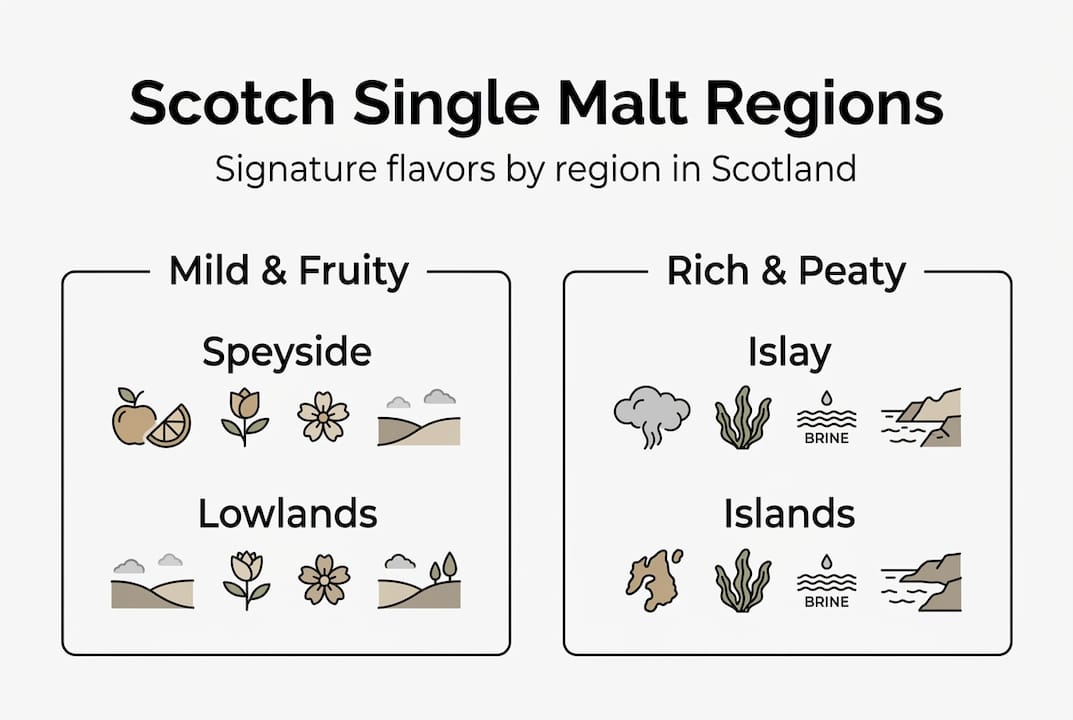
Here is a more detailed reference for collectors:
| Region | Aroma | Palate | Typical PPM | Cask preference |
|---|---|---|---|---|
| Highlands | Heather, dried fruit, malt | Rich, warming, variable | 0 to 15 | Ex-bourbon, sherry |
| Speyside | Honey, apple, vanilla | Fruity, sweet, rounded | 0 to 5 | Sherry, ex-bourbon |
| Lowlands | Floral, grass, citrus | Light, delicate, clean | 0 | Ex-bourbon, wine |
| Islay | Smoke, seaweed, iodine | Bold, peaty, briny | 25 to 50+ | Ex-bourbon, sherry |
| Campbeltown | Brine, oil, dried fruit | Complex, savoury | 5 to 15 | Ex-bourbon, sherry |
| Islands | Maritime, pepper, heather | Variable, often smoky | 5 to 30 | Ex-bourbon, sherry |
To identify a region by taste alone, focus on three things:
- Peat level: Is there smoke? How intense? Islay is unmistakable, Lowlands absent of it entirely.
- Texture: Is the malt oily and full (Campbeltown) or light and silky (Lowlands)?
- Fruit character: Speyside leans toward orchard fruit and honey. Highlands often bring dried or dark fruit.
Our article on flavour profiles explained goes deeper into how to train your palate to pick these nuances apart with confidence.
The role of casks and maturation in shaping single malt style
If region is the accent of a single malt, then cask maturation is its personality. The type of barrel used during ageing contributes up to 70% of the final flavour profile. This is not a minor detail. It is the central story of every bottle.
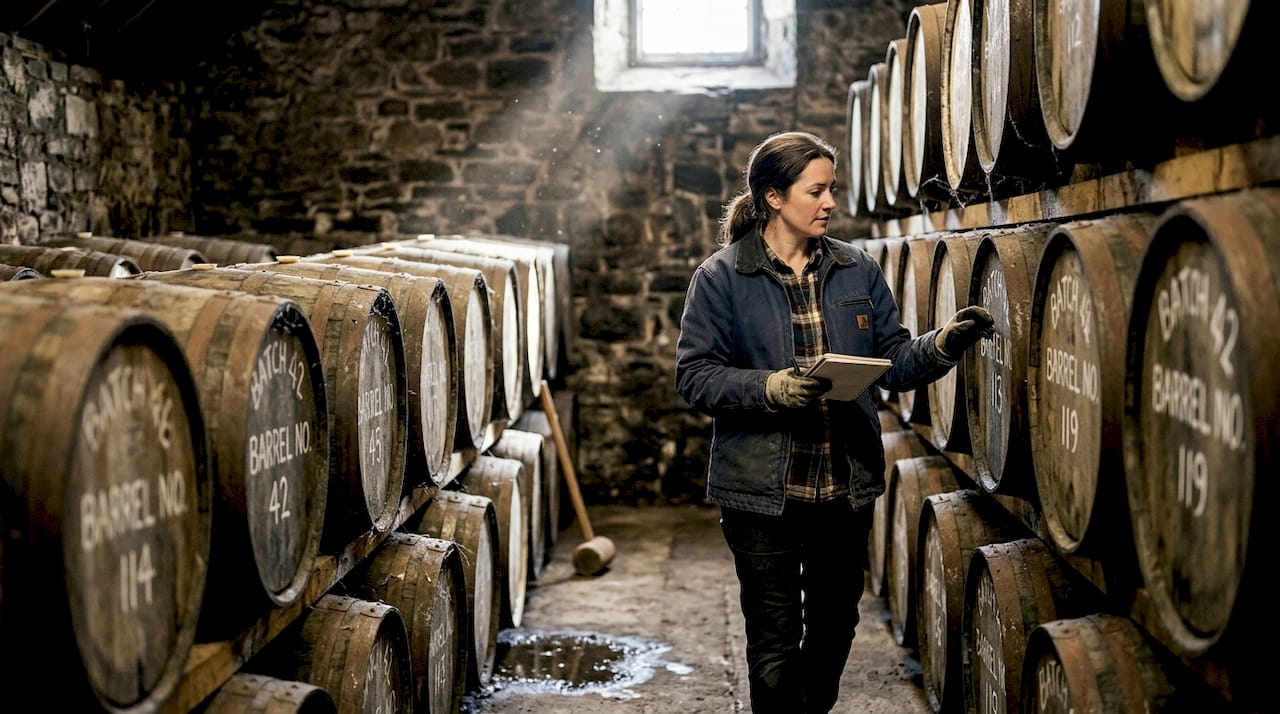
The three primary cask types each leave a distinct signature: ex-bourbon casks deliver vanilla, caramel, and coconut. Sherry casks bring dried fruit, Christmas cake spice, and deep mahogany colour. Wine and port casks add red berry, plum, and a silky texture that rounds out the finish beautifully.
Here is how to read a bottle’s maturation story:
- First-fill casks have the strongest influence because they still carry significant flavour compounds from their previous contents. A first-fill sherry butt will colour and flavour the spirit far more intensely than a third-fill cask.
- Refill casks are more neutral and allow the distillery character to shine through without heavy cask influence.
- Double maturation or cask finishing means the whisky spent most of its life in one cask type and was then transferred to a second for a finishing period, often six months to two years.
- Cask size matters too. Smaller casks, like quarter casks, accelerate maturation because the spirit has more contact with wood per litre.
- Warehouse environment shapes the rate of evaporation and temperature fluctuation, both of which influence the final character.
Pro Tip: When hunting for collector editions, look for single cask releases with a stated cask number, distillation date, and bottling date. These details confirm authenticity and help you track the whisky’s full maturation story. Our guides on double cask maturation, whisky cask influence, sherry cask whisky, and single cask releases are essential reading for any serious collector.
What most whisky guides miss: The artistry behind single malt diversity
Most guides to single malt Scotch do a reasonable job of mapping geography and listing age statements. What they consistently undervalue is the artistry that happens between the still and the bottle. Region and age are starting points, not conclusions.
The collectors who build the most interesting and rewarding whisky cabinets are not the ones who buy every 18-year-old Speyside they can find. They are the ones who seek out independent bottlers, unusual cask finishes, and cask strength expressions that reveal what a distillery is truly capable of. An independent bottler like Gordon and MacPhail or Signatory Vintage will often release a single malt that shows a completely different side of a well-known distillery, one that the official range never exposes.
Distillery technique matters just as much as terroir. Fermentation length, still shape, cut points, and condensation method all create flavour before the spirit ever touches wood. Two distilleries in the same postcode can produce radically different new-make spirits. The cask then amplifies or softens those differences over time.
Our recommendation is to use region as a compass, not a destination. Explore connoisseur-level single cask releases and compare cask finishes across the same distillery before drawing conclusions about what you like. That is where the real discovery begins.
Explore and collect your next single malt discovery
You now have the framework to approach single malt Scotch with genuine depth and purpose. Whether you are drawn to the bold peat of Islay, the honeyed richness of Speyside, or the maritime complexity of the Islands, there is a bottle waiting to reshape your understanding of what Scotch can be.
At Uisuki, we curate single malts from across Scotland and beyond, including rare cask strength releases, special finishes, and hard-to-find independent bottlings. If you are ready to push your collection further, explore our rum-finished single malt from Hobart Whisky, or step into the world of premium Scotch with the Macallan Classic Cut cask strength. Discover more single malt Scotch across every region and style in our full collection.
Frequently asked questions
What makes a Scotch single malt different from a blended malt?
Single malt Scotch is produced at one distillery using 100% malted barley, while a blended malt combines single malts from two or more distilleries. The “single” in single malt always refers to the distillery, not the number of casks used.
Which region is known for the smokiest single malts?
Islay is Scotland’s home of smoke, producing heavily peated malts with PPM levels often exceeding 30, alongside characteristic brine and medicinal notes from distilleries like Laphroaig and Ardbeg.
What does ‘cask strength’ mean in single malt Scotch?
Cask strength single malts are bottled without water dilution, preserving the full intensity of the spirit as it came from the barrel. They typically sit above 50% ABV and are highly sought after by collectors for their raw, unfiltered character.
How does cask type influence the taste of single malt Scotch?
Cask type is one of the most powerful flavour drivers in Scotch production. Ex-bourbon casks add vanilla and caramel, sherry casks contribute dried fruit and warm spice, and wine or port casks layer in red berry and plum notes that soften and enrich the finish.