

TL;DR:
- Japanese whisky emphasizes harmony, balance, and delicate complexity, earning global acclaim for its craftsmanship since standards were regulated in 2024. Its flavor profile relies on diverse cask influences like Mizunara oak, producing layered, floral, and fruity notes that differ from Scotch and bourbon. The refined highball serve further showcases its nuanced aromatic potential, making it an excellent choice for those seeking subtlety and authenticity.
Japanese whisky is defined by balance, precision, and a delicate complexity that distinguishes it from Scotch, bourbon, and virtually every other whisky style on the planet. Whether it is “better” depends on what you value in a glass, but the case for Japanese whisky is grounded in measurable craft, strict new production standards, and a philosophy of harmony that has earned it consistent top honours at international competitions. Producers like Suntory and Nikka have spent decades refining a style that prioritises integration over intensity. If subtlety and refinement are your benchmarks, Japanese whisky is very likely better for you.
Is Japanese whisky better than Scotch and bourbon for flavour?
Japanese whisky’s flavour profile is built around harmony rather than dominance. Where Scotch whiskies from Islay deliver assertive peat smoke and Highland expressions lean into dried fruit and spice, Japanese whisky pursues a state of balance the Japanese call wa. The result is a spirit where no single note overwhelms the others.
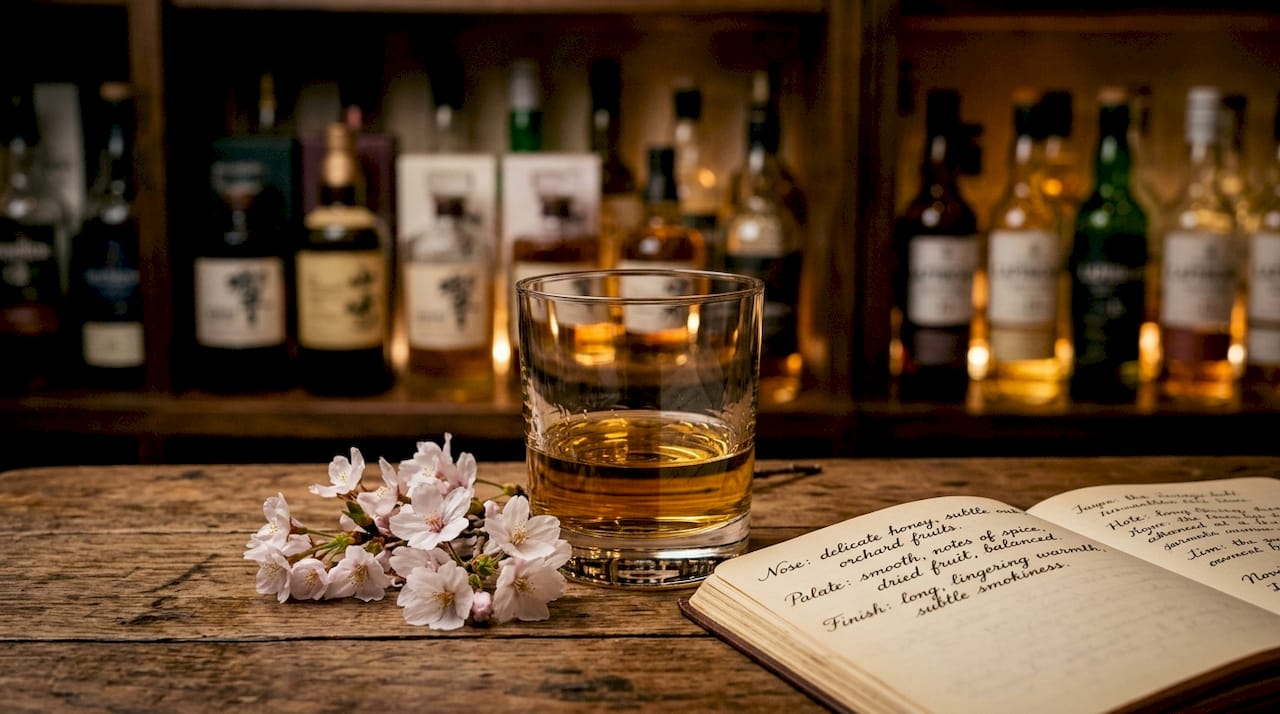
The delicate fruity and floral notes that characterise Japanese whisky come partly from careful yeast selection and partly from cask choices that would surprise most Scotch drinkers. Mizunara oak, a Japanese hardwood, imparts aromas of sandalwood, incense, and coconut that have no direct equivalent in European or American maturation. Yamazaki distillery alone uses up to 10 pot still shapes and five yeast strains, creating a range of flavour components that a single Scotch distillery rarely attempts.
Bourbon, by contrast, is defined by its legal requirement to use new charred American oak, which pushes vanilla, caramel, and sweet corn to the front. Japanese whisky uses a wider range of previously used casks, including ex-bourbon, ex-sherry, and Mizunara, producing a more layered and less predictable result.
| Style | Dominant notes | Cask influence | Typical strength |
|---|---|---|---|
| Japanese whisky | Floral, fruity, sandalwood | Mizunara, ex-sherry, ex-bourbon | 40–46% ABV |
| Scotch (Islay) | Peat smoke, brine, iodine | Ex-bourbon, ex-sherry | 43–46% ABV |
| Bourbon | Vanilla, caramel, corn | New charred American oak | 40–50% ABV |
| Irish whisky | Light, smooth, cereal | Ex-bourbon, ex-sherry | 40–43% ABV |
Pro Tip: If you are tasting Japanese whisky for the first time, try it neat at room temperature before adding ice or water. The full aromatic picture, including those Mizunara sandalwood notes, is most apparent in the first 30 seconds after pouring.
How have 2024 standards changed Japanese whisky quality?
The Japan Spirits and Liqueurs Makers Association (JSLMA) introduced binding standards effective April 2024 that fundamentally changed what the label “Japanese whisky” guarantees. Under these rules, production must occur entirely in Japan using Japanese ingredients, with a minimum maturation of three years in Japanese wooden casks and bottling at no less than 40% ABV.
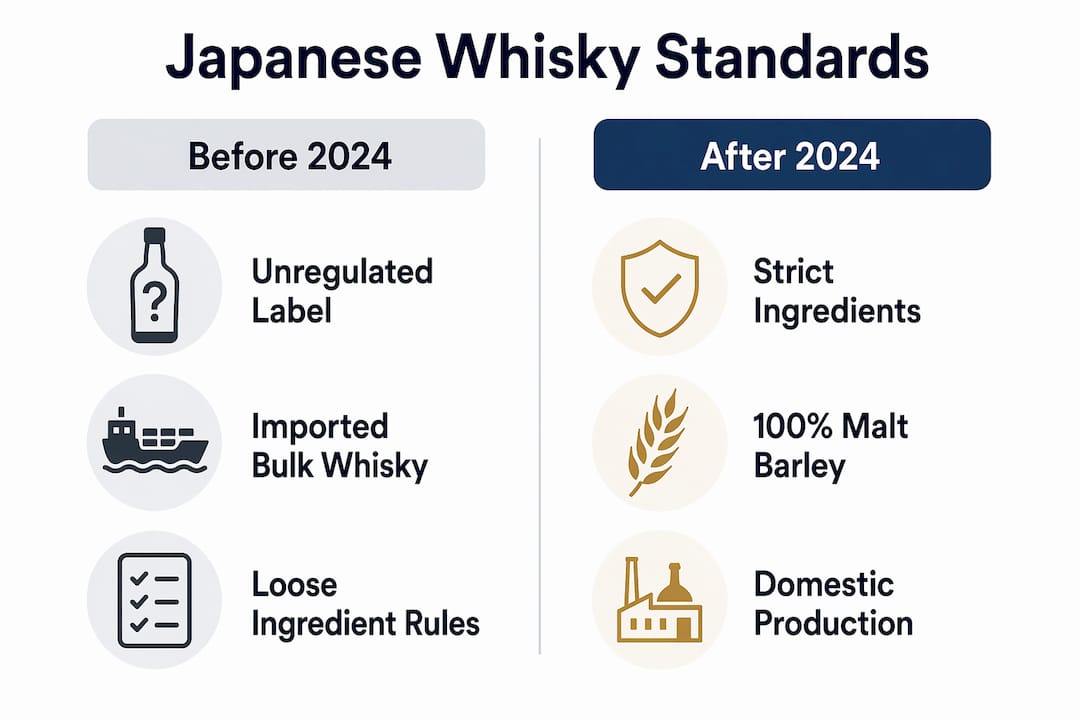
Before 2024, the label was largely unregulated. Distilleries could import bulk Scotch or Canadian whisky, blend it in Japan, and sell it under a Japanese name. That practice is now prohibited for any product claiming the “Japanese whisky” designation. This matters enormously to consumers because it shifts the quality conversation away from marketing and towards verifiable craft.
| JSLMA requirement | Detail |
|---|---|
| Ingredients | Malted barley and water sourced in Japan |
| Production | All distillation steps completed in Japan |
| Maturation | Minimum 3 years in Japanese wooden casks |
| Bottling | Must occur in Japan |
| Minimum ABV | 40% |
Label compliance post-2024 means that when you pick up a bottle marked “Japanese whisky,” you now have reliable assurance of authentic provenance. This has raised the floor on quality across the category and made No Age Statement (NAS) releases from producers like Nikka and Suntory more credible than they were before the regulations arrived.
Why does the Japanese highball make whisky taste better?
The Japanese whisky highball is not simply whisky and soda. It is a precisely engineered serve that highlights the spirit’s balance and finesse in a way that dilution in other styles often cannot achieve.
The standard preparation follows a strict sequence:
- Chill the glass thoroughly, ideally in a freezer, before use.
- Fill the glass with large, clear ice cubes to minimise dilution rate.
- Pour 45 ml of whisky over the ice and stir gently to chill the spirit without over-diluting.
- Add 135 ml of chilled soda water slowly down the side of the glass to preserve carbonation.
- Give the drink a single, gentle stir and serve immediately without a straw.
This 1:3 ratio produces roughly 8 to 10% ABV, which is sessionable without being weak. Japanese whisky is chemically suited to this serve because its lighter esters and floral aromatics become more expressive under careful dilution rather than being masked by it. Scotch with heavy peat or bourbon with dominant vanilla can overpower the soda, producing a drink that tastes unbalanced. Japanese whisky, particularly blends like Suntory Toki, was designed with the highball in mind.
Temperature control and carbonation retention are the two variables that separate a great highball from a flat one. Japanese bartenders treat this preparation with the same attention a barista gives to espresso extraction. The ritual is not affectation. It produces a measurably better drink.
Pro Tip: Use Suntory Toki or Nikka From The Barrel for highballs. Both are priced accessibly and designed to open up with carbonation, delivering far more complexity than their price suggests.
How does Japanese whisky compare on value and price?
Japanese whisky commands higher prices than comparable Scotch, Irish, and bourbon expressions across most market segments. Several factors drive this premium.
- Scarcity: Japan has fewer distilleries than Scotland, and the 2024 standards restrict supply to domestically produced spirit, tightening availability further.
- Maturation costs: Mizunara oak is rare and expensive. Casks made from it cost significantly more than European or American oak alternatives.
- Global demand: Japanese whisky’s reputation grew faster than production capacity could follow. Demand from Asia, Europe, and Australia continues to outpace supply for aged expressions.
- Brand prestige: Suntory’s Hibiki and Yamazaki ranges, along with Nikka’s Yoichi single malt, carry international award recognition that supports premium pricing.
Despite the general premium, value exists at specific price points. Taketsuru Pure Malt from Nikka retails at around £59 or $56 USD and is widely regarded as one of the most complete NAS whiskies available at that price. Suntory Toki sits at the accessible end of the range and punches well above its cost in a highball. The question of whether Japanese whisky is worth the price depends on whether you are buying an aged single malt or a well-made blend. For aged expressions above 18 years, the premium is real and justified. For entry-level blends, the value is genuinely competitive.
Which Japanese whisky brands are worth starting with?
The best Japanese whisky brands for newcomers are those that demonstrate the style’s range without demanding a significant financial commitment upfront.
- Yamazaki 12: Widely recommended by bartenders as a reference point for the style. Its light, honeyed character with Mizunara oak influence makes it approachable and educational.
- Suntory Toki: A blend designed specifically for highballs. Crisp, slightly sweet, and very clean. Ideal for understanding why the highball serve works so well.
- Nikka From The Barrel: Bottled at 51.4% ABV, this is one of the most complex and intense Japanese whiskies at its price point. It rewards both neat drinking and cocktail use.
- Yoichi Single Malt: Nikka’s peated expression from Hokkaido. It challenges the assumption that Japanese whisky is always delicate, offering maritime and smoky notes that rival Scotch.
- Hibiki Japanese Harmony: Suntory’s flagship blend. Accessible, elegant, and a strong introduction to the blending philosophy that defines Japanese whisky at its best.
| Expression | Style | Best serve | Entry difficulty |
|---|---|---|---|
| Yamazaki 12 | Single malt, honeyed | Neat or with a drop of water | Beginner |
| Suntory Toki | Blend, crisp | Highball | Beginner |
| Nikka From The Barrel | Blend, intense | Neat or on ice | Intermediate |
| Yoichi Single Malt | Single malt, peated | Neat | Intermediate |
| Hibiki Japanese Harmony | Blend, elegant | Neat or highball | Beginner |
The range within Japanese whisky is broader than most casual drinkers expect. Yoichi proves that peat and smoke are not exclusively Scottish territory, while Hibiki demonstrates that blending can produce something more refined than the sum of its parts.
Key takeaways
Japanese whisky earns its reputation through verifiable craft, strict 2024 production standards, and a flavour philosophy built on harmony that makes it genuinely distinct from Scotch and bourbon.
| Point | Details |
|---|---|
| Flavour philosophy | Japanese whisky prioritises balance and integration over intensity, using Mizunara oak for unique aromatics. |
| 2024 JSLMA standards | All production and maturation must occur in Japan, making label claims reliable for the first time. |
| Highball serve | A 1:3 whisky-to-soda ratio at precise temperature unlocks Japanese whisky’s full aromatic potential. |
| Value assessment | Entry-level blends like Suntory Toki offer strong value; aged single malts command a justified premium. |
| Starting bottles | Yamazaki 12, Suntory Toki, and Nikka From The Barrel cover the style’s range for new and experienced drinkers. |
Why I think the “better” question misses the real point
After years of tasting whiskies from Scotland, Ireland, the United States, and Japan, I have come to believe that asking whether Japanese whisky is better is the wrong question. The more useful question is: better at what?
Japanese whisky is better at expressing subtlety. It is better at pairing with food, particularly Japanese cuisine where a bold Scotch would compete rather than complement. It is better in a highball, where its architecture rewards precise preparation. And since the 2024 JSLMA standards arrived, it is better at guaranteeing authenticity on the label.
What Japanese whisky is not always better at is delivering the raw, confrontational character that makes a heavily peated Laphroaig or a cask-strength Stagg so memorable. Those are different pleasures, and they are legitimate ones. The mistake I see often is drinkers treating Japanese whisky as a refined alternative to Scotch when it is more accurately a parallel tradition with its own internal logic.
The consistent award results from blind tastings in 2026, including Chura scoring 95 points at the London Spirits Competition, document craftsmanship rather than settle a subjective debate. My advice is to approach Japanese whisky on its own terms. Start with Yamazaki 12 neat, then try Suntory Toki in a properly made highball. Those two experiences will tell you more about whether Japanese whisky is better for you than any comparison chart can.
— Brendan
Explore Japanese whisky at Uisuki
Uisuki stocks a curated range of Japanese whiskies alongside expressions from Scotland, Australia, and the United States, so you can taste the differences for yourself rather than read about them. Whether you are after an approachable entry point like Suntory Toki or something rarer, the collection includes both everyday bottles and limited editions worth seeking out. The Ichiro’s Malt and Grain Limited Edition World Blended Whisky at 48% ABV is a strong example of what Japanese-influenced blending can achieve at a global scale. For those curious about how Australian single malt compares, the Hobart Whisky Bourbon Matured Rum Finished expression offers a fascinating local counterpoint. Free shipping is available on qualifying orders across Australia.
FAQ
What makes Japanese whisky different from Scotch?
Japanese whisky prioritises balance and harmony over regional intensity, using Mizunara oak and diverse still shapes to create delicate floral and fruity profiles. Scotch emphasises regional character, with styles ranging from heavily peated Islay malts to the lighter, cereal-driven expressions of the Lowlands.
Is whisky from Japan good for beginners?
Japanese whisky is an excellent starting point because its approachable flavour profile is less confronting than heavily peated Scotch or high-proof bourbon. Expressions like Yamazaki 12 and Hibiki Japanese Harmony are widely recommended as reference bottles for new whisky drinkers.
Why is Japanese whisky so expensive?
Pricing reflects scarcity, the high cost of Mizunara oak casks, limited distillery capacity relative to global demand, and the 2024 JSLMA standards that restrict supply to domestically produced spirit. Aged expressions above 12 years command the steepest premiums.
Does Japanese whisky work well in cocktails?
Japanese whisky performs exceptionally well in highballs and lighter cocktails because its delicate structure opens up under dilution rather than being overwhelmed by it. Suntory Toki and Nikka From The Barrel are the most commonly recommended expressions for cocktail use.
Which Japanese whisky brands should I try first?
Yamazaki 12, Suntory Toki, and Hibiki Japanese Harmony are the three most recommended starting points, covering single malt, blend, and highball-focused styles respectively. For a peated alternative, Yoichi Single Malt from Nikka demonstrates that Japanese whisky has range well beyond its delicate reputation.