

Single malt Scotch whisky has a reputation for being a category unto itself, but many enthusiasts assume it’s far more uniform than it actually is. The truth is, the range of styles within single malt Scotch is genuinely staggering. From the delicate floral notes of a Lowland dram to the bonfire-smoke intensity of a heavily peated Islay expression, these whiskies can taste worlds apart. This guide breaks down what defines a single malt, how Scotland’s regions and cask choices shape the types you’ll encounter, and how you can use that knowledge to build richer, more rewarding tasting experiences.
Table of Contents
- What makes a whisky a single malt?
- Scotch whisky regions and their flavour profiles
- Peat influence and style spectrum: Unpeated to heavily peated
- Cask types and maturation: How wood shapes whisky
- How to discover and enjoy different types
- Why the single malt ‘rules’ are only half the story
- Browse and buy top single malts
- Frequently asked questions
Key Takeaways
| Point | Details |
|---|---|
| Single malt definition | A single malt must be made from malted barley at one Scottish distillery and aged in oak for at least three years. |
| Regional variety | Flavour profiles change by region but expect overlap and exceptions—exploration is key. |
| Peat spectrum | Peat levels range from unpeated to heavily peated, dramatically shifting the whisky’s taste. |
| Cask influence | Cask type and maturation add depth, nuance, and collectible appeal to single malt Scotch. |
| Personal discovery | The best way to find your favourite style is to try different types and trust your own palate. |
What makes a whisky a single malt?
Before you can appreciate the diversity within single malt Scotch, it helps to understand exactly what the term means. The definition is tighter than most people realise, and those rules directly shape the character of every bottle.
“Single malt Scotch whisky is legally defined as whisky produced from malted barley, water, and yeast at a single distillery in Scotland, distilled in pot stills, matured in oak casks for at least 3 years, and bottled at no less than 40% ABV.”
The word single is the one that trips people up most often. It does not mean a single barrel or a single batch. It refers to a single distillery. All the whisky in that bottle came from one place, which is why single malts are so closely tied to the character and craft of individual producers.
The required production steps are:
- Malted barley as the only grain
- Distillation in copper pot stills
- Maturation in oak casks for a minimum of three years
- Bottled at 40% ABV or above
- Produced entirely within Scotland
These single malt regulations create a consistent framework, but within that framework distilleries have enormous creative latitude. Still shape, cask selection, water source, and fermentation time all contribute to the final flavour. That’s why two whiskies that meet the same legal definition can taste completely different.
For collectors, the single distillery rule also matters for provenance. Knowing that every drop in the bottle originates from one place gives single malts a sense of identity and traceability that blended whiskies simply cannot replicate.
Scotch whisky regions and their flavour profiles
Scotland’s geography has shaped whisky production for centuries, and the country is divided into recognised regions that each carry their own flavour traditions. These regions are a useful starting point, though they are not rigid rules.
| Region | Peat level | Typical flavour notes | Famous distilleries |
|---|---|---|---|
| Speyside | Low | Fruity, honeyed, vanilla, light spice | Macallan, Glenfiddich, Aberlour |
| Highlands | Variable | Heather, dried fruit, malt, light smoke | Dalmore, Glenmorangie, GlenDronach |
| Islay | High | Peat smoke, brine, seaweed, medicinal | Laphroaig, Ardbeg, Bowmore |
| Lowlands | None | Floral, grassy, gentle, citrus | Auchentoshan, Glenkinchie |
| Campbeltown | Low to medium | Briny, oily, dried fruit, subtle smoke | Springbank, Glen Scotia |
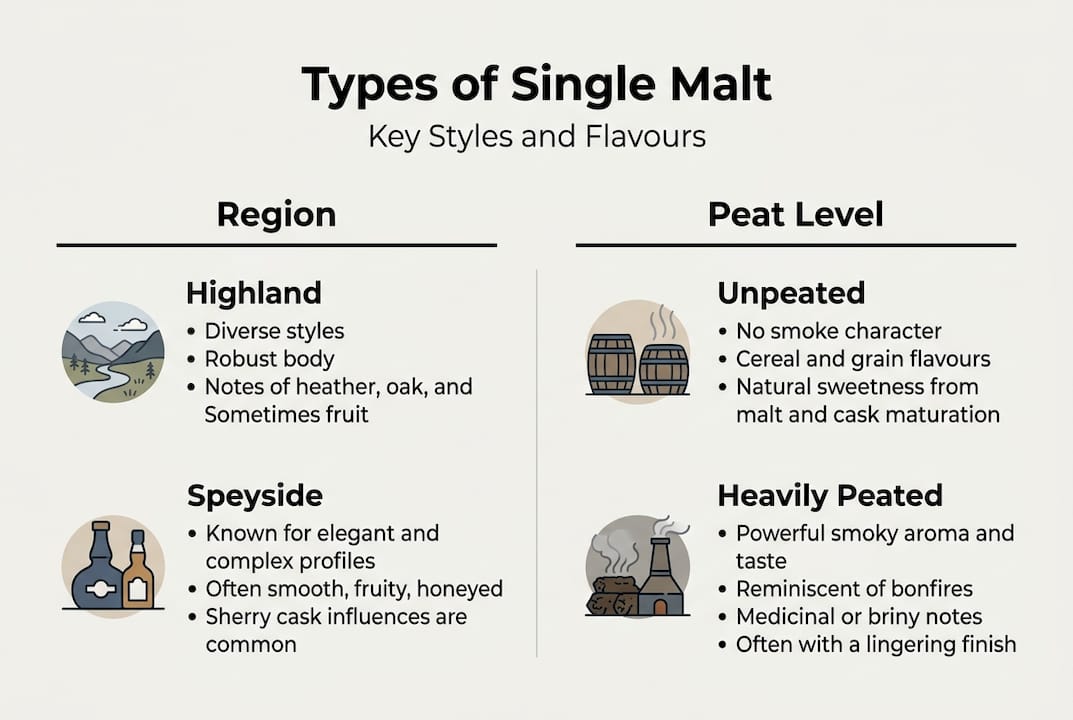
As regional diversity shows, Highland whiskies in particular defy strict categorisation. The region is so large and varied that you’ll find everything from rich, sherried expressions to light coastal drams within its borders.
For those just beginning their journey, the single malt choosing guide on Uisuki is a practical resource. Speyside and the Highlands are generally the friendliest entry points because of their approachable sweetness and balance.
Common flavour markers by region include:
- Speyside: Stone fruit, apple, vanilla, gentle oak. Try a Speyside expression to see what approachable really means.
- Highlands: Heather honey, malt, dried fruit, occasional smoke
- Islay: Peat smoke, iodine, brine, dark chocolate
- Lowlands: Grass, lemon, cream, soft florals
- Campbeltown: Brine, toffee, light smoke, oily texture
Pro Tip: If you’re new to single malts, start with Speyside or the Highlands. Their balanced profiles make it easier to identify individual flavour notes before you tackle more intense styles.
Peat influence and style spectrum: Unpeated to heavily peated
Peat is arguably the most divisive element in Scotch whisky. Some drinkers love the smoky, earthy intensity it brings. Others find it overwhelming. Understanding how peat works helps you navigate the full spectrum of single malt styles with confidence.
Peat is partially decomposed organic matter, primarily moss and plant material, that forms in boggy Scottish landscapes over thousands of years. When distillers burn peat to dry malted barley, the smoke infuses the grain with phenolic compounds. These compounds are measured in PPM (phenol parts per million), which acts as a scale for smoke intensity. PPM measures phenols responsible for the smoky flavour you detect in the glass.
| Style | PPM range | Flavour character | Example |
|---|---|---|---|
| Unpeated | 0 to 5 PPM | Fruity, floral, malty, sweet | Macallan 12 |
| Lightly peated | 5 to 20 PPM | Gentle smoke, earthy, balanced | GlenDronach Traditionally Peated |
| Heavily peated | 30 PPM and above | Bonfire smoke, medicinal, brine | Bowmore 12 |
If you’re new to peated whisky, approaching it gradually makes a real difference. Check out the best beginner whiskies for a broader starting point, then follow these steps when you’re ready to try something smoky:
- Start with an unpeated or lightly peated expression to establish your baseline.
- Pour a small measure and nose it before tasting. Peat reveals itself strongly on the aroma.
- Take a small sip and let it sit on your palate for a few seconds.
- Add a few drops of water to open up secondary flavours beneath the smoke.
- Compare your experience across different PPM levels over several sessions.
Peat is not a flavour to fear. Approached with curiosity rather than caution, it reveals extraordinary complexity that many enthusiasts come to love deeply.
Cask types and maturation: How wood shapes whisky
Peat and region explain a lot, but the cask a whisky matures in may be the single greatest influence on its final flavour. Wood is not just a container. It is an active ingredient.
The most common cask types used in Scotch whisky maturation include:
- Ex-bourbon barrels: The most widely used. They impart vanilla, caramel, and coconut notes.
- Sherry casks: Deliver dried fruit, Christmas cake, chocolate, and spice. Highly sought after by collectors.
- Wine casks: Add berry fruit, soft tannins, and floral complexity.
- Port pipes: Contribute rich red fruit, sweetness, and a deep ruby colour.
- New oak: Rare in Scotch but delivers intense wood spice and structure.
Beyond cask type, there are important distinctions between bottling styles. Single cask bottlings come from one barrel at cask strength, making each release unique and variable. Most single malts, however, are vatted from multiple casks at the same distillery to achieve a consistent house style.
Cask strength expressions are bottled without dilution, typically ranging from 50% to 65% ABV. They are intense and complex, but they reward patience. Rare cask bottlings are among the most collectible releases in the category, and for good reason. The combination of exceptional wood and time creates something genuinely irreplaceable.
Pro Tip: Cask strength whisky can be overwhelming at first pour. Add water drop by drop and taste as you go. You’ll often find the whisky opens up beautifully at a lower strength.
For gifting ideas that showcase cask variety, the whisky gift packs guide is worth a look.
How to discover and enjoy different types
Knowing the theory is one thing. Putting it into practice is where the real enjoyment begins. Whether you’re just starting out or you’ve been collecting for years, a structured approach to exploration makes every tasting session more rewarding.
The progression from unpeated to peated expressions is widely recommended for beginners, and it works because it trains your palate incrementally. Single malts are prized for their terroir expression, meaning the specific character of a place and its methods comes through in the glass.
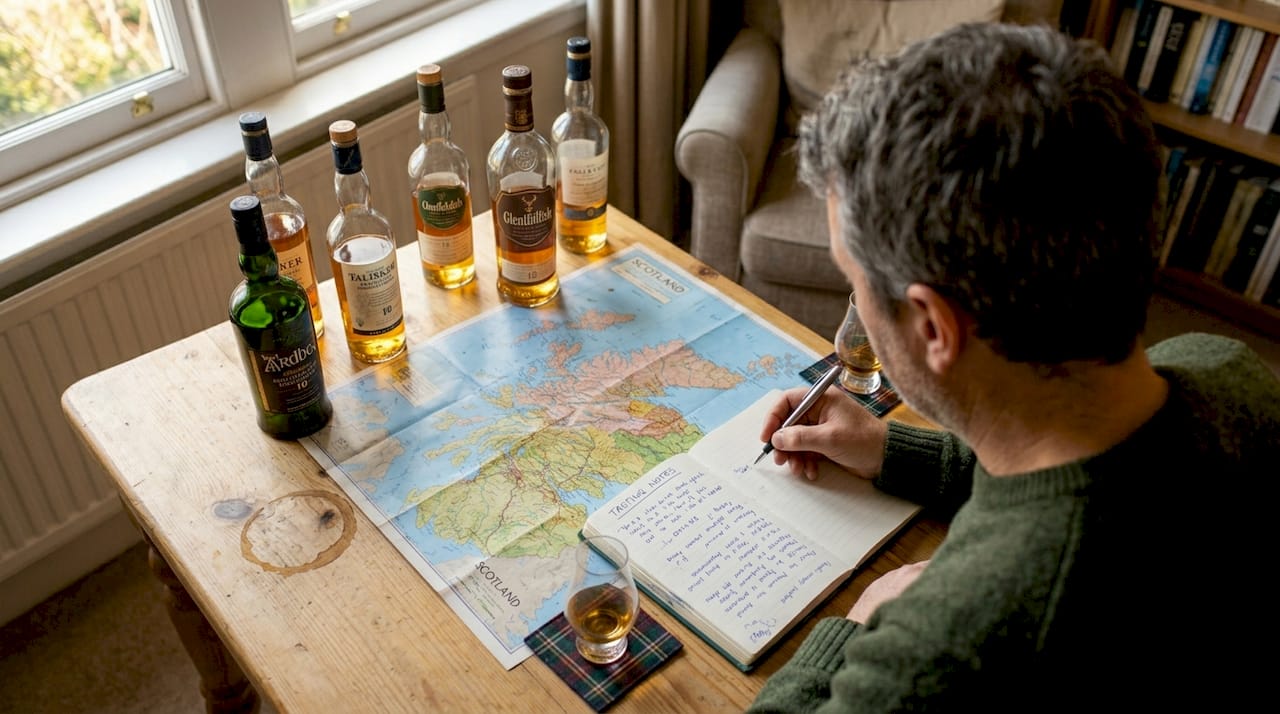
Here’s how to build a tasting flight at home:
- Choose three to four whiskies that represent different styles. For example, one Speyside, one Highland, and one Islay.
- Arrange them from lightest to most intense. Always taste in this order.
- Use clean Glencairn glasses and pour small measures of around 25ml each.
- Nose each whisky before tasting. Spend at least 30 seconds on the aroma.
- Taste without water first, then add a few drops and taste again.
- Note your impressions between each dram. Even rough notes help you remember what you liked.
Pro Tip: Aroma carries roughly 70% of what you perceive as flavour. Spending more time nosing your whisky before tasting will transform how much you pick up in the glass.
For collectors, the hunt for single cask releases, limited editions, and investible bottles adds another dimension entirely. The whisky tasting tips article on Uisuki covers practical advice for both newcomers and seasoned enthusiasts.
Why the single malt ‘rules’ are only half the story
There’s a tendency in whisky circles to treat regional styles and peat levels as firm rules. Islay means smoke. Speyside means fruit. Lowlands means light. These generalisations are useful shortcuts, but they can quietly steer enthusiasts away from some of the most interesting bottles on the shelf.
The reality is that innovation within Scotch whisky has accelerated dramatically. Distilleries in the Highlands are producing heavily peated expressions. Islay producers are releasing unpeated releases that challenge every assumption. Speyside distilleries are experimenting with unusual cask finishes that push their whiskies into unexpected territory.
Relying too heavily on regional rules also means you might overlook lesser-known distilleries that don’t fit neatly into any category. Some of the most memorable drams we’ve encountered at Uisuki come from producers who deliberately subvert expectations. The collector perspectives on single malt characteristics reinforce this point well.
The most important thing you can develop as a whisky enthusiast is trust in your own palate. Expert recommendations are valuable, but they are someone else’s experience. Your job is to build your own. That means being willing to try something outside your comfort zone, accepting that you might not love everything, and staying curious rather than chasing prestige or assumed quality.
Browse and buy top single malts
Ready to put your new whisky knowledge into action? At Uisuki, we stock a carefully curated range of single malt Scotch whiskies from every major Scottish region, from approachable Speyside classics to rare, collectible releases that serious enthusiasts will appreciate.

Whether you’re building your first tasting flight or hunting for a special bottle to add to your collection, our selection covers the full spectrum of styles covered in this guide. We also carry gift packs and limited releases that make excellent finds for collectors. If you’re after something less conventional, don’t miss the unique blended Scotch options alongside our single malts. Browse our full selection and find your next favourite dram.
Frequently asked questions
What is the difference between single malt and blended Scotch whisky?
Single malt comes from one distillery using only malted barley, while blended Scotch combines single malts and grain whiskies from multiple distilleries. Neither is inherently superior; single malts are simply prized for their individual distillery character.
Why do single malt Scotch whiskies from the same region taste different?
Distilleries use different still shapes, cask types, and peat levels, so even neighbouring producers can taste quite distinct. Highland diversity in particular defies any single flavour profile, with peat intensity and cask interactions varying widely across the region.
What does ‘cask strength’ mean?
Cask strength whisky is bottled directly from the barrel without dilution, making it stronger and more concentrated than standard releases. As single cask bottlings show, each release is unique because no two casks mature identically.
Is a peated whisky always from Islay?
No. While Islay is famous for heavily peated expressions, peated whiskies are increasingly produced in the Highlands, Campbeltown, and other regions as distilleries experiment beyond traditional styles.
How can I start appreciating peated single malts?
Begin with a lightly peated expression, take small sips, and add water to soften the smoke. Starting unpeated first helps you build a flavour baseline before progressing to more intense styles.
Recommended
- 7 Essential Types of Whisky Every Enthusiast Should Know – Uisuki.com.au
- Choosing Single Malt Whisky: A Step-by-Step Expert Guide – Uisuki.com.au
- Single malt whisky: characteristics, regulations & collector picks – Uisuki.com.au
- 7 Essential Scotch Whisky Types Every Enthusiast Should Know – Uisuki.com.au