

TL;DR:
- Securing limited edition whisky requires early registration, building relationships, and understanding allocation channels. Patience and preparation outperform impulsive searching, as genuine editions specify bottle counts, cask details, and release dates. Trusted retailers and proactive sourcing increase success chances in this highly competitive market.
Knowing you want to buy limited edition whisky is the easy part. Actually securing a bottle before it sells out is where most enthusiasts come unstuck. Limited releases, or what the industry formally calls “allocated releases,” sit behind a layered system of registrations, retailer relationships, and timed drops that rewards preparation over impulse. Whether you’re building a serious collection, hunting a specific distillery expression, or sourcing something extraordinary as a gift, this guide gives you the exact preparation, strategies, and execution steps you need to succeed.
Key takeaways
| Point | Details |
|---|---|
| Register early, not last minute | Waitlists and private client registrations close before bottles are announced publicly. |
| Know the allocation chain | Distillery, distributor, and retailer tiers each control different portions of stock. |
| Budget defines your strategy | Prices range from £75 to US$12,500 per bottle, so define your ceiling before release day. |
| Membership opens closed doors | Club access like the Slàinte Club or Ardbeg Committee can unlock sole purchase windows. |
| Verify provenance before buying | Genuine limited editions state bottle count, ABV, cask details, and release date upfront. |
How to buy limited edition whisky: the prerequisites
Before you ever click “add to cart,” there’s genuine groundwork to do. Skipping this phase is the single biggest reason collectors miss out on the bottles they want most.
Understanding what you’re actually buying
A true limited edition whisky, or allocated release, is defined by a finite bottle count, a specific cask or batch, and a clear provenance trail. The Bruichladdich PC5 Redux is a textbook example: limited to 2,500 bottles at 63.5% ABV, available online and at the distillery from a set date. That specificity is not marketing fluff. It tells you exactly how scarce the product is and when you need to act.
At the extreme end, bottles like Buffalo Trace’s Eagle Rare 30 carry a price tag of US$12,500. At the approachable end, small batch releases can come in well under $200. Knowing where your target sits on that spectrum shapes every decision that follows.
Building access before release day
The most reliable route to collectible whisky for sale is through relationships and registrations, not search engines. Here’s what to have in place:
- Distillery mailing lists: Sign up directly with distilleries you follow. Most announce limited releases to their subscriber base days or weeks before public drops.
- Retailer accounts with purchase history: Account tier and buying history at each distribution level directly affect your allocation priority. Spend regularly with your preferred retailer so you’re not a stranger when a sought-after bottle arrives.
- Club memberships: Some releases are gated entirely behind membership. Isle of Raasay’s Slàinte Club 2026 Limited Release, for instance, is only available to club members with an order code. No membership, no access.
- Collector forums and apps: Communities like r/whisky or dedicated release tracker apps surface news that doesn’t always reach official newsletters first.
Pro Tip: Set up a dedicated email folder and filter for distillery and retailer announcements. Missing a release email by 24 hours can cost you the bottle entirely.
| Resource type | Example | Benefit |
|---|---|---|
| Distillery newsletter | Bruichladdich, Ardbeg | Early announcements and exclusive access |
| Retailer account | Local specialist or online | Allocation priority based on purchase history |
| Membership club | Slàinte Club, Ardbeg Committee | Sole or pre-release purchase windows |
| Online forums | Reddit, Whisky Base | Real-time release intelligence |
Step-by-step guide to securing the bottle
Once you have the foundations in place, execution is about timing and precision. Here is how to move from “I want this bottle” to “it’s on its way.”
-
Confirm the official release date and channel. Check the distillery’s website and your registered retailer directly. Do not rely on social media alone for date accuracy. Release calendars shift.
-
Apply for allocation early. For high-demand bottles, Diageo’s Rare Series requires global registration through private client teams. Registering late means being deprioritised or locked out entirely. Treat application deadlines like flight check-in times.
-
Identify all available channels. Some bottles arrive through distillery direct sales, some through distributor networks, and some via exclusive retail drops. Chichibu’s Selfridges collaboration was limited to 195 bottles at 59.5% cask strength, available both online and in select stores. Knowing this means you can pursue multiple channels simultaneously.
-
Prepare your account before the on-sale time. Log in, verify your shipping address, and have your payment method saved. On-sale windows for highly sought bottles can close in minutes.
-
Set a precise alarm for the release time. Not approximate, precise. Even a five-minute delay can mean a sold-out page.
-
Decide in advance: online or in-person. Buying exclusive whisky online offers convenience and a broader range, but you need to verify shipping and return conditions before purchasing. Some retailers only ship within certain regions. Know this before release day, not after.
-
Know your secondary market threshold. If you miss the retail release, Port Ellen and Brora bottles trade 200 to 400% above retail at auction. Decide what you’re willing to pay before emotions take over.
When it comes to where to buy special whisky, trusted specialist retailers with transparent stock sourcing are almost always preferable to general marketplaces. A specialist can verify provenance; a generalist marketplace often cannot.
Pro Tip: If a retailer offers a personalised sourcing service, use it. Describe the specific bottle you’re after and ask to be notified. This passive strategy works in parallel with your active searching.
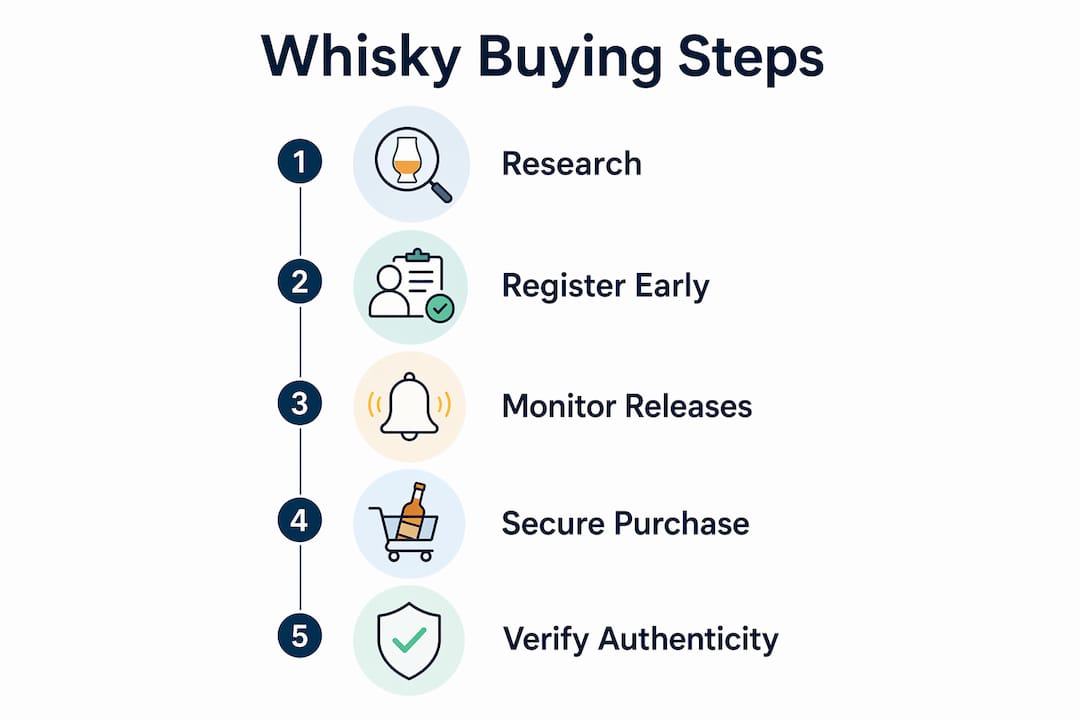
For step-by-step acquisition strategies, Uisuki’s dedicated guide is worth bookmarking alongside this one.
Mistakes that cost collectors their bottles
Even experienced collectors make these errors. Recognise them now so they don’t cost you a bottle you’ve been watching for months.
- Waiting for social media buzz before acting. By the time a limited release goes viral, it’s often gone. Pre-release access through registrations consistently outperforms marketplace searching.
- Overlooking club and membership access. Joining the Ardbeg Committee or a distillery’s exclusive collector community can unlock early or sole purchase windows that open and close before the public even hears about a bottle.
- Misreading allocation tiers. The three-tier supply chain, from importer to distributor to retailer, means that the same bottle can be available at one retailer and completely unavailable at another. This is structural, not arbitrary.
- Ignoring provenance details. Overpaying for a bottle that turns out to be a standard release repackaged with limited edition labelling is a real risk. Genuine limited editions state bottle count, specific cask details, ABV, and release date plainly.
- Not reading the fine print on online orders. Return policies and international shipping restrictions vary significantly. Discovering a retailer won’t ship to your state after you’ve placed the order is a frustrating and avoidable problem.
Patience and preparation are the real currency of the limited edition whisky market. The collector who registers six months before release will almost always outcompete the one who searches on the day.
Understanding why limited editions matter to distilleries and collectors alike helps you see these not as arbitrary barriers but as deliberate quality controls.
Verifying your purchase and what comes next
Buying a bottle is only complete when you can confirm you have the genuine article and it’s safely stored.
What authentic product listings include
Legitimate limited release whisky listings, whether from a distillery or reputable retailer, always specify bottle count, ABV, cask type, distillation date, and non-chill filtration status where relevant. Provenance details and measurable specs like these are what distinguish a genuine limited edition from a marketing exercise.
| What to check | Why it matters |
|---|---|
| Bottle number or batch size | Confirms true scarcity and collector value |
| ABV and cask details | Authenticates product specifics against official release notes |
| Distillery or importer confirmation | Verifies the supply chain is legitimate |
| Packaging condition on arrival | Damage affects resale value and certificate of authenticity |
After the bottle arrives
Check the packaging against the official release photos and specification sheet. If bottle numbering applies, verify your number is within the stated run. If anything looks inconsistent, contact the retailer immediately. Most reputable specialists have clear resolution processes.
Pro Tip: Store limited edition bottles upright, away from direct light and temperature fluctuations. Even if you plan to drink rather than sell, condition affects both flavour and secondary market value should you change your mind.
When thinking about selecting bottles for your collection, it’s worth documenting each acquisition with photos, receipts, and official release notes from day one.
My perspective on buying limited editions in Australia
I’ve watched Australian collectors miss bottles they’ve tracked for years because they treated the purchase like a standard online shop rather than a competition with a hard start time. The reality is that the best limited edition whiskies are managed scarcity by design. Distilleries gate them behind entitlement, allocation tiers, and narrow sell windows.
In my experience, the collectors who build real collections aren’t the ones refreshing product pages on launch day. They’re the ones who spent the previous six months on waitlists, spending modestly with their preferred retailers, and joining every club that matters. Relationships genuinely change your position in the allocation queue.
For Australian buyers, there’s an added layer. Import timelines and regional distributor relationships mean some bottles arrive months after their international release, and some don’t arrive at all through standard retail. This is where a specialist platform that actively sources rare and hard-to-find bottles becomes genuinely useful rather than just a convenience.
The investment versus enjoyment question comes up constantly. My take is that you should buy bottles you’d be satisfied drinking if the secondary market never materialised. The collector mindset is healthiest when the worst case is a phenomenal whisky experience, not a financial loss.
— Brendan
Find your next rare bottle with Uisuki
If you’re serious about tracking down the best limited edition whiskies, having a trusted retail partner makes an enormous difference.
Uisuki is an Australian specialist platform curating premium, rare, and allocated whiskies from Scotland, Japan, the USA, and Australia. The platform stocks detailed product listings with ABV percentages, cask specifics, and full provenance information so you know exactly what you’re buying. Subscribers receive early notifications on new arrivals and hard-to-find bottles, giving you a head start over general marketplace buyers. You can also submit personalised sourcing requests for specific bottles. Whether you’re building a long-term collection or hunting one standout gift bottle, explore the full range at Uisuki and get ahead of the next release.
FAQ
What makes a whisky genuinely “limited edition”?
A genuine limited edition whisky is defined by a finite, stated bottle count, specific cask or batch provenance, and a clear release date. These details should appear in all official product listings and release announcements.
How do allocation systems work when buying rare whisky?
Allocation systems operate through multiple tiers including private client registrations, distributor networks, and retailer drops. Account history and relationships at each tier determine your priority, which is why early registration and consistent buying with the same retailers matters.
Is buying exclusive whisky online safe?
Yes, when buying through reputable specialist retailers with clear provenance listings, verified shipping policies, and published return conditions. Always confirm the retailer’s legitimacy and check their stated shipping and return terms before completing a purchase.
When should you consider the secondary market for limited releases?
The secondary market is worth considering when retail allocation is exhausted and the bottle holds personal or collection significance that outweighs the premium. Understand that genuinely scarce bottles can trade significantly above retail, so set a maximum price before searching.
How can Australian collectors improve their access to limited releases?
Joining distillery clubs, maintaining purchase history with specialist Australian retailers, and subscribing to official distillery newsletters are the most reliable methods. A platform like Uisuki that actively sources rare bottles and notifies subscribers early provides a meaningful advantage for finding rare expressions before general availability.