

TL;DR:
- Choosing Japanese whisky involves matching your flavor preferences, authenticity needs, and serving methods for the best experience. Consumers should look for the JSLMA ‘JW’ logo, clear distillery details, and authentic production standards to ensure genuine quality. Selecting bottles based on flavor profile and occasion, especially for highballs, enhances enjoyment and aligns with genuine Japanese whisky craftsmanship.
Choosing Japanese whisky means matching your palate, purpose, and occasion with a category defined by precision, restraint, and layered complexity. Producers like Suntory (Yamazaki, Hakushu, Hibiki) and Nikka have set the global benchmark for this style, yet the market now includes dozens of craft expressions that reward informed buyers. Whether you are selecting a bottle for yourself or gifting one to a serious enthusiast, understanding flavour profiles, authenticity standards, and serving traditions will get you to the right choice far faster than browsing by price alone.
How to choose Japanese whisky by flavour profile
Choosing by flavour style delivers a more satisfying result than buying by age statement or prestige alone. Japanese whisky is built on subtlety. Rather than a single dominant note, expect restraint and progressive layering that unfolds across the glass. This means your first impression is rarely the full picture, and patience in tasting pays off.
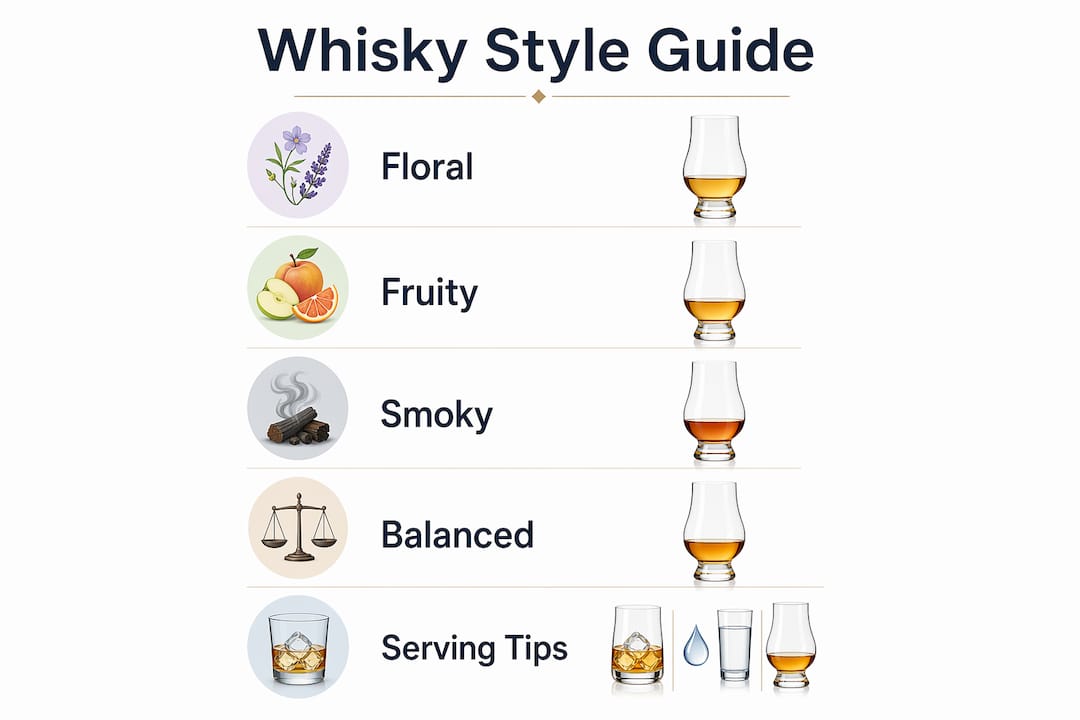
The four main style categories break down like this:
- Floral and delicate. Lighter expressions from blends like Hibiki or softer single malts. These suit drinkers who prefer elegance over intensity, with notes of white flowers, green tea, and honeydew.
- Fruity and spice-forward. Yamazaki expressions and many craft malts sit here, offering stone fruit, dried citrus, and gentle spice from a mix of cask types including American oak and sherry.
- Smoky and peated. Yoichi from Nikka is the clearest example. Its coastal, peated character is closer to Islay Scotch than most Japanese expressions, making it the go-to for smoke lovers.
- Balanced blends. Expressions like Hibiki Harmony or Suntory Toki are crafted for harmony across aroma, flavour, and finish rather than any single standout quality.
The tasting approach matters as much as the style you target. Smell the glass before you sip, and give the whisky 30 seconds to open. If it tastes closed or tight, add a few drops of water. Serving temperature and dilution genuinely change how a whisky presents, so the same bottle can read differently neat versus with water. For a deeper look at how these styles differ at the production level, the unique flavours of Japanese whisky guide at Uisuki covers the key distinctions well.
Pro Tip: Before committing to a full bottle, seek out tasting sets or 15ml sample pours. Sampling sets featuring Yamazaki, Hakushu, and Hibiki allow you to calibrate your preference before spending on a 700ml bottle.

How do authenticity standards help you identify genuine Japanese whisky?
The Japanese Spirits and Liqueurs Makers Association (JSLMA) introduced its mandatory logo standard in April 2024. The JSLMA ‘JW’ logo on a label confirms that the whisky was fermented, distilled, and matured exclusively in Japan using qualifying ingredients. This matters because a significant number of bottles marketed as Japanese whisky have historically contained imported Scotch or Canadian whisky blended and bottled in Japan. The logo cuts through that ambiguity.
When reading a label, work through these steps in order:
- Look for the JSLMA ‘JW’ logo. Its presence confirms the product meets the 2024 standard. Its absence does not automatically mean the whisky is fake, but it warrants closer scrutiny.
- Check for a named distillery. Clear distillery naming and production details are the clearest indicators of a genuine product. Vague descriptions like “crafted in the Japanese tradition” are a warning sign.
- Read the production details. Look for references to specific cask types, maturation periods, and distillation methods. Authentic producers are specific.
- Assess the language. Romantic storytelling and poetic label copy without production facts often signals a product leaning on aesthetics rather than substance.
- Cross-reference with a trusted retailer. A reputable stockist will have sourcing information and can confirm authenticity details that labels sometimes omit.
Geographical Indication (GI) protections for Japanese whisky are still developing at the regulatory level, which means the JSLMA logo remains the most reliable consumer-facing tool available right now. Authenticity logos like this improve transparency globally, making selection easier as international interest in the category continues to grow.
What role does the highball play in choosing the right bottle?
The Japanese whisky highball is not just a serving suggestion. It is a genuine selection filter. The standard ratio is one part whisky to three or four parts chilled soda water over ice, and lighter, aroma-forward whiskies suit this format far better than heavy, sherry-dominant expressions. Suntory Toki is the clearest example of a whisky designed with the highball in mind, its notes of green apple, basil, and white pepper holding up cleanly under carbonation.
The key variables to consider when choosing a highball whisky are:
- Aroma retention. Delicate floral and citrus notes survive dilution well. Heavy oak or sulphur notes amplify unpleasantly.
- Texture. A whisky with good body and mouthfeel maintains presence in the glass even when diluted. Thin, watery expressions disappear.
- Tannin level. Heavily oaked whiskies can turn bitter when carbonated. Avoid expressions with aggressive wood tannins if the highball is your primary serve.
- Finish length. A clean, medium finish works better than a very long, complex finish that gets muddied by the soda.
Pro Tip: If you are buying specifically for highballs, taste the whisky with a splash of still water first. If the flavour holds and stays pleasant, it will perform well with soda. If it becomes flat or bitter, choose a different bottle.
For a broader look at tasting methods and serving traditions, the Japanese whisky tasting guide at Uisuki covers the full range of serve options.
How to match a bottle to your palate and the occasion
Selecting the right bottle becomes straightforward once you treat it as a two-step process: know your palate, then match it to the occasion.
- Identify your flavour preference. Work out whether you lean toward sweetness, spice, smoke, or balance. If you are new to Japanese whisky, start with a balanced blend like Hibiki Harmony before moving to single malts.
- Define the occasion. Casual sipping at home calls for a different bottle than a formal gift. Cocktail making favours lighter, versatile expressions. Gifting to a collector warrants something with a clear age statement or limited release status.
- Set a realistic budget. Age statements in Japanese whisky carry a premium, but style honesty and production clarity matter more than years on a label. A well-made no-age-statement expression from a reputable distillery often outperforms an aged bottle from an unknown producer.
- Use tasting sets before committing. Sample pours and tasting sets reduce the risk of a poor match, particularly for gifts where you cannot taste on behalf of the recipient.
- Read the retailer description carefully. Good retailers provide tasting notes, cask information, and serving suggestions. Use these to cross-reference your flavour preference before purchasing.
The table below summarises the main style categories, their best serving formats, and the occasions they suit most.
| Style | Flavour notes | Best serve | Ideal occasion |
|---|---|---|---|
| Floral and delicate | White flowers, green tea, honeydew | Neat or with water | Formal gifting, quiet sipping |
| Fruity and spice-forward | Stone fruit, dried citrus, gentle spice | Neat or on ice | Dinner pairing, enthusiast gifting |
| Smoky and peated | Coastal smoke, brine, dark fruit | Neat | Scotch lovers, adventurous drinkers |
| Balanced blend | Honey, light oak, subtle fruit | Highball or neat | Everyday drinking, introduction to the category |
For gifting specifically, the Japanese whisky gifting guide at Uisuki offers well-considered options across price points and occasions.
Key takeaways
Choosing Japanese whisky well requires matching flavour style, production authenticity, and serving format to your specific palate and occasion.
| Point | Details |
|---|---|
| Buy by flavour style first | Identify floral, fruity, smoky, or balanced preferences before considering age or price. |
| Check for the JSLMA logo | The ‘JW’ logo, mandatory from April 2024, confirms genuine Japanese production standards. |
| Match the bottle to the serve | Lighter, aroma-forward whiskies perform best as highballs; heavy sherry expressions suit neat drinking. |
| Use tasting sets before committing | Sample pours reduce the risk of a poor match, especially when buying as a gift. |
| Prioritise label clarity | Named distilleries and specific production details signal authenticity more reliably than poetic label copy. |
Why I think most people are buying Japanese whisky the wrong way
The most common mistake I see is buying Japanese whisky the way you would buy a bottle of wine at a restaurant: by price point and reputation. You pick the second most expensive option, assume the label tells you something meaningful, and hope for the best. With Japanese whisky, that approach fails more often than it should.
The category rewards a different kind of attention. Blending in Japanese whisky is a precise technical discipline, not a casual process. Master blenders like Suntory’s Shinji Fukuyo evaluate every expression across aroma, flavour, texture, structure, and consistency before release. The result is a whisky that evolves in the glass rather than announcing itself immediately. If you are expecting a bold, immediate hit of peat or sherry, you will miss what is actually there.
Mizunara oak maturation is the clearest example of this patience principle. Optimal Mizunara character only emerges after at least 15 years, with genuine complexity appearing closer to 25. Buying a young Mizunara-matured expression and expecting full complexity is like pulling a roast out of the oven after 20 minutes. The potential is there; the time is not.
My practical advice: ignore the hype cycle entirely. When a limited release generates social media noise, the price inflates before most buyers have tasted it. Instead, focus on label clarity, distillery reputation, and whether the style actually matches how you drink. A well-chosen Suntory Toki at a fraction of the price of a hyped limited release will give you more pleasure if highballs are your thing. Know what you want, then find the bottle that delivers it.
— Brendan
Explore authentic Japanese whisky at Uisuki
Uisuki stocks a curated range of authentic Japanese whiskies, from approachable blends to limited edition expressions, all sourced with label clarity and production provenance in mind. If you are after a bottle to try at home or a considered gift for a serious enthusiast, the Ichiro’s Malt and Grain Limited Edition is a standout option. It combines Japanese craft blending with global grain character at 48% ABV, making it a genuinely interesting choice for collectors and curious drinkers alike. Browse by flavour profile or occasion on the Uisuki whisky catalogue, with Australian and international shipping available and expert sourcing support for hard-to-find bottles.
FAQ
What is the easiest way to start choosing Japanese whisky?
Start with a balanced blend like Hibiki Harmony or Suntory Toki before moving to single malts. These expressions are designed for accessibility and give you a clear reference point for the style.
How do I know if a Japanese whisky is authentic?
Look for the JSLMA ‘JW’ logo, which has been mandatory on compliant labels since April 2024. A named distillery and specific production details on the label are additional indicators of a genuine product.
Which Japanese whiskies work best as highballs?
Lighter, aroma-forward expressions like Suntory Toki are designed for the highball format. Avoid heavily oaked or sherry-dominant whiskies, as carbonation can make them taste bitter.
Does age statement matter when selecting Japanese whisky?
Age statements carry a premium but are not the most reliable quality indicator. A well-made no-age-statement expression from a reputable distillery often outperforms an aged bottle from an unknown producer.
What should I look for on a Japanese whisky label?
Prioritise a named distillery, specific cask and production information, and the JSLMA logo. Vague romantic language without production facts is a warning sign worth taking seriously.