

Choosing a new bottle for your collection is never just about country of origin or a famous distillery. For whisky collectors and enthusiasts across Australia, understanding how whisky regions shape each spirit’s character can make every tasting richer and more rewarding. While regional influences matter, the true artistry of whisky lies in the balance between tradition, production standards, and the unique story behind every batch. Dive deeper and discover how regional characteristics transform your drinking and collecting experience.
Table of Contents
- Defining Whisky Regions And Common Myths
- Scottish Regions And Their Distinctive Profiles
- Japanese, Australian, And American Regional Traits
- Climate, Terroir And Local Traditions Influencing Taste
- Collecting And Sourcing Rare Regional Whiskies
Key Takeaways
| Point | Details |
|---|---|
| Understanding Whisky Regions | Whisky regions influence flavour profiles; however, they do not determine the quality or taste of each spirit. |
| Scottish Regional Distinctions | Each Scottish whisky region boasts unique characteristics shaped by geography, tradition, and environmental factors. |
| Global Whisky Innovations | International whisky producers, from Japan to Australia, challenge traditional boundaries with innovative techniques and unique expressions. |
| Importance of Provenance in Collecting | Rare whisky collecting requires careful provenance verification to ensure authenticity and preserve liquid heritage. |
Defining whisky regions and common myths
Whisky regions represent far more than simple geographical demarcations - they are complex narratives of tradition, terroir, and meticulous production standards that profoundly shape the liquid in your glass. Whisky production regulations create intricate frameworks defining how spirits are crafted, aged, and ultimately experienced.
Understanding whisky regions requires dispelling several persistent myths about what truly distinguishes one geographical area’s spirit from another. These misconceptions often stem from oversimplified thinking about how landscape, water, and local practices influence whisky’s character. While regional characteristics do matter, they are not the sole determinants of a whisky’s quality or flavour profile.
Key myths about whisky regions include:
- All whiskies from a single region taste identical
- Regional boundaries are rigid and unchanging
- Production methods are uniform across a region
- Water source is the primary flavour differentiator
In reality, whisky production is an intricate dance of multiple factors. Scottish whisky production exemplifies this complexity, with strict regulations mandating minimum maturation periods, specific ingredient requirements, and traditional distillation methods that go far beyond simple geographical considerations.
Regional distinctions matter, but a whisky’s true character emerges from the interplay of craft, tradition, and meticulous attention to detail.
The nuanced relationship between geography and flavour means that while regional traditions provide a framework, individual distilleries within those regions can and do produce remarkably diverse spirits. Each distillery brings its own unique approach to malting, fermentation, distillation, and maturation.
Pro tip: When exploring whisky regions, approach each bottle as a unique expression rather than assuming all spirits from one area will taste the same.
Scottish regions and their distinctive profiles
The landscape of Scottish whisky is as diverse and complex as the terrain itself, with five officially recognized whisky regions offering a remarkable spectrum of flavour experiences. Each region brings its own unique narrative, shaped by geographical nuances, traditional production methods, and environmental influences that transform simple ingredients into liquid poetry.
Scotland’s whisky regions each boast distinctive characteristics that reflect their unique terroir:
- Speyside: Known for sweet, fruity whiskies with complex apple and pear notes
- Highlands: Incredibly diverse profile ranging from light and floral to rich and smoky
- Lowland: Typically lighter, more delicate spirits with gentle grass and citrus undertones
- Islay: Famous for intense, peaty whiskies with strong maritime and smoky characteristics
- Campbeltown: Producing complex, often briny spirits with subtle maritime influences
The Scotch whisky production landscape represents a profound interaction between human craft and natural environment. Distilleries in each region leverage local water sources, climatic conditions, and generational knowledge to create spirits that are simultaneously unique and emblematic of their geographical origins.
The true magic of Scottish whisky lies not just in its ingredients, but in the stories and traditions embedded in every drop.
What makes these regional distinctions truly fascinating is how seemingly subtle variations can dramatically transform a whisky’s character. A Speyside whisky might offer honeyed sweetness, while an Islay spirit delivers an almost medicinal peat smoke that speaks directly to the rugged coastal landscape of its origin.
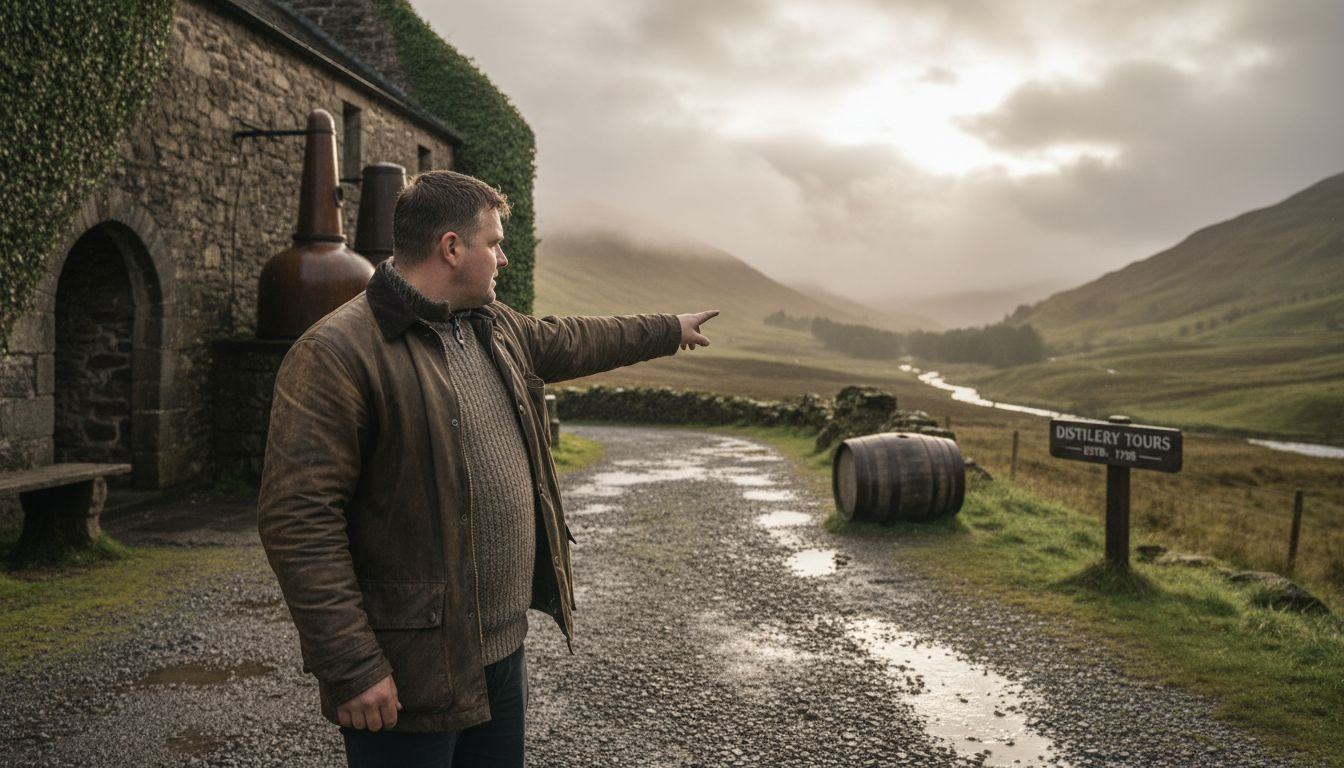
Geological and climatic factors play crucial roles in defining these regional profiles. Speyside’s sheltered valleys, Islay’s windswept shores, and the Highland’s mountainous terrain each contribute unique environmental signatures that whisky makers transform into liquid expressions of place.
Pro tip: When exploring Scottish whiskies, approach each dram as a geographical journey, allowing the spirit to tell its regional story through its distinctive flavour profile.
Japanese, Australian, and American regional traits
Beyond Scotland’s storied whisky landscape, other nations have carved distinctive paths in whisky production, each bringing unique regional characteristics that challenge traditional expectations. Japanese whisky production represents a particularly fascinating example of how a culture can reimagine and elevate a traditional craft, transforming imported techniques into a world-class art form.
Each region offers remarkable insights into local whisky-making traditions:
- Japan: Precision-driven, with exceptional attention to detail and rare oak cask experimentation
- United States: Bold, grain-forward spirits emphasising corn and regional variations
- Australia: Emerging region with experimental approaches and unique local ingredients
- Kentucky: Limestone-rich water creating distinctive bourbon profiles
- Tasmania: Cool climate producing uniquely smooth and complex single malts
The American whiskey landscape demonstrates remarkable diversity, with regional variations dramatically influencing flavor profiles. Kentucky’s distinctive limestone-filtered water and temperature fluctuations create bourbon styles that are simultaneously sweet, robust, and unmistakably American.
Regional identity in whisky is less about boundaries and more about the story each spirit tells.
Japanese distilleries have developed a reputation for meticulous craftsmanship, often using rare mizunara oak casks that impart extraordinary aromatic complexity. Their approach demonstrates how regional innovation can transcend traditional production methods, creating entirely new flavor narratives.
Climatic conditions play a crucial role in shaping these regional characteristics. From Japan’s precise, controlled environments to Australia’s variable microclimates, each location contributes unique elements that transform simple ingredients into extraordinary spirits.
Here’s a quick reference comparing whisky regional influences across major producing countries:
| Region | Signature Influence | Notable Attributes |
|---|---|---|
| Scotland | Historical terroir and strict regulations | Distinct profiles, strong identity |
| Japan | Precision and unique cask experimentation | Complex aromas, evolving traditions |
| United States | Grain variety and climate extremes | Diverse spirits, bold flavours |
| Australia | Emerging innovation and local botanicals | Experimental, unique expressions |
| Tasmania | Cool climate, artisanal craft | Smooth, layered single malts |
Pro tip: Explore whiskies from emerging regions with an open mind, recognising that innovation often happens at the geographical margins.
Climate, terroir and local traditions influencing taste
Whisky is more than a beverage - it’s a liquid reflection of its geographical origins, with scientific research confirming terroir’s profound impact on flavour development. Every sip tells a complex story of environmental interactions, from soil composition to regional climate patterns that shape grain characteristics long before distillation begins.
Key environmental factors influencing whisky taste include:
- Soil Composition: Mineral content directly affecting grain growth
- Temperature Variations: Influencing barley development and stress responses
- Precipitation Levels: Determining water quality and agricultural conditions
- Altitude: Impacting plant metabolism and grain protein structures
- Microclimate: Creating unique stress responses in crops
Scientific studies on whisky terroir demonstrate that environmental conditions can dramatically alter grain characteristics, potentially creating more flavour variation than genetic differences between barley varieties. These nuanced interactions transform seemingly simple agricultural inputs into complex sensory experiences.
Terroir is nature’s signature - an unrepeatable moment captured in liquid form.
Traditional production methods further amplify these environmental influences. Local malting techniques, water source selection, and generational knowledge about grain cultivation create layers of complexity that extend beyond mere agricultural science. Each distillery becomes a custodian of its unique environmental narrative.
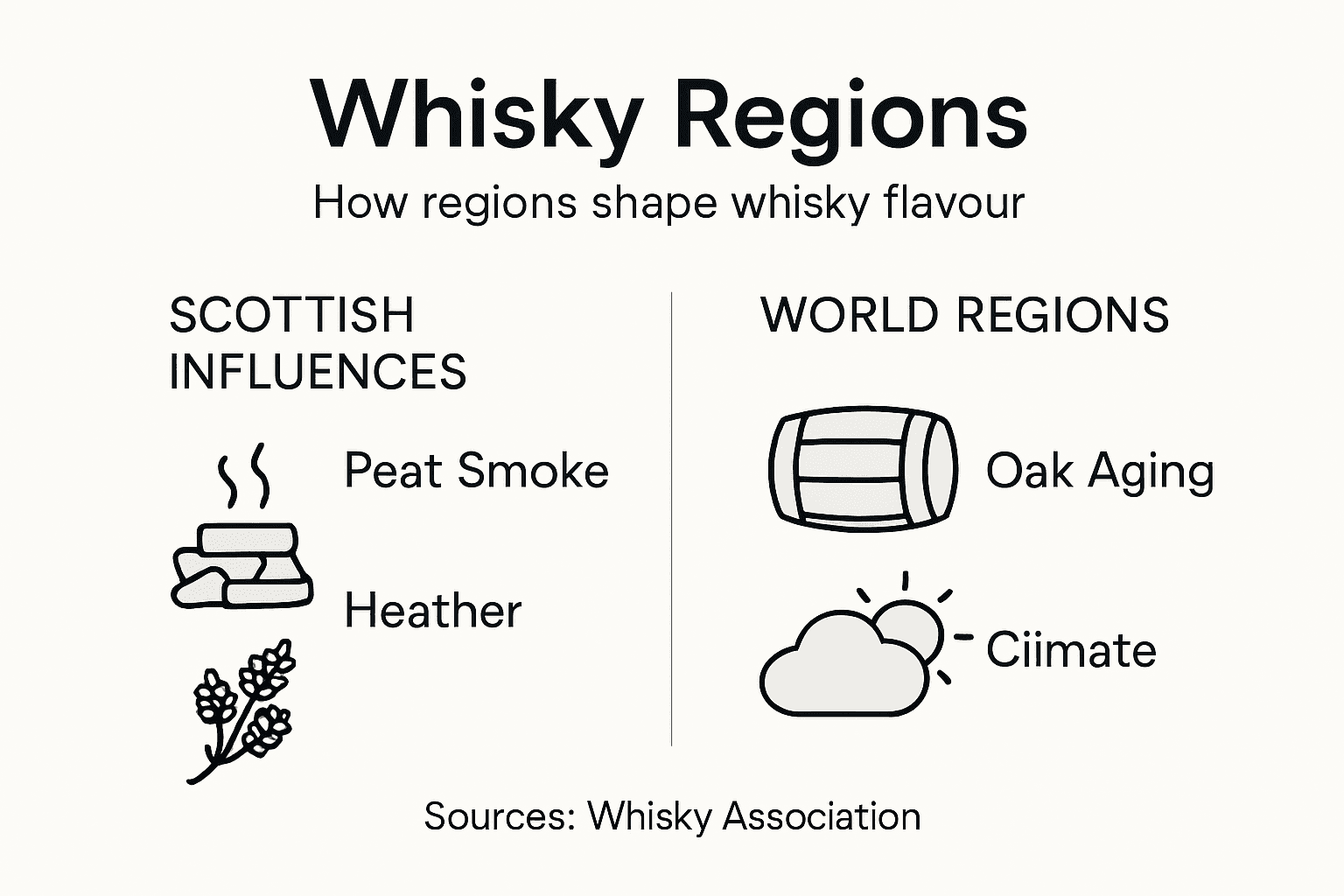
Climatic conditions act as silent collaborators in whisky production, with temperature, humidity, and seasonal variations writing intricate flavour profiles into every barrel. A cool Highland valley produces remarkably different barley compared to a sun-drenched lowland plain, each contributing distinct aromatic characteristics.
Explore some key environmental factors and their effect on whisky character:
| Factor | Impact on Whisky | Typical Regional Effect |
|---|---|---|
| Soil Composition | Alters grain flavour base | Richness in Highlands, diversity in Tasmania |
| Temperature Variation | Changes maturation speed | Faster developing spirits in Kentucky |
| Altitude | Influences grain structure | Higher complexity in mountainous regions |
| Precipitation | Affects water & crop quality | Lighter notes in wetter regions |
Pro tip: When tasting whiskies, pay attention to the geographical story behind each bottle - the landscape speaks through every sip.
Collecting and sourcing rare regional whiskies
Rare whisky collecting is an art form that blends passion, expertise, and strategic investment, with careful sourcing of single cask whiskies requiring deep understanding of provenance and authenticity. Each rare bottle represents a unique moment in distilling history, promising both sensory delight and potential financial appreciation.
Critical strategies for successful whisky collection include:
- Provenance Documentation: Verifying bottle origin and authenticity
- Distillery Reputation: Focusing on iconic and emerging producers
- Limited Edition Releases: Tracking special bottlings and vintage collections
- Storage Conditions: Maintaining proper preservation techniques
- Market Trend Analysis: Understanding investment potential
Rare whisky investment strategies demonstrate that value extends beyond mere liquid. Iconic distilleries from Scotland, Japan, and America command premium prices, with limited editions representing the pinnacle of collectibility.
Collecting rare whiskies is about preserving liquid heritage, not just acquiring bottles.
Authenticity becomes paramount when sourcing rare regional whiskies. Bonded warehouse relationships and comprehensive documentation protect collectors from counterfeit products, ensuring each acquisition represents genuine craftsmanship.
Geographical diversity enriches collection depth, with regional variations offering unique investment opportunities. A carefully curated collection might include rare expressions from Scotland’s remote Highland distilleries, Japan’s precision-driven producers, and America’s innovative craft whisky makers.
Pro tip: Always request complete provenance documentation and consider professional authentication when acquiring rare whisky bottles.
Discover Your Perfect Whisky Expression and Unlock Regional Stories
Understanding how whisky regions shape flavour can feel overwhelming when faced with so many unique profiles to explore. Whether your challenge is finding authentic Speyside sweetness or uncovering rare Islay peat complexity, the key lies in thoughtful selection from trusted sources that respect both tradition and innovation. Concepts like terroir, climatic influence, and local craftsmanship impact every dram – making it essential to access curated collections that celebrate these principles.
Dive deeper into regional excellence through our carefully selected range at Scotch Whisky (all) - Glenglassaugh – Uisuki.com.au.

Elevate your whisky journey today by exploring our premium offerings from Scotland, Japan, Australia and beyond. Visit Uisuki.com.au to browse expertly described products that bring the essence of each region directly to your glass. Whether you seek iconic brands like The Balvenie – Uisuki.com.au or are searching for unique distillery treasures such as Glendronach – Uisuki.com.au, we guide you in selecting authentic bottles with provenance assurance. Start your regional whisky adventure now and savour the stories behind every sip.
Frequently Asked Questions
What defines the character of a whisky from different regions?
The character of a whisky is influenced by various factors including local ingredients, environmental conditions, traditional production methods, and the distillery’s unique approach. Each region has distinctive profiles shaped by its terroir.
Do all whiskies from the same region taste the same?
No, it’s a myth that all whiskies from a single region taste identical. Individual distilleries have their own unique techniques and recipes that create a wide range of flavours, even within the same region.
How do climatic conditions affect the taste of whisky?
Climatic conditions such as temperature variations, humidity, and precipitation influence how whisky matures in barrels, which in turn affects its flavour profile. Different climates can lead to distinct taste experiences, highlighting the importance of each geographical area in whisky production.
What are some common misconceptions about whisky regions?
Common misconceptions include the belief that all whiskies from a specific region have the same taste, that production methods are uniform across a region, and that water source is the primary differentiator of flavour. In reality, there are multiple factors affecting whisky’s character beyond regional characteristics.