

TL;DR:
- Whisky collecting is driven by personal passion, cultural history, community engagement, and potential financial gains. Building a collection requires intentional focus, proper storage, and patience, with provenance and rarity increasing value. The community, combined with thoughtful exploration, makes whisky collecting a rewarding pursuit beyond monetary return.
Most people assume whisky collecting is about money. Buy a bottle, watch it appreciate, sell it for a profit. That assumption misses almost everything that makes this hobby genuinely worthwhile. Why collect whisky? The honest answer is that serious collectors are drawn by a mix of sensory pleasure, cultural preservation, community belonging, and yes, financial upside. These motivations rarely sit neatly apart. They overlap, reinforce each other, and create a pursuit that rewards patience, curiosity, and genuine enthusiasm in ways that few other hobbies can match.
Table of Contents
- Key takeaways
- Why collect whisky: the real motivations
- What actually creates value in a collection
- Whisky collecting essentials: starting and storing
- Auctions, community, and the investment reality
- My honest take on collecting
- Start your collection with Uisuki
- Common questions
Key takeaways
| Point | Details |
|---|---|
| Collecting is about more than investment | Personal passion, cultural history, and community are equally strong reasons to start collecting whisky. |
| Provenance drives real value | Documentation and ownership history matter as much as rarity when assessing the value of a whisky collection. |
| Storage protects your investment | Keeping bottles upright at 15–20°C in a dark, stable environment preserves quality and prevents cork damage. |
| Start small and with intention | A well-rounded starter collection covering key regional styles can be built for under £200 without compromising on quality. |
| Community adds depth | Engaging with the whisky collecting community through auctions, tastings, and forums enriches the experience well beyond what is in the bottle. |
Why collect whisky: the real motivations
Let’s be direct about something. There is no single answer. Collector motivations vary widely, with some people building collections with precise intention around rarity and history, and others accumulating bottles almost accidentally before realising they have something meaningful on their hands.
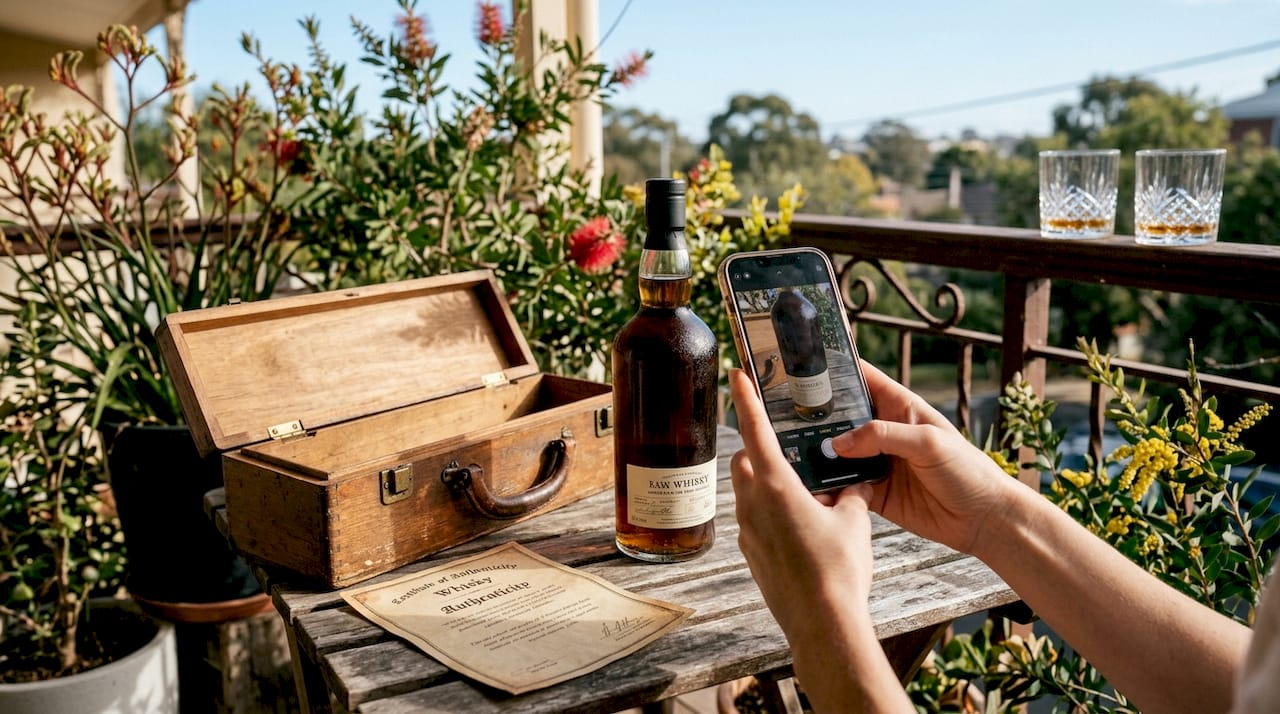
Personal passion is the most durable reason. Whisky is one of the few consumable products where production methods, regional character, and maturation time create genuinely distinct experiences across thousands of expressions. Collecting gives you the space to explore those differences seriously, rather than grabbing whatever is on the shelf at your local bottle shop.
Then there is the historical dimension. Whisky is, in a very real sense, liquid history.
“Collections function as unintentional archives documenting experiments, cult bottlings, and distillery history, capturing shifts in whiskey production and adding intellectual value beyond the liquid itself.” — Sotheby’s
Beyond passion and history, there are compelling financial reasons too. The rare whisky market remains strong, with recent auctions exceeding expectations significantly. A Sotheby’s sale of the Great American Whiskey Collection fetched US$2.5 million, with 89% of 320 lots selling above their highest pre-sale estimate. That is not a fluke. It reflects sustained demand from a growing collector base worldwide.
And finally, there is the social pull. The whisky collecting community is genuinely warm, knowledgeable, and welcoming at most levels. You learn faster when you collect alongside others.
What actually creates value in a collection
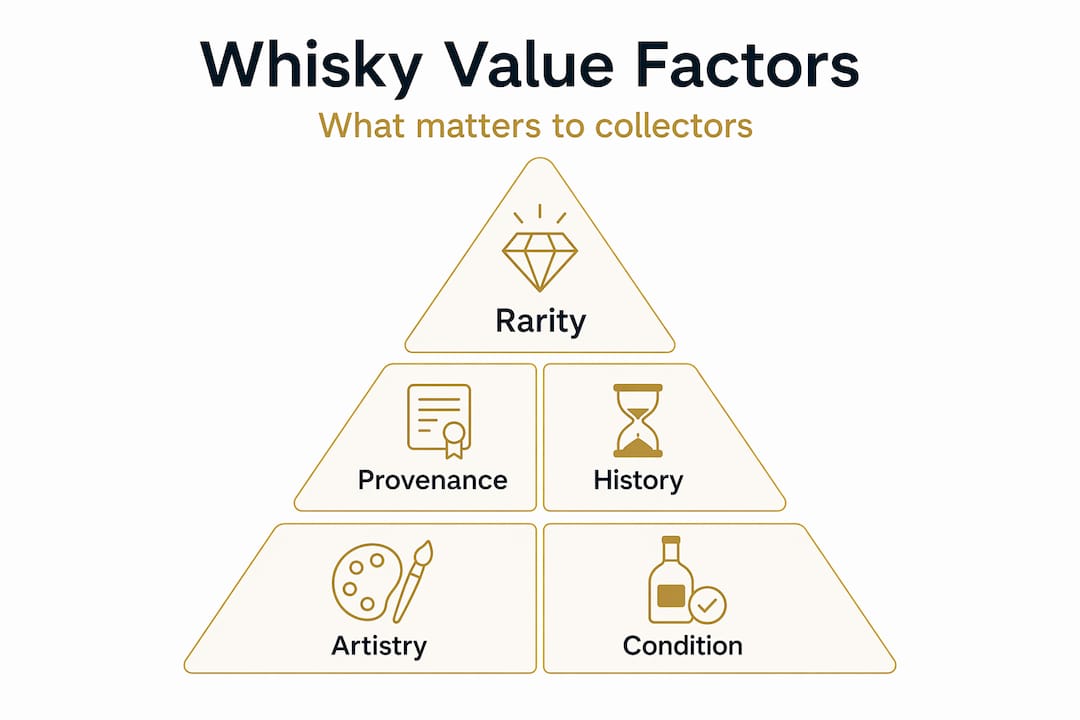
Understanding the value of a whisky collection means thinking beyond the obvious. Price at retail is a poor guide. What matters is a combination of factors that most newcomers take time to fully grasp.
| Value factor | What it means in practice |
|---|---|
| Rarity | Limited releases, closed distilleries, or single cask expressions with small outturn |
| Provenance | Documented ownership history, original packaging, and certificates of authenticity |
| Condition | Fill level, label integrity, and original wax or capsule intact |
| Historical significance | Distillery era, production method, or connection to a notable moment in whisky history |
| Storytelling | The narrative around a bottle, including who made it, why, and under what circumstances |
Rarity gets the most attention, but provenance is arguably more important for serious collectors. A bottle with clear documentation of its storage history and chain of ownership is significantly more trustworthy at auction or in private sale. Whisky provenance also affects how much you can genuinely trust what is inside the bottle, which matters whether you plan to drink it or preserve it.
The history of whisky collectibles shows us that context adds layers of meaning. A bottle from a distillery that has since closed, or from a production era before major process changes, carries a story that no modern release can replicate. That story is part of what you are acquiring.
Pro Tip: When assessing a bottle’s collectibility, ask three questions: how many exist, where has it been stored, and what does it represent historically? Price follows those answers, not the other way around.
Collectors increasingly seek transparency on provenance and artistry, with quality over quantity the defining trend in rare releases right now. That shift rewards collectors who do their research.
Whisky collecting essentials: starting and storing
Building a collection that holds together requires intention from the start. Knowing what you want to achieve whether that is regional breadth, flavour diversity, or long-term investment shapes every purchasing decision you make.
Here is a practical framework for getting started with whisky collecting essentials:
-
Define your focus. A successful whisky collection begins with intentionality. Decide whether you are collecting for flavour exploration, regional coverage, distillery depth, or investment potential. You can combine these goals, but one should lead.
-
Build a regional foundation first. A five-bottle starter shelf covering Speyside, Islay, Highland, Campbeltown, and either Japanese or Australian whisky gives you genuine breadth. Expert-curated selections show this is achievable for under £173 total, averaging under £35 per bottle. For an in-depth look at how regional styles differ, Uisuki’s guide to mastering whisky regions is well worth your time.
-
Allocate your budget with purpose. A practical split puts roughly 60% of your budget toward foundational bottles and depth expressions, with 40% reserved for distinguished rarities as you develop your collection over time.
-
Store correctly from day one. The most common mistake new collectors make is storing bottles on their side as they would wine. High-alcohol spirits stored horizontally can degrade cork seals, causing evaporation and contamination. Keep bottles upright, at a stable temperature between 15 and 20°C, away from direct light and temperature swings.
-
Decide your open-versus-preserve strategy. Many serious collectors buy duplicate bottles, one to enjoy and one to preserve. This removes the anxiety around cracking open something rare and lets you actually experience what you are collecting.
Pro Tip: Photograph your bottles when you acquire them, including labels, fill levels, and any documentation. This creates a personal provenance record that adds credibility if you ever sell or insure your collection.
For Australian collectors managing humidity and heat, Uisuki has a dedicated resource on storing whisky in Australia that addresses the specific environmental challenges you face locally.
Auctions, community, and the investment reality
The whisky collecting community is one of its best-kept secrets. Forums, tasting groups, private clubs, and auction preview events attract people who are genuinely passionate about what is in the glass. That shared appreciation creates friendships and connections that most collectors describe as among the most rewarding parts of the hobby.
On the financial side, the numbers can be striking. The Old Rip Van Winkle 18 Year Old ‘Binny’s’ sold for $106,250 at auction, far exceeding pre-sale estimates. These results attract new collectors and drive media attention, which in turn brings more buyers into the market.
But there are important cautions worth stating plainly:
- Patience is non-negotiable. Whisky casks as long-term assets require maturation periods between 10 to 25 years or more to reach peak value. There is no quick flip strategy that works reliably in this market.
- Documentation protects you. Whisky is viewed as a tangible legacy asset. Knowing exactly where and how it is stored is vital, both for personal assurance and for any future sale.
- Younger collectors are reshaping the market. There is growing demand from buyers in their thirties and forties who are drawn by both the culture and the investment angle. This demographic shift is pushing up prices for approachable rarities.
- Not all bottles appreciate. Plenty of limited releases sit flat or even decline in secondary market value. Research into whisky collectibility trends will help you avoid buying into hype.
Collecting whisky for pure investment without passion is a fragile strategy. The collectors who do best financially tend to be those who love what they are building regardless of what the market does.
My honest take on collecting
When people ask me why collect whisky, I usually answer with a question: what else do you own that improves with age, tells a story, brings people together, and tastes extraordinary when you finally decide to open it?
I have seen collectors who treat their shelves like a financial ledger and miss the entire point. The bottles that have meant the most to me are ones I opened at the right moment, shared with the right people. The monetary value was secondary, if it mattered at all.
What I have learned over years of collecting is that intention matters more than budget. A collection built around a genuine theme, whether that is a single distillery across decades, expressions from closed Scottish distilleries, or the emerging Australian whisky scene, has a coherence and depth that a random accumulation of hyped releases never achieves.
The balance between drinking and preserving is also something most collectors figure out the hard way. My advice: open more than you think you should. The memory of sharing a great whisky with someone who appreciates it is worth more than the bottle sitting sealed on a shelf.
Collecting is ultimately an act of paying attention. To craft, to history, to place. That is why it lasts.
— Brendan
Start your collection with Uisuki
Whether you are just beginning to think about building a collection or looking to add a standout bottle to what you already have, Uisuki makes it straightforward to find quality whisky with genuine character.

The Ardnamurchan Macleans Nose Blended Scotch Whisky at 46% ABV is a strong starting point. It represents the kind of thoughtfully crafted, approachable expression that works as both a drinking bottle and an introduction to Scottish whisky collecting. Ardnamurchan is one of the newer Highland distilleries attracting serious collector interest, and this expression showcases why. Beyond individual bottles, Uisuki’s curated selection spans Scotland, Japan, Australia, and the USA, with rare and hard-to-find bottles regularly added. Browse the full range at uisuki.com.au and find your next acquisition.
Common questions
What is the main reason people collect whisky?
Most collectors are motivated by a combination of personal passion, appreciation for cultural history, and the financial potential of rare bottles. Very few serious collectors are driven by investment alone.
How much do I need to spend to start a whisky collection?
You can build a meaningful five-bottle collection covering key regional styles for under £200. A well-curated starter shelf does not require significant outlay, particularly if you prioritise foundational expressions before seeking rarities.
Does whisky increase in value over time?
Some whiskies appreciate significantly, particularly limited releases, closed distillery bottlings, and expressions with strong provenance. However, not all bottles gain value, and the market rewards patience and research rather than speculation.
How should I store my whisky collection?
Store bottles upright at a stable temperature between 15 and 20°C, away from direct light and heat fluctuations. Storing spirits on their side risks cork degradation, which can harm the liquid inside.
Is the whisky collecting community welcoming to newcomers?
Genuinely yes. Tasting groups, online forums, and auction preview events attract enthusiasts at every level. Engaging with the community is one of the fastest ways to develop your knowledge and find bottles worth collecting.