

Rare whisky values soared by a bold 9 percent in 2022, making headlines among Australian collectors and investors alike. As whisky shifts from an enthusiast’s pursuit to a serious alternative asset, Australians are paying closer attention to what truly makes a bottle collectible. From scarcity to provenance, discover why the world of whisky collecting now blends history, artistry, and financial potential like never before.
Table of Contents
- What Makes Whisky Collectible Today
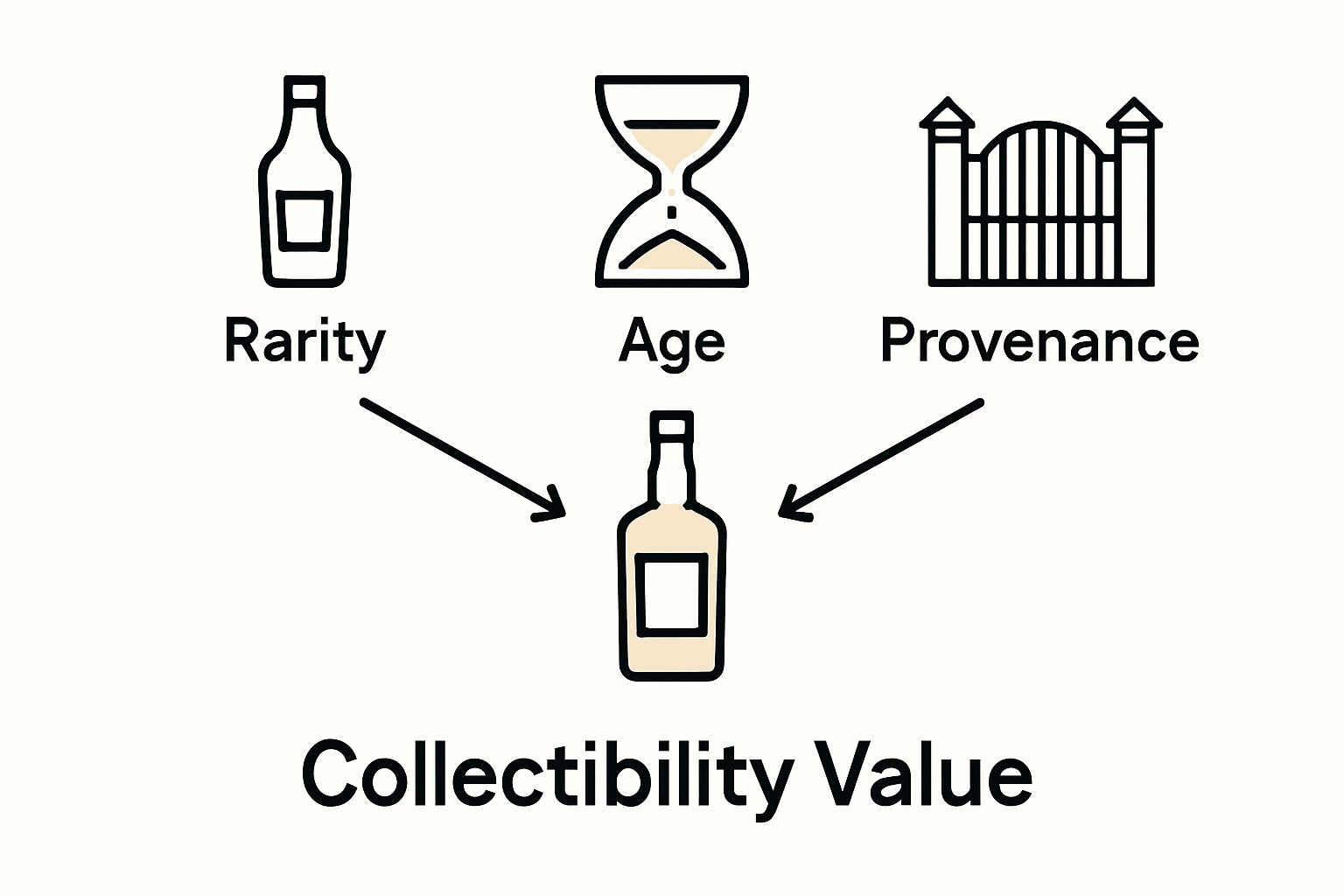
- Rarity, Age, Distillery And Provenance Factors
- Investment Trends And Resale Market Dynamics
- Risks, Pitfalls And Australian Legal Considerations
- Collecting Versus Drinking: Finding Your Balance
Key Takeaways
| Point | Details |
|---|---|
| Rarity and Provenance | The value of collectible whiskies is heavily influenced by their rarity and unique production stories, making provenance a critical factor in their collectibility. |
| Investment Potential | Collectors should consider both the financial returns and the historical significance of bottles, as true collectibility transcends mere monetary value. |
| Market Dynamics | The whisky investment landscape is evolving, with online auctions increasing in popularity, presenting new opportunities for investors. |
| Risks and Regulations | Potential investors must navigate challenges such as authenticity verification and regulatory compliance, requiring thorough research and risk management strategies. |
What Makes Whisky Collectible Today
Whisky collecting has transformed from a niche hobby into a sophisticated investment strategy that attracts passionate enthusiasts and serious investors alike. Rare whisky values increased by 9% in 2022, signalling a robust market driven by scarcity, exclusivity, and unique provenance.
Collectible whiskies share several critical characteristics that distinguish them from standard bottles. Rarity stands as the primary factor, with limited edition releases, discontinued expressions, and bottles from defunct distilleries commanding premium prices. Collectors seek whiskies with unique production stories: single cask releases, experimental maturation techniques, or bottles representing significant milestones in a distillery’s history.
Investment potential is another crucial element determining collectibility. Research from the University of Pretoria highlights that exclusive whiskies can generate superior returns, particularly those with documented provenance and impeccable condition. Key collectibility factors include:
- Distillery reputation and historical significance
- Unique production methods
- Limited production numbers
- Exceptional packaging or design
- Pristine preservation and original packaging
- Verifiable authenticity and complete documentation
Successful whisky collectors approach their passion with a blend of historical knowledge, market understanding, and genuine appreciation for the craft. While financial returns matter, true collectibility transcends monetary value, celebrating the artistry, heritage, and storytelling embodied in each exceptional bottle.
Rarity, Age, Distillery and Provenance Factors
The intricate world of whisky collecting revolves around complex valuation metrics that go far beyond simple market pricing. Market dynamics reveal that whisky’s value is deeply rooted in its unique provenance and heritage, with collectors prioritising bottles that tell a compelling narrative.

Rarity emerges as the paramount factor in determining a whisky’s collectibility. Scarcity drives value dramatically, especially for limited production runs, discontinued expressions, or bottles from closed distilleries. Collectors meticulously assess production volumes, seeking out expressions with minimal annual releases or one-off experimental batches that represent unique moments in a distillery’s history.
Age plays a significant role in whisky valuation, but not always in the way novice collectors might expect. While older whiskies traditionally commanded higher prices, contemporary collectors now appreciate nuanced factors beyond simple chronological age. Exceptional cask selection, innovative maturation techniques, and the specific year of production can elevate a relatively younger whisky to extraordinary collectible status.
Distillery provenance represents another critical dimension of collectibility. Renowned distilleries with storied histories and consistent quality attract serious collectors. Key considerations include:
- Distillery reputation and historical significance
- Track record of producing exceptional spirits
- Innovative production techniques
- Limited edition or commemorative releases
- Bottles representing pivotal moments in the distillery’s evolution
- Recognised awards and international reputation
Successful whisky collectors understand that true value transcends mere age or brand recognition, encompassing a complex interplay of historical context, craftsmanship, and the intangible qualities that transform a simple bottle into a coveted collectible treasure.
Investment Trends and Resale Market Dynamics
The whisky investment landscape has undergone remarkable transformation in recent years, evolving from a niche passion to a sophisticated alternative asset class. Online whisky auctions experienced a 14% sales increase in 2022, signalling growing investor interest and technological disruption in traditional trading platforms.
Market Volatility is a critical consideration for potential whisky investors. Research from the University of Pretoria reveals that whisky demonstrates unique portfolio characteristics, showing lower correlation with conventional financial instruments. This suggests whisky can serve as an intriguing diversification strategy for investors seeking alternatives to traditional stock and bond markets.
The resale market for collectible whiskies operates through multiple channels, each with distinct dynamics:
- Specialised online auction platforms
- Dedicated whisky investment funds
- Direct peer-to-peer transactions
- Professional broker networks
- International collector marketplaces
Successful whisky investors understand that true value extends beyond simple price appreciation. Factors like bottle condition, original packaging, provenance documentation, and market sentiment play crucial roles in determining potential returns. Authenticity verification, storage conditions, and comprehensive investment research become paramount in navigating this complex marketplace.
While potential returns can be attractive, prudent investors approach whisky collecting with a balanced perspective. The market rewards those who combine passionate knowledge with strategic investment principles, recognising that each bottle represents not just a financial asset, but a piece of liquid history waiting to be appreciated.
Risks, Pitfalls and Australian Legal Considerations
The increasing popularity of whisky investment has attracted unscrupulous operators seeking to exploit unsuspecting collectors, making rigorous due diligence an absolute necessity for Australian investors navigating this complex marketplace. Fraud risk represents the most significant challenge, with counterfeit bottlings and fraudulent investment schemes proliferating across global markets.
Legal considerations in the Australian whisky investment landscape are multifaceted. Investors must navigate complex regulations surrounding alcohol sales, investment documentation, and potential taxation implications. This includes understanding capital gains tax treatments, potential excise duties, and the nuanced legal distinctions between collecting and commercial trading of alcoholic beverages.
Key risks confronting whisky investors include:
- Authenticity verification challenges
- Potential market value fluctuations
- Storage and insurance complexities
- Regulatory compliance requirements
- Potential tax reporting obligations
- Liquidity limitations in specialised markets
Beyond financial risks, collectors must also consider physical preservation challenges. Proper storage conditions are critical, with factors like temperature, humidity, light exposure, and positioning directly impacting a whisky’s long-term value. Professional collectors often invest in specialised storage solutions, professional insurance, and comprehensive authentication processes to mitigate potential depreciation risks.
Ultimately, successful whisky investment demands a combination of passionate knowledge, meticulous research, and a disciplined approach to risk management. Prospective collectors are advised to consult legal and financial professionals who specialise in alternative asset investments to develop a comprehensive and legally sound investment strategy.
Collecting Versus Drinking: Finding Your Balance
The evolving landscape of whisky collecting presents a nuanced challenge between preservation and enjoyment, where passionate enthusiasts must carefully navigate the delicate balance between investment potential and personal appreciation. Collector’s dilemma emerges as collectors grapple with the fundamental question: should a rare bottle remain untouched or be experienced?
Investment considerations play a critical role in this decision-making process. Market volatility and liquidity challenges suggest that collectors should prioritise personal enjoyment alongside financial potential, recognising that a whisky’s true value extends beyond monetary metrics. Some collectors adopt a strategic approach of maintaining a diverse collection that includes:
- Investment-grade bottles for potential appreciation
- Drinking-quality whiskies for personal consumption
- Commemorative or historically significant releases
- Experimental or limited edition expressions
- Backup bottles of favoured expressions
Practical strategies for balancing collection and consumption involve careful selection and rotation. Collectors might choose to purchase multiple bottles of a particular expression – one for investment, another for drinking – or establish clear personal guidelines about when and how to open cherished bottles. This approach allows for both financial prudence and sensory exploration, ensuring that the collection remains dynamic and meaningful.
Ultimately, whisky collecting transcends pure investment. It represents a passionate engagement with craftsmanship, history, and personal taste. The most successful collectors approach their collections with a blend of financial wisdom and genuine appreciation, understanding that the true value of whisky lies not just in its potential market price, but in the stories it tells and the experiences it creates.
Unlock the True Potential of Your Whisky Collection Today
Understanding the complexities of whisky collectibility can feel overwhelming when factors like rarity, provenance and market risks come into play. Whether you seek investment-grade bottles or simply wish to explore exceptional whiskies with rich histories, having access to trusted sources makes all the difference. At Uisuki, we offer a handpicked range of premium selections including Older Bottling’s – Uisuki.com.au renowned for their provenance and scarcity that discerning collectors appreciate.

Take control of your whisky journey by exploring our carefully curated collections like Glendronach – Uisuki.com.au which combines heritage craftsmanship with exceptional value. Visit Uisuki.com.au now to discover rare and sought-after bottles supported by expert advice. Secure your next collectible treasure today and enjoy the confidence that comes from sourcing your whisky from a trusted Australian platform.
Frequently Asked Questions
What characteristics make a whisky collectible?
Collectible whiskies are distinguished by rarity, unique production methods, historical significance, and exceptional packaging. Factors like limited edition releases, unique storytelling, and pristine preservation also contribute to their collectibility.
How does age affect the value of a whisky?
While age traditionally influenced whisky valuations, contemporary collectors prioritize factors such as exceptional cask selection and innovative maturation techniques. A younger whisky can potentially hold remarkable collectible value if it exhibits these qualities.
What are common risks associated with whisky investment?
Key risks include authenticity verification challenges, market value fluctuations, and complexities around storage and insurance. Investors should also be aware of regulatory compliance and potential liquidity issues in specialized markets.
How can collectors balance drinking and investing in whisky?
Collectors can maintain a balance by acquiring both investment-grade bottles and drinking-quality whiskies. Purchasing multiple bottles of a cherished expression for different purposes allows for both financial prudence and personal enjoyment.