

A collectible whisky’s market value is decided primarily by scarcity, provenance, and condition — not its retail price. That distinction matters most when you are deciding whether to insure a bottle at replacement cost, hold it through a market cycle, or sell it now through the right channel.
Three immediate actions if you own a bottle you think is valuable:
- Commission a written appraisal from a specialist auction house or dealer before you do anything else.
- Pull at least three comparable auction realisations for the same expression, vintage, and condition.
- Choose your selling channel based on price expectation versus speed — auction, specialist dealer, or private sale each produce different net returns.
The Knight Frank Luxury Investment Index shows rare whisky rose +111.9% over the decade to 2025, aligning with a practitioner estimate of roughly 10% annual returns over the prior decade for carefully selected bottles. Auction realisations and pricing indices are the strongest public evidence of that overall performance.
Table of Contents
- What actually determines the value of a collectible whisky?
- How to estimate what your bottle is worth right now
- Where to sell in Australia: channels, fees, and realistic timelines
- How to get a formal appraisal in Australia
- Common mistakes that cost collectors real money
- Key takeaways
- A collector’s honest take on valuation
- Uisuki is your specialist partner for rare whisky in Australia
- Useful sources for Australian collectors
What actually determines the value of a collectible whisky?
Rarity is the foundation, but it is more specific than most collectors realise. A limited edition run of 500 bottles is meaningfully different from one of 5,000, and the number still in circulation matters as much as the original print run. Rare whisky behaves like other scarcity-driven collectibles: fixed supply, consumption removes inventory, and provenance anchors price. Every bottle drunk is one fewer available, which is why older expressions from small distilleries can appreciate sharply over time.
Distillery reputation and closed/defunct status carry enormous weight. Bottles from Port Ellen, Brora, and Karuizawa command premiums precisely because no new stock is being produced. A living distillery can always release more; a closed one cannot. Sotheby’s global head of whisky Jonny Fowle put it plainly: “The better the quality of the whisky, the more bottles are drunk and the fewer that remain — that’s where rarity is introduced.”
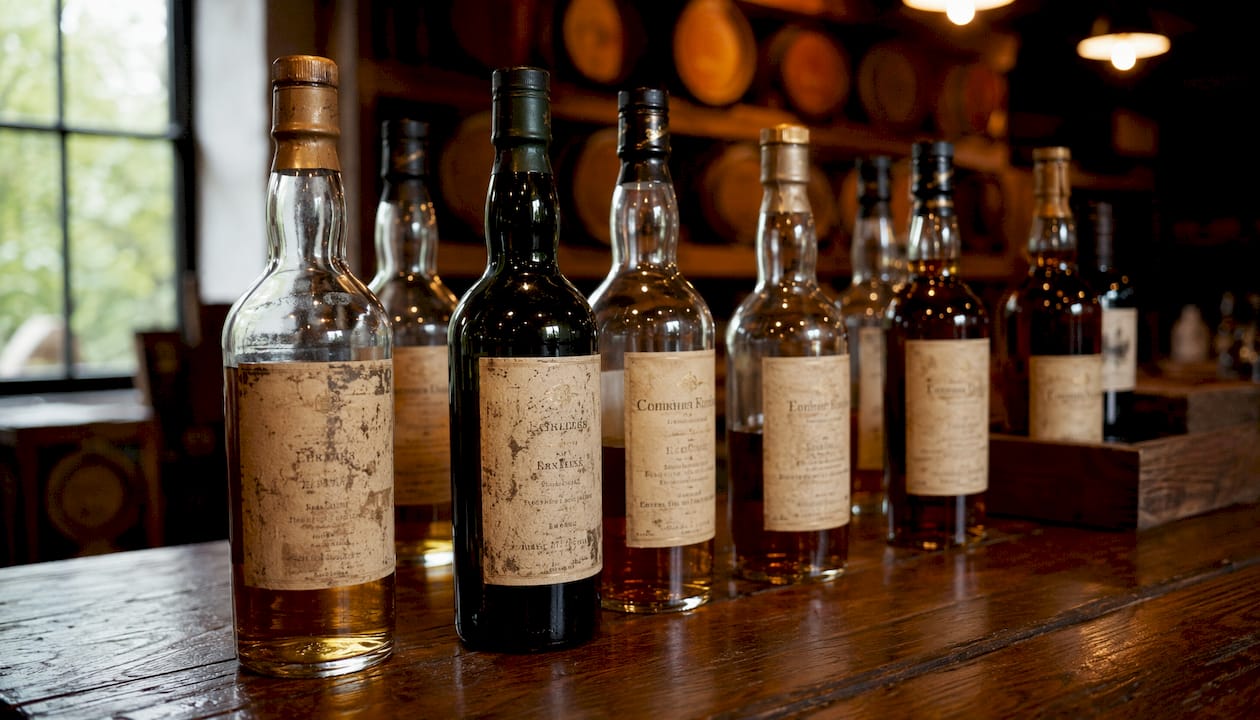
Age statements and vintage raise value, but they are not the whole story. The logical reasons are real: a smaller proportion of spirit survives long maturation, storage costs accumulate, and expert monitoring is required throughout. A full set of The Macallan Red Collection sold at Sotheby’s for £756,400 in October 2020; a complete Dalmore Decades set fetched £830,000 through the same house a year later. Yet a 12-year-old from a closed distillery can outprice a 30-year-old from a prolific one. Age amplifies value when combined with scarcity — it rarely creates value on its own.
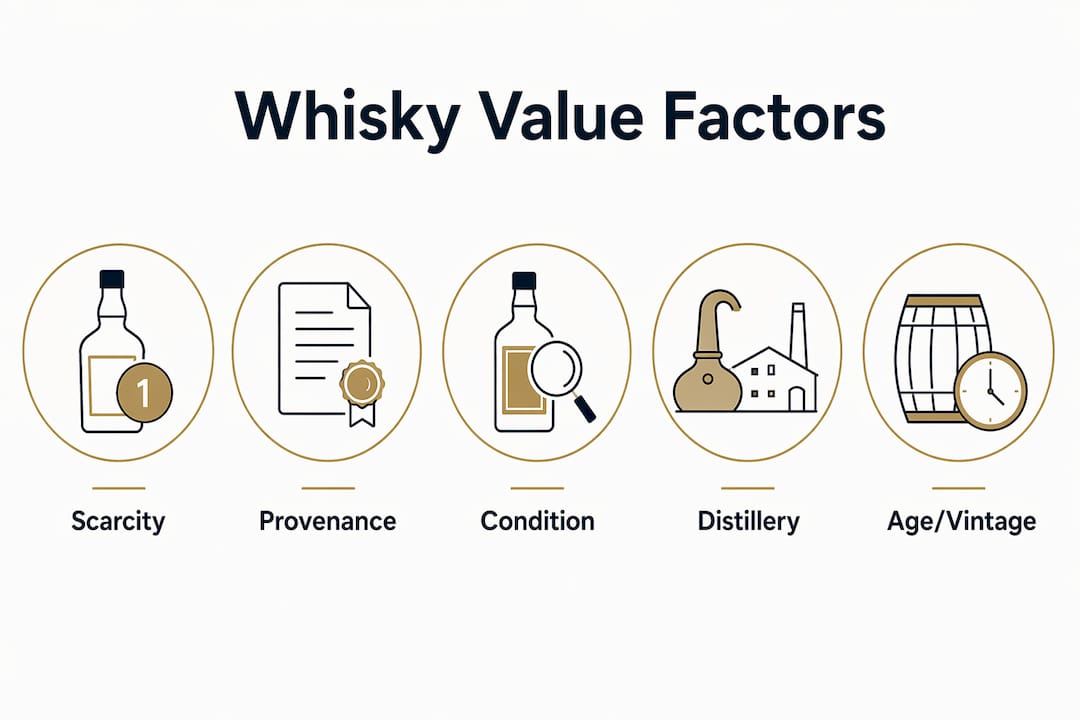
Cask type, finish, and ABV are increasingly significant price drivers. Cask-strength bottlings (typically 55–65% ABV) are sought after because they are uncut and often produced in smaller volumes. Unusual finishes — ex-Awamori, rare Cognac casks, sought-after rum producers — add a “first-ever” premium that collectors and auction houses both recognise.
Condition: the checklist that can shift price bands
- Fill level: anything below the base of the neck is a discount trigger. Low fill (shoulder level or below) can reduce realised price by 20–30% on otherwise comparable lots.
- Seal and cork integrity: an intact, unbroken seal is non-negotiable for top-tier realisations. A replaced or cracked cork raises authenticity questions immediately.
- Label condition: tears, staining, fading, or water damage reduce value. A pristine label on a 40-year-old bottle is genuinely rare and commands a premium.
- Original packaging: the box, tube, or presentation case is not cosmetic. Bottles sold without original packaging routinely realise less than complete sets, sometimes significantly so.
Sotheby’s recommends storing bottles upright to prevent the spirit from degrading the cork — a simple habit that protects fill level and seal integrity over years.
Provenance and documentation are where many Australian collectors leave money on the table. A bottling certificate, original purchase receipt, prior auction records, and a clear chain of custody each add verifiable weight to a price claim. A provenance paper trail materially underpins price — bottles lacking documentation trade at a discount, sometimes a steep one. For high-value expressions, the difference between a documented bottle and an undocumented one can run to thousands of dollars.
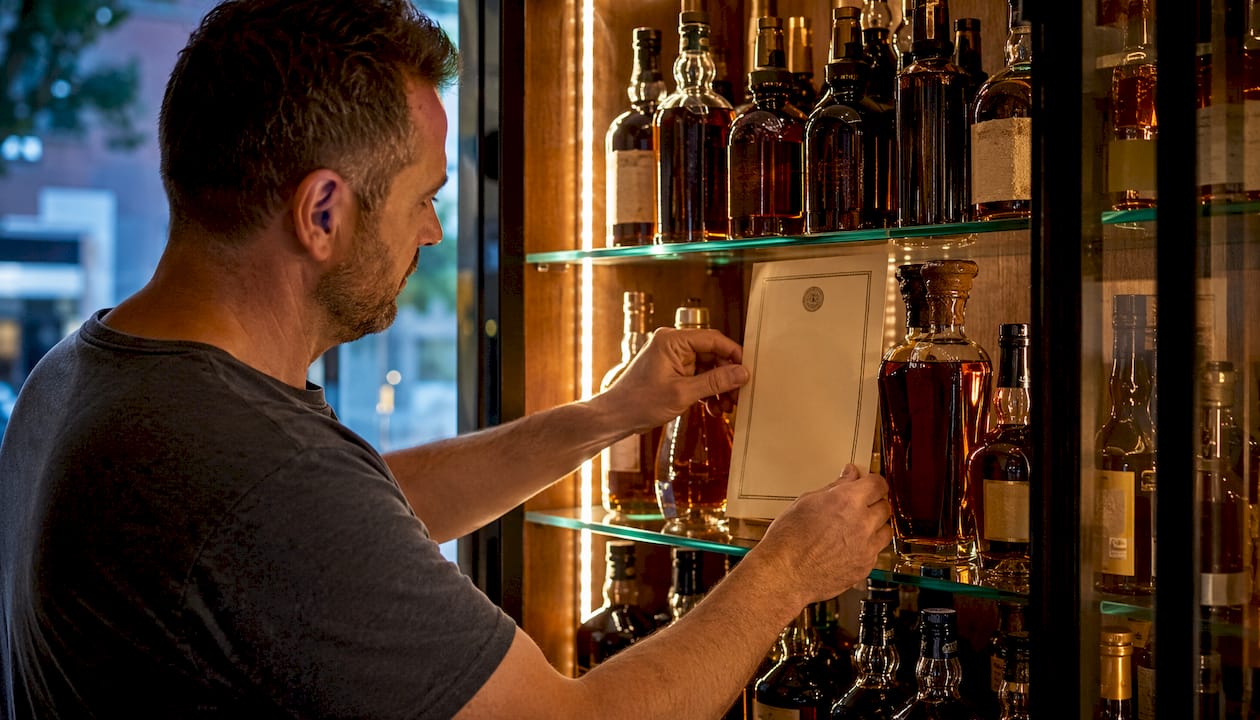
Counterfeit risk is real in the Australian market, particularly for high-demand Japanese and Scotch expressions. Authentication indicators include: embossed or heat-shrink capsules that show no signs of tampering, consistent fill levels for the stated age, label typography matching known genuine examples, and bottle weight consistent with the stated volume and glass specification. For bottles above AU$2,000, professional authentication is worth commissioning before sale or purchase.
Pro Tip: Photograph every bottle you own — label, seal, fill level, base, and original packaging — and store those images with your purchase receipt. That documentation costs nothing now and can add real dollars at auction later.
How to estimate what your bottle is worth right now
The most reliable method starts with comparable auction realisations, not retail price lists. Here is the workflow:
- Identify the exact expression. Distillery, age statement or vintage year, bottling series, cask number if applicable, and ABV. Vague searches produce useless comparables.
- Search recent auction results. Use the last 12–24 months of results where possible. Older realisations may not reflect current demand, especially for Japanese whisky, which has seen significant price movement.
- Read the lot notes carefully. Note fill level, seal condition, packaging completeness, and any provenance documents listed. A comparable with “low fill, no box” is not a fair comparison for your complete, full bottle.
- Adjust for condition. A low fill level or damaged label typically warrants a 10–30% discount from a comparable in perfect condition. Missing original packaging adds another 10–20% reduction in most cases.
- Apply the buyer-channel margin. Auction buyer premiums in Australia typically run 15–25% on top of the hammer price. That premium is paid by the buyer, not you, but it affects what buyers are willing to bid — factor it into your net expectation.
- Convert to AUD and round to a realistic range. Most international auction results are quoted in GBP or USD. Use the current exchange rate and add a buffer of 5–10% for currency movement between now and settlement.
Tools like WhiskyStats provide automated price estimates drawn from observed market data. They are useful as a cross-check, but treat them as a starting point rather than a final answer — they cannot account for condition nuances or the specific lot presentation that drives realised prices at auction.
A quick example: suppose you own a bottle of a well-regarded 18-year-old single malt Scotch from a distillery with a strong collector following. Recent auction results show comparable lots realising £800–£1,100 (hammer) in the UK, with full packaging and good fill. At a mid-rate of approximately AU$2.00 to the pound, that translates to roughly AU$1,600–$2,200 before fees. If your bottle has a slightly low fill and no original box, apply a 20–30% adjustment: realistic net expectation drops to AU$1,100–$1,750. That is the range to take into any selling conversation.
For Australian-specific context on why whisky values fluctuate between cycles, Uisuki’s market analysis is worth reading before you set a reserve.
Pro Tip: Always check at least three comparable lots, not one. A single outlier result — high or low — can skew your expectation badly. Three gives you a realistic band.
Where to sell in Australia: channels, fees, and realistic timelines
The channel you choose has a bigger impact on your net return than most collectors expect. Each route involves different trade-offs between price, speed, and cost.
- Auction houses typically produce the highest realised prices for rare and sought-after bottles, because competitive bidding can push results above estimate. The trade-off is time: from consignment to settlement, expect 6–12 weeks minimum, sometimes longer for specialist sales. Seller commissions in Australia generally run 10–15% of the hammer price, and you may also pay for photography, insurance, and shipping to the auction house.
- Specialist dealers offer faster liquidity — often a week or two from valuation to payment — but at a lower price. A dealer needs a margin to resell, so expect to receive 50–70% of estimated retail value. For bottles that are hard to sell at auction (lower-profile expressions, incomplete sets), a dealer can be the practical choice.
- Private sale through collector communities or online marketplaces can yield the best net price when you find the right buyer, but it carries the most risk: no price discovery mechanism, no buyer premium to offset your negotiating position, and no recourse if a transaction goes wrong. It also takes the longest when the buyer pool is thin.
In Australia, Wine Auctions Australia (Wickman) is one of the established local auction channels for collectible spirits. Approaching them requires a clear bottle description, condition photographs, and any provenance documents you hold.
| Channel | Typical price outcome | Speed to payment | Seller cost |
|---|---|---|---|
| Auction house | Highest (competitive bidding) | 6–12 weeks | 10–15% commission + listing/shipping |
| Specialist dealer | Moderate (50–70% of retail estimate) | 1–2 weeks | Nil (margin absorbed in offer) |
| Private sale | Variable (can match auction) | Weeks to months | Platform fees if applicable |
“We began selling spirits specifically in 2019,” says Jonny Fowle, global head of whisky at Sotheby’s. “That year we sold US$15m and we now achieve around US$30m, so it’s really grown quite massively since then.” The same trajectory is visible in Australian auction activity, where collector demand for rare Scotch and Japanese expressions has expanded the local buyer pool considerably.
Costs that reduce your net proceeds include seller commission, buyer premium (which affects bidding behaviour even though the buyer pays it), packing and shipping to the auction house, insurance in transit, and photography fees. For a bottle realising AU$2,000 at hammer, total deductions can easily reach AU$400–$600 before you see a payment.
For a broader view of where to source and sell rare whisky in Australia, Uisuki’s collector guides cover both the buying and selling sides of the local market.
How to get a formal appraisal in Australia
A formal written appraisal is worth commissioning when the bottle is likely worth AU$1,000 or more, when you need an insured value for your home contents policy, or when you are preparing for a significant sale. Online comparables are useful for a rough estimate; a written appraisal carries weight with insurers, auction houses, and potential buyers.
Documents to prepare before approaching an appraiser:
- Clear photographs: label (front and back), seal, fill level, base, and all original packaging
- Original purchase receipt or proof of ownership
- Any bottling certificates, distillery letters, or authentication documents
- Prior auction records if the bottle has been sold before
- Any condition notes from previous storage or handling
Questions worth asking any appraiser:
- What is your specific experience with rare whisky, and which distilleries or regions do you specialise in?
- Do you have active connections with Australian and international auction houses?
- How do you grade condition, and what condition adjustments do you apply to your estimate?
- What is your fee structure — flat fee, percentage of estimated value, or hourly?
- Will the appraisal be in writing and suitable for insurance or sale purposes?
A short appraisal request template you can copy:
Subject: Appraisal request — [Distillery, Expression, Age/Vintage]
I am seeking a written appraisal for the following bottle: [Distillery], [Expression name], [Age statement or vintage year], [ABV], [bottle size]. The bottle is [condition notes: fill level, seal, label, packaging]. I hold [list documents: original receipt / bottling certificate / prior auction records]. I am seeking this appraisal for [insurance / sale / personal records]. Please advise your fee, turnaround time, and any additional information you require. I can provide photographs immediately.
A paid formal appraisal is worth the cost when the stakes are high. For bottles under AU$500, online comparables from auction archives are usually sufficient. For anything above AU$1,500, a written appraisal from a specialist with auction connections is the more defensible approach.
Common mistakes that cost collectors real money
Poor storage is the most common and most avoidable error. Bottles stored on their side (as you would wine) risk spirit contact with the cork, which can degrade the seal and introduce off-flavours. Store upright, away from direct light, and at a stable temperature. A bottle that has been stored badly for five years is a harder sell than one kept well for twenty.
Selling without comparables is the second major mistake. Accepting the first offer from a retailer or dealer without checking recent auction realisations is how collectors routinely leave 20–40% on the table. The five minutes it takes to search auction archives can be the most valuable five minutes in the transaction.
Ignoring provenance paperwork is a slow-burn error. Collectors who discard receipts, bottling certificates, and original packaging at the time of purchase often regret it years later when they want to sell. The documentation that feels like clutter today is the paper trail that materially underpins price at auction.
Authentication red flags to watch for when buying: inconsistent label typography, capsule seams that show signs of re-sealing, fill levels that seem too high for the stated age (evaporation is real), and pricing that sits well below comparable auction realisations. For high-value Japanese and limited-edition Scotch expressions, professional authentication is a reasonable precaution before committing significant funds.
Pro Tip: Keep a simple spreadsheet logging every bottle you own: purchase date, price paid, source, condition notes, and photographs. If you ever need to make an insurance claim or prepare for sale, that record is worth its weight.
Key takeaways
The single most important thing to understand about rare whisky pricing: scarcity, provenance, and condition together determine realised value, and the selling channel you choose can shift your net return by 20–40%.
| Point | Details |
|---|---|
| Scarcity drives value | Limited run size, closed distilleries, and consumption of existing stock are the primary price engines. |
| Condition and packaging matter | Low fill level or missing original packaging can reduce realised price by 10–30% versus a complete, pristine example. |
| Use auction realisations as your benchmark | Cross-check at least three comparable lots from the last 12–24 months before setting a price or accepting an offer. |
| Channel choice affects net return | Auction houses maximise price but take 6–12 weeks; specialist dealers pay faster at 50–70% of retail estimate. |
| Uisuki for sourcing and guidance | Uisuki.com.au offers curated rare bottles, specialist sourcing requests, and collector resources for the Australian market. |
A collector’s honest take on valuation
There is a temptation, especially early in collecting, to treat every bottle as a potential investment and every valuation as a number to maximise. The experienced collectors I have observed tend to think differently. They split their cellar mentally: some bottles are held for the market, some are held to drink, and the decision about which is which gets made at the point of purchase, not years later when sentiment clouds judgement.
The market signals that matter most are not the headline auction records. The Macallan 1926 selling for US$2.7 million at Sotheby’s London in 2023 is a data point, but it tells you almost nothing about what your bottle of a lesser-known expression is worth today. What tells you something useful is the pattern of realisations for comparable bottles over 12–24 months: whether the trend is up, flat, or correcting. The Knight Frank Luxury Investment Index showed a correction of -10.9% for rare whisky in 2025 on an annual basis, a reminder that the category is not a one-way escalator. Timing a sale into a rising market matters, and that requires watching the data, not the headlines.
For Australian collectors, the practical advantage is access to both local auction channels and international platforms. That dual access means you can compare realisations across markets and choose the venue where demand for your specific expression is strongest. Uisuki’s whisky collectibility resources are a useful starting point for understanding how Australian market dynamics compare with global trends.
Uisuki is your specialist partner for rare whisky in Australia
If you have a bottle you want appraised, sourced, or sold, Uisuki.com.au is built for exactly that. The platform curates rare and hard-to-find expressions from Scotland, Japan, Australia, and the USA, and accepts personalised sourcing requests for bottles that are not currently in stock. For collectors who want to buy into the market rather than sell out of it, the range includes limited-edition releases like the Ichiro’s Malt and Grain Limited Edition — the kind of bottle that illustrates exactly why provenance and original packaging matter at resale.
Uisuki ships nationally with free shipping thresholds, multiple payment options, and a returns policy that reflects the care the platform takes with its curation. The collector community around the site is active, and the editorial resources are genuinely useful for setting realistic expectations before you buy or sell.
To start an appraisal enquiry or sourcing request, visit uisuki.com.au and use the contact or sourcing request form. Provide the bottle details, your condition notes, and any provenance documents you hold — the team can advise on next steps from there.
Useful sources for Australian collectors
- Uisuki — Whisky collectibility: value, trends, and risks: Best starting point for Australian-specific context on what drives collectible value and current market trends.
- Uisuki — Where to buy rare whisky: collector’s guide 2026: Locally focused channel guide covering auction houses, specialist dealers, and online platforms relevant to Australian collectors.
- WhiskyStats pricing engine: Automated price estimates drawn from observed market data; useful as a cross-check against auction realisations, not as a standalone valuation.
- Sotheby’s whisky market guides: Practical condition and storage tips from one of the world’s leading whisky auction houses; relevant for understanding what auction specialists look for.
- Scotch Whisky Investments — investing in whisky: Detailed analysis of long-term performance data, index comparisons, and portfolio construction; useful for collectors thinking about whisky as a long-term asset.
- Uisuki — Why whisky value fluctuates: Explains the supply, demand, and market-cycle drivers that affect realised prices; good for setting realistic seller expectations before approaching an auction house.
- Wine Auctions Australia (Wickman): One of Australia’s established auction channels for collectible spirits; approach with condition photographs, provenance documents, and a clear bottle description for a consignment assessment.
- Raphael Nagel — Rare whisky and spirits investing: Framework for understanding how provenance documentation and chain of custody affect price; useful for collectors preparing paperwork before a formal appraisal.