

TL;DR:
- Single malt Scotch comes from one distillery using only malted barley and copper pot stills, while blended Scotch combines malts and grain whiskies from multiple distilleries. Blended Scotch makes up most exports and emphasizes consistency and approachability, while single malts highlight a distillery’s unique character.
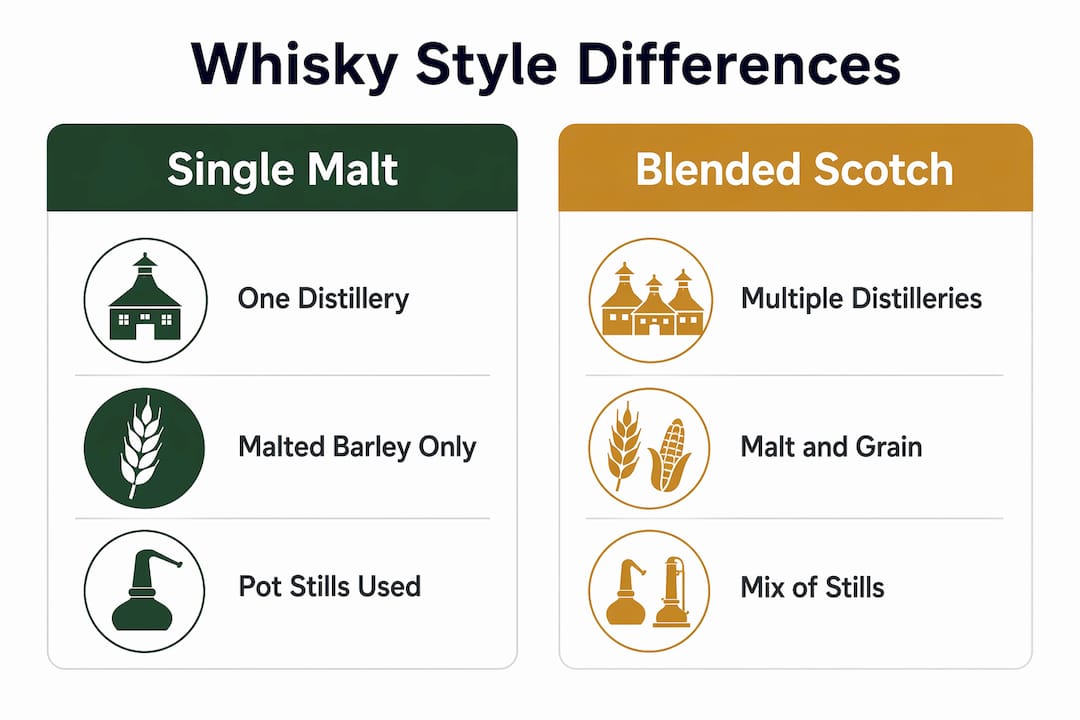
The core difference is this: a single malt comes from one distillery and uses only malted barley distilled in copper pot stills, while a blended Scotch combines one or more single malts with one or more grain whiskies from different distilleries. If you want to taste a specific distillery’s character, reach for a single malt. If you want something approachable, consistent, and usually easier on the wallet, a blend is the smarter starting point.
These categories are not just marketing labels. The Scotch Whisky Regulations 2009 set the legal definitions, and blended whiskies comprise the largest share of Scotch exports, reflecting where the real craft and volume of the industry actually sits.
Table of Contents
- What does ‘single malt’ legally mean?
- What do ‘blended Scotch’, ‘blended malt’, and ‘single grain’ actually mean?
- How do production choices shape what ends up in your glass?
- How do casks and ageing change the flavour of both styles?
- What do single malts and blends actually taste like?
- Common myths about blended and single malt whisky
- How to choose between a single malt and a blend
- Where to buy single malts and blends in Australia
- Key takeaways
- The categories are a map, not a verdict
- Browse single malts and blends at Uisuki
- Useful sources and further reading
What does ‘single malt’ legally mean?
Under the Scotch Whisky Regulations 2009, a single malt Scotch must be:
- Distilled at a single distillery (that is what ‘single’ means — not a single cask or single batch)
- Made from water and malted barley only, with no other cereals added
- Distilled in copper pot stills
- Matured in Scotland for at least three years in oak casks
- Bottled at a minimum of 40% ABV
The word ‘single’ trips people up constantly. It does not mean one barrel. In practice, almost every retail single malt is a vatting of many casks from the same distillery, blended together to maintain a consistent house style across bottlings. Glenfiddich 12, for example, draws from hundreds of casks each release to hit the same fruit-forward, honeyed profile year after year.
‘Malt’ is the other half of the equation. The grain must be malted barley specifically — steeped in water, allowed to germinate, then dried. That germination process activates enzymes that convert starches to fermentable sugars, and it is what gives malt whisky its characteristic cereal depth and complexity.
The distillery’s location, water source, still shape, and fermentation time all leave fingerprints on the final spirit. That is why a Speyside single malt and an Islay single malt can taste like they come from different planets, even though both follow the same legal checklist. For a deeper look at regional styles, the types of single malt whisky guide on Uisuki breaks it down by flavour profile.
What do ‘blended Scotch’, ‘blended malt’, and ‘single grain’ actually mean?
The label ‘blended’ covers more ground than most people realise. There are three distinct categories, and they are not interchangeable.
Blended Scotch whisky is the one you see most often. Per the Scotch Whisky Regulations 2009, it must contain at least one single malt Scotch whisky and at least one single grain Scotch whisky. Johnnie Walker Black Label and Chivas Regal 12 are classic examples. A premium blend can draw from fifty or more individual whiskies.
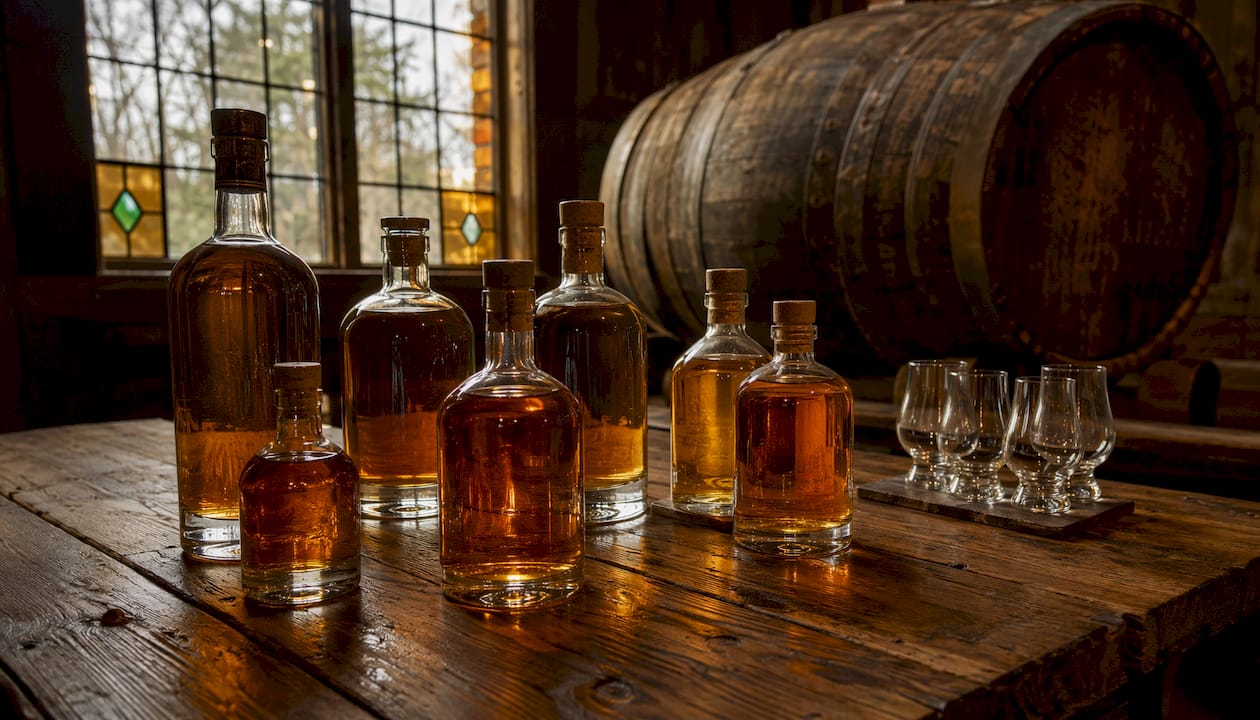
Blended malt Scotch whisky (formerly called ‘vatted malt’) is a blend of two or more single malts from different distilleries, with no grain whisky involved. It sits between single malt and blended Scotch in character — you get multi-distillery complexity while keeping an all-malt profile. This category is often overlooked, but it is worth seeking out if you want something more layered than a standard blend without paying single malt prices.
Single grain Scotch whisky comes from one distillery but is made from cereals other than (or in addition to) malted barley — typically wheat or corn — and distilled in column stills. It is lighter and sweeter than malt whisky. Most single grain production goes straight into blends, though a handful of standalone bottlings exist for the curious.
Blended grain Scotch whisky combines two or more single grain whiskies from different distilleries. It is the rarest of the five categories and mostly of interest to collectors.
The practical takeaway: when you see ‘blended’ on a label, check whether it says ‘blended Scotch’ (malt plus grain), ‘blended malt’ (all malt, multiple distilleries), or ‘blended grain’ (all grain). They taste quite different. For more on how grain whisky differs from malt, Uisuki’s explainer covers the key contrasts.
How do production choices shape what ends up in your glass?
The still type is the single biggest production variable separating single malt from blended Scotch, and it has direct sensory consequences.
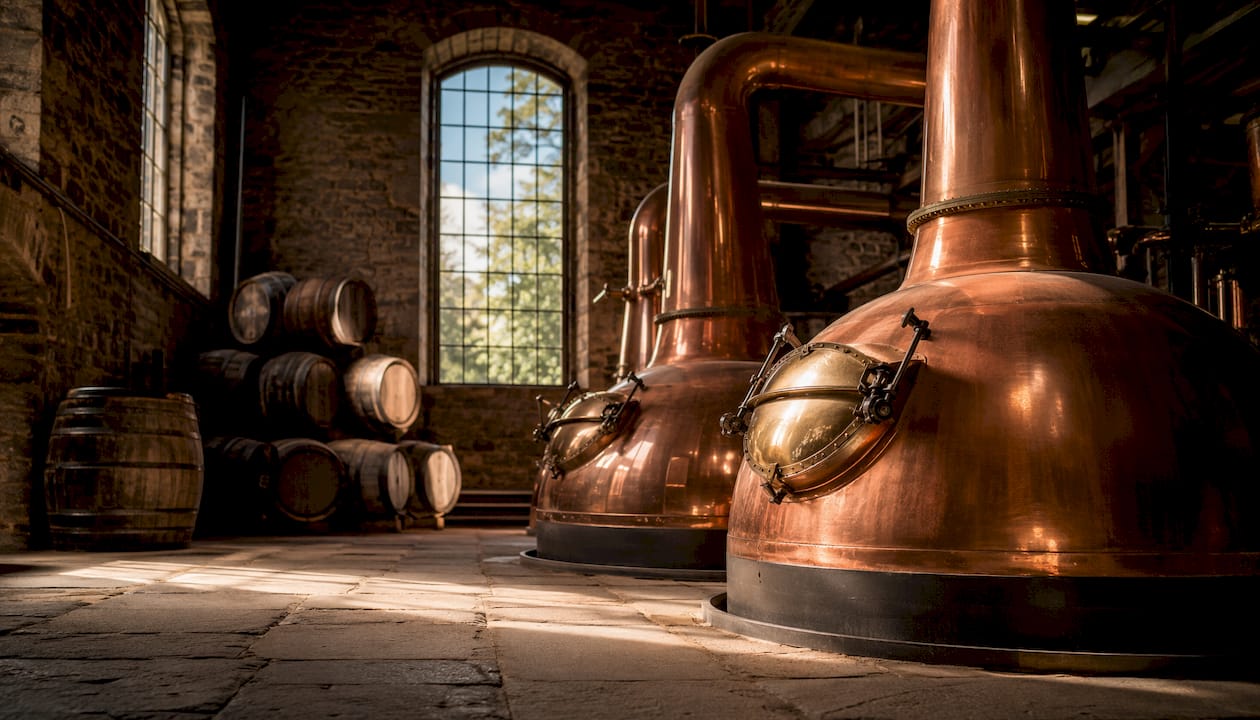
Pot stills work in batches. Spirit passes through twice (sometimes three times), and the copper contact retains more flavour compounds called congeners — esters, aldehydes, fatty acids — that give pot-distilled whisky its oily mouthfeel, fruity top notes, and overall richness. The shape of the still matters too: a tall, narrow still produces a lighter, more delicate spirit; a short, squat still yields something heavier and more robust.
Column stills (also called Coffey or continuous stills) run non-stop and can produce spirit at over 94% ABV, stripping out most of the heavier congeners in the process. The result is a cleaner, lighter, more neutral spirit — exactly what blenders want as a structural base that lets the malt whiskies in the blend do the flavour work.
Here is how the key production steps map to flavour outcomes:
- Pot still distillation → oily mouthfeel, stone fruit, floral top notes, more body
- Column still distillation → light body, clean cereal sweetness, vanilla, easy drinkability
- Malted barley base → biscuit, honey, dried fruit, enzymatic complexity
- Wheat or corn base (grain whisky) → soft sweetness, lighter texture, less cereal depth
- Long fermentation (72+ hours) → more fruity esters, tropical notes
- Short fermentation → more cereal, grainy, sometimes sulphury notes
Peat and phenols: Peat smoke character is measured in parts per million (ppm) of phenolic compounds. Unpeated malts typically sit below 5 ppm, while heavily peated expressions often exceed 100 ppm, and extreme examples — think certain Islay distilleries — can push past 300 ppm. That range explains why one whisky smells like a bakery and another like a bonfire.
Malted barley contributes more cereal and enzymatic complexity than wheat or corn because the malting process itself generates a wider range of flavour precursors. That is why even a lightly peated single malt tends to have more textural interest than a grain whisky of the same age.
How do casks and ageing change the flavour of both styles?
Cask influence is where a lot of the real flavour action happens. Industry guidance attributes approximately 60–70% of mature whisky flavour to cask type, previous fills, and maturation environment rather than distillation alone. That figure should recalibrate how you read tasting notes.
| Cask type | Typical flavour contribution | Common use |
|---|---|---|
| Ex-bourbon (American oak) | Vanilla, coconut, light caramel, dried citrus | Most common; used across single malts and blends |
| Ex-sherry (European oak) | Dried fruit, Christmas cake, chocolate, spice | Adds richness; popular for premium expressions |
| Port / Pedro Ximénez | Raisins, dark berry, molasses, sweetness | Often used for finishing; adds depth and colour |
| New American oak | Strong vanilla, toasted wood, bold tannins | Less common in Scotch; more typical in bourbon |
| Wine cask finish | Red fruit, floral notes, light tannin | Used for finishing runs of several months |
First-fill casks (used for the first time after their original spirit) give the most intense flavour extraction. A first-fill ex-sherry butt will push dried fruit and spice hard. Refill casks are more neutral — the wood has already given much of its flavour — so they let the distillery character come through more clearly. Blenders often use a mix of both to hit a target profile.
Age statements tell you the minimum time the youngest whisky in the bottle spent in wood. They do not tell you the cask type, the fill history, or the maturation warehouse conditions — all of which can matter more than the number on the label. A 12-year-old matured in a first-fill sherry butt will often taste richer and more complex than a 15-year-old from a tired refill hogshead.
What do single malts and blends actually taste like?
Single malts tend to highlight what makes a specific distillery distinctive. A Speyside expression like Glenfiddich typically leans into dried fruit, honey, and gentle oak. An Islay single malt goes the other direction entirely — peat smoke, brine, iodine, and sometimes a medicinal edge. Coastal distilleries often show sea salt and light smoke even without heavy peating. The point is that single malts wear their provenance openly.
Blends aim for something different: balance, approachability, and above all, consistency. Johnnie Walker Black Label draws from around forty distilleries across Scotland, which gives the master blender enormous flexibility to hit the same smoky, fruity, slightly sweet profile every single time, regardless of how individual cask batches vary year to year. Chivas Regal 12 is built around a similar philosophy — soft, rounded, with a creamy cereal sweetness that makes it one of the most food-friendly whiskies on the shelf.
A few practical flavour pointers:
- Single malts as sippers: their distillery character rewards slow drinking neat or with a small splash of water, which opens up the aromatics
- Blends in cocktails: their consistent, approachable profile makes them the better choice for a Rob Roy, a Rusty Nail, or a simple highball — the flavour holds up without dominating
- Blended malts as a middle ground: if you want multi-distillery complexity without grain dilution, a blended malt gives you that without the price tag of a premium single malt
- Entry-level single malts vs premium blends: a $60 blend from a skilled master blender can be more interesting than a $55 entry-level single malt — price does not automatically follow quality across categories
Sullivans Cove from Tasmania is worth mentioning here as an Australian example of what single malt can achieve outside Scotland. Their French Oak expression has won international awards and shows how distillery character — in this case, rich dried fruit and dark chocolate from new French oak — can be just as compelling as anything from the Highlands.
Common myths about blended and single malt whisky
Myth: blended whisky is inferior. This is the most persistent misconception in the category, and it does not hold up. Blended Scotch accounts for approximately 90% of all Scotch exports, and the master blenders behind Johnnie Walker, Chivas Regal, and similar houses spend careers developing and maintaining those profiles. The skill of the master blender is a distinct craft — choosing which whiskies complement each other, adjusting the recipe as individual casks vary, and maintaining consistency across millions of bottles. That is not a lesser discipline than distilling; it is a different one.
Myth: single malt means single cask. It does not. As noted above, almost every retail single malt is a vatting of many casks from the same distillery. Single cask bottlings exist and are labelled as such — they are the exception, not the rule.
Myth: a higher age statement means better whisky. Age is one variable among many. Cask type, fill history, and maturation conditions often have more impact on the final flavour than the number of years in wood. A well-chosen 10-year-old in a first-fill sherry cask can outperform a 21-year-old from a tired refill barrel on pure flavour grounds.
Myth: the categories reflect quality, not production. The Scotch Whisky Regulations 2009 define these categories by ingredients and production method, full stop. Single malt commands cultural prestige partly because of how the category was marketed from the 1960s onward, not because the regulations confer a quality ranking. A premium blended Scotch can be more complex and more consistent than an entry-level single malt from a less-regarded distillery.
How to choose between a single malt and a blend
The right choice depends on what you are drinking, when, and why. Work through these questions before you buy.
- What is the occasion? Sipping slowly after dinner calls for a single malt with character. Mixing cocktails or sharing a bottle at a casual gathering is where a well-made blend earns its keep.
- What flavours do you enjoy? If you like fruit, honey, and cereal warmth, start with a Speyside single malt or a quality blended Scotch. If smoke and salt appeal to you, an Islay single malt is the direct route. If you want something lighter and sweeter, a blended Scotch with a high grain ratio fits.
- What is your budget? Entry-level blends ($40–$60) offer reliable quality and consistency. Entry-level single malts in the same range are available but narrower in selection. Mid-range ($60–$120) is where both categories get genuinely interesting. Premium ($120+) opens up aged single malts, limited releases, and prestige blends.
- Are you collecting or drinking? Collectors tend to focus on single malts, distillery-specific releases, and limited blended malts. Everyday drinking is where blends shine.
- Ask the right questions in-store or online: What is the ABV? What cask was it matured or finished in? Is there an age statement, and if not, why not? Is it a blended malt or a blended Scotch? A retailer who cannot answer these questions clearly is a red flag.
Red flags when buying:
- No ABV listed (legally required on all bottles)
- An age statement that seems implausibly old for the price
- Vague provenance (“premium Scotch whisky” with no distillery or blender named)
- No cask information on a bottle marketed as a premium expression
- Suspiciously low prices for a stated 18- or 21-year-old expression
Where to buy single malts and blends in Australia
Australia has a solid range of buying options, each with different strengths.
Specialist online retailers are the best source for rare, limited, and imported expressions. They typically carry detailed product listings with ABV, cask type, age statement, and provenance — the information you need to buy with confidence. Shipping is available nationally, though some states have specific liquor licensing requirements that affect delivery.
Bottle shops (Dan Murphy’s, BWS, and independent retailers) stock mainstream single malts and blends reliably. For anything beyond the standard range, you will usually need to go online or contact a specialist.
Auctions (both online and in-person) are where rare and discontinued expressions surface. Prices can be high and condition varies, so buy only from reputable platforms with clear provenance documentation.
Duty-free is useful for well-known expressions at competitive prices, but the selection is limited and you cannot inspect the bottle closely before purchase.
When assessing any listing, look for: a clear ABV percentage, a named distillery or blender, cask type and fill history where relevant, an age statement or a transparent explanation of why there is none, and verifiable customer reviews. For practical guidance on buying whisky online in Australia, including shipping considerations and authentication tips, Uisuki’s retail guide covers the process clearly.
Pro Tip: When verifying an unfamiliar bottle, check the batch or lot number on the label against the distillery’s or retailer’s records, ask for clear photos of the label and capsule if buying online, and cross-reference the product description across at least two trusted listings. Inconsistencies in ABV, age statement, or cask description between listings are a warning sign worth investigating before you commit.
For niche releases that are not in stock, a sourcing request to a specialist retailer is often the most direct route. Many Australian specialists maintain supplier relationships that give them access to allocations not available through standard wholesale channels.
Key takeaways
Single malt comes from one distillery using only malted barley in pot stills; blended Scotch combines at least one single malt with at least one grain whisky, and roughly 90% of all Scotch exports fall into that blended category.
| Point | Details |
|---|---|
| Legal definitions matter | Single malt = one distillery, malted barley, pot stills; blended Scotch = malt plus grain whisky, per Scotch Whisky Regulations 2009. |
| ‘Single’ does not mean one cask | Most retail single malts are a vatting of many casks from the same distillery to maintain a consistent house style. |
| Casks drive flavour | Roughly 60–70% of mature whisky flavour comes from cask type, fill history, and maturation environment, not distillation alone. |
| Blended is not inferior | Master blenders craft blends to a precise, consistent profile; the category reflects production method, not quality ranking. |
| Match the whisky to the use | Single malts reward slow sipping; blends suit cocktails, everyday drinking, and value-focused buying. |
| Uisuki for Australian buyers | Uisuki.com.au stocks a curated range of single malts and blends with detailed cask and provenance information for confident buying. |
Taste both styles side by side if you can — that single comparison will teach you more about the blended and single malt difference than any amount of reading.
The categories are a map, not a verdict
The prestige gap between single malt and blended Scotch is largely a marketing artefact from the 1980s and 1990s, when single malt producers successfully repositioned their category as the connoisseur’s choice. That repositioning worked commercially, but it left a lot of drinkers with a false hierarchy in their heads.
The truth is more interesting. A master blender working with fifty or more whiskies to hit a precise, repeatable flavour target is doing something technically demanding that a single distillery release does not require. And a blended malt — all malt, multiple distilleries, no grain dilution — can be more complex than either a standard blend or an entry-level single malt, yet it rarely gets the shelf space or the conversation it deserves.
What the categories actually tell you is how a whisky was made and where its components came from. They do not tell you whether you will enjoy it. The only way to answer that question is to taste widely across both styles, pay attention to cask type and age rather than just the category label, and stop letting the word ‘blended’ trigger a quality assumption that the industry’s own export figures contradict.
Browse single malts and blends at Uisuki
Uisuki.com.au is a specialist online whisky retailer stocking a curated selection of single malts and blended whiskies from Scotland, Japan, Australia, and the USA. Every listing includes ABV, cask details, and provenance information — the specifics that actually help you decide. Whether you are after a well-known Speyside single malt, a premium blended Scotch like Chivas Regal, or a rare Australian expression like Sullivans Cove, the range covers entry-level through to collector-grade bottles. Other trusted Australian retailers also stock quality whiskies, and Uisuki’s team is available for sourcing requests when a specific bottle is not currently listed.

Ready to find your next bottle? Browse the full range at Uisuki.com.au, or get in touch directly if you are chasing something specific.
Useful sources and further reading
These are the primary and authoritative sources behind the definitions and production facts in this article.
-
Scotch Whisky Regulations 2009 — the UK statutory instrument that legally defines all five Scotch whisky categories, including single malt, blended Scotch, blended malt, single grain, and blended grain. The definitive source for label interpretation and legal requirements.
-
Scotch Whisky Technical File (UK Government, June 2019) — the official technical file setting out production requirements, aroma and flavour standards, and the role of the blender. Authoritative for production-to-flavour questions.
-
Scotch Whisky Association (SWA) — the industry body representing Scotch whisky producers. Its educational materials cover category definitions, maturation science, and industry statistics including export volumes.
-
Edinburgh Whisky Academy — peat and phenol guidance — practical educational resource on peat ppm measurements and how phenolic compounds translate to sensory character in whisky.
-
Serious Eats — single malt vs blended whisky explainer — well-researched consumer-facing primer that addresses common misconceptions about quality and category differences.