

Choosing the right whisky can feel overwhelming when regional distinctions blur together. Nearly 30% of whisky gifts go unappreciated due to mismatched tastes or improper selection, a challenge that frustrates both gift givers and collectors. Understanding whisky regions transforms confusion into confidence, unlocking better tasting experiences and smarter investment decisions. This guide teaches you to identify and select premium whiskies by region, ensuring every bottle you choose aligns with your palate and collection goals.
Table of Contents
- Introduction To Whisky Regions
- Major Whisky Regions Worldwide And Their Unique Characteristics
- Australian Whisky Regions And Their Distinctive Traits
- Step By Step Guide To Selecting Whisky By Region For Collectors And Enthusiasts
- Common Mistakes And Troubleshooting In Selecting Regional Whisky
- Expected Outcomes And Success Metrics From Understanding Whisky Regions
- Explore Premium Regional Whiskies With Uisuki
- What Defines A Whisky Region And Why Does It Matter?
Key takeaways
| Point | Details |
|---|---|
| Regional geography shapes flavour | Climate, water, soil and production traditions create distinct whisky characteristics unique to each region. |
| Australian regions mature faster | Warmer climates accelerate ageing by up to 2 times compared to Scotland, affecting flavour development. |
| Regional knowledge improves decisions | Selecting whisky by region boosts purchase confidence and collection value while reducing disappointment. |
| Avoid common selection mistakes | Verify provenance, match flavour profiles to experience levels, and buy only from trusted sellers. |
| Regional understanding enhances enjoyment | Knowing regional influences improves tasting satisfaction and gifting success rates by over 70%. |
Introduction to whisky regions
A whisky region represents a geographical area where specific production traditions, climate conditions, and natural resources combine to influence the spirit’s style and flavour. Understanding these regional distinctions matters because they determine the characteristics you’ll experience in every bottle. For Australian enthusiasts and collectors, this knowledge becomes essential when selecting whiskies that align with personal taste preferences and long term collecting goals.
Climate affects everything from maturation speed to flavour intensity. Water quality and mineral composition shape the distillation process. Soil influences the barley grown for production. Local traditions dictate fermentation times, still shapes, and cask choices. These factors work together to create regional signatures that make Islay whiskies taste dramatically different from Speyside expressions.
Regional identity also serves as a marker of provenance, rarity, and investment potential. Collectors value bottles from established regions with proven quality reputations. Understanding whisky regions and flavour profiles helps you:
- Identify flavour characteristics before purchasing
- Select whiskies matching your taste preferences
- Build a diverse collection with regional variety
- Recognise investment opportunities from emerging regions
- Communicate knowledgeably with sellers and fellow enthusiasts
Major whisky regions worldwide and their unique characteristics
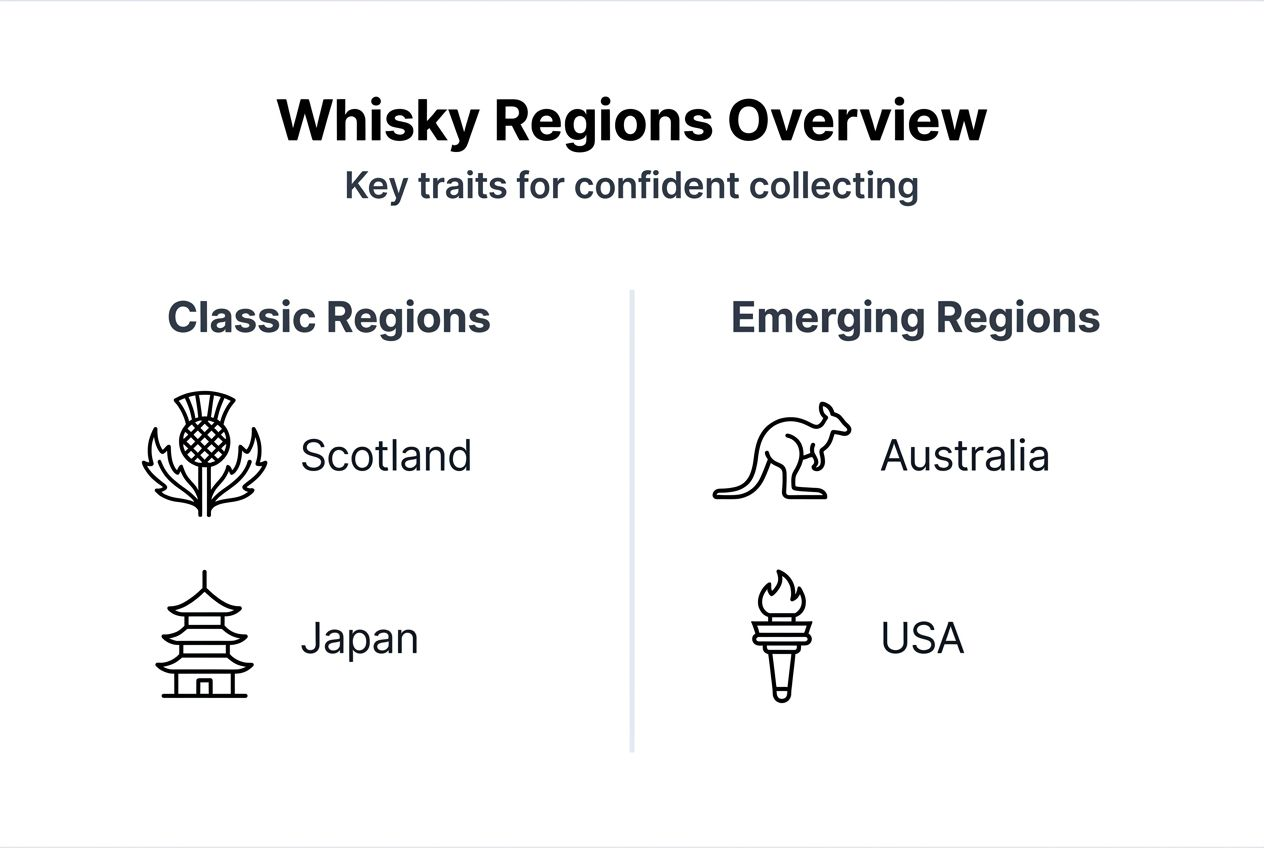
Scotland established five traditional whisky regions that define global standards. Speyside produces the most distilleries, offering fruity, elegant whiskies with honey and orchard notes. Highlands delivers diverse styles from light floral to rich sherried expressions. Islay creates intensely peated, smoky whiskies with maritime character. Lowlands crafts delicate, grassy spirits perfect for newcomers. Islands offer varied profiles from maritime to lightly peated styles.
Japanese whisky emerged as Scotland’s refined sibling, emphasising balance, delicacy, and precision. Producers adopted Scottish methods but developed distinctly Japanese characteristics through meticulous blending, Mizunara oak usage, and attention to subtle flavour layers. The result delivers elegant, complex whiskies prized by collectors worldwide.
American whiskey brings sweetness and boldness through corn based bourbons, spicy rye expressions, and Tennessee’s charcoal filtered smoothness. Regional production variance matters here too. Kentucky bourbon tastes different from Texas bourbon due to climate impacts on barrel interaction and maturation speed.
Australian whisky regions showcase innovation and climatic advantage. Tasmania, Victoria, and New South Wales produce award winning spirits with unique characteristics shaped by local conditions. Warmer temperatures, native grains, and experimental cask finishes create profiles unavailable elsewhere.
| Region | Climate | Signature Flavours | Production Focus |
|---|---|---|---|
| Speyside | Cool, moderate | Fruity, honey, elegant | High volume, consistent quality |
| Islay | Maritime, cool | Peated, smoky, medicinal | Heavily peated expressions |
| Japanese | Varied, moderate | Delicate, balanced, refined | Precision blending, Mizunara oak |
| Australian | Warm to moderate | Bold, innovative, fruity | Fast maturation, experimental casks |
| Kentucky | Hot summers, cold winters | Sweet, caramel, vanilla | Bourbon production, corn dominant |
Exploring a major whisky regions checklist builds palate awareness. Regional knowledge helps you predict flavour profiles before opening bottles. Understanding regional flavour and production differences refines your ability to select whiskies confidently for personal enjoyment or gifting.
Australian whisky regions and their distinctive traits
Tasmania dominates Australian whisky production, leveraging cool maritime climate, pure water sources, and barley quality comparable to Scotland. Distilleries like Sullivan’s Cove, Lark, and Overeem produce internationally acclaimed single malts. The island’s conditions create complex, balanced whiskies with distinct Tasmanian character.
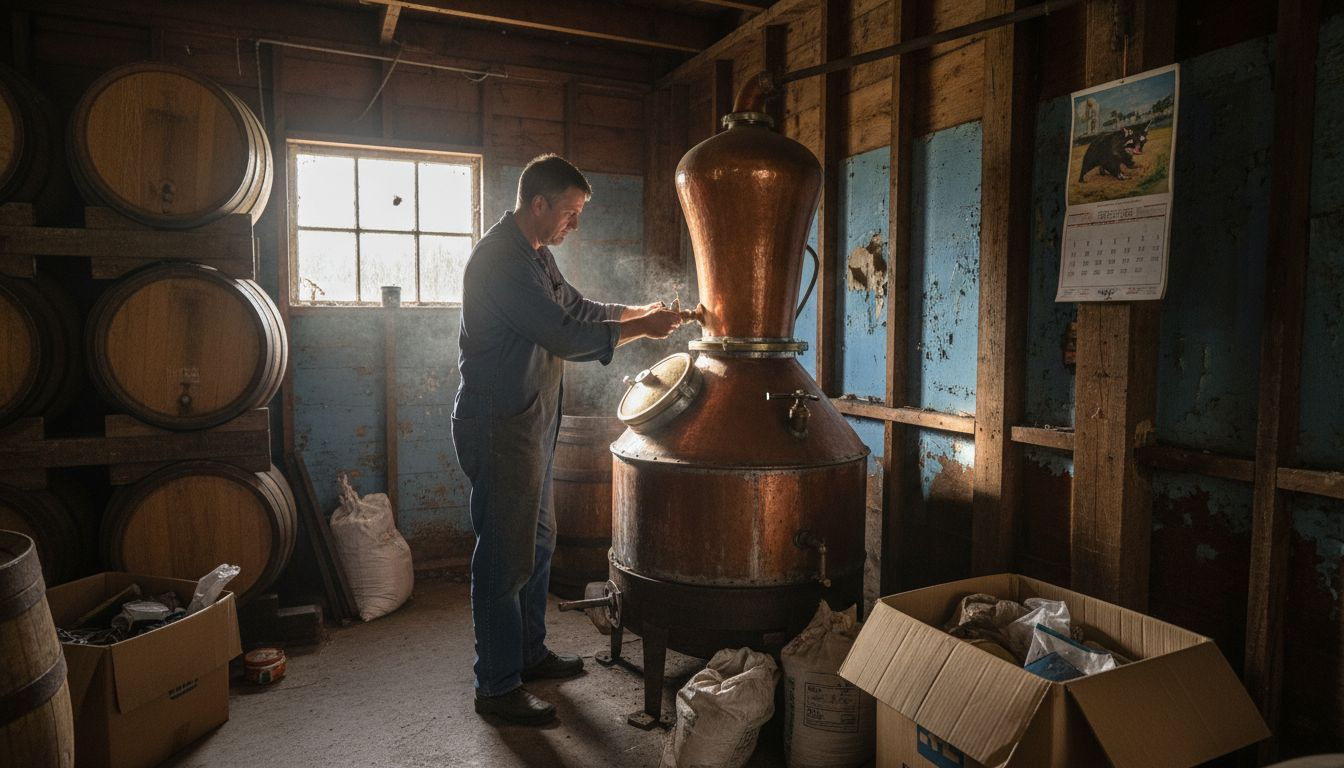
Victoria and New South Wales contribute growing numbers of innovative distilleries. Warmer mainland climates dramatically affect maturation. Maturation accelerated by up to 2 to 3 times in warmer Australian climates compared to Scotland means younger whiskies deliver flavour complexity typically requiring longer ageing in cooler regions. This accelerated development influences both pricing and collecting strategies.
Australian producers experiment with native grains, local wine cask finishes, and port barrels unavailable to traditional regions. These innovations create unique flavour profiles valued by collectors seeking distinctive bottles. Awards from international competitions validate Australian whisky quality, driving global recognition and investment interest.
Key Australian regional characteristics include:
- Faster flavour development requiring fewer years maturation
- Bold, fruit forward profiles from warmer barrel interaction
- Innovative cask finishes using Australian wine and fortified barrels
- Native grain experimentation adding unique terroir elements
- Maritime influence in coastal distilleries creating salinity notes
Pro tip: When collecting Australian whisky, focus on age statements relative to climate impact. A 5 year Tasmanian whisky may deliver complexity comparable to a 10 year Scottish malt due to maturation acceleration. Understanding Australian whisky regional characteristics helps you evaluate value and flavour expectations accurately. Research Australian whisky maturation and climate effects before purchasing to set realistic expectations for age, flavour development, and investment potential.
Step by step guide to selecting whisky by region for collectors and enthusiasts
Selecting whisky by region requires systematic evaluation matching regional characteristics with your taste preferences and collection objectives. Follow this structured approach to make confident purchases every time.
-
Identify preferred whisky regions by sampling diverse regional styles. Visit tasting events, try miniature sets, or order flights to experience Speyside elegance versus Islay intensity versus Australian innovation.
-
Understand how climate and production methods influence flavour expectations. Research regional maturation speeds, typical cask types, and traditional production techniques before purchasing.
-
Select reputable distilleries within your chosen region. Focus on established producers with consistent quality or awarded newcomers with verified credentials. Prioritise age statements, cask type information, and limited edition releases that enhance collectability.
-
Verify provenance and authenticity before finalising purchases. Check seller credentials, request authentication certificates, examine packaging integrity, and confirm serial numbers match distillery records.
-
Match whisky profiles with recipient palate experience when gifting. Beginners need approachable, lighter styles. Experienced drinkers appreciate complex, challenging expressions. Regional knowledge prevents mismatched selections.
Pro tip: Create a personal regional preference matrix tracking which regions you enjoy most across different occasions. Rate regions by flavour intensity, complexity, and versatility to guide future purchases systematically.
| Selection Criteria | What to Check | Why It Matters |
|---|---|---|
| Regional style | Flavour profile alignment | Ensures taste satisfaction |
| Distillery reputation | Awards, reviews, heritage | Indicates quality and value |
| Age statement | Years relative to climate | Sets flavour expectations |
| Cask type | First fill, sherry, wine | Determines flavour influence |
| Provenance | Seller credentials, documentation | Prevents counterfeit purchases |
| Limited edition status | Production numbers, release date | Affects collectability and investment |
Applying selecting regional whisky step by step methodically reduces purchasing mistakes. Understanding how to match whisky to taste and occasion ensures every bottle serves its intended purpose, whether personal enjoyment, collection building, or thoughtful gifting.
Common mistakes and troubleshooting in selecting regional whisky
Even experienced collectors make selection errors that result in disappointing purchases or diminished collection value. Recognising these mistakes helps you avoid costly missteps when buying regional whiskies.
Gifting heavily peated or cask strength whiskies to novices creates negative first impressions. Nearly 30% of whisky gifts go unappreciated because flavour intensity overwhelms inexperienced palates. Match regional intensity to recipient experience. Beginners need approachable Speyside or Lowlands expressions, not Islay peat bombs.
Purchasing from unverified sellers risks counterfeit bottles, incorrect storage conditions, or misrepresented provenance. The secondary market contains sophisticated fakes targeting collectors. Only buy from established retailers with authentication processes and return policies protecting your investment.
Ignoring climate impacts on maturation leads to unrealistic expectations. Australian whiskies aged 5 years deliver flavour depth requiring 10 years in Scotland. Judging solely by age statement without regional context causes disappointment. Research regional maturation rates before evaluating age value.
Neglecting packaging and documentation preservation destroys collectible value. Original boxes, certificates, and distillery information matter enormously for resale and authentication. Store these materials carefully alongside bottles.
Key mistakes to avoid:
- Selecting high intensity regional styles for inexperienced recipients
- Trusting unverified sellers or secondary market listings without authentication
- Comparing age statements across regions without climate adjustment
- Discarding original packaging reducing future resale value
- Purchasing without researching regional characteristics and distillery reputation
Learn techniques for avoiding counterfeit whisky through verification processes. Study common whisky selection mistakes and fixes to prevent disappointing purchases. Applying these troubleshooting strategies protects both your investment and tasting satisfaction.
Expected outcomes and success metrics from understanding whisky regions
Mastering regional whisky knowledge delivers measurable improvements across purchasing accuracy, collection value, and tasting enjoyment. These concrete outcomes demonstrate the practical value of regional expertise.
You’ll experience increased confidence making purchasing decisions without second guessing selections. Regional knowledge eliminates uncertainty by providing clear frameworks matching whiskies to preferences. Decision making becomes faster and more accurate as you recognise regional signatures instantly.
Gift dissatisfaction drops dramatically when you match regional profiles to recipient experience levels. Proper selection reduces returns and disappointment by over 70%, transforming you into a trusted whisky advisor among friends and family.
Collection value grows as you identify undervalued regions before market recognition peaks. Australian whisky represents current opportunity similar to Japanese whisky 15 years ago. Understanding regional provenance helps you spot investment potential others miss.
Tasting experiences improve through conscious flavour appreciation. Recognising how regional factors create specific characteristics deepens enjoyment and conversation. You’ll describe and share whisky knowledge articulately, enhancing social experiences.
Measurable success indicators include:
- Making whisky purchases without extensive research or seller consultation
- Receiving positive feedback on gifts with zero returns
- Building collections that appreciate in value annually
- Identifying regional characteristics blind during tastings
- Educating others about regional distinctions confidently
Tracking measuring whisky collecting success through these metrics validates your growing expertise. Regional mastery transforms casual appreciation into sophisticated collecting, where every purchase serves strategic taste development and investment objectives.
Explore premium regional whiskies with Uisuki
Apply your regional knowledge immediately by exploring Uisuki’s expertly curated selection spanning Scottish, Japanese, American, and Australian expressions. Every bottle features verified provenance and authentication, giving you confidence in quality and collectability. Our team sources directly from producers, ensuring you access limited editions and award winning releases unavailable through standard retail channels.
Discover premium Australian whisky selections showcasing Tasmania’s innovative approach to cask finishing. Browse exclusive limited edition whiskies from globally recognised producers. Consult our expert whisky buying guide to refine your selection strategy further, ensuring every purchase enhances your collection’s diversity and value.
What defines a whisky region and why does it matter?
A whisky region encompasses the geographical area where specific climate conditions, water sources, production traditions, and natural resources combine to create distinctive spirit characteristics. These factors influence everything from grain selection and fermentation to maturation speed and final flavour profiles. Regional definition matters because it helps collectors and enthusiasts predict taste characteristics, understand value propositions, and build diverse collections representing global whisky heritage. Recognising regional signatures allows you to select bottles confidently, avoiding mismatched purchases whilst identifying investment opportunities from emerging areas before broader market recognition drives prices higher.
How does Australian climate affect whisky maturation compared to Scotland?
Australia’s warmer temperatures accelerate maturation by up to 2 to 3 times compared to Scotland’s cooler climate. This faster barrel interaction means Australian whiskies develop flavour complexity in fewer years than Scottish counterparts. A 5 year Australian expression often delivers depth comparable to a 10 year Scottish malt. Collectors should adjust age expectations accordingly, evaluating Australian whiskies by flavour development rather than age statement alone. This climate advantage creates unique investment opportunities as younger, less expensive bottles offer sophisticated profiles typically requiring longer, costlier maturation in traditional regions.
What steps should I take to avoid counterfeit whisky purchases?
Buy exclusively from verified, reputable sellers with established authentication processes and transparent return policies. Verify provenance, original packaging, and purchase through trusted retailers to avoid counterfeits. Check for intact seals, correct label details, serial number authenticity, and proper bottle weight. Request certificates of authenticity for rare or expensive bottles. Research seller credentials through reviews, industry associations, and collector forums before purchasing. When buying secondary market bottles, demand complete provenance history documenting ownership chain from distillery to current seller. These verification steps protect your investment and ensure genuine quality.
Which whisky regions are best for beginners seeking milder flavours?
Speyside and Lowlands regions offer the most approachable profiles for whisky newcomers. Speyside delivers fruity, honey sweet characteristics with smooth, elegant finishes requiring minimal palate adjustment. Lowlands produces light, grassy, floral whiskies with gentle complexity perfect for developing appreciation gradually. Avoid heavily peated Islay expressions or cask strength releases initially, as intense flavours overwhelm inexperienced palates. Japanese whiskies also provide refined, balanced options suitable for beginners. Exploring beginner friendly whisky regions systematically builds palate sophistication, allowing progression towards more challenging regional styles as experience develops.