

TL;DR:
- American single malt whiskey is defined as a spirit made entirely from malted barley within a single US distillery, formalized by the TTB in 2025. It requires at least two years of oak aging if labeled as “straight” and permits various stills and barrel types, resulting in diverse flavor profiles and wider versatility than Scotch. The new regulation boosts credibility and market growth for American single malt, making it a distinct category worth exploring.
American single malt whiskey is defined as a whiskey made from 100% malted barley, mashed, distilled, aged, and bottled entirely within a single US distillery. The Alcohol and Tobacco Tax and Trade Bureau (TTB) formalised this definition in january 2025, giving the category its first official standard of identity. Before that ruling, American distillers producing single malt had no legal framework to distinguish their product from bourbon or rye. For Australian whisky enthusiasts curious about what is american single malt whiskey, this article covers the regulations, flavour profile, and how it compares to Scotch and bourbon, so you can buy and drink it with confidence.
What is American single malt whiskey? The official definition
American single malt whiskey is a legally defined spirit requiring 100% malted barley as its mash bill, with every step of production completed in the United States. The TTB regulations took effect on 19 january 2025. They set a maximum distillation proof of 160 and require ageing in oak barrels of no more than 700 litres. The word “single” refers to one distillery, not one barrel or one batch. Blending multiple casks from the same distillery is fully permitted under the rules.
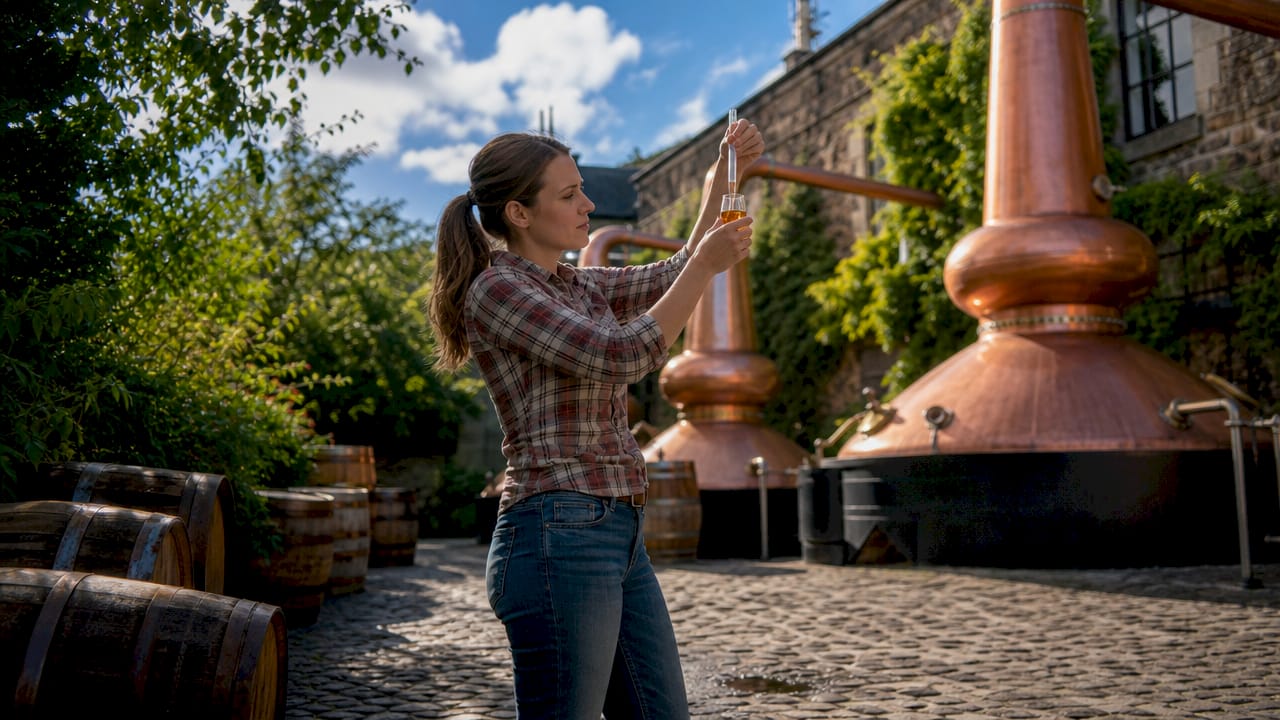
The “straight” designation adds a further requirement. Straight American Single Malt must mature for a minimum of two years in oak barrels, mirroring the straight whiskey standard applied to bourbon and rye. Permitted barrel types include new charred oak, new uncharred oak, and previously used oak. This barrel flexibility is one of the most significant differences from Scotch, which mandates used oak only.
Labelling rules are equally specific. Caramel colouring is the only permitted additive, and it must be disclosed on the label. No other flavouring or colouring agents are allowed. This transparency rule aligns American single malt with the broader American whiskey labelling framework and gives buyers a clear picture of what is in the bottle.
Pro Tip: When shopping for American single malt, look for the word “straight” on the label. It guarantees at least two years of oak maturation and signals a more developed flavour profile.
What are the legal production standards?
The TTB’s 2025 regulations created a numbered set of requirements that every American single malt must meet.
- Mash bill. The grain recipe must be 100% malted barley. No other grains are permitted.
- Single distillery. The entire production process, from mashing through distillation to ageing and bottling, must occur at one US distillery.
- Distillation proof. The spirit cannot exceed 160 proof (80% ABV) off the still.
- Barrel size. Ageing must take place in oak containers of 700 litres or less.
- Bottling proof. The whiskey must be bottled at no less than 80 proof (40% ABV).
- Permitted additives. Only caramel colouring is allowed, and it must appear on the label.
The industry has a five-year transition period from january 2025 to comply fully. Labels approved before the ruling are grandfathered in temporarily. This means some bottles on shelves today may not yet reflect the new standard precisely. During this window, checking the distillery’s own documentation is the most reliable way to confirm compliance.
The new standard also resolves a long-standing identity problem. Before 2025, American distillers making single malt had to label their product under catch-all categories like “malt whiskey,” which gave consumers no clear signal of what they were buying. The official definition changes that entirely.
How does American single malt differ from bourbon and Scotch?
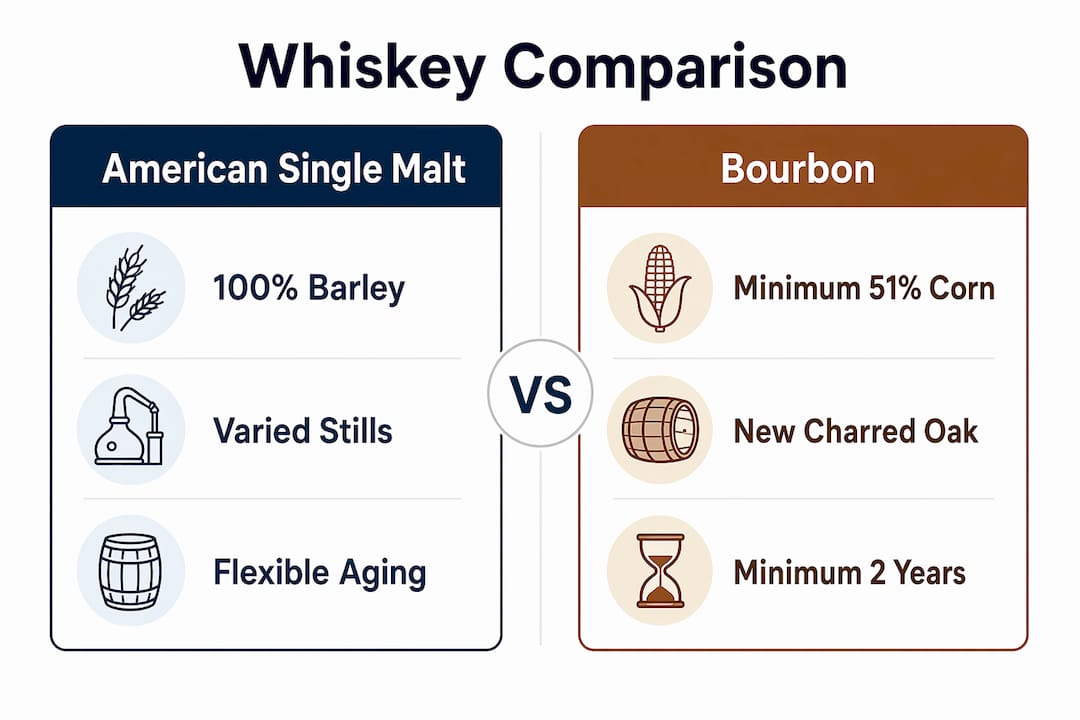
The three styles share a family resemblance but differ in grain, barrel, ageing rules, and flavour. The table below captures the core distinctions.
| Feature | American single malt | Bourbon | Scotch single malt |
|---|---|---|---|
| Grain | 100% malted barley | Min. 51% corn | 100% malted barley |
| Barrel type | New or used oak | New charred oak only | Used oak only |
| Min. ageing | None (2 yrs for “straight”) | None (2 yrs for “straight”) | 3 years |
| Distillation | Pot, column, or hybrid still | Column or pot still | Pot still only |
| Permitted additives | Caramel colouring (disclosed) | None | Caramel colouring |
| Country | USA | USA | Scotland |
Grain and flavour differences
American single malt uses 100% malted barley, while bourbon requires at least 51% corn. That single ingredient difference drives a significant shift in flavour. Bourbon leans toward vanilla, caramel, and oak sweetness because of its corn base and mandatory new charred oak barrels. American single malt delivers honey, toasted biscuit, stone fruit, and nutty notes instead.
Scotch single malt shares the malted barley base with American single malt, but the regulatory environment differs sharply. Scotch requires a minimum of three years in used oak, while American single malt has no minimum ageing requirement at all. That flexibility lets US distillers release younger, fresher expressions that Scotch producers legally cannot.
Distillation flexibility
American single malt may be distilled using pot stills, column stills, or hybrid configurations. Scotch single malt is restricted to pot stills. This is not a minor technical detail. Column stills produce a lighter, cleaner spirit. Pot stills retain more congeners and grain character. American distillers can choose the tool that best suits their flavour target, which is a creative freedom Scotch producers do not have.
For a deeper look at how American whiskey styles compare, the American whiskey vs bourbon guide on Uisuki covers the broader category differences in plain language.
What flavour characteristics define American single malt?
American single malt flavour profiles typically include honey, toasted biscuit, dried fruit, stone fruit, and roasted nuts. These notes come directly from the malted barley and are shaped further by the choice of barrel and the length of maturation. The style is generally softer and more grain-forward than bourbon, and less smoky than peated Scotch.
Barrel selection has an outsized influence on the final character. A distillery ageing in new charred oak will push the spirit toward vanilla and spice. One using ex-bourbon barrels will add caramel and coconut. Ex-sherry casks bring dried fruit and chocolate. This barrel flexibility is one reason American single malt expressions vary so widely from one producer to the next.
Maturation time also matters. A two-year straight expression will show more raw grain and fresh fruit. A five-year or older release develops deeper oak integration, dried fruit complexity, and a longer finish. The absence of a mandatory minimum ageing period means the market contains everything from young, vibrant releases to well-developed aged expressions.
Pro Tip: If you are new to American single malt, start with a straight expression aged three years or more. The extra time in oak rounds out the grain character and makes the style easier to compare against Scotch or bourbon.
The category is growing fast. Distilleries across states including Washington, Colorado, New York, and Kentucky are now producing American single malt, each bringing regional brewing traditions and local grain sources to the style. Westland Distillery in Seattle and Stranahan’s in Denver are two of the most recognised names in the category, both producing expressions that sit clearly in the honey, fruit, and nut flavour range.
How should you drink and enjoy American single malt?
American single malt rewards attention. The following approach gives you the best chance of appreciating what the distiller intended.
- Serve neat first. Pour a small measure at room temperature. Smell the glass before you taste. The nose often reveals honey, biscuit, and fruit before the palate does.
- Add a few drops of water. A small amount of still water opens up the spirit and reduces the alcohol burn. This is especially useful for expressions above 50% ABV.
- Choose the right glass. A Glencairn glass concentrates the aromas. A wide-rimmed tumbler disperses them. Use a Glencairn or similar tulip-shaped glass for tasting.
- Try it with ice last. Ice chills the spirit and mutes the more delicate grain notes. If you prefer a longer, cooler drink, a single large cube melts slowly and dilutes less than crushed ice.
- Pair it with food. American single malt works well with aged cheddar, smoked salmon, roasted nuts, and dark chocolate. The malted barley character bridges savoury and sweet pairings naturally.
Storing American single malt is straightforward. Keep bottles upright, away from direct sunlight, and at a stable room temperature. Unlike wine, whiskey does not improve in the bottle once sealed. An opened bottle is best consumed within one to two years before oxidation affects the flavour.
For Australian collectors interested in exploring the best single malt whiskies across multiple regions, Uisuki’s 2026 guide covers both local and international options worth adding to your shelf.
Key takeaways
American single malt whiskey is the only American whiskey style requiring 100% malted barley, single distillery production, and US ageing under a formal TTB standard effective january 2025.
| Point | Details |
|---|---|
| Official definition | TTB rules effective january 2025 require 100% malted barley, one US distillery, and oak ageing. |
| Straight designation | “Straight” American single malt requires at least two years in oak barrels. |
| Distillation freedom | Pot, column, and hybrid stills are all permitted, unlike Scotch which allows pot stills only. |
| Flavour profile | Expect honey, toasted biscuit, stone fruit, and nuts, shaped by barrel type and maturation time. |
| Transition period | A five-year compliance window from january 2025 means some labels may not yet reflect the new standard. |
Why the 2025 ruling matters more than most people realise
The TTB’s decision to formalise American single malt is one of the most significant regulatory moments in American whiskey history since bourbon’s own standards were codified. I have been watching this category develop for years, and the absence of a legal definition was genuinely holding it back. Distillers were producing excellent malt whiskey with no way to communicate its identity clearly on a label.
The new classification gives American single malt the credibility to compete globally, not just against bourbon, but against Scotch and Japanese single malts in international markets. That matters for Australian consumers because it means more producers will invest in the category, more expressions will reach export markets, and the quality floor will rise as the definition enforces minimum standards.
My advice for enthusiasts here in Australia is to treat American single malt as its own category rather than a cheaper alternative to Scotch. The distillation flexibility and barrel variety produce a style that is genuinely different, not inferior. The best expressions from producers like Westland and Stranahan’s stand on their own terms. The five-year transition period also means now is an interesting time to buy. Some bottles on shelves were produced before the standard existed, which makes them a small piece of category history.
— Brendan
American single malt at Uisuki
Uisuki stocks a curated range of premium whiskies from the USA alongside selections from Scotland, Japan, and Australia.

Whether you are after a well-known American single malt expression or a harder-to-find bottle, the Uisuki team can help you find it. The site includes detailed tasting notes, ABV information, and expert guidance to help you choose with confidence. Uisuki also offers personalised sourcing for rare releases and ships across Australia with free shipping available above the threshold. Browse the full whisky collection to see what is currently available, or reach out directly for a recommendation tailored to your palate.
FAQ
What makes American single malt different from bourbon?
American single malt uses 100% malted barley, while bourbon requires at least 51% corn. Bourbon must age in new charred oak; American single malt can use new or used oak barrels.
When did American single malt get an official definition?
The TTB established the standard of identity for American single malt whiskey on 19 january 2025. A five-year transition period allows the industry to comply fully by 2030.
Does American single malt have to be aged for a minimum time?
There is no minimum ageing requirement for standard American single malt. The “straight” designation requires at least two years in oak, compared to Scotch single malt’s mandatory three years.
Can American single malt be made with a column still?
Yes. American single malt may be produced using pot stills, column stills, or hybrid stills. Scotch single malt is restricted to pot stills only, which gives American producers significantly more flexibility in flavour development.
Is American single malt widely available in Australia?
Availability is growing as the category gains international recognition. Specialist online retailers like Uisuki stock American single malt expressions alongside Scotch, Japanese, and Australian whiskies, with personalised sourcing available for harder-to-find bottles.