

TL;DR:
- Australian single malts offer unique cask finishes and faster maturation, enhancing their collector appeal.
- Award-winning Scotch and Australian whiskies are reliable options, but local exclusives provide better investment potential.
- Building a collection involves direct distillery relations, monitoring awards, and understanding regional and maturation differences.
Navigating the world of premium single malt whisky has never been more rewarding — or more complicated — for Australian collectors. The global market is flooded with exceptional bottlings, from storied Scottish distilleries to Tasmania’s rapidly maturing craft producers. With the World Whiskies Awards 2026 shining a spotlight on both hemispheres, the question is no longer just “Scotch or not?” but how to build a collection that balances flavour, prestige, and long-term value. This guide cuts through the noise with a structured, evidence-based approach to selecting the finest single malts available to Australian enthusiasts right now.
Table of Contents
- How to identify a true single malt whisky
- Award-winning single malt whisky picks for collectors
- Head-to-head comparison: Scotch vs. Australian single malts
- Collector strategies: Sourcing, investing, and enjoying single malts in Australia
- What most whisky guides miss: High-impact nuances for Australian collectors
- Expand your single malt collection with award winners and exclusive releases
- Frequently asked questions
Key Takeaways
| Point | Details |
|---|---|
| Single malt essentials | Understand how production and regionality define quality and collectability in single malts. |
| Award-winning picks | 2026’s globally recognised and Australian whiskies offer both enjoyment and investment appeal. |
| Scotch vs. Aussie strengths | Compare traditional Scotch profiles with Australia’s innovative approaches for personal and collector decisions. |
| Collector strategies | Direct sourcing, club memberships, and rare editions are key to building a valuable collection in Australia. |
| Expert perspective | Local nuances and sourcing channels often matter more than chasing global rankings for Australian collectors. |
How to identify a true single malt whisky
Before spending serious money on a bottle, you need to know exactly what you are buying. The term “single malt” is legally defined and carries strict production requirements that vary slightly by country but share a common core.
For Scotch whisky, a single malt must be produced at one distillery using only malted barley, distilled in copper pot stills, and matured in oak casks for a minimum of three years. That last point is non-negotiable under Scotch Whisky Regulations. The single distillery rule is what separates single malts from blended malts, which can draw from multiple distilleries.
Region matters enormously when assessing single malt characteristics. Here is a quick breakdown of what to expect from each major region:
- Highland: Broad and varied, often fruity with heather and honey notes
- Speyside: Typically elegant, with apple, vanilla, and sherry-driven sweetness
- Islay: Bold, heavily peated, with maritime and medicinal qualities
- Lowland: Light, floral, and approachable — great entry points for new collectors
- Tasmanian (Australia): Rich, fruit-forward, and complex due to rapid climate-driven maturation
Peat is one of the most misunderstood variables. Islay distilleries like Bowmore and Laphroaig use heavily peated malt, measured in phenol parts per million (ppm). Speyside producers typically sit below 5 ppm, while Islay can exceed 50 ppm. This directly shapes the smoky, earthy character you taste in the glass.
Australian single malts follow similar production logic but are not bound by Scotch regulations. Producers like Sullivans Cove and Lark Distillery use locally grown barley and source unique cask types including French oak wine barrels and port pipes. Tasmania’s warm summers and cold winters accelerate the interaction between spirit and wood, producing whiskies with surprising depth at relatively young ages.
Pro Tip: When reading a label, look for the words “single malt” and “single distillery” together. If you only see “malt whisky,” it may be a vatted or blended malt from multiple sources.
Award-winning single malt whisky picks for collectors
With so many bottles competing for shelf space, leaning on credible award results is a smart shortcut. The World Whiskies Awards (WWA) 2026 delivered a strong list of regional best Scotch single malts that any serious collector should know.
Here are the standout picks from the 2026 awards cycle:
- Aberfeldy 21 Year Old — Highland, rich honeyed fruit and waxy complexity
- Glen Scotia 15 Year Old — Campbeltown, briny and full-bodied with dried fruit
- Isle of Raasay Cask Strength — Island, peated and layered with dark chocolate
- InchDairnie KinGlassie — Lowland, innovative rye-influenced malt with floral lift
- The Glenlivet Founder’s Reserve — Speyside, approachable and creamy with citrus
- Bowmore 21 Sherry Oak — Islay, balanced smoke and dried fruit from sherry casks
- Sullivans Cove French Oak White Wine Old and Rare TD0112 — Tasmania, World’s Best Single Cask Single Malt at WWA 2026
For those interested in rare whiskies for collectors, the Bowmore range deserves particular attention. The Bowmore 12 Year Old offers an accessible entry into Islay peat, while the Bowmore 15 Year Old steps up with deeper sherry influence and more complexity.
| Whisky | Region | Notable cask | Collector appeal |
|---|---|---|---|
| Aberfeldy 21 | Highland | Ex-bourbon | High |
| Glen Scotia 15 | Campbeltown | Sherry finish | Medium-high |
| Isle of Raasay Cask Strength | Island | STR cask | High |
| InchDairnie KinGlassie | Lowland | Rye cask | Emerging |
| Sullivans Cove French Oak | Tasmania | French oak wine | Very high |
| Bowmore 21 Sherry Oak | Islay | Oloroso sherry | High |
“The global prestige of Australian single malts is no longer a surprise. Sullivans Cove’s back-to-back recognition at the WWA confirms that Tasmanian whisky has permanently earned its place alongside Scotland’s finest.”
Head-to-head comparison: Scotch vs. Australian single malts
Choosing between Scotch and Australian single malts is not a matter of one being better. It is about understanding what each tradition offers and matching that to your goals as a collector or drinker.
Scotch has centuries of heritage behind it. Consistency is baked into the regulations, and the secondary market for aged Scotch is deep and liquid. Peated expressions from Islay offer a flavour profile that no other region replicates, and the sheer variety across Highland, Speyside, Campbeltown, and Lowland means there is always something new to explore.
Australian single malts, particularly from Tasmania, bring something genuinely different. The unique cask finishes using local wine, port, and brandy barrels create flavour profiles you simply cannot get from Scotland. Climate-driven maturation means a five-year-old Tasmanian whisky can exhibit complexity that rivals a twelve-year-old Scotch. That is not marketing spin. It is the result of dramatic temperature swings accelerating the extraction of wood compounds.
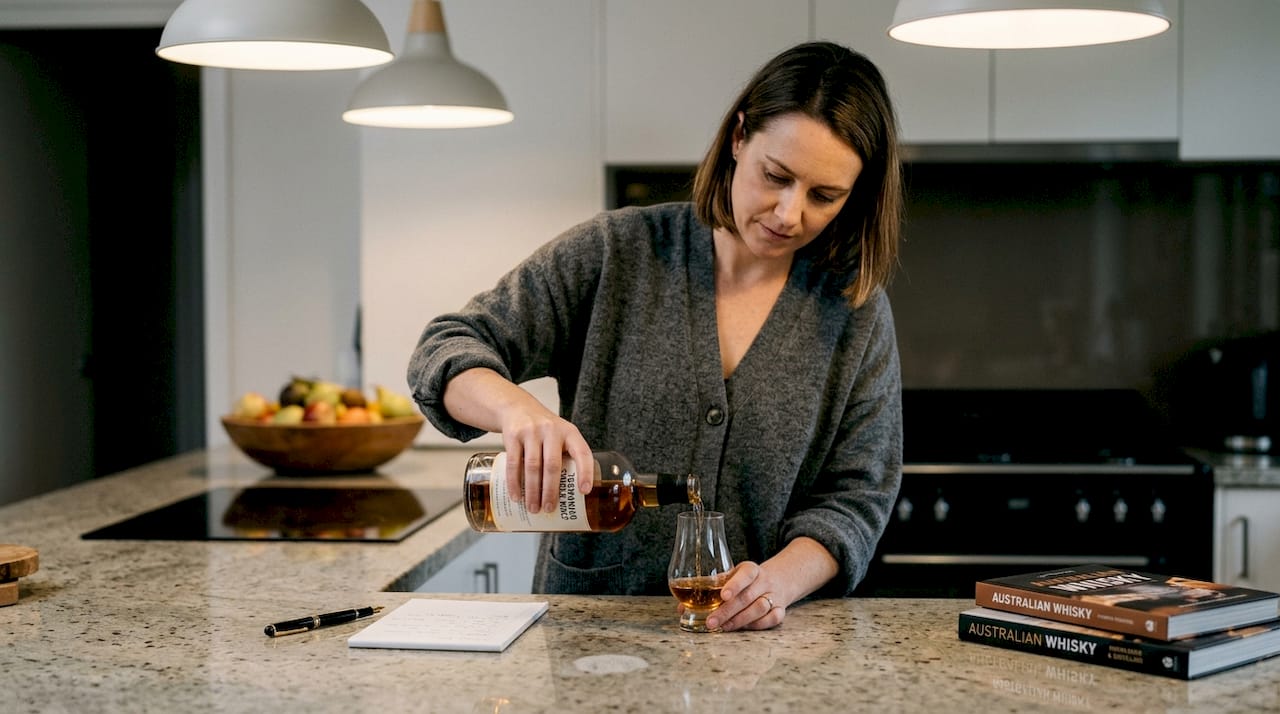
The Lark Distillery Classic Cask is a perfect example of this principle in action, delivering a richly textured dram at a fraction of the age you might expect from a comparable Scotch.
| Attribute | Top Scotch single malts | Top Australian single malts |
|---|---|---|
| Flavour range | Broad, from light floral to heavy peat | Fruit-forward, wine-influenced, rich |
| Maturation speed | Slower, cooler climate | Faster, climate-driven |
| Collectability | Established global market | Rapidly growing, high exclusivity |
| Average price (AUD) | $80 to $500+ | $120 to $400+ |
| Investment track record | Long and proven | Shorter but accelerating |
When to favour Scotch for your collection:
- You want a deep secondary market for resale
- You are building around established names like Macallan or Bowmore
- You prefer peated expressions with a long flavour history
When to favour Australian single malts:
- You want exclusivity and limited production numbers
- You are drawn to wine and port cask finishes as a point of difference
- You are investing locally and want to support a growing category
Collector strategies: Sourcing, investing, and enjoying single malts in Australia
Knowing which bottles to target is only half the battle. How and where you source them makes an enormous difference to both price and access.
Distillery-direct and club memberships are your most powerful tools. Producers like Lark and Sullivans Cove release exclusive casks to members before they ever reach retail. These allocations are small, often numbering in the hundreds of bottles, and they rarely appear on the secondary market at anything close to release price.
For investment-grade acquisitions, tracking award results is essential. Rare single casks from Sullivans Cove and limited editions from Hellyers Road and Lark consistently outperform expectations at auction. Rare Scotch from producers like Macallan remains a benchmark through Australian specialists. Monitoring WWA and IWSC results gives you a reliable framework for identifying bottles before prices spike.
Here are the key strategies every serious collector should apply:
- Join distillery clubs and mailing lists for pre-release access
- Use reputable auction platforms to track secondary market pricing trends
- Source from specialist retailers who can verify provenance and storage history
- Study rare whisky types to understand which formats command the highest premiums
- Store bottles upright in a cool, dark environment away from direct sunlight and temperature fluctuations
- Consider specialist whisky insurance for collections exceeding $5,000 in value
Pro Tip: When buying at auction, always request storage history. A bottle that has been kept in poor conditions — heat, light exposure, or on its side for years — can lose significant value and flavour integrity, even if the seal appears intact.
For personal enjoyment, do not overlook the value of opening bottles. A collection that is never tasted is a museum, not a passion. Rotate bottles, host tastings with fellow enthusiasts, and document your notes. The experience deepens your palate and sharpens your future buying decisions.
What most whisky guides miss: High-impact nuances for Australian collectors
Most whisky guides hand you a list of award winners and call it done. What they rarely address is the structural advantage that Australian collectors have when they think locally first.
Direct distillery relationships are not just a nice-to-have. They are the single most reliable route to bottles that never appear on the retail market. When Sullivans Cove releases a new single cask expression, members often have first access at prices that look extraordinary twelve months later. No global ranking or retail catalogue can replicate that.
The second thing most guides overlook is the maturation speed advantage. Because Tasmania’s climate drives faster wood interaction, younger Australian expressions often deliver complexity that rivals much older Scotch. This means you are not always paying for age when you buy local. You are paying for genuine flavour development, which is a far better deal.
Finally, investing for local exclusivity often outperforms chasing globally ranked bottles. By the time a bottle appears on a “world’s best” list, the price has already moved. The smarter play is identifying producers before the awards arrive. Explore collector examples of bottles that gained value before mainstream recognition, and you will start to see the pattern clearly.
Expand your single malt collection with award winners and exclusive releases
If this guide has sparked your appetite for building a serious single malt collection, the next step is finding a trusted source that understands both the global market and the Australian landscape.
At Uisuki, we curate a selection of premium and hard-to-find single malts sourced from Scotland, Japan, Tasmania, and beyond. Whether you are after a bold Japanese expression like Ichiro’s Malt and Grain or something closer to home like the Hobart Whisky Rum Finished, our range is built for collectors who take their whisky seriously. Browse our full selection and let us help you find your next great bottle.
Frequently asked questions
What defines a single malt whisky?
A single malt whisky is made at one distillery using only malted barley, distilled in pot stills, and matured in oak casks for a minimum of three years. The single distillery requirement is what distinguishes it from blended or vatted malts.
Which single malt whiskies won major awards in 2026?
Notable WWA 2026 winners include Aberfeldy 21, Glen Scotia 15, Isle of Raasay Cask Strength, InchDairnie KinGlassie, The Glenlivet Founder’s Reserve, Bowmore 21 Sherry Oak, and Sullivans Cove French Oak White Wine Old and Rare TD0112.
Are Australian single malt whiskies investment-worthy?
Yes, particularly rare single casks and limited editions from Tasmanian producers like Sullivans Cove and Lark, which are increasingly recognised and sought after by collectors worldwide.
What are the top criteria for choosing a single malt whisky?
Key factors include production method, regional style, cask type, peat influence, award recognition, and collector accessibility. Australian Tasmanian expressions are gaining particular recognition for their unique cask finishes using local wine and port barrels.