

TL;DR:
- Japanese whisky is a premium, craft-produced spirit known for its balance, restraint, and meticulous blending. Major brands like Yamazaki, Nikka, and Hibiki feature distinct styles, with emphasis on local maturation and unique cask choices. Prices have risen sharply since 2022, reflecting increased demand and limited supply, especially for aged expressions.
Japanese famous whisky is defined as premium, distillery-crafted spirit produced in Japan, celebrated globally for its meticulous blending, distinct cask choices, and flavour precision. The category spans single malts, blended whiskies, and grain expressions from houses like Suntory, Nikka, and Hibiki. What separates Japanese whisky from Scotch or American bourbon is its philosophy: restraint, balance, and an almost obsessive attention to craft. If you want to understand why collectors and casual drinkers alike chase these bottles, the answer starts with the distilleries themselves.
1. What are the top Japanese famous whisky brands?
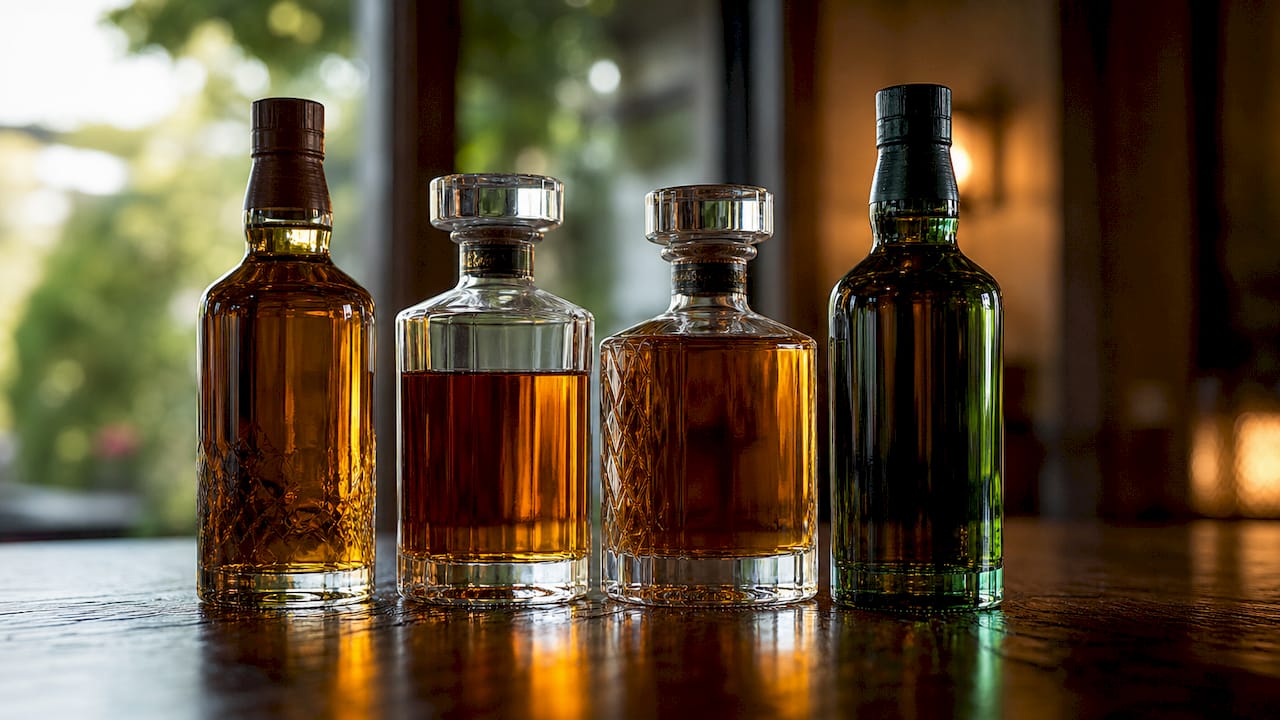
The best Japanese whisky brands share three traits: a clear house style, a commitment to local maturation, and at least one expression that has won international recognition. The names below represent the core of the category.
Suntory Yamazaki
Yamazaki was founded in 1923, making it Japan’s first malt whisky distillery. Its most distinctive feature is the use of Mizunara oak casks, which impart sandalwood, incense, and coconut notes that no other wood replicates. The Yamazaki 12 is widely regarded as the essential introductory expression, valued for its light, honeyed character and accessibility for new drinkers. Experienced collectors chase the 18 Year Old and the Distillery Exclusive releases.
Key characteristics:
- Mizunara oak maturation adds incense and sandalwood
- Light, honeyed fruit on the palate
- Flagship expressions: Yamazaki 12, 18, and Distillery Exclusive
Nikka Whisky
Nikka was founded by Masataka Taketsuru, who studied distillation in Scotland before returning to Japan. That Scottish influence shows in Nikka’s willingness to use peated malt, which sets it apart from the cleaner Suntory house style. The Nikka From The Barrel expression is a cult favourite for its full-bodied, high-proof character at a price that still makes sense. Nikka’s two distilleries, Yoichi and Miyagikyo, produce contrasting styles: coastal and smoky versus fruity and light.
Key characteristics:
- Peated malt influence from Scottish training
- Yoichi: rich, smoky, coastal character
- Miyagikyo: soft, fruity, floral profile
Hibiki
Hibiki is Suntory’s prestige blended whisky line, built around the philosophy of harmony between malt and grain whiskies. The Hibiki 17 Year Old is a blended masterpiece celebrated for its balance, combining malt and grain whiskies matured for 17 years. Demand for aged Hibiki expressions has outpaced supply, driving significant price premiums on the secondary market. The Hibiki Japanese Harmony remains the most accessible entry point in the range.
Key characteristics:
- Blended style prioritising balance and elegance
- Hibiki 17: fruit, oak, and spice in harmony
- Hibiki Harmony: floral, honeyed, and widely available
Hakushu
Hakushu sits in the Japanese Alps and produces a single malt unlike anything else in the category. The Hakushu 12 is distinguished by its fresh, herbal, alpine style with green apple and cucumber notes. That botanical crispness comes from the distillery’s mountain water source and cool fermentation environment. Hakushu suits drinkers who find Scotch too heavy or Yamazaki too sweet.
Key characteristics:
- Fresh, green, herbal nose
- Green apple, cucumber, and mint on the palate
- Single malt from a high-altitude forest distillery
Other notable brands
Mars Shinshu, Akashi, and Ichiro’s Malt round out the category for drinkers who want to go beyond the major houses. Ichiro’s Malt from Chichibu Distillery has earned a fierce following for its card series releases and experimental cask programme. Akashi from White Oak Distillery offers accessible blended and single malt expressions at prices that reflect genuine value.
2. What tasting notes and styles define Japanese whiskies?
Japanese whiskies emphasise fresh, green, and botanical profiles compared to heavier Scotch expressions. That difference is intentional. Japanese distillers aim for precision and restraint rather than the bold peat or sherry weight common in Speyside or Islay Scotch.
The most common tasting notes across top Japanese whiskies include:
- Floral and fruit: cherry blossom, peach, yuzu, and green apple
- Herbal and botanical: fresh mint, cucumber, green tea, and pine
- Oak and spice: vanilla, sandalwood, incense (especially Mizunara-aged expressions)
- Honeyed sweetness: light caramel, white chocolate, and marzipan
Yamazaki 12 is the benchmark for newcomers, appreciated for its light, honeyed character and gentle fruit. Hakushu 12 sits at the opposite end of the spectrum with its crisp, herbal nose and bright palate. Hibiki 17 sits between the two: elegant, layered, and built for slow sipping.
Pro Tip: Let single malts like Hakushu 12 breathe for five minutes before your first sip. The herbal and alpine notes open significantly once the whisky has had contact with air.
Japanese whisky also differs from Scotch in how it is most commonly served. Most blended Japanese whisky is consumed as highballs rather than neat, particularly using Suntory Kakubin, known locally as the “kaku-hai.” That serving style is not a compromise. It is a deliberate cultural choice that showcases the whisky’s clean, refreshing character.
3. How do price and availability affect your choices?
Price is now a serious factor for anyone buying Japanese whisky. Suntory raised prices by 2.25 times since 2022, and Nikka increased prices by up to 56% in april 2024. That inflation reflects genuine supply pressure: aged Japanese whisky takes years to produce, and global demand surged faster than distilleries could respond.
| Expression | Style | Approx. price range | Best for |
|---|---|---|---|
| Yamazaki 12 | Single malt | Mid-range | Newcomers and gifting |
| Hakushu 12 | Single malt | Mid-range | Herbal and botanical lovers |
| Hibiki Harmony | Blended | Mid-range | Everyday sipping |
| Hibiki 17 | Blended | Premium | Collectors and special occasions |
| Nikka From The Barrel | Blended | Accessible | Value seekers and cocktail use |
| Ichiro’s Malt | Single malt | Premium to rare | Enthusiasts and collectors |
Hibiki 17 commands the highest premiums because it was discontinued for a period and remains scarce. Nikka From The Barrel remains the strongest value proposition in the category, offering full-flavoured whisky at a price well below its quality level.
Pro Tip: Post-2021, the Japan Spirits & Liqueurs Makers Association tightened labelling rules to ensure all distillation and ageing occurs in Japan. Check that any bottle you buy carries this compliance. Bottles labelled “world whisky” or “blended with imported spirits” are not true Japanese whisky under the current definition.
For everyday drinking, Hibiki Harmony and Nikka From The Barrel offer the best balance of quality and price. For gifting or collecting, Yamazaki 12 and Hakushu 12 remain the most recognisable names. Check the 2026 brand guide for current pricing and availability across expressions.
4. How to enjoy and serve Japanese whisky like a local
The way Japanese drinkers serve whisky is as considered as the whisky itself. Three serving styles dominate: neat, highball, and mizuwari.
Neat suits aged single malts like Yamazaki 18 or Hakushu 12. Pour at room temperature, let the glass sit for five minutes, and sip slowly. No ice, no water.
Highball is the everyday standard. Highballs enjoy cultural prominence in Japan as the standard serve for blended whisky. To make one properly: fill a tall glass with ice, pour a measure of whisky, then add chilled soda water in a roughly 1:3 ratio. Stir gently once. The Suntory Kakubin highball is the classic version.
Mizuwari is the traditional diluted serve. Mix one part whisky with two parts still mineral water and stir precisely to open the aromatics without overpowering them. This method works beautifully with Hibiki Harmony or Nikka From The Barrel.
Serving do’s and don’ts:
- Do use large, clear ice cubes for highballs. They melt slowly and keep dilution controlled.
- Do chill your glass before making a highball.
- Do let single malts breathe before tasting.
- Don’t add ice to aged single malts like Yamazaki 18. Cold suppresses the delicate Mizunara notes.
- Don’t over-stir a mizuwari. Three to four slow rotations is enough.
- Don’t use sparkling water with strong mineral flavour for highballs. It competes with the whisky.
For cocktails, Nikka From The Barrel and Hibiki Harmony both work well in a Japanese whisky sour or a simple whisky and ginger. Their clean profiles integrate without fighting the other ingredients. The how to choose Japanese whisky guide covers serving styles in more detail if you want to match expressions to occasions.
Key takeaways
Japanese whisky earns its global reputation through precise craftsmanship, distinct cask choices like Mizunara oak, and a culture of serving that treats every pour as intentional.
| Point | Details |
|---|---|
| Start with Yamazaki 12 | It is the most accessible entry point, with a light, honeyed character suited to newcomers. |
| Hakushu 12 is unique | Its herbal, alpine style sets it apart from every other Japanese single malt. |
| Prices have risen sharply | Suntory prices have increased significantly since 2022; buy current releases before further rises. |
| Check authenticity labels | Post-2021 rules require all distillation and ageing to occur in Japan for a bottle to qualify. |
| Serve it the right way | Highball for blended whisky, neat or mizuwari for single malts. |
Brendan’s take on where Japanese whisky is heading
The authenticity rules introduced in 2021 changed the category for the better. Before those guidelines, bottles labelled “Japanese whisky” could legally contain imported Scotch or Canadian spirit. That practice misled buyers and diluted the category’s credibility. The tighter labelling standards now mean that when you buy a bottle marked as Japanese whisky, you know exactly what you are getting.
What I find most interesting in 2026 is the rise of smaller distilleries like Chichibu and Mars Shinshu. They are producing whisky that competes with Suntory and Nikka on quality while offering more experimental cask profiles. Ichiro’s Malt card series releases sell out within hours, which tells you everything about where collector interest is moving.
My personal recommendation for anyone starting out: buy a Yamazaki 12 and a Hakushu 12 at the same time. Taste them side by side. The contrast between Yamazaki’s honeyed fruit and Hakushu’s herbal crispness gives you the full range of what Japanese single malt can do. From there, Hibiki 17 is the logical next step if you want to understand what great blending looks like.
The category is not cheap anymore. But the quality justifies the price at every level above entry. Japanese whisky is not a trend. It is a permanent fixture in the world’s best collections.
— Brendan
Premium Japanese whisky, sourced and delivered to you
Com at Uisuki.com.au carries a curated range of authentic Japanese whiskies, from everyday expressions like Nikka From The Barrel to rare and allocated bottles for serious collectors.
Every bottle in the range meets the post-2021 authenticity standards, so you are buying genuine Japanese whisky every time. The catalogue includes popular Japanese whisky types across single malt, blended, and grain categories, with detailed tasting notes and ABV information on every listing. Shipping is available across Australia, with free shipping thresholds and multiple payment options. Browse the full Japanese whisky collection and find the right bottle for your next pour.
FAQ
What is the most famous Japanese whisky?
Yamazaki 12 is the most widely recognised Japanese whisky globally, valued for its light, honeyed character and its status as Japan’s first malt distillery expression. Hibiki 17 Year Old is the most celebrated blended Japanese whisky.
Why has Japanese whisky become so expensive?
Suntory raised prices by 2.25 times since 2022, and Nikka increased prices by up to 56% in april 2024, driven by global demand outpacing the supply of aged stock. Scarcity of aged expressions like Hibiki 17 has pushed secondary market prices even higher.
What does Japanese whisky taste like?
Japanese whisky typically features light, floral, and fruit-driven notes such as peach, green apple, and cherry blossom, with herbal and botanical elements in expressions like Hakushu 12. It is generally cleaner and less peated than Scotch whisky.
How should I drink Japanese whisky?
Single malts like Yamazaki 12 and Hakushu 12 are best served neat after a five-minute rest. Blended expressions like Hibiki Harmony work well as a highball or in the traditional mizuwari style with still mineral water.
Is all Japanese whisky actually made in Japan?
Since 2021, the Japan Spirits & Liqueurs Makers Association requires all distillation and ageing to occur in Japan for a bottle to carry the Japanese whisky designation. Bottles blended with imported spirits must be labelled differently under the current rules.